Loading page, please wait…
What are the Journey of Marathas after Shivaji? - UPSC History
What is What are the Journey of Marathas after Shivaji? in UPSC History?
What are the Journey of Marathas after Shivaji? is a key topic under History for UPSC Civil Services Examination. Key points include: Shivaji's death in 1680 led to immediate succession challenges.. Sambhaji Maharaj ruled from 1680-1689, continuing resistance against Mughals.. Sambhaji was captured and executed by Mughals in 1689, a major setback.. Understanding this topic is essential for both UPSC Prelims and Mains preparation.
Why is What are the Journey of Marathas after Shivaji? important for UPSC exam?
What are the Journey of Marathas after Shivaji? is a Easy-level topic in UPSC History. It is tested in both Prelims (factual MCQs) and Mains (analytical answer writing). Previous year UPSC questions have frequently covered aspects of What are the Journey of Marathas after Shivaji?, making it essential for comprehensive IAS preparation.
How to prepare What are the Journey of Marathas after Shivaji? for UPSC?
To prepare What are the Journey of Marathas after Shivaji? for UPSC: (1) Study the comprehensive notes covering all key concepts on Vaidra. (2) Practice previous year questions on this topic. (3) Connect it with current affairs using daily updates. (4) Revise using key takeaways and mind maps available for History. (5) Write practice answers linking What are the Journey of Marathas after Shivaji? to related GS Paper topics.
Key takeaways of What are the Journey of Marathas after Shivaji? for UPSC
- Shivaji's death in 1680 led to immediate succession challenges.
- Sambhaji Maharaj ruled from 1680-1689, continuing resistance against Mughals.
- Sambhaji was captured and executed by Mughals in 1689, a major setback.
- Rajaram Maharaj, Shivaji's younger brother, took leadership after Sambhaji.
- Rajaram led the Maratha resistance during the 'War of 27 Years' (1689-1707), ensuring the empire's survival.
What are the Journey of Marathas after Shivaji?
Easy⏱️ 5 min read
history
📖 Introduction
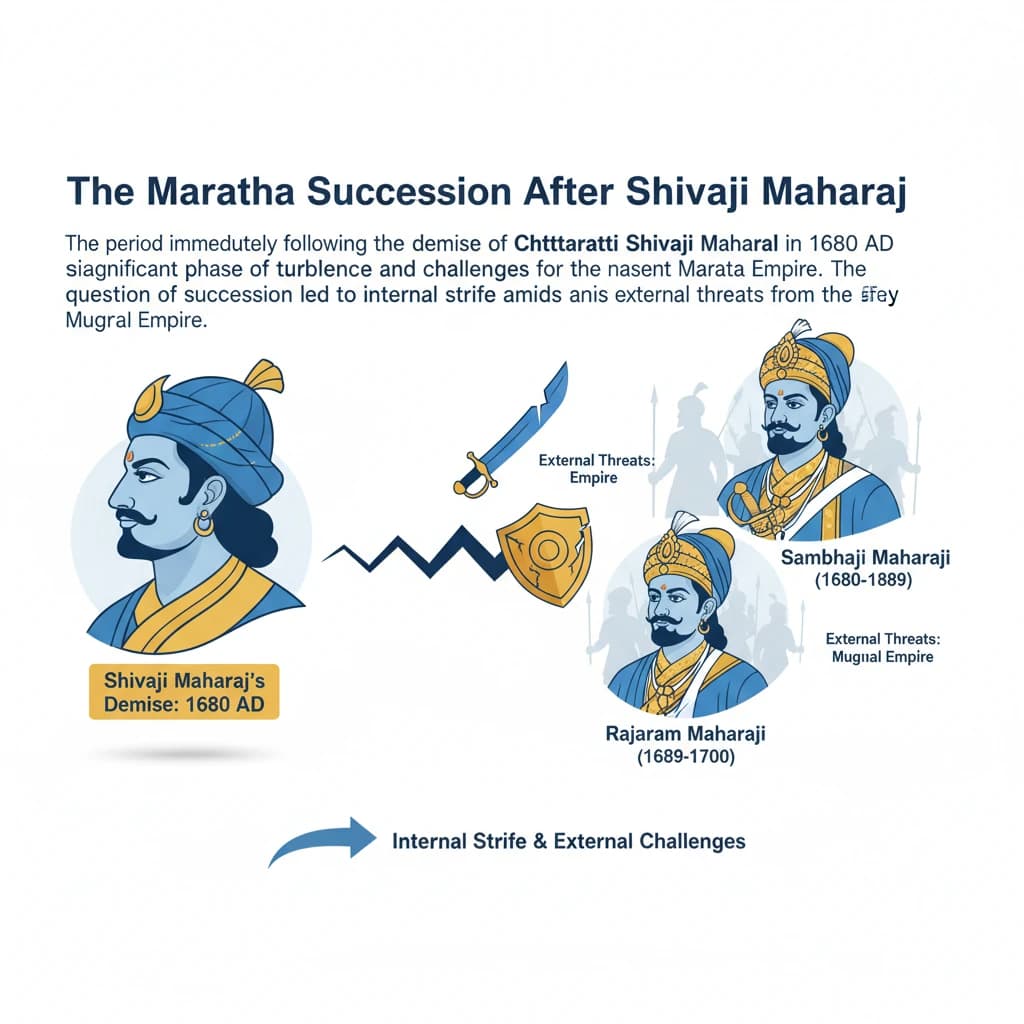
The Maratha Succession After Shivaji Maharaj
The period immediately following the demise of Chhatrapati Shivaji Maharaj in 1680 AD marked a significant phase of turbulence and challenges for the nascent Maratha Empire. The question of succession led to internal strife amidst external threats from the Mughal Empire.
Shivaji Maharaj's Demise: Chhatrapati Shivaji Maharaj passed away in 1680 AD, leaving behind a strong, yet young, Maratha state.
Sambhaji Maharaj's Ascension and Reign
Upon Shivaji's death, his elder son, Sambhaji, ascended to the throne. His reign was characterized by continuous warfare against the Mughals and efforts to consolidate the Maratha territories.
However, Sambhaji's rule was tragically cut short. He was captured by the Mughals and subsequently executed in 1689 AD, a major blow to the Maratha cause.
Sambhaji Maharaj's Reign: 1680 AD - 1689 AD.
Key Event: Captured and executed by Mughal Emperor Aurangzeb in 1689 AD.
The Era of Rajaram Maharaj and Regency
Following Sambhaji's untimely death, the leadership of the Maratha Empire fell to Chhatrapati Rajaram Maharaj, Shivaji's younger brother. He initially ruled as a regent for Sambhaji's young son, Shahu, who was a captive of the Mughals.
Rajaram's reign was primarily a period of intense resistance against the Mughal onslaught. He moved his capital to Gingee and continued the struggle, ensuring the survival of the Maratha spirit despite immense pressure.
Chhatrapati Rajaram Maharaj: Shivaji's younger son, led the Marathas after Sambhaji's death. Crucial in maintaining Maratha resistance during the Mughal-Maratha War (War of 27 Years).
UPSC often asks about the challenges faced by the Marathas immediately after Shivaji's death and the role of subsequent rulers in preserving the empire. Focus on the continuity of resistance.
💡 Key Takeaways
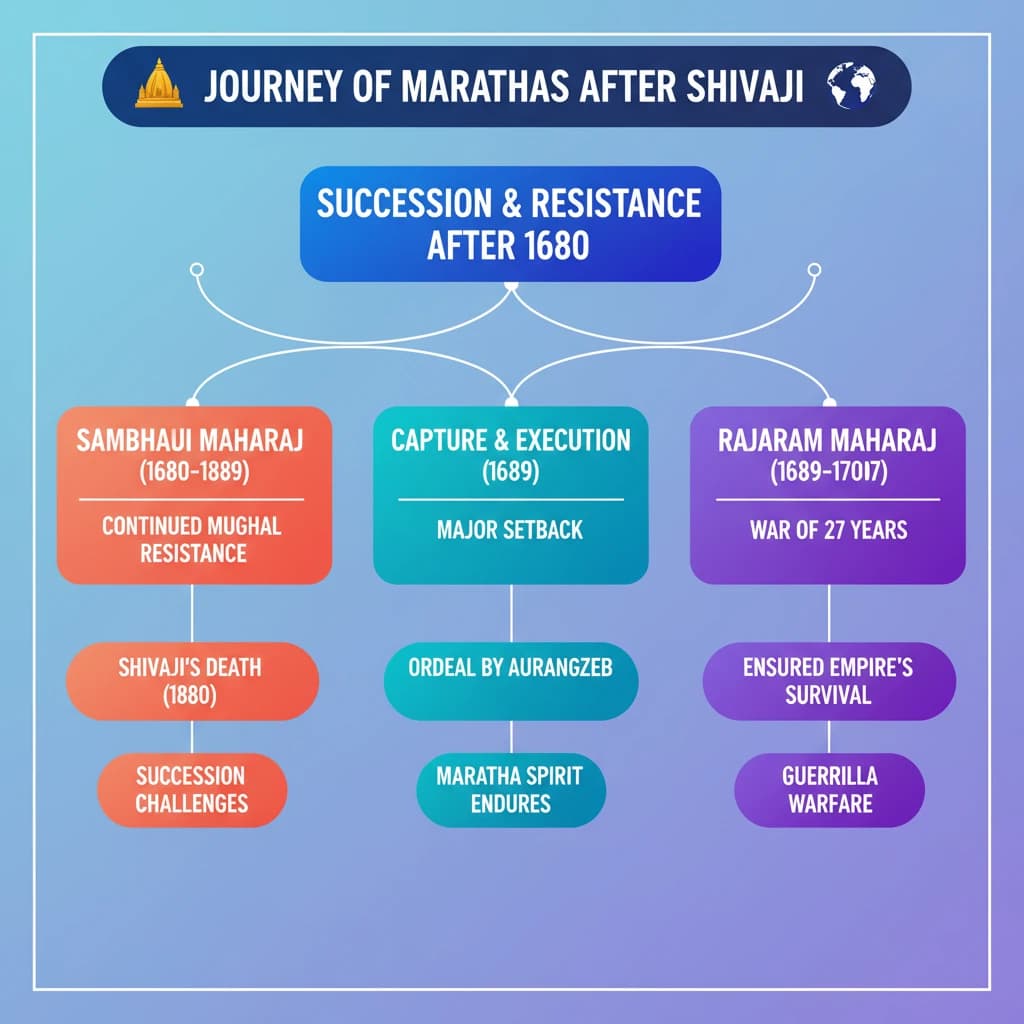
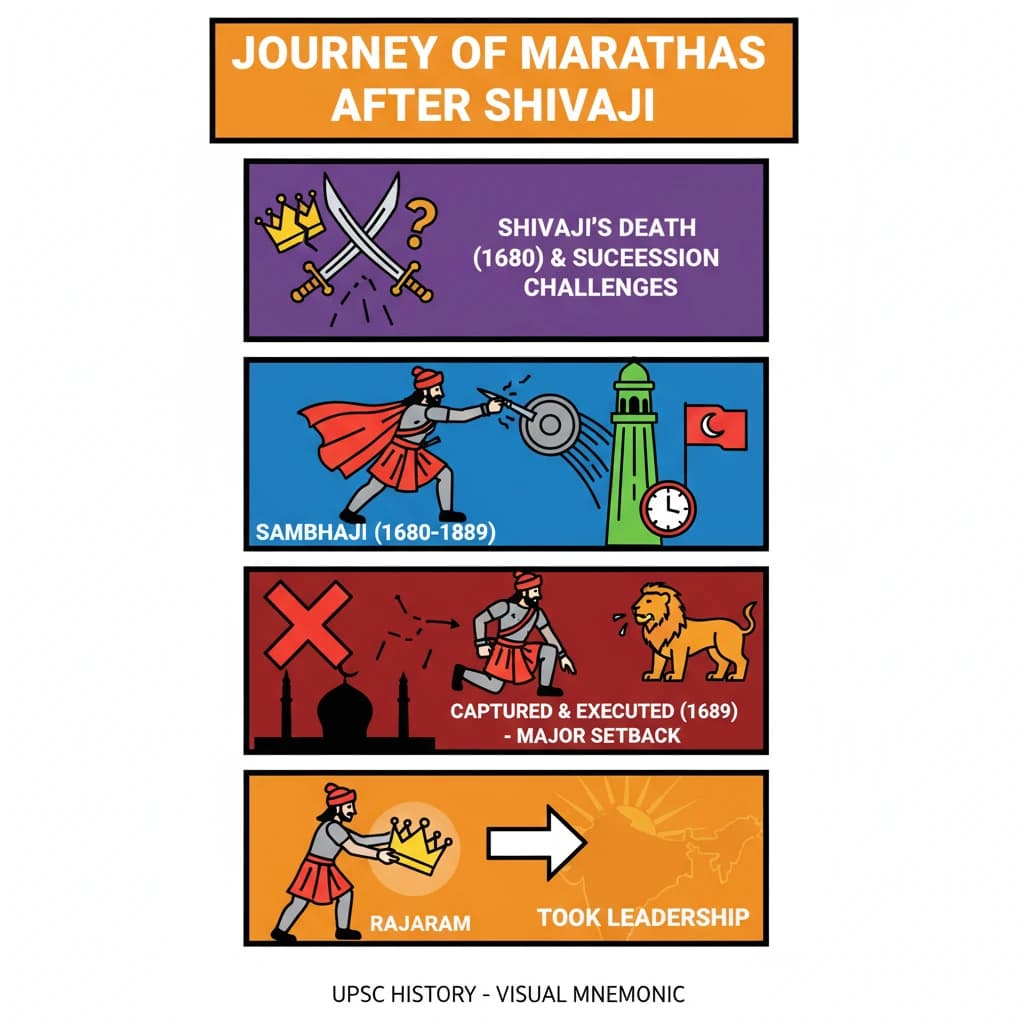
- •Shivaji's death in 1680 led to immediate succession challenges.
- •Sambhaji Maharaj ruled from 1680-1689, continuing resistance against Mughals.
- •Sambhaji was captured and executed by Mughals in 1689, a major setback.
- •Rajaram Maharaj, Shivaji's younger brother, took leadership after Sambhaji.
- •Rajaram led the Maratha resistance during the 'War of 27 Years' (1689-1707), ensuring the empire's survival.
🧠 Memory Techniques
95% Verified Content
📚 Reference Sources
•Standard Indian History textbooks for UPSC (e.g., Bipin Chandra, Satish Chandra for cross-verification of facts)