Loading page, please wait…
What are the Key Facts About the Ikshvaku Period? - UPSC History
What is What are the Key Facts About the Ikshvaku Period? in UPSC History?
What are the Key Facts About the Ikshvaku Period? is a key topic under History for UPSC Civil Services Examination. Key points include: Ikshvakus emerged in the Krishna-Guntur region after the decline of the Satavahanas (c. 300-400 CE).. Their capital was Vijayapuri, often identified with Nagarjunakonda.. King Kamtasiri was instrumental in expanding their territory across parts of Andhra, Telangana, and Maharashtra.. Understanding this topic is essential for both UPSC Prelims and Mains preparation.
Why is What are the Key Facts About the Ikshvaku Period? important for UPSC exam?
What are the Key Facts About the Ikshvaku Period? is a Medium-level topic in UPSC History. It is tested in both Prelims (factual MCQs) and Mains (analytical answer writing). Previous year UPSC questions have frequently covered aspects of What are the Key Facts About the Ikshvaku Period?, making it essential for comprehensive IAS preparation.
How to prepare What are the Key Facts About the Ikshvaku Period? for UPSC?
To prepare What are the Key Facts About the Ikshvaku Period? for UPSC: (1) Study the comprehensive notes covering all key concepts on Vaidra. (2) Practice previous year questions on this topic. (3) Connect it with current affairs using daily updates. (4) Revise using key takeaways and mind maps available for History. (5) Write practice answers linking What are the Key Facts About the Ikshvaku Period? to related GS Paper topics.
Key takeaways of What are the Key Facts About the Ikshvaku Period? for UPSC
- Ikshvakus emerged in the Krishna-Guntur region after the decline of the Satavahanas (c. 300-400 CE).
- Their capital was Vijayapuri, often identified with Nagarjunakonda.
- King Kamtasiri was instrumental in expanding their territory across parts of Andhra, Telangana, and Maharashtra.
- The dynasty was a significant patron of Buddhism, leading to the construction of numerous stupas and monasteries.
- Key Buddhist sites include Nagarjunakonda, Kanaganahalli, and Sankaram.
- The Ikshvakus were eventually succeeded by the Pallavas.
What are the Key Facts About the Ikshvaku Period?
Medium⏱️ 6 min read
history
📖 Introduction
Introduction to the Ikshvaku Dynasty
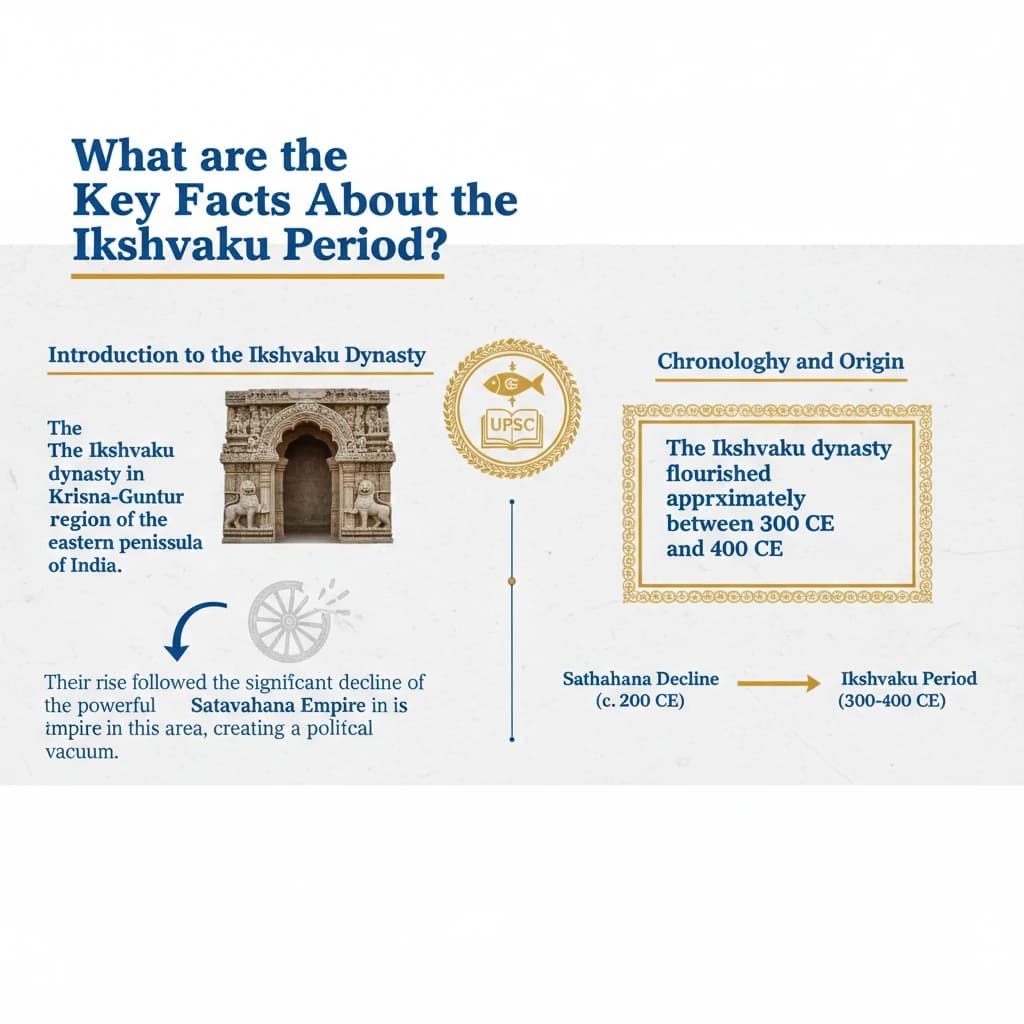
The Ikshvaku dynasty emerged in the Krishna-Guntur region of the eastern peninsula of India.
Their rise followed the significant decline of the powerful Satavahana Empire in this area, creating a political vacuum.
Chronology and Origin
The Ikshvaku dynasty flourished approximately between 300 CE and 400 CE.
The dynasty is traditionally named after the legendary ancient King Ikshvaku, a revered figure in Indian mythology.
Evidence suggests their initial emergence in the Vijayapuri region, which corresponds to modern-day Bellary district, Karnataka, around the 3rd century CE.
Sources of Information
Our understanding of the Ikshvaku period is primarily derived from several crucial historical sources.
- Inscriptions: Numerous epigraphic records provide details about their rule and administration.
- Coinage: Ikshvaku coins offer insights into their economy, symbols, and deities.
- Archaeological Excavations: Sites like Nagarjunakonda have yielded significant material evidence.
Succession
The Ikshvaku dynasty was eventually succeeded by the powerful Pallavas, who rose to prominence in the southern regions of India.
Expansion and Consolidation of Power
The Ikshvakus significantly expanded their influence under the leadership of King Kamtasiri.
Kamtasiri's conquests were instrumental in establishing the Ikshvakus as a formidable regional power.
His military campaigns extended their dominion across various parts of modern-day Andhra Pradesh, Telangana, and Maharashtra.
Cultural Contributions: Patronage of Buddhism
The Ikshvaku dynasty was a prominent patron of Buddhism during their reign.
This patronage led to a significant flourishing of Buddhist art and architecture.
- Construction of magnificent stupas and monasteries.
- Notable sites include Kanaganahalli and Sankaram, showcasing elaborate Buddhist complexes.
Economic Contributions: Coinage
Ikshvaku coins were widely circulated, reflecting the economic stability and cultural practices of the era.
These coins often featured a blend of Buddhist symbols and various regional deities, indicating religious syncretism.
Understanding the Ikshvaku period's rise after the Satavahanas and their succession by the Pallavas is crucial for tracing post-Mauryan South Indian history for UPSC Prelims.
💡 Key Takeaways
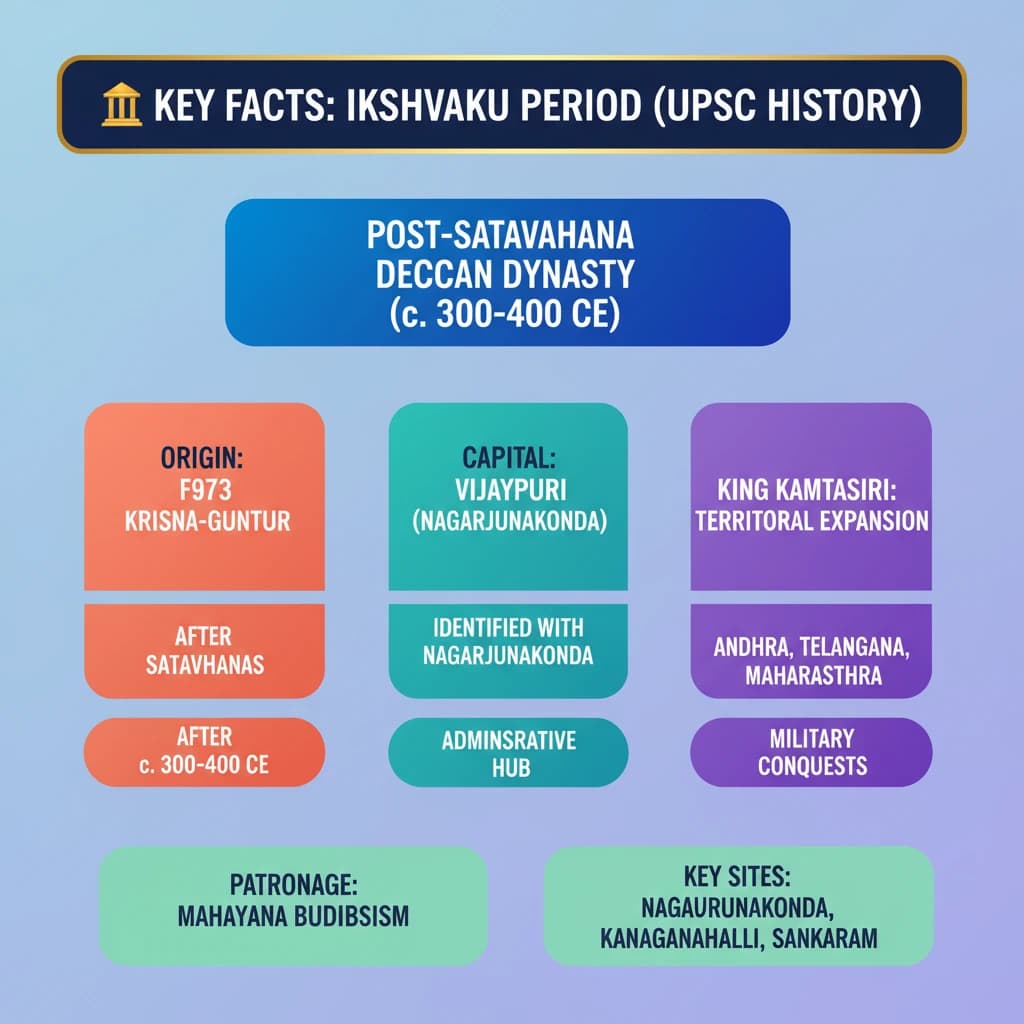
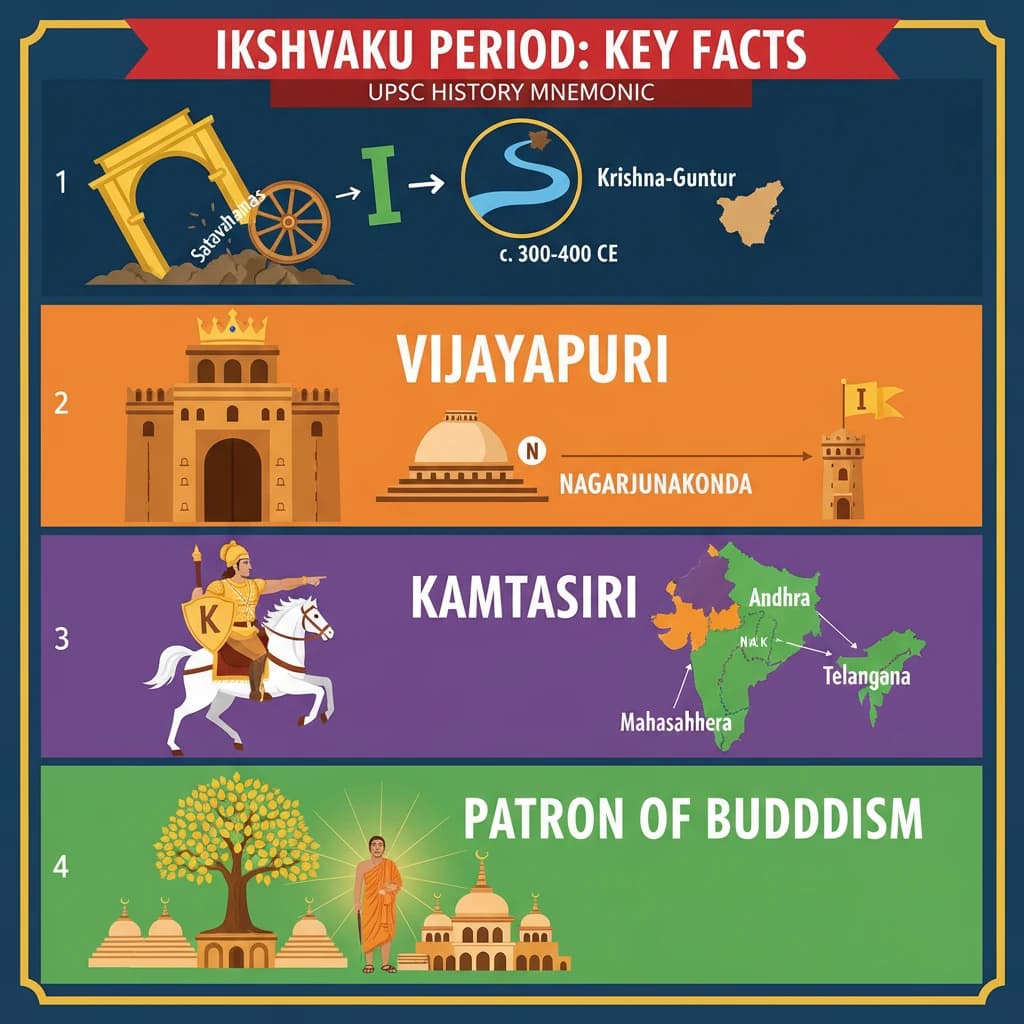
- •Ikshvakus emerged in the Krishna-Guntur region after the decline of the Satavahanas (c. 300-400 CE).
- •Their capital was Vijayapuri, often identified with Nagarjunakonda.
- •King Kamtasiri was instrumental in expanding their territory across parts of Andhra, Telangana, and Maharashtra.
- •The dynasty was a significant patron of Buddhism, leading to the construction of numerous stupas and monasteries.
- •Key Buddhist sites include Nagarjunakonda, Kanaganahalli, and Sankaram.
- •The Ikshvakus were eventually succeeded by the Pallavas.
🧠 Memory Techniques
95% Verified Content
📚 Reference Sources
•NCERT History Textbooks (Ancient India)
•A History of South India by K.A. Nilakanta Sastri