Loading page, please wait…
What are the Key Facts about the Nataraja Statue? - UPSC History
What is What are the Key Facts about the Nataraja Statue? in UPSC History?
What are the Key Facts about the Nataraja Statue? is a key topic under History for UPSC Civil Services Examination. Key points include: Nataraja symbolizes Shiva's cosmic dance of creation, preservation, and destruction.. The iconic Nataraja form evolved during the Chola dynasty (9th-13th CE).. Key symbolic features include Damaru (creation), Agni (destruction), Abhayamudra (protection), and Apasmara (ignorance).. Understanding this topic is essential for both UPSC Prelims and Mains preparation.
Why is What are the Key Facts about the Nataraja Statue? important for UPSC exam?
What are the Key Facts about the Nataraja Statue? is a Medium-level topic in UPSC History. It is tested in both Prelims (factual MCQs) and Mains (analytical answer writing). Previous year UPSC questions have frequently covered aspects of What are the Key Facts about the Nataraja Statue?, making it essential for comprehensive IAS preparation.
How to prepare What are the Key Facts about the Nataraja Statue? for UPSC?
To prepare What are the Key Facts about the Nataraja Statue? for UPSC: (1) Study the comprehensive notes covering all key concepts on Vaidra. (2) Practice previous year questions on this topic. (3) Connect it with current affairs using daily updates. (4) Revise using key takeaways and mind maps available for History. (5) Write practice answers linking What are the Key Facts about the Nataraja Statue? to related GS Paper topics.
Key takeaways of What are the Key Facts about the Nataraja Statue? for UPSC
- Nataraja symbolizes Shiva's cosmic dance of creation, preservation, and destruction.
- The iconic Nataraja form evolved during the Chola dynasty (9th-13th CE).
- Key symbolic features include Damaru (creation), Agni (destruction), Abhayamudra (protection), and Apasmara (ignorance).
- Chola bronzes are renowned for their artistic finesse and spiritual depth.
- A Nataraja replica at CERN signifies the link between ancient philosophy and modern physics.
- Cholas maintained a powerful navy, controlled vital ports, and conducted successful overseas expeditions to Southeast Asia (Rajendra I).
- Chola maritime power secured trade routes and thwarted rivals like the Chinese.
What are the Key Facts about the Nataraja Statue?
Medium⏱️ 8 min read
history
📖 Introduction
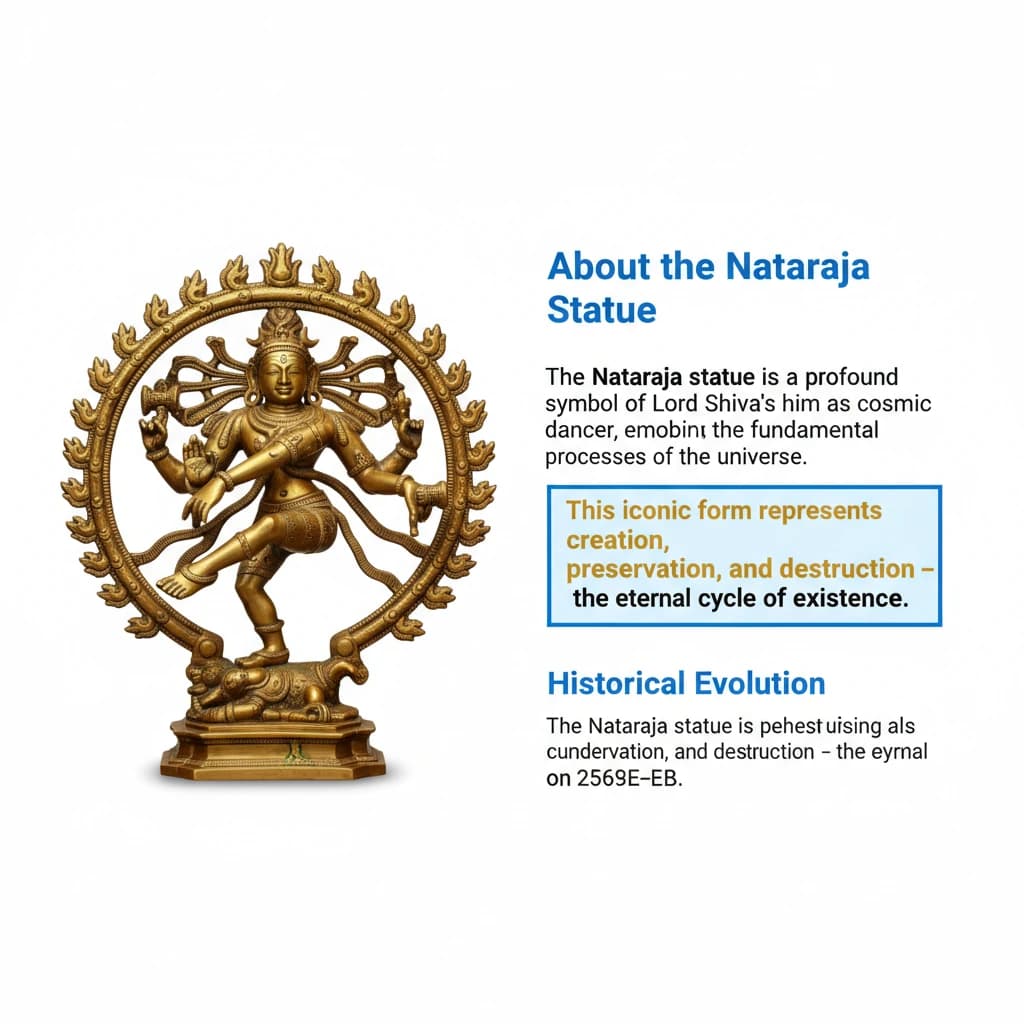
About the Nataraja Statue
The Nataraja statue is a profound symbol of Lord Shiva. It depicts him as the cosmic dancer, embodying the fundamental processes of the universe.
This iconic form represents creation, preservation, and destruction – the eternal cycle of existence.
Historical Evolution
The earliest known sculptures depicting Nataraja can be traced back to the 5th century CE.
However, the world-famous and iconic form of the statue truly evolved and flourished during the reign of the Chola dynasty (9th–13th century CE). This period marked significant artistic and cultural advancements.
The Cosmic Dance: Ananda Tandava
The dance performed by Lord Shiva is known as Ananda Tandava, meaning the "Dance of Bliss."
This dance symbolizes the eternal rhythm of the universe, representing the continuous cycle of creation and destruction, and the perpetual flow of time.
Key Symbolic Features of Nataraja
Each element of the Nataraja statue holds deep symbolic meaning:
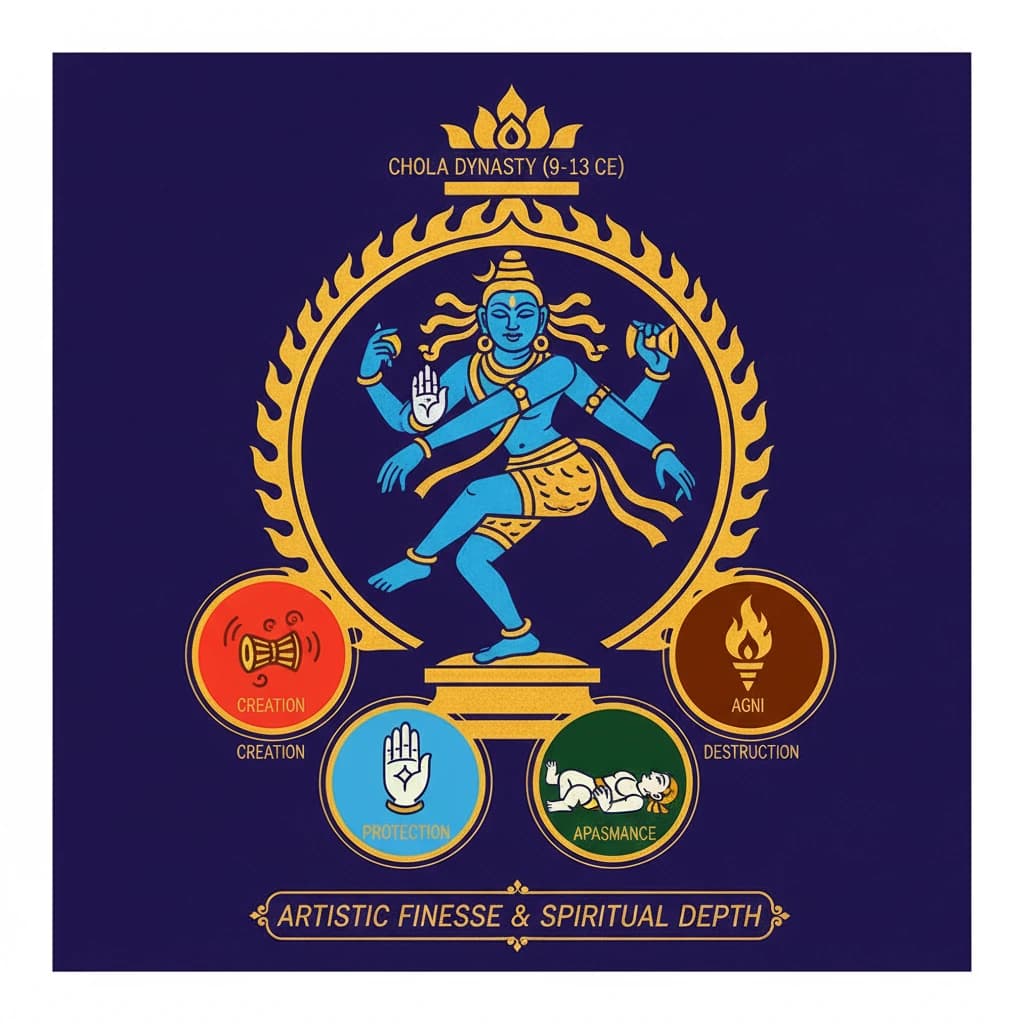
- Flaming Halo (Prabhamandala): This circle of flames represents the entire cosmos and the unending cycle of time, destruction, and renewal.
- Damaru (Upper Right Hand): Shiva holds a small hand drum, symbolizing the first sound of creation (Shabda Brahma) and the fundamental rhythm of the universe.
- Agni (Upper Left Hand): The flame in this hand signifies destruction, marking the inevitable end of every cosmic cycle.
- Abhayamudra (Lower Right Hand): This is a gesture of reassurance and protection, dispelling fear from devotees.
- Left-Hand Gesture: This hand points towards the raised left foot, symbolizing the path to refuge and liberation for the troubled soul.
- Apasmara Purusha: The dwarf figure crushed under Shiva’s right foot represents ignorance or illusion (maya), which misleads humans.
- Raised Left Foot: This elevated foot represents grace and the ultimate path to salvation (moksha).
Chola Dynasty's Contribution
The Chola bronzes, including the Nataraja statue, are celebrated for their exceptional finesse, intricate detailing, and profound spiritual symbolism.
The statues were primarily crafted in bronze, showcasing the advanced expertise of Chola-era metallurgists and artists.
Global Recognition
A significant replica of the Nataraja statue is placed outside CERN (European Organization for Nuclear Research) in Geneva, Switzerland.
This placement symbolizes the cosmic dance of particles in modern physics, drawing a parallel between ancient spiritual symbolism and contemporary scientific understanding. It highlights the interdisciplinary nature of knowledge.
Chola Maritime Prowess
Under Chola rule, a powerful navy was established. This naval strength enabled the Cholas to extend their influence to distant shores.
Their maritime activities were crucial for conquering territories and actively promoting their mercantile interests across the seas.
Key Chola Ports
The Chola dynasty controlled several vital ports that facilitated their extensive trade and naval operations:
- Mamallapuram (Mahabalipuram)
- Kaveripattinam
- Nagapattinam
- Kancheepuram
- Kulachal
- Thootukudi
Southeast Asian Invasions
King Rajendra I spearheaded a significant naval invasion of the Sailendra Empire in Southeast Asia.
This successful campaign brought crucial regions like the Malay Peninsula, Java, and Sumatra under Chola control, expanding their sphere of influence dramatically.
The Cholas also effectively thwarted attempts by the Chinese to disrupt their established trade routes with Southeast Asia, safeguarding their economic dominance.
Advanced Shipbuilding
The sophistication of Chola maritime technology is evidenced by treatises such as Kappal Sastiram.
This ancient text on shipbuilding highlights their advanced knowledge and capabilities in naval architecture and construction.
💡 Key Takeaways
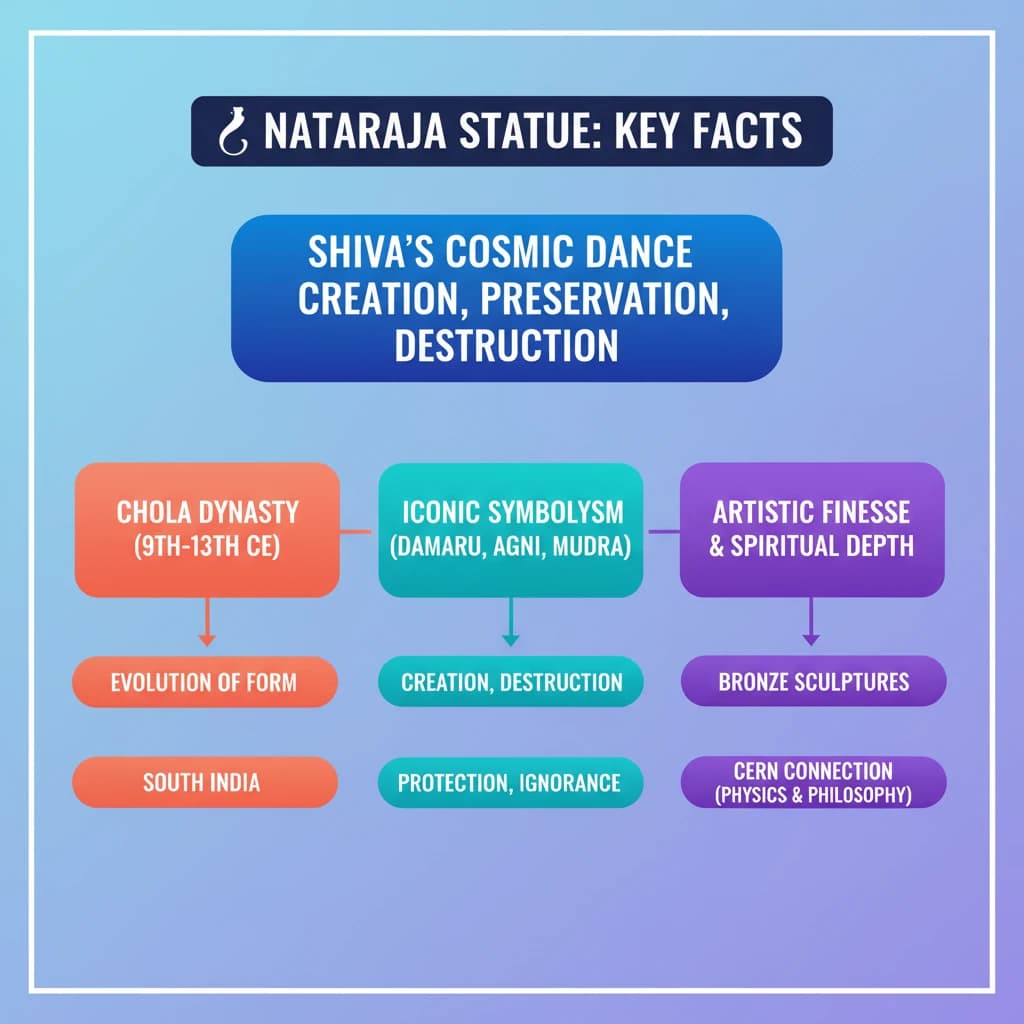
- •Nataraja symbolizes Shiva's cosmic dance of creation, preservation, and destruction.
- •The iconic Nataraja form evolved during the Chola dynasty (9th-13th CE).
- •Key symbolic features include Damaru (creation), Agni (destruction), Abhayamudra (protection), and Apasmara (ignorance).
- •Chola bronzes are renowned for their artistic finesse and spiritual depth.
- •A Nataraja replica at CERN signifies the link between ancient philosophy and modern physics.
- •Cholas maintained a powerful navy, controlled vital ports, and conducted successful overseas expeditions to Southeast Asia (Rajendra I).
- •Chola maritime power secured trade routes and thwarted rivals like the Chinese.
🧠 Memory Techniques
90% Verified Content