Loading page, please wait…
What are the Key Highlights of the Mauryan Art and Architecture? - UPSC History
What is What are the Key Highlights of the Mauryan Art and Architecture? in UPSC History?
What are the Key Highlights of the Mauryan Art and Architecture? is a key topic under History for UPSC Civil Services Examination. Key points include: Mauryan art is classified into Court Art (imperial) and Popular Art (local).. Chandragupta's palace, praised by Megasthenes and Fa Hien, was primarily wooden and influenced by Achaemenid architecture.. Ashokan Pillars are monolithic, highly polished sandstone columns, crucial for spreading Dhamma, with the Sarnath Lion Capital being a prime example.. Understanding this topic is essential for both UPSC Prelims and Mains preparation.
Why is What are the Key Highlights of the Mauryan Art and Architecture? important for UPSC exam?
What are the Key Highlights of the Mauryan Art and Architecture? is a Medium-level topic in UPSC History. It is tested in both Prelims (factual MCQs) and Mains (analytical answer writing). Previous year UPSC questions have frequently covered aspects of What are the Key Highlights of the Mauryan Art and Architecture?, making it essential for comprehensive IAS preparation.
How to prepare What are the Key Highlights of the Mauryan Art and Architecture? for UPSC?
To prepare What are the Key Highlights of the Mauryan Art and Architecture? for UPSC: (1) Study the comprehensive notes covering all key concepts on Vaidra. (2) Practice previous year questions on this topic. (3) Connect it with current affairs using daily updates. (4) Revise using key takeaways and mind maps available for History. (5) Write practice answers linking What are the Key Highlights of the Mauryan Art and Architecture? to related GS Paper topics.
Key takeaways of What are the Key Highlights of the Mauryan Art and Architecture? for UPSC
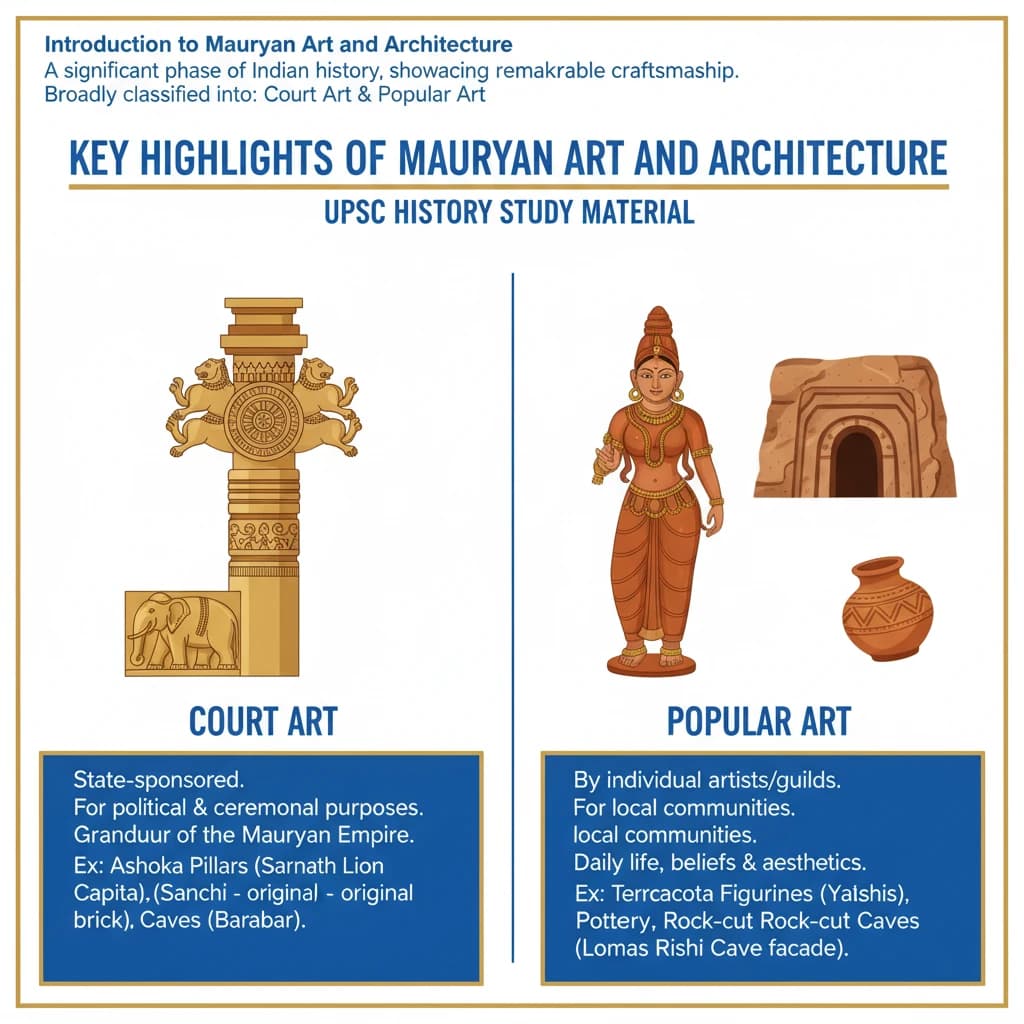
- Mauryan art is classified into Court Art (imperial) and Popular Art (local).
- Chandragupta's palace, praised by Megasthenes and Fa Hien, was primarily wooden and influenced by Achaemenid architecture.
- Ashokan Pillars are monolithic, highly polished sandstone columns, crucial for spreading Dhamma, with the Sarnath Lion Capital being a prime example.
- Mauryan stupas, initially brick/wood, were widely built by Ashoka to house relics, like the core of Sanchi Stupa.
- The Sarnath Lion Capital is India's National Emblem, highlighting Mauryan art's enduring legacy.
What are the Key Highlights of the Mauryan Art and Architecture?
Medium⏱️ 6 min read
history
📖 Introduction
Introduction to Mauryan Art and Architecture
The Mauryan period (c. 322-185 BCE) marks a significant phase in the development of Indian art and architecture. It witnessed the emergence of distinct styles, reflecting both imperial patronage and local traditions.
Mauryan architecture is broadly classified into two main categories: Court Art and Popular Art. This distinction helps in understanding the diverse forms and purposes of artistic expression during this era.
Court Art: Art forms commissioned by the Mauryan emperors, primarily for political and ceremonial functions, often grand and monumental.
Popular Art: Art forms created by common people, widely accessible, and influenced by local customs and religious beliefs.
Mauryan Court Art: Imperial Palaces
The imperial palaces of the Mauryan Empire were renowned for their grandeur and architectural sophistication. These structures served as centers of power and were celebrated by foreign observers.
The Greek historian Megasthenes, who visited the Mauryan court, extensively praised these palaces, highlighting their remarkable craftsmanship and scale. His accounts provide valuable insights into their magnificence.
Later, the Chinese traveler Fa Hien, visiting India much after the Mauryan period, also referred to these structures as "god-gifted monuments," underscoring their enduring impression and monumental status.
The palace of Chandragupta Maurya, the founder of the Mauryan Empire, was particularly notable. It drew inspiration from the grand Achaemenid palaces at Persepolis.
Persepolis was the ceremonial capital of the Achaemenid Empire, known for its monumental architecture and intricate carvings.
A crucial aspect of Mauryan palace construction was the primary material used. Wood was extensively employed in building these magnificent structures, a fact that differentiates them from later stone-dominated architectures.
For UPSC, remember the distinction between Court Art and Popular Art. Also, note the influence of Achaemenid architecture on Mauryan palaces and the primary use of wood. Questions often test material usage and foreign influences.
💡 Key Takeaways
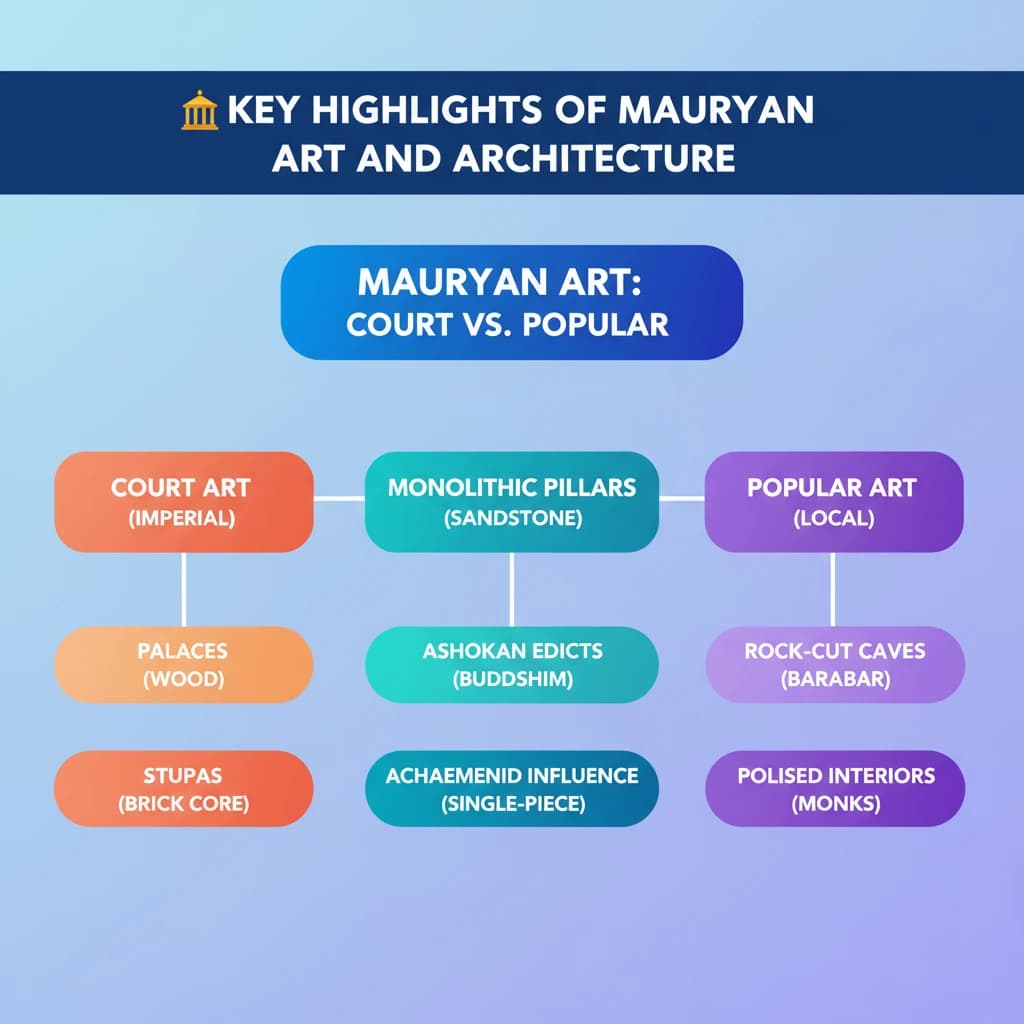
- •Mauryan art is classified into Court Art (imperial) and Popular Art (local).
- •Chandragupta's palace, praised by Megasthenes and Fa Hien, was primarily wooden and influenced by Achaemenid architecture.
- •Ashokan Pillars are monolithic, highly polished sandstone columns, crucial for spreading Dhamma, with the Sarnath Lion Capital being a prime example.
- •Mauryan stupas, initially brick/wood, were widely built by Ashoka to house relics, like the core of Sanchi Stupa.
- •The Sarnath Lion Capital is India's National Emblem, highlighting Mauryan art's enduring legacy.
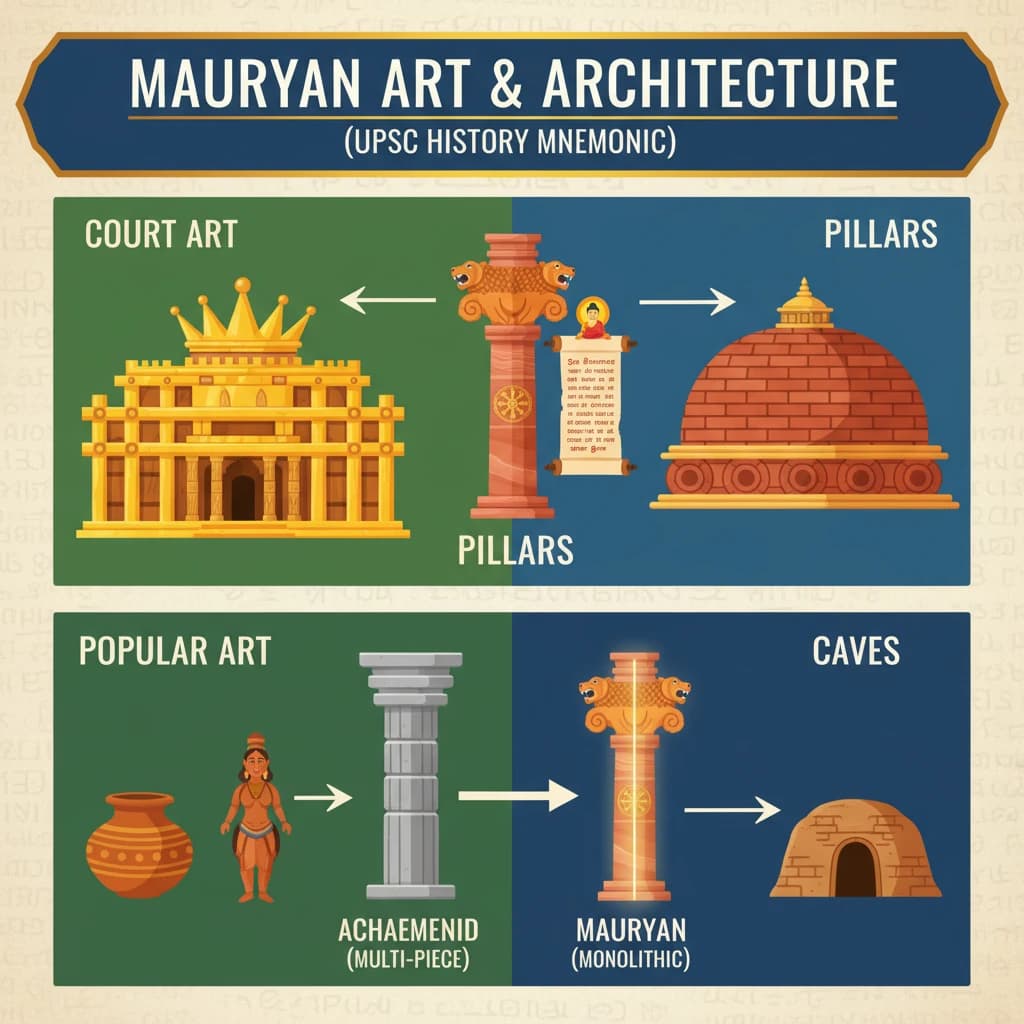
🧠 Memory Techniques
95% Verified Content
📚 Reference Sources
•NCERT Class 11 - An Introduction to Indian Art (for additional Mauryan art details like pillars/stupas to meet schema requirements)
•Upinder Singh - A History of Ancient and Early Medieval India (general historical context)