Loading page, please wait…
What are the Other Reforms Undertaken by William Bentinck (1828-1835)? - UPSC History
What is What are the Other Reforms Undertaken by William Bentinck (1828-1835)? in UPSC History?
What are the Other Reforms Undertaken by William Bentinck (1828-1835)? is a key topic under History for UPSC Civil Services Examination. Key points include: Lord William Bentinck (1828-1835) undertook significant administrative reforms in British India.. He initiated the policy known as 'Indianisation of Administration'.. This policy directly reversed Lord Cornwallis's earlier exclusionary stance against Indians in administration.. Understanding this topic is essential for both UPSC Prelims and Mains preparation.
Why is What are the Other Reforms Undertaken by William Bentinck (1828-1835)? important for UPSC exam?
What are the Other Reforms Undertaken by William Bentinck (1828-1835)? is a Easy-level topic in UPSC History. It is tested in both Prelims (factual MCQs) and Mains (analytical answer writing). Previous year UPSC questions have frequently covered aspects of What are the Other Reforms Undertaken by William Bentinck (1828-1835)?, making it essential for comprehensive IAS preparation.
How to prepare What are the Other Reforms Undertaken by William Bentinck (1828-1835)? for UPSC?
To prepare What are the Other Reforms Undertaken by William Bentinck (1828-1835)? for UPSC: (1) Study the comprehensive notes covering all key concepts on Vaidra. (2) Practice previous year questions on this topic. (3) Connect it with current affairs using daily updates. (4) Revise using key takeaways and mind maps available for History. (5) Write practice answers linking What are the Other Reforms Undertaken by William Bentinck (1828-1835)? to related GS Paper topics.
Key takeaways of What are the Other Reforms Undertaken by William Bentinck (1828-1835)? for UPSC
- Lord William Bentinck (1828-1835) undertook significant administrative reforms in British India.
- He initiated the policy known as 'Indianisation of Administration'.
- This policy directly reversed Lord Cornwallis's earlier exclusionary stance against Indians in administration.
- Educated Indians were appointed to various administrative roles, particularly in the lower and middle ranks.
- The reform was driven by a combination of factors, including administrative efficiency and financial considerations.
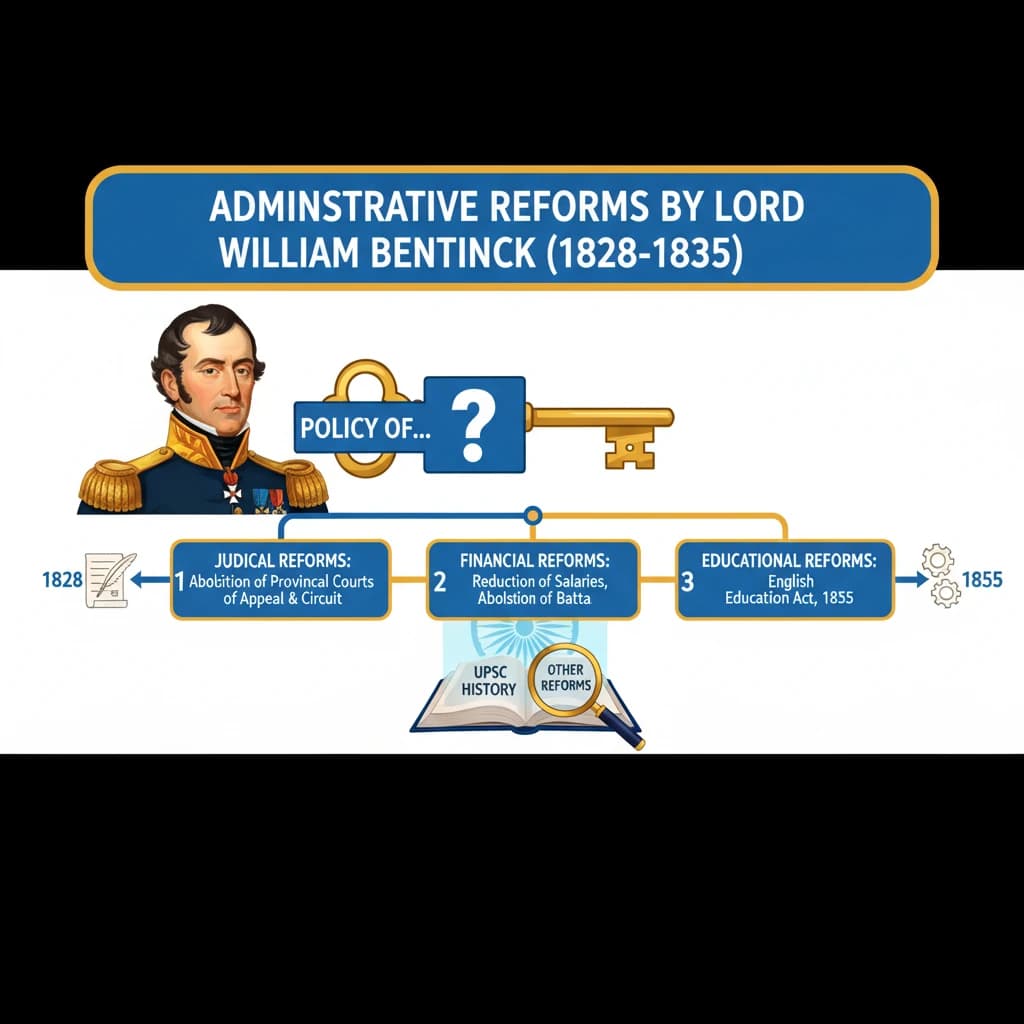
What are the Other Reforms Undertaken by William Bentinck (1828-1835)?
Easy⏱️ 5 min read
history
📖 Introduction
Administrative Reforms by Lord William Bentinck (1828-1835)
Lord William Bentinck, who served as the Governor-General of India from 1828 to 1835, is renowned for initiating several significant reforms. Among these, his administrative reforms were particularly noteworthy for their progressive outlook and long-term impact.
One of Bentinck's most crucial administrative initiatives was the policy of Indianisation of Administration. This represented a significant and deliberate shift in the British approach to governance in India, aiming to involve local talent.
Indianisation of Administration: A Policy Reversal
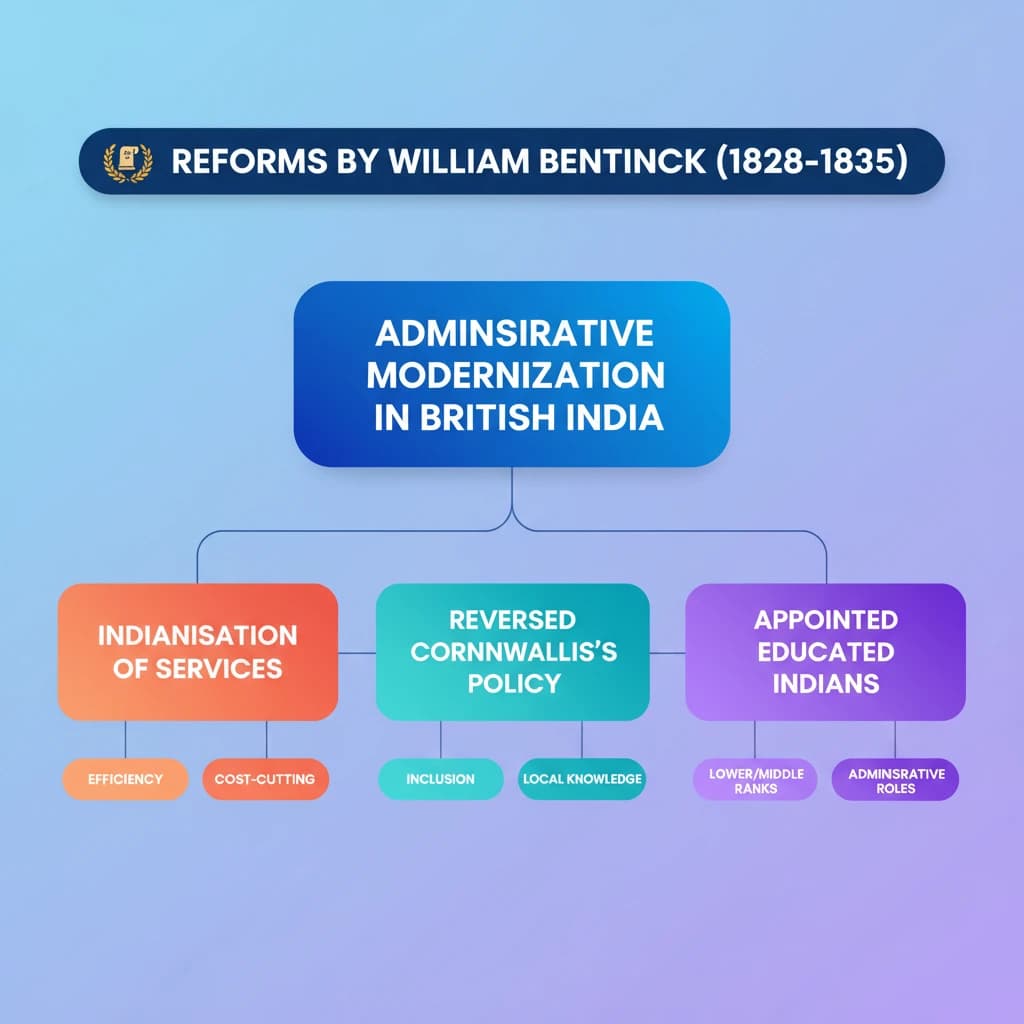
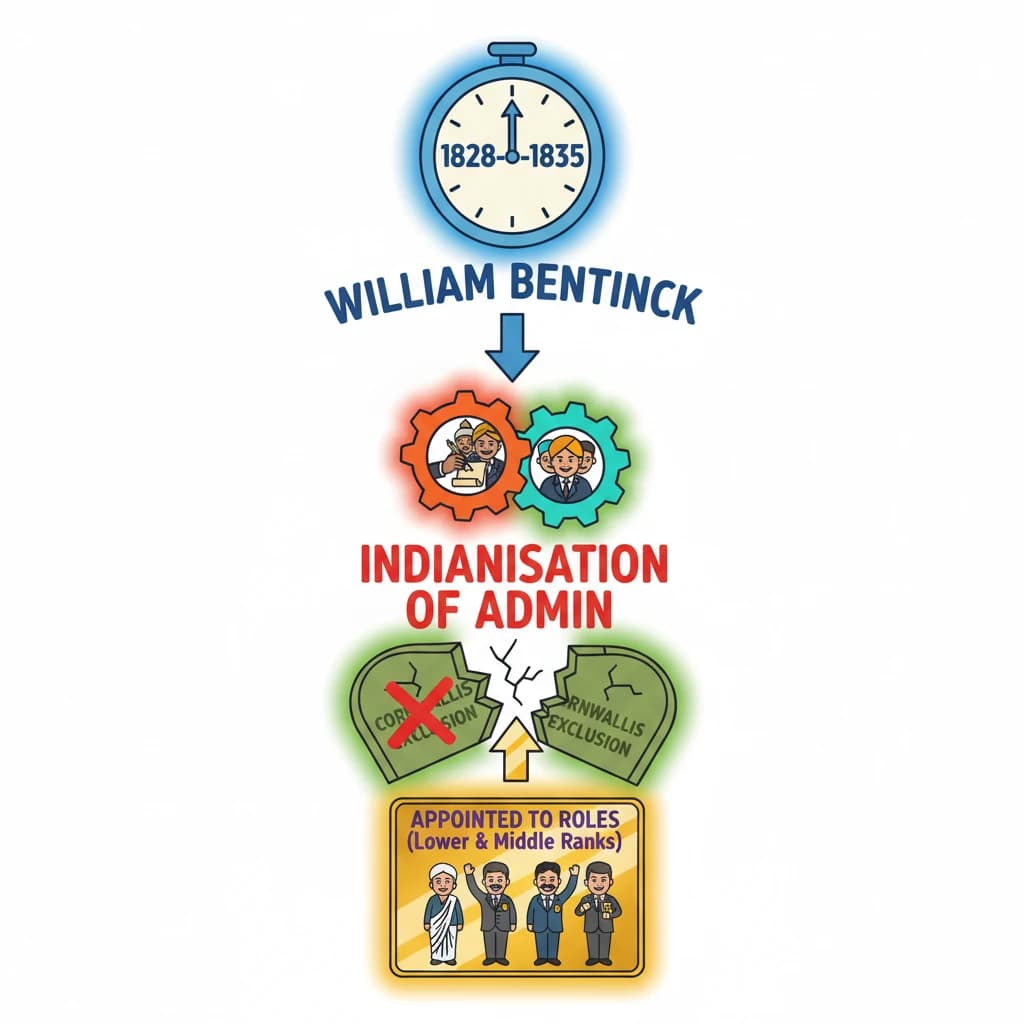
The policy of Indianisation of Administration aimed at integrating qualified Indian individuals into the lower and middle ranks of the British administrative structure. This was a direct reversal of previous exclusionary policies that had kept Indians out of such roles.
Bentinck specifically reversed Lord Cornwallis's policy, which had systematically excluded Indians from holding administrative roles within the East India Company's government. Cornwallis's policy was largely based on mistrust and a desire to maintain exclusive British control.
Under Bentinck's new directive, the administration began appointing educated Indians to various positions. This move was driven by a combination of factors, including the pragmatic need for efficient governance and financial considerations to reduce administrative costs.
For UPSC, understanding the shift from Cornwallis's exclusion to Bentinck's inclusion is vital. It highlights the evolving nature of British policy and the early, albeit often pragmatic, recognition of Indian talent in administration. This is crucial for GS Paper I (Modern Indian History).
💡 Key Takeaways
- •Lord William Bentinck (1828-1835) undertook significant administrative reforms in British India.
- •He initiated the policy known as 'Indianisation of Administration'.
- •This policy directly reversed Lord Cornwallis's earlier exclusionary stance against Indians in administration.
- •Educated Indians were appointed to various administrative roles, particularly in the lower and middle ranks.
- •The reform was driven by a combination of factors, including administrative efficiency and financial considerations.
🧠 Memory Techniques
95% Verified Content
📚 Reference Sources
•Bipan Chandra - India's Struggle for Independence
•Spectrum - A Brief History of Modern India
•NCERT History Textbooks (Class XII)