Loading page, please wait…
What are the Other Tribal Revolts in Chota Nagpur Region? - UPSC History
What is What are the Other Tribal Revolts in Chota Nagpur Region? in UPSC History?
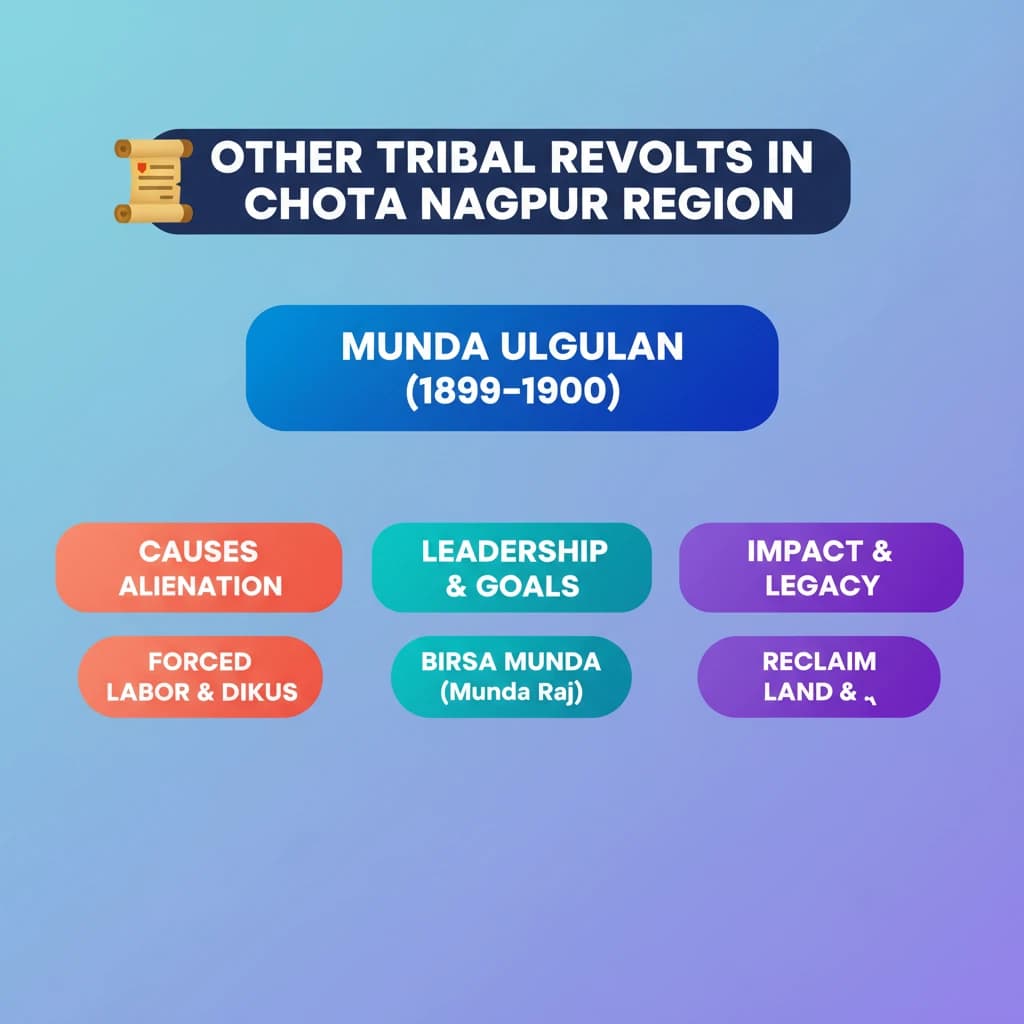
What are the Other Tribal Revolts in Chota Nagpur Region? is a key topic under History for UPSC Civil Services Examination. Key points include: The Munda Ulgulan was a significant tribal revolt led by Birsa Munda in the Chota Nagpur region (1899-1900).. Key causes included land alienation (Khuntkatti system disruption), forced labor ('beth begari'), exploitation by Dikus (outsiders), and cultural interference by missionaries.. Birsa Munda aimed to reclaim Munda land rights, restore traditional systems, and establish an independent Munda Raj.. Understanding this topic is essential for both UPSC Prelims and Mains preparation.
Why is What are the Other Tribal Revolts in Chota Nagpur Region? important for UPSC exam?
What are the Other Tribal Revolts in Chota Nagpur Region? is a Medium-level topic in UPSC History. It is tested in both Prelims (factual MCQs) and Mains (analytical answer writing). Previous year UPSC questions have frequently covered aspects of What are the Other Tribal Revolts in Chota Nagpur Region?, making it essential for comprehensive IAS preparation.
How to prepare What are the Other Tribal Revolts in Chota Nagpur Region? for UPSC?
To prepare What are the Other Tribal Revolts in Chota Nagpur Region? for UPSC: (1) Study the comprehensive notes covering all key concepts on Vaidra. (2) Practice previous year questions on this topic. (3) Connect it with current affairs using daily updates. (4) Revise using key takeaways and mind maps available for History. (5) Write practice answers linking What are the Other Tribal Revolts in Chota Nagpur Region? to related GS Paper topics.
Key takeaways of What are the Other Tribal Revolts in Chota Nagpur Region? for UPSC
- The Munda Ulgulan was a significant tribal revolt led by Birsa Munda in the Chota Nagpur region (1899-1900).
- Key causes included land alienation (Khuntkatti system disruption), forced labor ('beth begari'), exploitation by Dikus (outsiders), and cultural interference by missionaries.
- Birsa Munda aimed to reclaim Munda land rights, restore traditional systems, and establish an independent Munda Raj.
- The rebellion's lasting impact was the Chotanagpur Tenancy Act (1908), which protected tribal land from transfer to non-tribals.
- These revolts highlight the deep-seated grievances of tribal communities against colonial and exploitative forces, influencing modern tribal rights legislation.

What are the Other Tribal Revolts in Chota Nagpur Region?
Medium⏱️ 8 min read
history
📖 Introduction
Introduction to Tribal Revolts in Chota Nagpur
The Chota Nagpur region has historically been a hotbed of tribal resistance against external exploitation. These revolts, often rooted in land grievances and cultural interference, played a crucial role in the broader struggle against colonial rule.
Tribal uprisings in this region were not isolated incidents but a series of movements reflecting deep-seated discontent among indigenous communities.
The Munda Rebellion (Ulgulan)
The Munda Ulgulan, meaning 'Great Tumult', was one of the most significant tribal revolts during the period leading up to Indian independence. It showcased the immense capacity of tribal communities to organize and protest against severe exploitation.
Context and Causes of the Munda Rebellion
The Munda tribe, primarily agrarian, inhabited the Chota Nagpur plateau in present-day Jharkhand. They traditionally followed the 'Khuntkatti' system of communal land ownership.
However, their way of life was severely disrupted by external forces. They faced systematic oppression from various groups.
- British colonists introduced new land revenue systems.
- Zamindars (landlords) encroached upon tribal lands.
- Moneylenders exploited them through usurious loans.
- Missionaries interfered with their traditional religious and social customs.
The core grievances included the forcible seizure of tribal lands and the imposition of forced labor, known as 'beth begari'.
Leadership and Objectives of the Movement
The movement was spearheaded by Birsa Munda, a charismatic leader who emerged as a prophet-like figure for his people. He galvanized the Munda community with his vision of an independent Munda Raj.
Birsa Munda's primary objectives were clear: to reclaim the tribe's lost land rights and restore their traditional social and religious systems. He advocated for a return to ancestral ways and resistance against foreign intrusions.
Impact and Legacy: The Chotanagpur Tenancy Act, 1908
Although the rebellion was eventually suppressed and Birsa Munda was captured, it had a profound and lasting impact. The British administration was forced to acknowledge the deep-seated issues.
A direct result of the Birsa Movement was the enactment of the Chotanagpur Tenancy Act (CN Act) in 1908. This landmark legislation aimed to protect tribal land rights.
The CN Act prohibited the transfer of tribal land to non-tribals, thereby offering a crucial legal safeguard against further alienation of indigenous territories. It remains a significant protective measure for tribal communities in Jharkhand.
The Munda Ulgulan is a classic example of how tribal movements, despite being suppressed, often led to significant legislative changes. UPSC often asks about the causes, leaders, and consequences of such revolts (e.g., GS Paper I - History).
💡 Key Takeaways
- •The Munda Ulgulan was a significant tribal revolt led by Birsa Munda in the Chota Nagpur region (1899-1900).
- •Key causes included land alienation (Khuntkatti system disruption), forced labor ('beth begari'), exploitation by Dikus (outsiders), and cultural interference by missionaries.
- •Birsa Munda aimed to reclaim Munda land rights, restore traditional systems, and establish an independent Munda Raj.
- •The rebellion's lasting impact was the Chotanagpur Tenancy Act (1908), which protected tribal land from transfer to non-tribals.
- •These revolts highlight the deep-seated grievances of tribal communities against colonial and exploitative forces, influencing modern tribal rights legislation.
🧠 Memory Techniques

95% Verified Content
📚 Reference Sources
•NCERT History Textbooks (Class XII - Themes in Indian History Part III)
•Bipan Chandra - India's Struggle for Independence