Loading page, please wait…
What is Jainism? - UPSC History
What is What is Jainism? in UPSC History?
What is Jainism? is a key topic under History for UPSC Civil Services Examination. Key points include: Jainism is based on 'Jina' (conqueror) and propagated by 'Tirthankaras' (ford-makers), with Mahavira being the 24th.. Central tenet is Ahimsa (non-violence) to all living beings.. Five Mahavratas (vows): Ahimsa, Satya, Asteya, Aparigraha, and Brahmacharya (added by Mahavira).. Understanding this topic is essential for both UPSC Prelims and Mains preparation.
Why is What is Jainism? important for UPSC exam?
What is Jainism? is a Medium-level topic in UPSC History. It is tested in both Prelims (factual MCQs) and Mains (analytical answer writing). Previous year UPSC questions have frequently covered aspects of What is Jainism?, making it essential for comprehensive IAS preparation.
How to prepare What is Jainism? for UPSC?
To prepare What is Jainism? for UPSC: (1) Study the comprehensive notes covering all key concepts on Vaidra. (2) Practice previous year questions on this topic. (3) Connect it with current affairs using daily updates. (4) Revise using key takeaways and mind maps available for History. (5) Write practice answers linking What is Jainism? to related GS Paper topics.
Key takeaways of What is Jainism? for UPSC
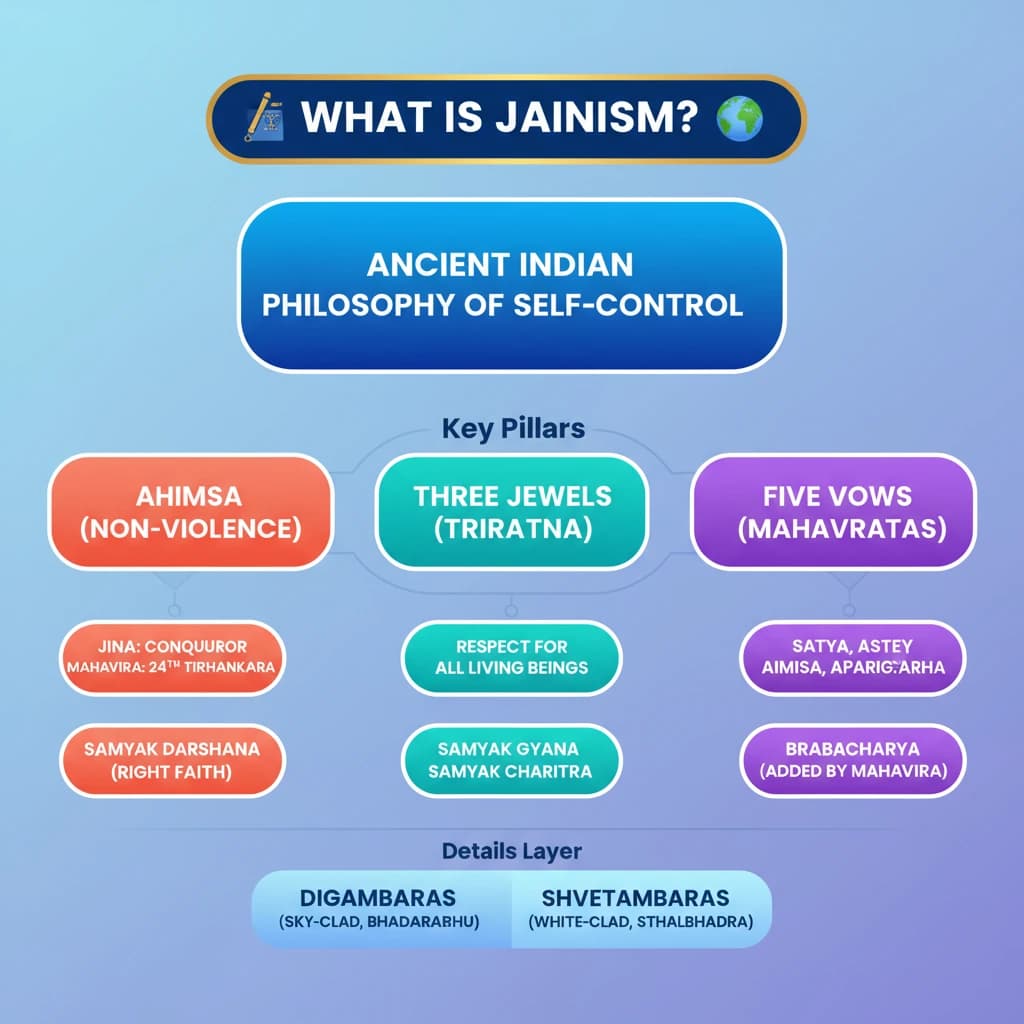
- Jainism is based on 'Jina' (conqueror) and propagated by 'Tirthankaras' (ford-makers), with Mahavira being the 24th.
- Central tenet is Ahimsa (non-violence) to all living beings.
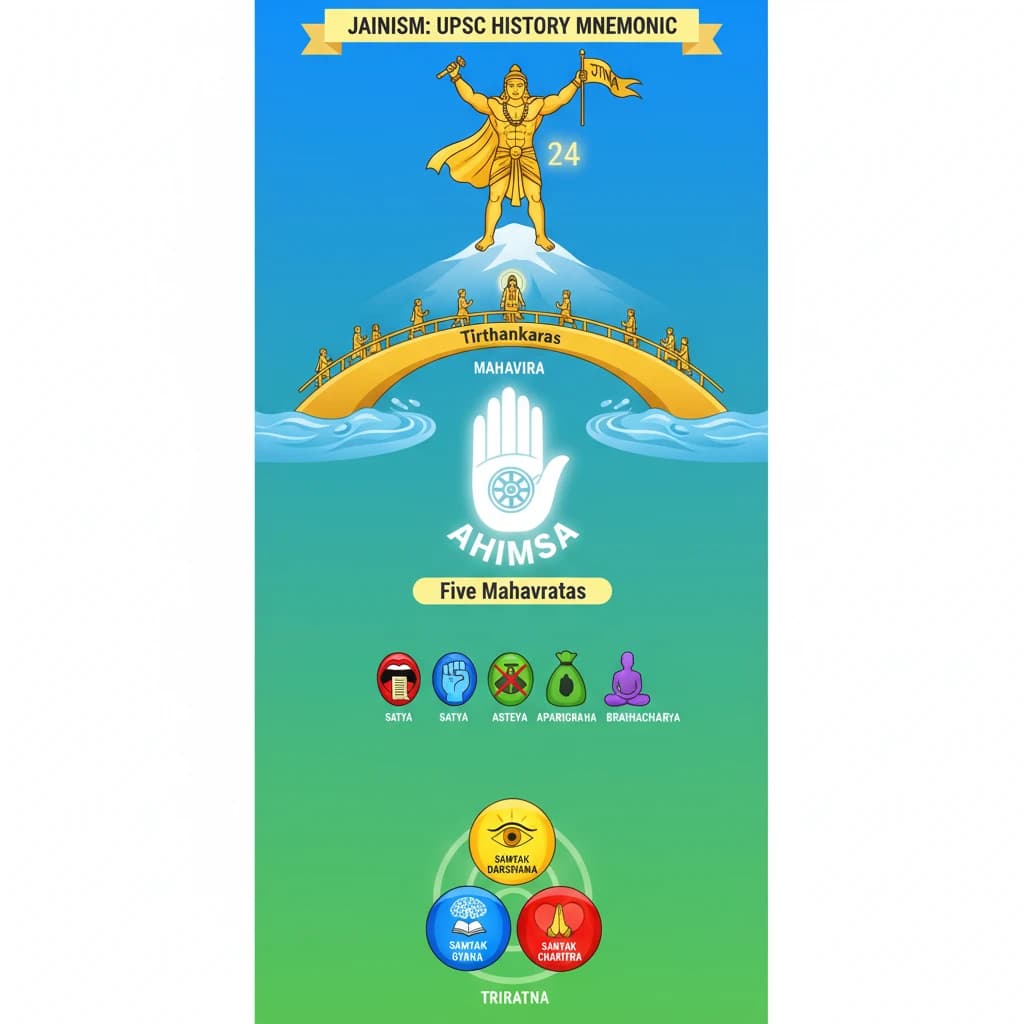
- Five Mahavratas (vows): Ahimsa, Satya, Asteya, Aparigraha, and Brahmacharya (added by Mahavira).
- Three Jewels (Triratna): Samyak Darshana, Samyak Gyana, Samyak Charitra.
- Divided into Shvetambaras (white-clad, Sthalabhadra) and Digambaras (sky-clad, Bhadrabahu).
- Belief in animated world, karma, and liberation through asceticism and penance.
- Santhara/Sallekhana is a ritual fast unto death, currently sub-judice in the Supreme Court.
What is Jainism?
Medium⏱️ 6 min read
history
📖 Introduction
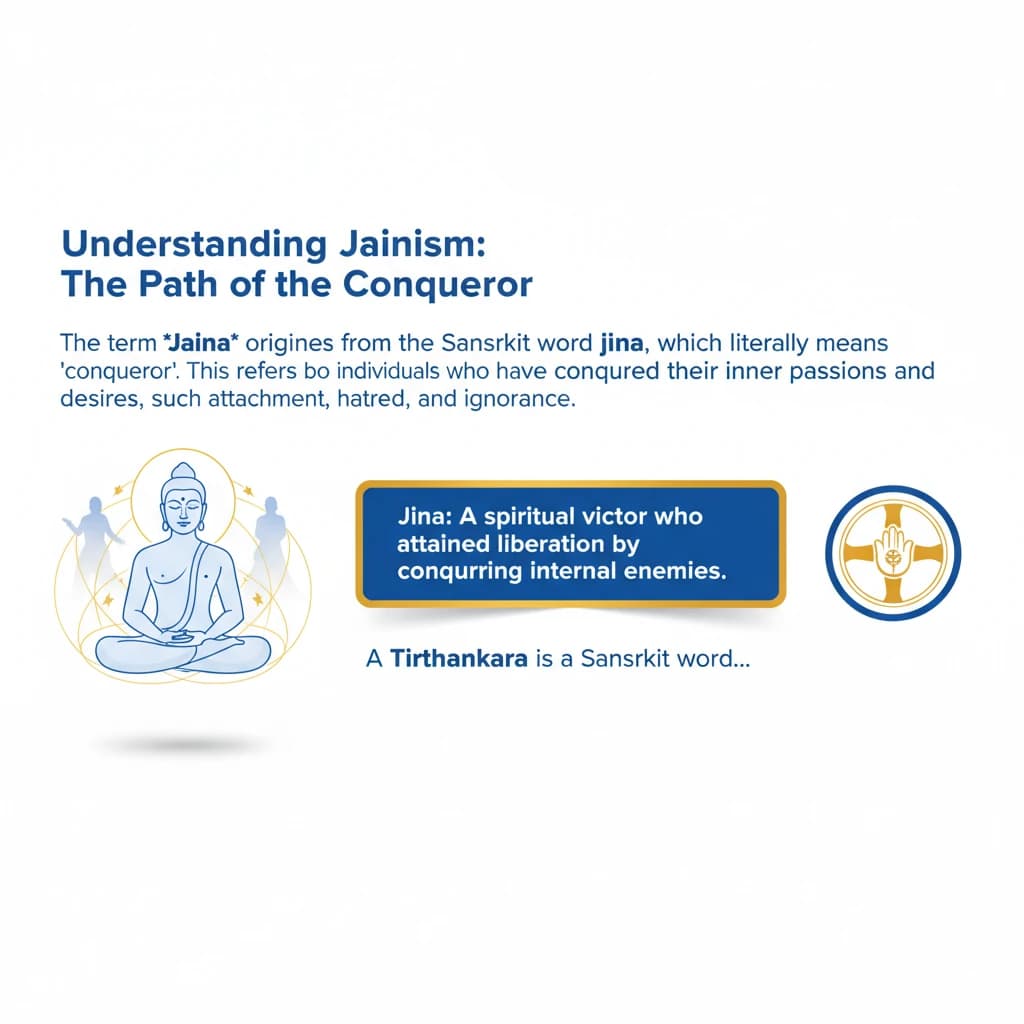
Understanding Jainism: The Path of the Conqueror
The term Jaina originates from the Sanskrit word jina, which literally means 'conqueror'. This refers to individuals who have conquered their inner passions and desires, such as attachment, hatred, and ignorance.
Jina: A spiritual victor who has attained liberation by conquering internal enemies.
A Tirthankara is a Sanskrit word meaning 'ford maker'. In Jain philosophy, a Tirthankara is an enlightened being who has successfully crossed the river of earthly life, guiding others across the perpetual flow of birth and rebirth.
Tirthankara: A spiritual teacher and saviour who shows the path to liberation (moksha).
Core Principle: Ahimsa (Non-violence)
Jainism places paramount importance on Ahimsa, or non-violence. This principle extends not only to humans but to all living beings, reflecting a deep respect for life in its myriad forms.
Ahimsa: The fundamental ethical principle of non-harm to any living being.
The Five Mahavratas (Great Vows)
Jainism prescribes five great vows, known as Mahavratas, for its ascetics. These vows are central to the ethical conduct required for spiritual progress.
- Ahimsa (Non-violence): Not to cause harm to any living being.
- Satya (Truth): To speak the truth and be honest in all dealings.
- Asteya or Acharya (Non-stealing): Not to take anything that is not freely given.
- Aparigraha (Non-attachment/Non-possession): To limit possessions and detach from worldly desires.
- Brahmacharya (Celibacy/Chastity): To practice sexual restraint.
UPSC Insight: It is crucial to remember that the vow of Brahmacharya was specifically added by Mahavira, the 24th Tirthankara, to the existing four vows.
The Three Jewels (Triratna) of Jainism
The path to liberation in Jainism is encapsulated in its three jewels, or Triratna. These represent the right attitude, knowledge, and conduct necessary for spiritual emancipation.
- Samyak Darshana (Right Faith): Believing in the truths of Jainism and its Tirthankaras.
- Samyak Gyana (Right Knowledge): Having accurate and complete knowledge of Jain philosophy.
- Samyak Charitra (Right Conduct): Following the ethical principles and vows of Jainism.
Sectarian Division: Shvetambaras and Digambaras
Over time, Jainism experienced a significant schism, leading to the formation of two major sects. This division arose primarily due to differing interpretations of monastic practices and rules.
Shvetambaras: Led by Sthalabhadra, they wear white clothes. They believe women can achieve liberation.
Digambaras: Led by Bhadrabahu, they are 'sky-clad' (naked). They believe women cannot achieve liberation without being reborn as men.
UPSC Focus: Understanding the key differences between Shvetambaras and Digambaras, especially regarding clothing and the status of women, is a frequently tested concept in GS Paper I.
Core Philosophical Tenets
A fundamental idea in Jainism is that the entire world is animated. This means that even seemingly inanimate objects like stones, rocks, and water are believed to possess life and consciousness.
Central to Jain philosophy is the principle of non-injury to living beings. This extends to humans, animals, plants, and even insects, dictating a lifestyle of minimal harm.
According to Jain teachings, the soul's journey through the cycle of birth and rebirth (samsara) is determined by karma. Actions, both good and bad, accumulate karma, which clings to the soul.
To achieve the liberation of the soul (moksha) and free oneself from the cycle of karma, asceticism and intense penance are deemed essential. These practices help shed accumulated karmic particles.
Santhara/Sallekhana: Fasting Unto Death
The practice of Santhara (or Sallekhana) is a significant aspect of Jainism. It is a ritual of fasting unto death, undertaken voluntarily by individuals who feel they have completed their life's purpose or are nearing the end of their natural life.
Santhara: Term used by Shvetambara Jains for the ritual fast unto death.
Sallekhana: Term used by Digambara Jains for the same ritual fast unto death.
Legal Context: The practice of Santhara became a subject of legal debate in the Nikhil Soni vs Union Of India Case. The Rajasthan High Court declared it an offense punishable under the Indian Penal Code (IPC). However, the matter is currently sub-judice in the Supreme Court, highlighting a conflict between religious freedom and the right to life.
💡 Key Takeaways
- •Jainism is based on 'Jina' (conqueror) and propagated by 'Tirthankaras' (ford-makers), with Mahavira being the 24th.
- •Central tenet is Ahimsa (non-violence) to all living beings.
- •Five Mahavratas (vows): Ahimsa, Satya, Asteya, Aparigraha, and Brahmacharya (added by Mahavira).
- •Three Jewels (Triratna): Samyak Darshana, Samyak Gyana, Samyak Charitra.
- •Divided into Shvetambaras (white-clad, Sthalabhadra) and Digambaras (sky-clad, Bhadrabahu).
- •Belief in animated world, karma, and liberation through asceticism and penance.
- •Santhara/Sallekhana is a ritual fast unto death, currently sub-judice in the Supreme Court.
🧠 Memory Techniques
98% Verified Content