Loading page, please wait…
What is Megalithic Culture? - UPSC History
What is What is Megalithic Culture? in UPSC History?
What is Megalithic Culture? is a key topic under History for UPSC Civil Services Examination. Key points include: Megalithic Culture is defined by large stone structures (megaliths).. Megaliths served as burials, commemorative sites, or ritualistic places.. In South India, megalithic cultures are dated 3rd century BC to 1st century AD, based on Brahmagiri excavation.. Understanding this topic is essential for both UPSC Prelims and Mains preparation.
Why is What is Megalithic Culture? important for UPSC exam?
What is Megalithic Culture? is a Easy-level topic in UPSC History. It is tested in both Prelims (factual MCQs) and Mains (analytical answer writing). Previous year UPSC questions have frequently covered aspects of What is Megalithic Culture?, making it essential for comprehensive IAS preparation.
How to prepare What is Megalithic Culture? for UPSC?
To prepare What is Megalithic Culture? for UPSC: (1) Study the comprehensive notes covering all key concepts on Vaidra. (2) Practice previous year questions on this topic. (3) Connect it with current affairs using daily updates. (4) Revise using key takeaways and mind maps available for History. (5) Write practice answers linking What is Megalithic Culture? to related GS Paper topics.
Key takeaways of What is Megalithic Culture? for UPSC
- Megalithic Culture is defined by large stone structures (megaliths).
- Megaliths served as burials, commemorative sites, or ritualistic places.
- In South India, megalithic cultures are dated 3rd century BC to 1st century AD, based on Brahmagiri excavation.
- Indicates advanced social organization and engineering skills in prehistoric societies.
- Crucial for understanding the transition from Neolithic to Iron Age in various regions.
What is Megalithic Culture?
Easy⏱️ 5 min read
history
📖 Introduction
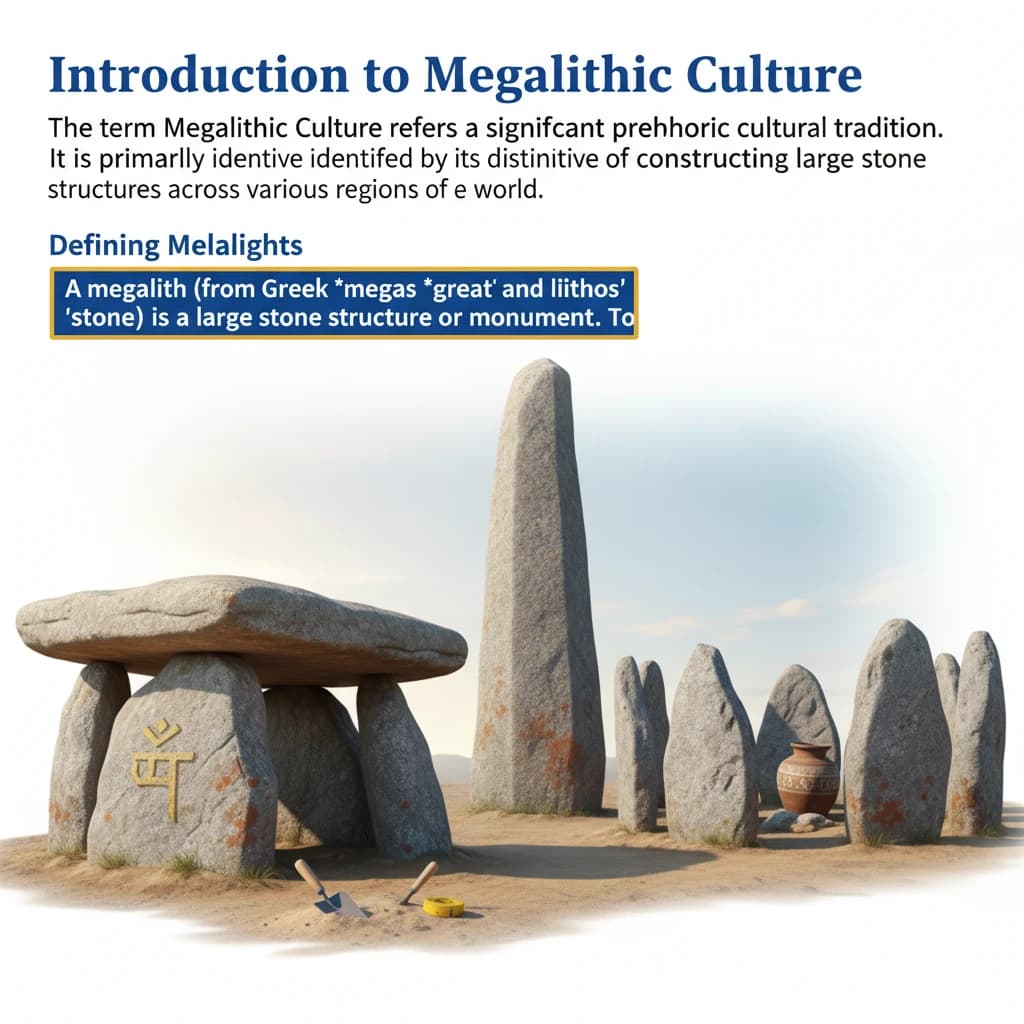
Introduction to Megalithic Culture
The term Megalithic Culture refers to a significant prehistoric cultural tradition. It is primarily identified by its distinctive practice of constructing large stone structures across various regions of the world.
Defining Megaliths
A megalith (from Greek megas 'great' and lithos 'stone') is a large stone structure or monument. These structures were typically built without mortar or cement, showcasing advanced prehistoric engineering skills.
These monuments served diverse purposes, including burial sites, commemorative structures, and sometimes astronomical observatories. Their sheer scale indicates organized communal effort and a complex social structure.
Chronology of Megalithic Cultures in India
The dating of Megalithic Cultures varies significantly across different geographical regions. In South India, specific archaeological evidence provides a clear chronological framework.
Based on the findings from the Brahmagiri excavation, the megalithic cultures of South India are dated to a period spanning from the 3rd century BC to the 1st century AD.
Understanding the chronology and key excavation sites like Brahmagiri is crucial for UPSC Prelims, especially for questions related to ancient Indian history and archaeological periods.
💡 Key Takeaways
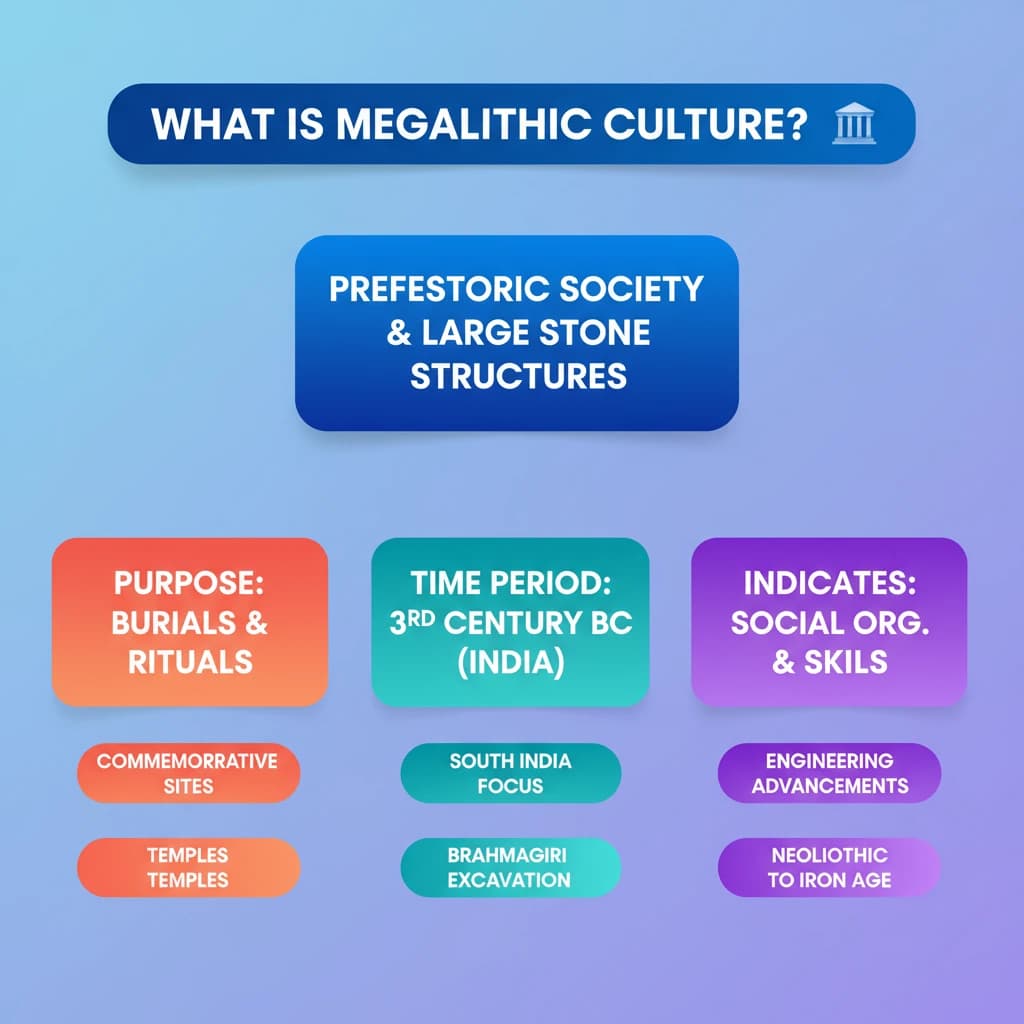
- •Megalithic Culture is defined by large stone structures (megaliths).
- •Megaliths served as burials, commemorative sites, or ritualistic places.
- •In South India, megalithic cultures are dated 3rd century BC to 1st century AD, based on Brahmagiri excavation.
- •Indicates advanced social organization and engineering skills in prehistoric societies.
- •Crucial for understanding the transition from Neolithic to Iron Age in various regions.
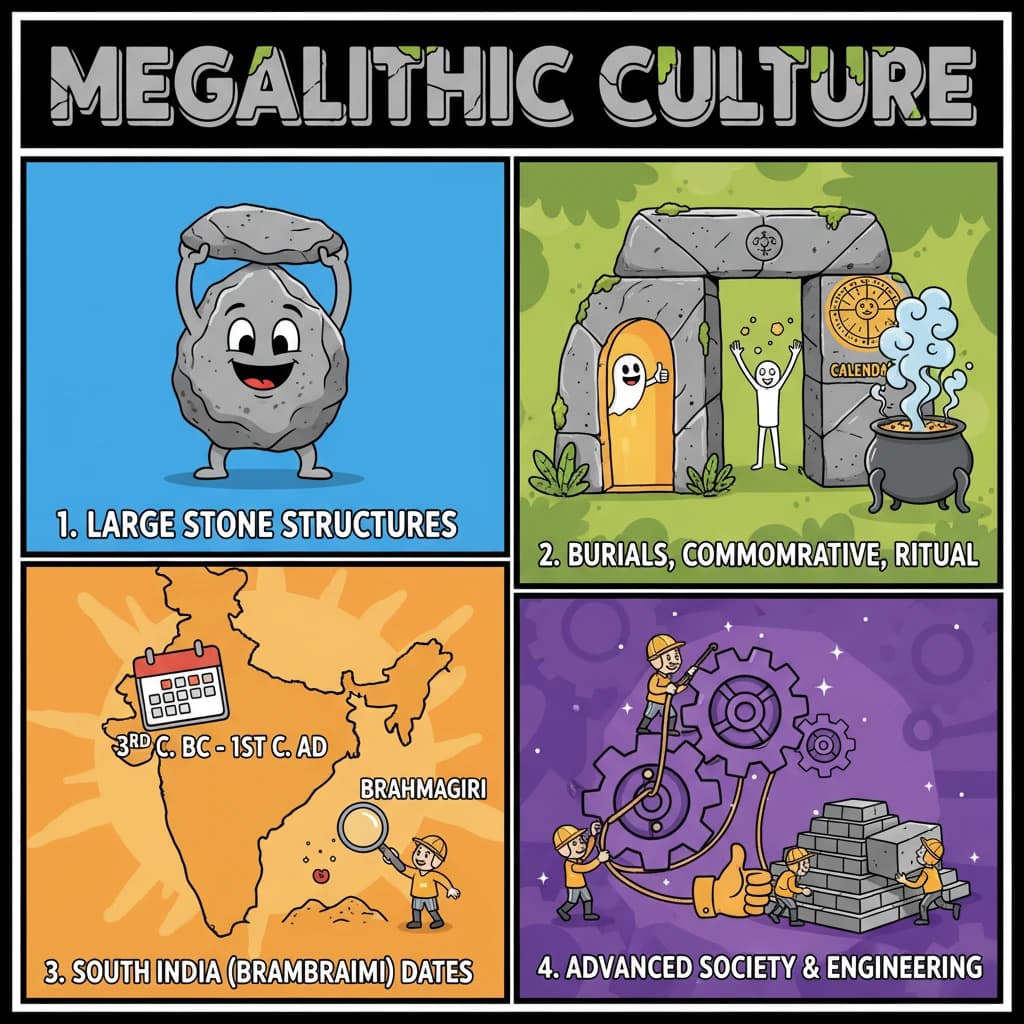
🧠 Memory Techniques
95% Verified Content
📚 Reference Sources
•NCERT Class 11 An Introduction to Indian Art (for general megalithic context)
•Archaeological Survey of India publications (for Brahmagiri details)