Loading page, please wait…
What is the Santhal Hul of 1855? - UPSC History
What is What is the Santhal Hul of 1855? in UPSC History?
What is the Santhal Hul of 1855? is a key topic under History for UPSC Civil Services Examination. Key points include: The Santhal Hul of 1855 was an early peasant and tribal uprising against British colonial exploitation.. It was led by four brothers: Sidho, Kanho, Chand, Bhairav Murmu, and sisters Phulo and Jhano.. The revolt began on June 30, 1855, primarily in the Damin-i-Koh region.. Understanding this topic is essential for both UPSC Prelims and Mains preparation.
Why is What is the Santhal Hul of 1855? important for UPSC exam?
What is the Santhal Hul of 1855? is a Easy-level topic in UPSC History. It is tested in both Prelims (factual MCQs) and Mains (analytical answer writing). Previous year UPSC questions have frequently covered aspects of What is the Santhal Hul of 1855?, making it essential for comprehensive IAS preparation.
How to prepare What is the Santhal Hul of 1855? for UPSC?
To prepare What is the Santhal Hul of 1855? for UPSC: (1) Study the comprehensive notes covering all key concepts on Vaidra. (2) Practice previous year questions on this topic. (3) Connect it with current affairs using daily updates. (4) Revise using key takeaways and mind maps available for History. (5) Write practice answers linking What is the Santhal Hul of 1855? to related GS Paper topics.
Key takeaways of What is the Santhal Hul of 1855? for UPSC
- The Santhal Hul of 1855 was an early peasant and tribal uprising against British colonial exploitation.
- It was led by four brothers: Sidho, Kanho, Chand, Bhairav Murmu, and sisters Phulo and Jhano.
- The revolt began on June 30, 1855, primarily in the Damin-i-Koh region.
- Key causes included land alienation, usurious moneylending, and corrupt administration by 'Dikus' (outsiders).
- It highlights the deep-seated resistance of indigenous communities against colonial oppression.
What is the Santhal Hul of 1855?
Easy⏱️ 7 min read
history
📖 Introduction
Introduction to the Santhal Hul
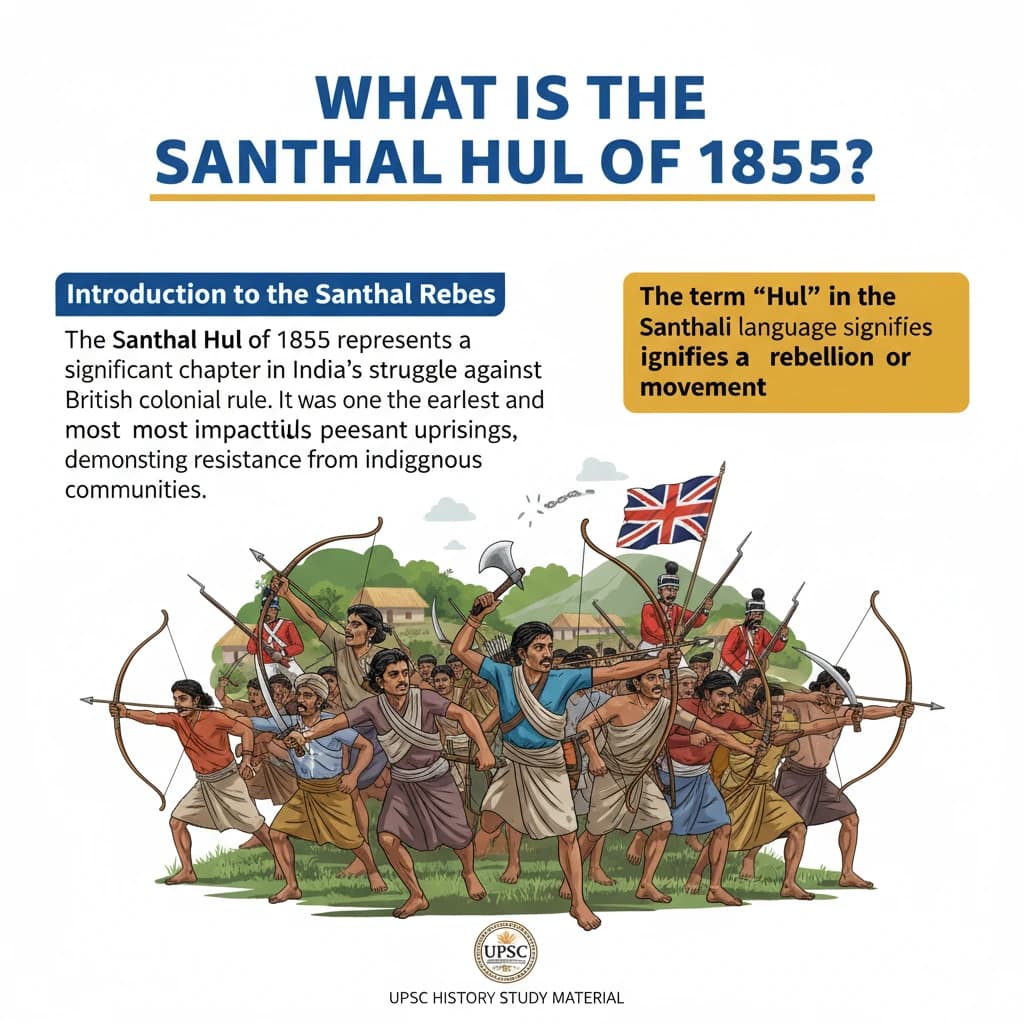
The Santhal Hul of 1855 represents a significant chapter in India's struggle against British colonial rule. It was one of the earliest and most impactful peasant uprisings, demonstrating fierce resistance from indigenous communities.
The term "Hul" in the Santhali language signifies a rebellion or movement, reflecting the intense nature of this revolt.
Key Leaders of the Revolt
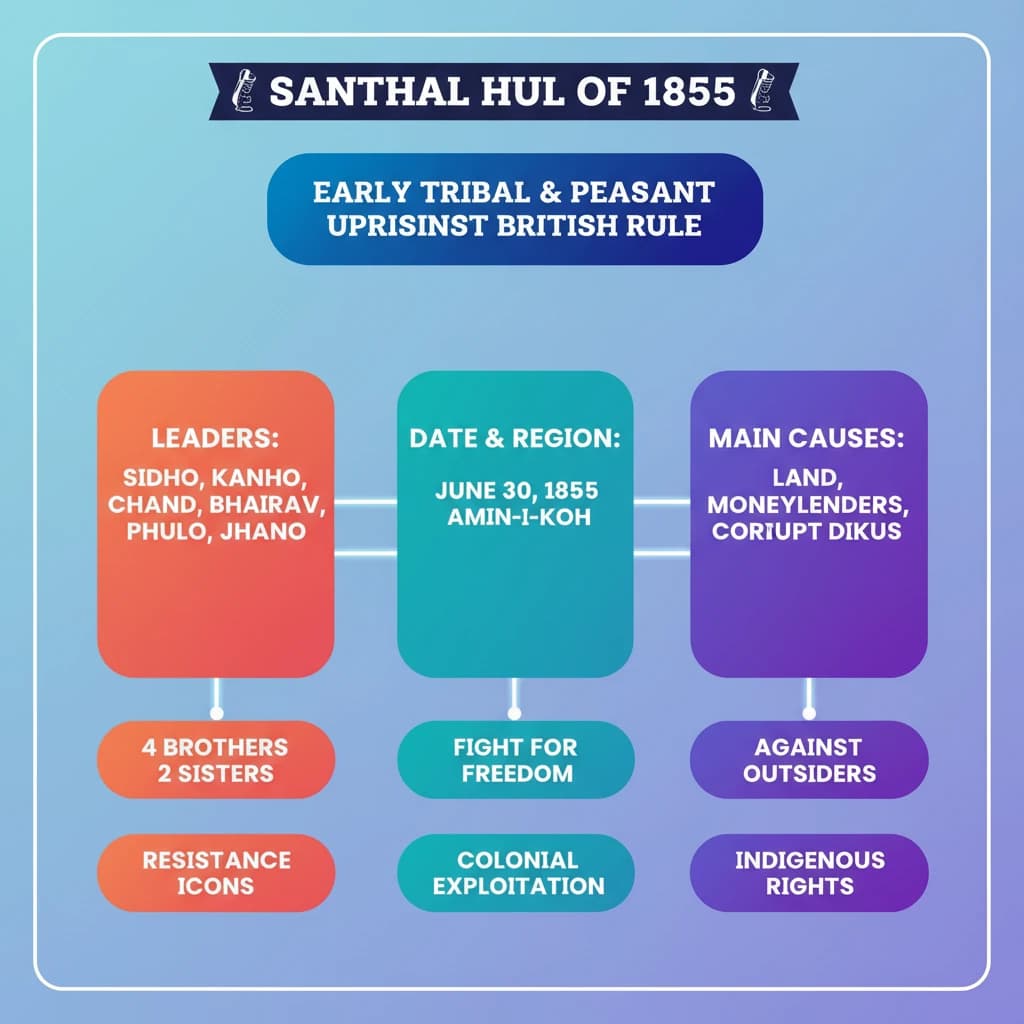
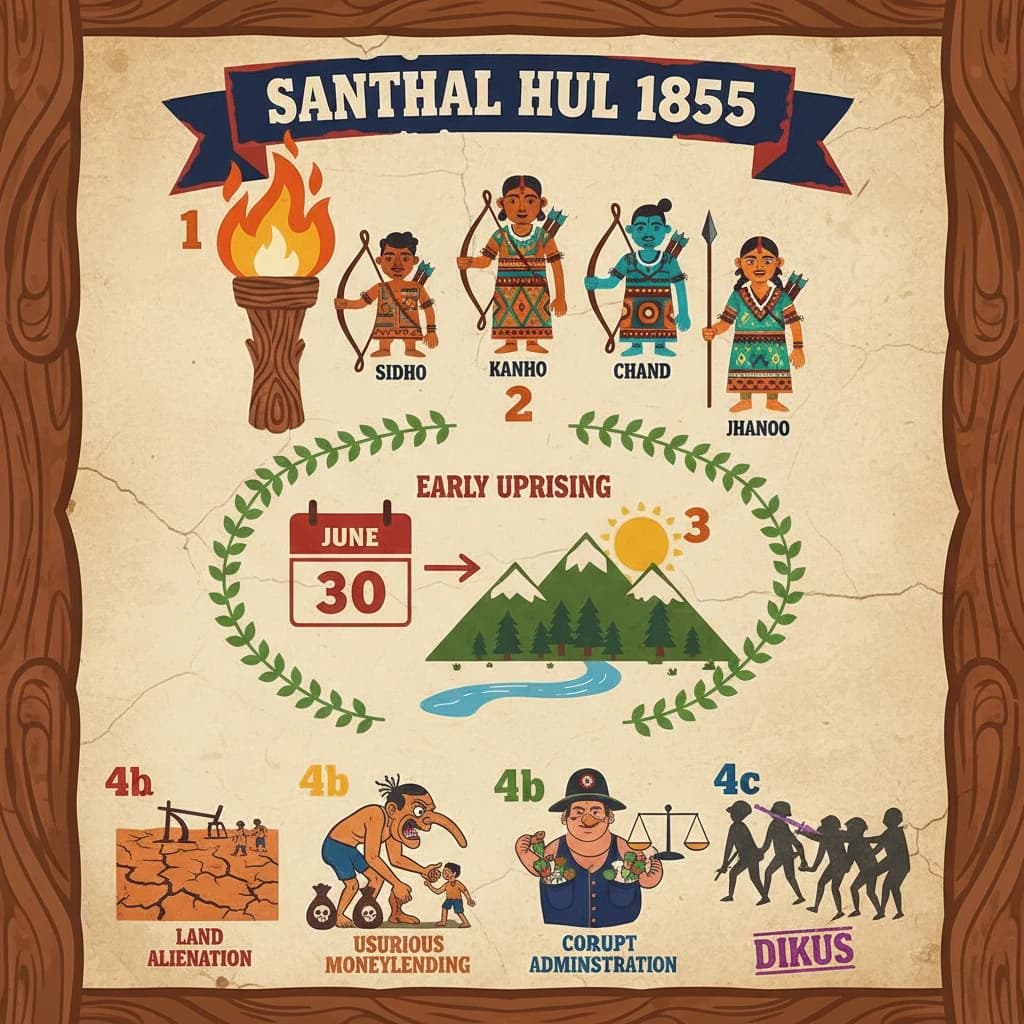
The uprising was spearheaded by four charismatic brothers: Sidho Murmu, Kanho Murmu, Chand Murmu, and Bhairav Murmu. Their leadership galvanized thousands of Santhals against oppressive forces.
Crucially, their sisters, Phulo Murmu and Jhano Murmu, also played pivotal roles, inspiring and mobilizing the Santhal community, highlighting the collective nature of the resistance.
Commencement of the Uprising
The revolt officially commenced on June 30, 1855. This date marks the formal declaration of rebellion, escalating the simmering discontent into a full-scale armed struggle.
Date Initiated: June 30, 1855
Location: Primarily the Damin-i-Koh region (present-day Jharkhand and West Bengal)
Nature: Peasant and tribal uprising against exploitation.
💡 Key Takeaways
- •The Santhal Hul of 1855 was an early peasant and tribal uprising against British colonial exploitation.
- •It was led by four brothers: Sidho, Kanho, Chand, Bhairav Murmu, and sisters Phulo and Jhano.
- •The revolt began on June 30, 1855, primarily in the Damin-i-Koh region.
- •Key causes included land alienation, usurious moneylending, and corrupt administration by 'Dikus' (outsiders).
- •It highlights the deep-seated resistance of indigenous communities against colonial oppression.
🧠 Memory Techniques
95% Verified Content