Loading page, please wait…
What was Raja Rammohan Roy’s Role in Abolition of Sati? - UPSC History
What is What was Raja Rammohan Roy’s Role in Abolition of Sati? in UPSC History?
What was Raja Rammohan Roy’s Role in Abolition of Sati? is a key topic under History for UPSC Civil Services Examination. Key points include: Raja Rammohan Roy was a key figure in the 19th-century Indian social reform movement.. He launched his anti-Sati campaign in 1818, driven by moral and ethical convictions.. Roy used sacred texts, rationality, humanity, and grassroots activism to challenge Sati.. Understanding this topic is essential for both UPSC Prelims and Mains preparation.
Why is What was Raja Rammohan Roy’s Role in Abolition of Sati? important for UPSC exam?
What was Raja Rammohan Roy’s Role in Abolition of Sati? is a Medium-level topic in UPSC History. It is tested in both Prelims (factual MCQs) and Mains (analytical answer writing). Previous year UPSC questions have frequently covered aspects of What was Raja Rammohan Roy’s Role in Abolition of Sati?, making it essential for comprehensive IAS preparation.
How to prepare What was Raja Rammohan Roy’s Role in Abolition of Sati? for UPSC?
To prepare What was Raja Rammohan Roy’s Role in Abolition of Sati? for UPSC: (1) Study the comprehensive notes covering all key concepts on Vaidra. (2) Practice previous year questions on this topic. (3) Connect it with current affairs using daily updates. (4) Revise using key takeaways and mind maps available for History. (5) Write practice answers linking What was Raja Rammohan Roy’s Role in Abolition of Sati? to related GS Paper topics.
Key takeaways of What was Raja Rammohan Roy’s Role in Abolition of Sati? for UPSC
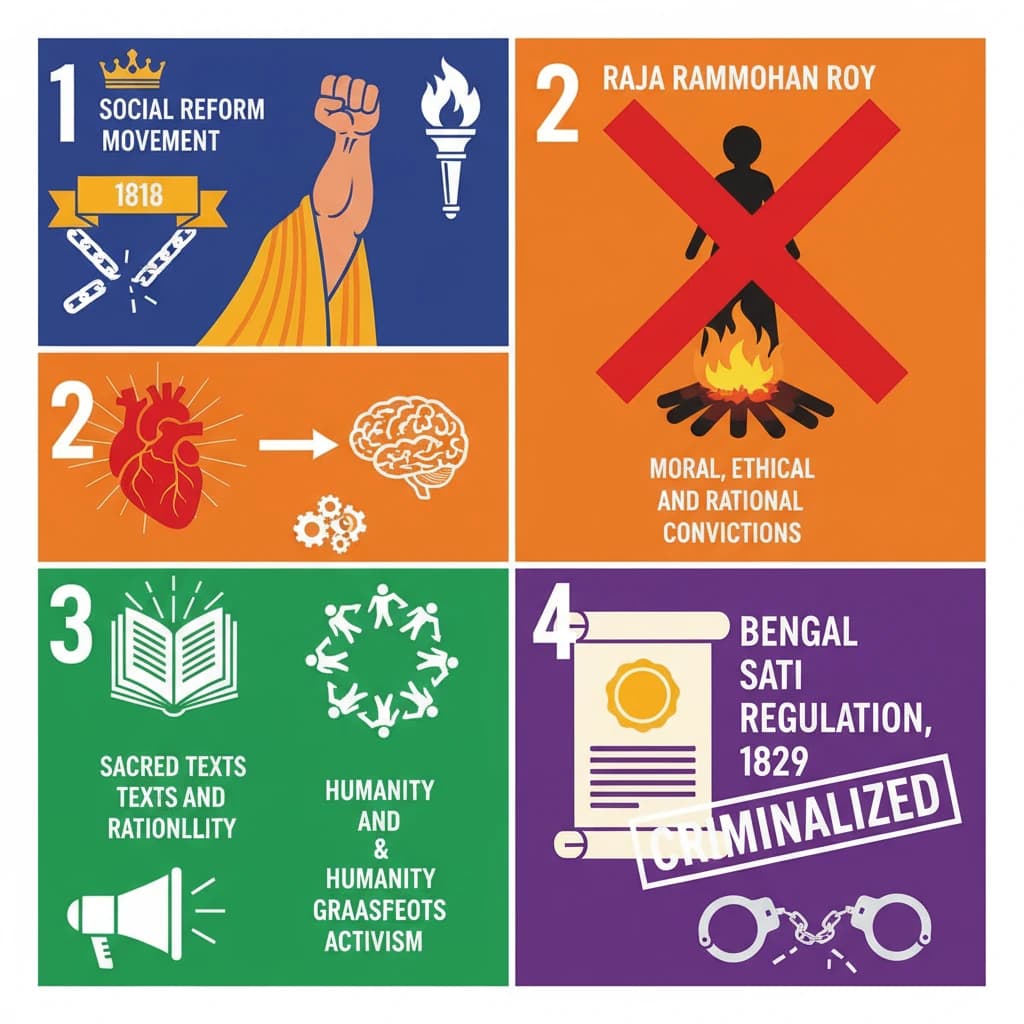
- Raja Rammohan Roy was a key figure in the 19th-century Indian social reform movement.
- He launched his anti-Sati campaign in 1818, driven by moral and ethical convictions.
- Roy used sacred texts, rationality, humanity, and grassroots activism to challenge Sati.
- His tireless efforts led to the Bengal Sati Regulation, 1829, which criminalized the practice.
- His work exemplifies the power of reform through intellectual argument, public advocacy, and direct action.
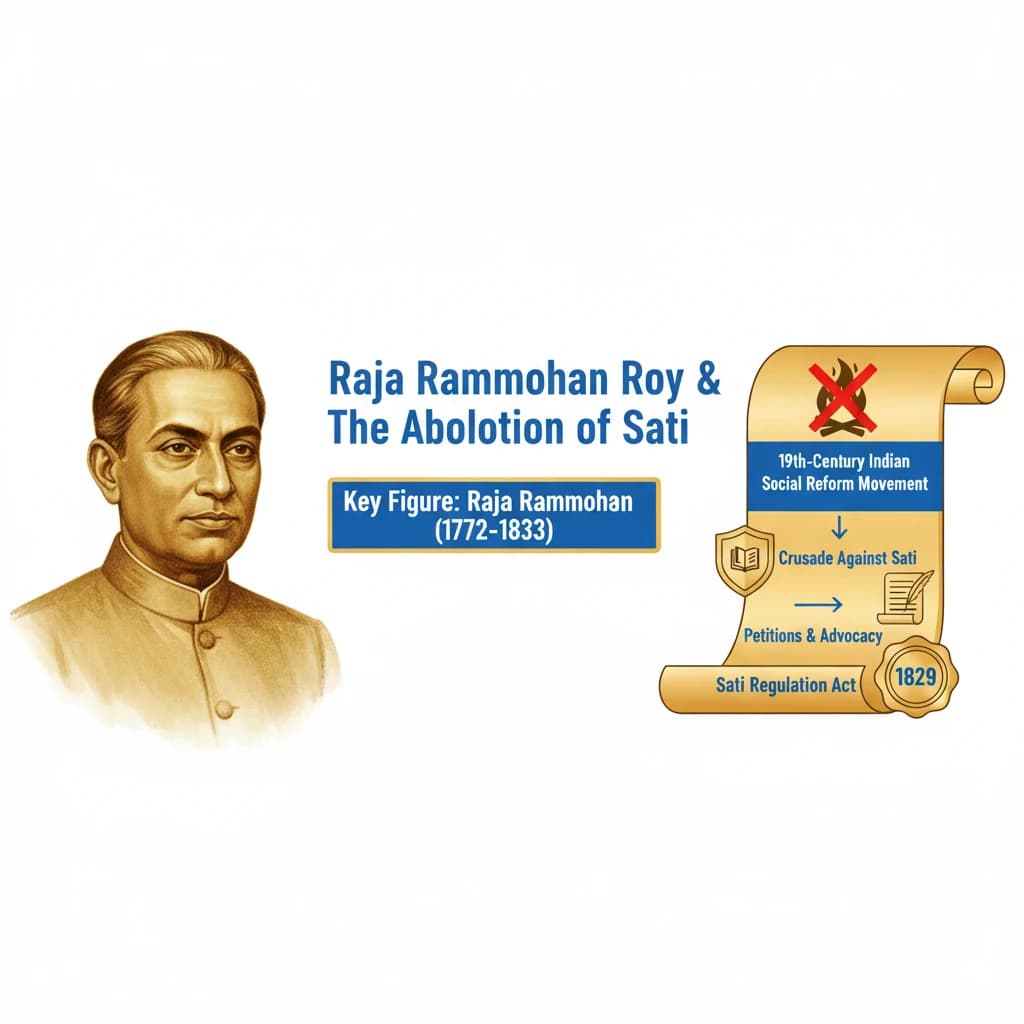
What was Raja Rammohan Roy’s Role in Abolition of Sati?
Medium⏱️ 8 min read
history
📖 Introduction
Introduction to Raja Rammohan Roy and Social Reform
Raja Rammohan Roy stands as a pivotal figure in the 19th-century Indian social reform movement. He is widely recognized for his unwavering commitment to eradicating the abhorrent practice of Sati, a custom where a widow immolated herself on her husband's funeral pyre.
Key Figure: Raja Rammohan Roy (1772-1833)
Primary Focus: Abolition of Sati
Era: 19th Century India
Launch of the Anti-Sati Campaign
Rammohan Roy initiated his vigorous campaign against Sati in 1818. His activism was fundamentally driven by a deep conviction that the practice was not only morally reprehensible but also ethically unjustifiable.
He believed that Sati represented a profound violation of human dignity and societal values, compelling him to challenge deeply entrenched traditions.
Strategies Employed in the Movement
Raja Rammohan Roy employed a multi-faceted approach to combat Sati, leveraging both scriptural interpretations and appeals to universal human values.
- Use of Sacred Texts: He meticulously cited various Hindu sacred texts to demonstrate that no religious scripture actually sanctioned or mandated the burning alive of widows. This approach aimed to counter arguments from orthodox sections of society.
- Rationality and Humanity: Beyond scriptural arguments, Roy appealed to broader concepts of humanity, reason, and compassion. This allowed him to engage a wider audience, including both religious scholars and secular thinkers, in his crusade.
- Grassroots Activism: His efforts were not confined to intellectual debates. Rammohan Roy actively engaged in grassroots activism, visiting cremation grounds, organizing vigilance groups to prevent Sati, and filing counter-petitions to the government to advocate for its abolition.
Culmination: The Bengal Sati Regulation, 1829
The relentless and tireless efforts of Raja Rammohan Roy ultimately bore fruit. His sustained campaign significantly influenced the colonial administration.
Landmark Legislation: Bengal Sati Regulation, 1829
Date: December 4, 1829
Impact: Declared the practice of Sati a crime throughout the Bengal Presidency.
This landmark legislation marked a crucial victory for social reform in India, largely attributable to Roy's pioneering advocacy.
💡 Key Takeaways
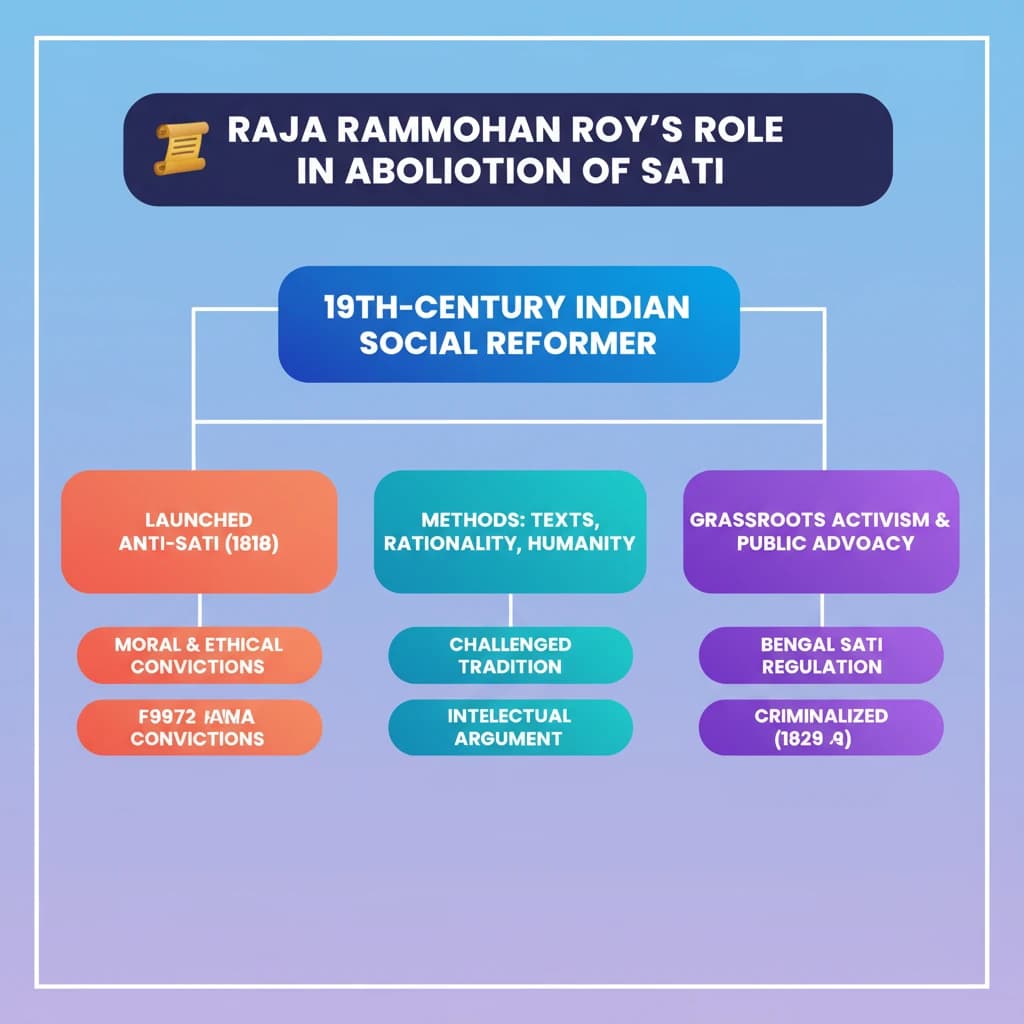
- •Raja Rammohan Roy was a key figure in the 19th-century Indian social reform movement.
- •He launched his anti-Sati campaign in 1818, driven by moral and ethical convictions.
- •Roy used sacred texts, rationality, humanity, and grassroots activism to challenge Sati.
- •His tireless efforts led to the Bengal Sati Regulation, 1829, which criminalized the practice.
- •His work exemplifies the power of reform through intellectual argument, public advocacy, and direct action.
🧠 Memory Techniques
98% Verified Content
📚 Reference Sources
•NCERT Textbooks (History - Class VIII, XII)
•Standard Modern Indian History Texts (e.g., Bipan Chandra, Spectrum)