Loading page, please wait…
What were Surat Raids Conducted by Shivaji? - UPSC History
What is What were Surat Raids Conducted by Shivaji? in UPSC History?
What were Surat Raids Conducted by Shivaji? is a key topic under History for UPSC Civil Services Examination. Key points include: Surat was the wealthiest Mughal port, a 'jewel of the Mughal Empire', making it a prime target for Shivaji.. Shivaji conducted two major raids on Surat in 1664 and 1670.. The raids aimed to acquire wealth for the Maratha state and to challenge Mughal authority and prestige.. Understanding this topic is essential for both UPSC Prelims and Mains preparation.
Why is What were Surat Raids Conducted by Shivaji? important for UPSC exam?
What were Surat Raids Conducted by Shivaji? is a Medium-level topic in UPSC History. It is tested in both Prelims (factual MCQs) and Mains (analytical answer writing). Previous year UPSC questions have frequently covered aspects of What were Surat Raids Conducted by Shivaji?, making it essential for comprehensive IAS preparation.
How to prepare What were Surat Raids Conducted by Shivaji? for UPSC?
To prepare What were Surat Raids Conducted by Shivaji? for UPSC: (1) Study the comprehensive notes covering all key concepts on Vaidra. (2) Practice previous year questions on this topic. (3) Connect it with current affairs using daily updates. (4) Revise using key takeaways and mind maps available for History. (5) Write practice answers linking What were Surat Raids Conducted by Shivaji? to related GS Paper topics.
Key takeaways of What were Surat Raids Conducted by Shivaji? for UPSC
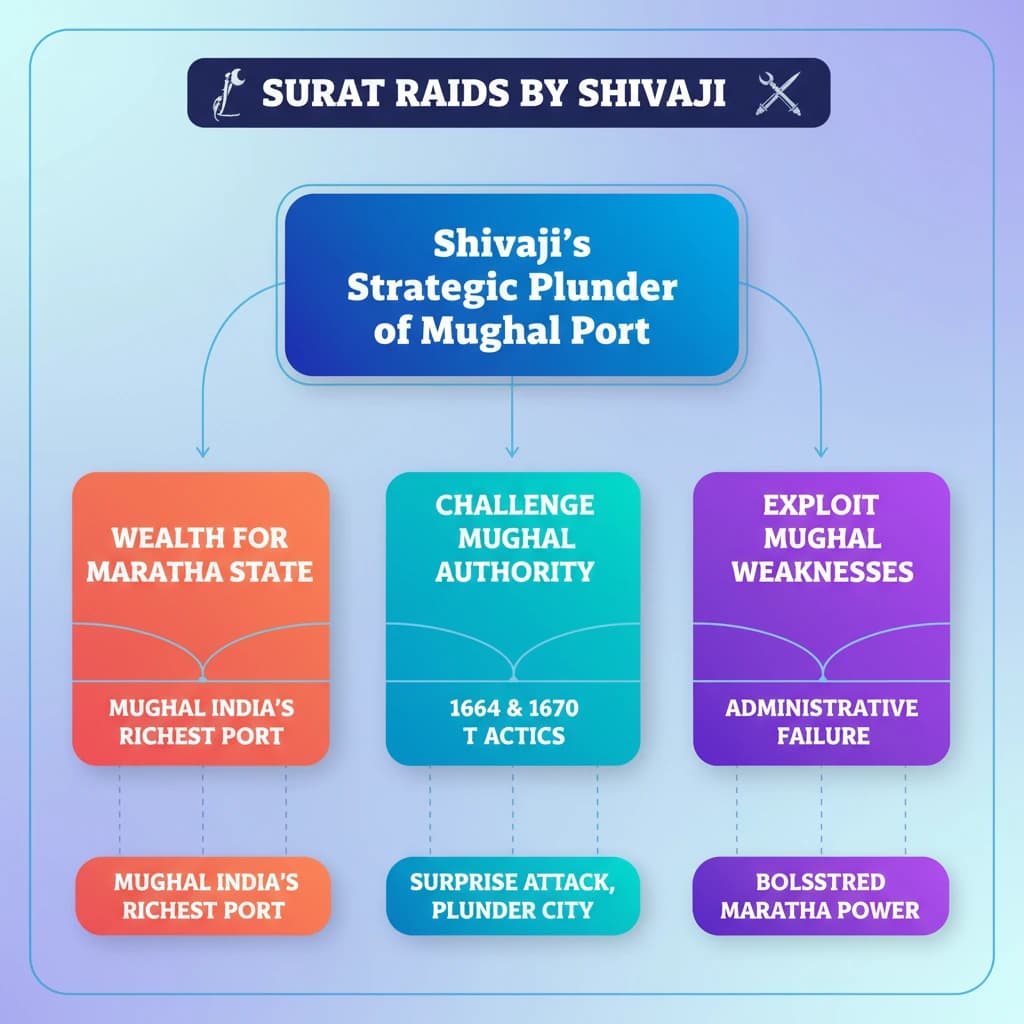
- Surat was the wealthiest Mughal port, a 'jewel of the Mughal Empire', making it a prime target for Shivaji.
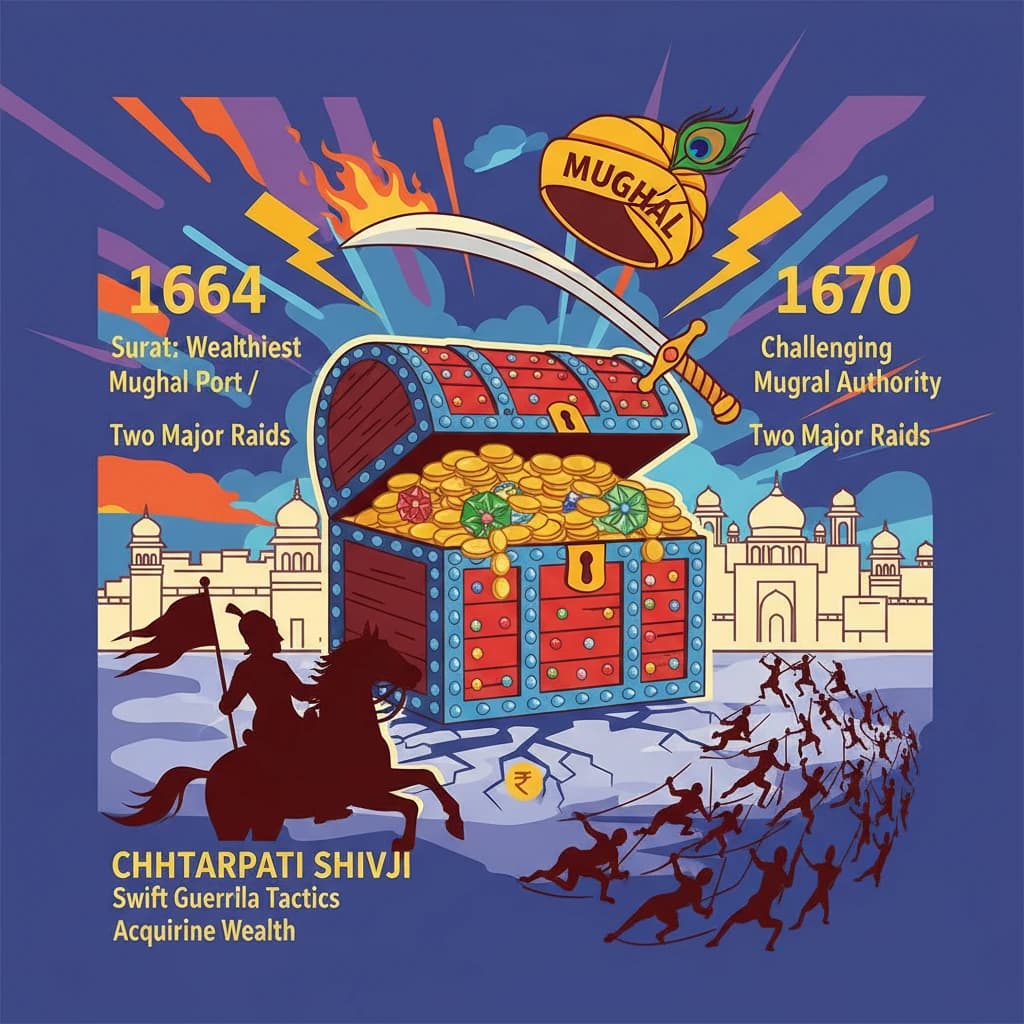
- Shivaji conducted two major raids on Surat in 1664 and 1670.
- The raids aimed to acquire wealth for the Maratha state and to challenge Mughal authority and prestige.
- Shivaji employed swift guerrilla tactics, surprising Mughal forces and plundering the city extensively.
- The raids exposed Mughal administrative and military weaknesses, contributing to their decline and bolstering Maratha power.
- European factories in Surat were largely spared during the raids due to their fortifications and pragmatic Maratha strategy.
What were Surat Raids Conducted by Shivaji?
Medium⏱️ 7 min read
history
📖 Introduction
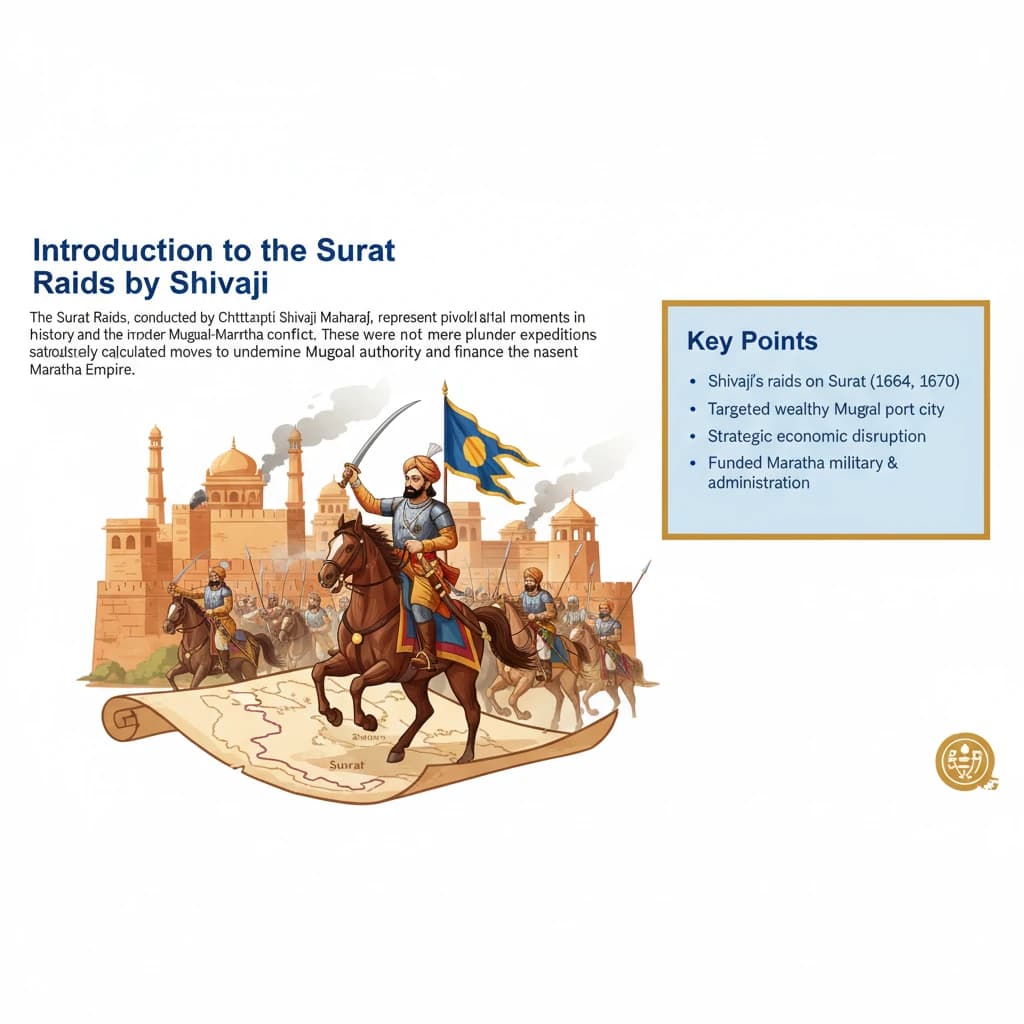
Introduction to the Surat Raids by Shivaji
The Surat Raids, conducted by Chhatrapati Shivaji Maharaj, represent pivotal moments in Maratha history and the broader Mughal-Maratha conflict. These were not mere plunder expeditions but strategically calculated moves to undermine Mughal authority and finance the nascent Maratha Empire.
Shivaji's raids on Surat in 1664 and 1670 demonstrated his military prowess and the effectiveness of his guerrilla warfare tactics against the mighty Mughal Empire.
Strategic Importance of Surat
Surat, located on the west coast of India, was a city of immense economic and strategic value during the 17th century. It served as the primary port for Mughal trade and a crucial embarkation point for pilgrims to Mecca.
Surat was renowned as 'the greatest emporium of the Orient and the richest jewel of the Mughal Empire'. Its wealth came from lucrative trade with Europe, Persia, and the Middle East, making it a symbol of Mughal prosperity.
Objectives Behind the Raids
Shivaji's primary motivations for targeting Surat were multifaceted. He aimed to acquire substantial wealth to fund his military campaigns and the administration of his growing Maratha kingdom.
Beyond wealth, the raids served to humiliate the Mughal Emperor Aurangzeb and challenge his perceived invincibility. It was a clear demonstration that Mughal territories were vulnerable, even their most prized possessions.
The First Surat Raid (1664)
The First Sack of Surat occurred in January 1664. Shivaji led his forces swiftly, catching the Mughal administration and the city's governor, Inayat Khan, unprepared.
Despite resistance from some European factories (like the English and Dutch), Shivaji's forces plundered the city for several days, amassing a vast treasure. This raid severely damaged Mughal prestige and highlighted their administrative weaknesses.
The Second Surat Raid (1670)
Six years later, in October 1670, Shivaji launched another major assault on Surat. This raid was partly in retaliation for Aurangzeb's renewed aggression against the Marathas and to further replenish his treasury.
Once again, the Mughal defenses proved inadequate. The city was sacked, and considerable wealth was seized. The repeated failure to protect Surat underscored the growing threat posed by Shivaji.
Impact and Significance of the Raids
The Surat Raids had profound implications. They provided the Maratha state with much-needed financial resources, enabling Shivaji to strengthen his army and consolidate his power.
For UPSC Mains, analyze the Surat Raids not just as military events but as strategic moves that impacted Mughal-Maratha relations, economic history, and the rise of regional powers. Focus on Shivaji's strategic genius.
The raids significantly dented Mughal prestige and confidence, exposing their inability to protect their wealthiest cities. This encouraged other regional powers and rebels, contributing to the eventual decline of the Mughal Empire.
💡 Key Takeaways
- •Surat was the wealthiest Mughal port, a 'jewel of the Mughal Empire', making it a prime target for Shivaji.
- •Shivaji conducted two major raids on Surat in 1664 and 1670.
- •The raids aimed to acquire wealth for the Maratha state and to challenge Mughal authority and prestige.
- •Shivaji employed swift guerrilla tactics, surprising Mughal forces and plundering the city extensively.
- •The raids exposed Mughal administrative and military weaknesses, contributing to their decline and bolstering Maratha power.
- •European factories in Surat were largely spared during the raids due to their fortifications and pragmatic Maratha strategy.
🧠 Memory Techniques
95% Verified Content
📚 Reference Sources
•A History of India by Romila Thapar
•Medieval India: From Sultanat to the Mughals by Satish Chandra
•Shivaji and His Times by Jadunath Sarkar
•Drishti IAS Study Material