Loading page, please wait…
Vaidra Logo
Vaidra

Top 4 items + smart groups

UPSC GPT
New
Current Affairs
Daily Solutions
Daily Puzzle
Mains Evaluator

Version 2.0.0 • Built with ❤️ for UPSC aspirants

Loading...
Loading...
Loading...
Loading...
Loading...
Loading...
Loading...
Loading...
Loading...
Loading...
Loading...
Loading...
Loading...
Back
All Subjects

Topics

0 topics • 0 completed

Loading topics...
Loading...
Loading...
Loading...
Loading...
Loading...
Overall Progress0%

Nuclear Disarmament - UPSC International Relations

What is Nuclear Disarmament in UPSC International Relations?

Nuclear Disarmament is a key topic under International Relations for UPSC Civil Services Examination. Key points include: Nobel Peace Prize 2024 awarded to Nihon Hidankyo, representing Japanese atomic bomb survivors (Hibakusha).. The award emphasizes the critical importance of advocacy for nuclear disarmament.. Nuclear disarmament efforts are deeply rooted in the catastrophic impacts of the Hiroshima and Nagasaki bombings (August 1945).. Understanding this topic is essential for both UPSC Prelims and Mains preparation.

Why is Nuclear Disarmament important for UPSC exam?

Nuclear Disarmament is a Medium-level topic in UPSC International Relations. It is tested in both Prelims (factual MCQs) and Mains (analytical answer writing). Previous year UPSC questions have frequently covered aspects of Nuclear Disarmament, making it essential for comprehensive IAS preparation.

How to prepare Nuclear Disarmament for UPSC?

To prepare Nuclear Disarmament for UPSC: (1) Study the comprehensive notes covering all key concepts on Vaidra. (2) Practice previous year questions on this topic. (3) Connect it with current affairs using daily updates. (4) Revise using key takeaways and mind maps available for International Relations. (5) Write practice answers linking Nuclear Disarmament to related GS Paper topics.

Key takeaways of Nuclear Disarmament for UPSC

  • Nobel Peace Prize 2024 awarded to Nihon Hidankyo, representing Japanese atomic bomb survivors (Hibakusha).
  • The award emphasizes the critical importance of advocacy for nuclear disarmament.
  • Nuclear disarmament efforts are deeply rooted in the catastrophic impacts of the Hiroshima and Nagasaki bombings (August 1945).
  • Nihon Hidankyo (formed 1956) actively lobbies for a nuclear-free world, sharing survivor testimonies.
  • The humanitarian consequences of nuclear weapons remain the core argument for their abolition and continued relevance in global security discussions.
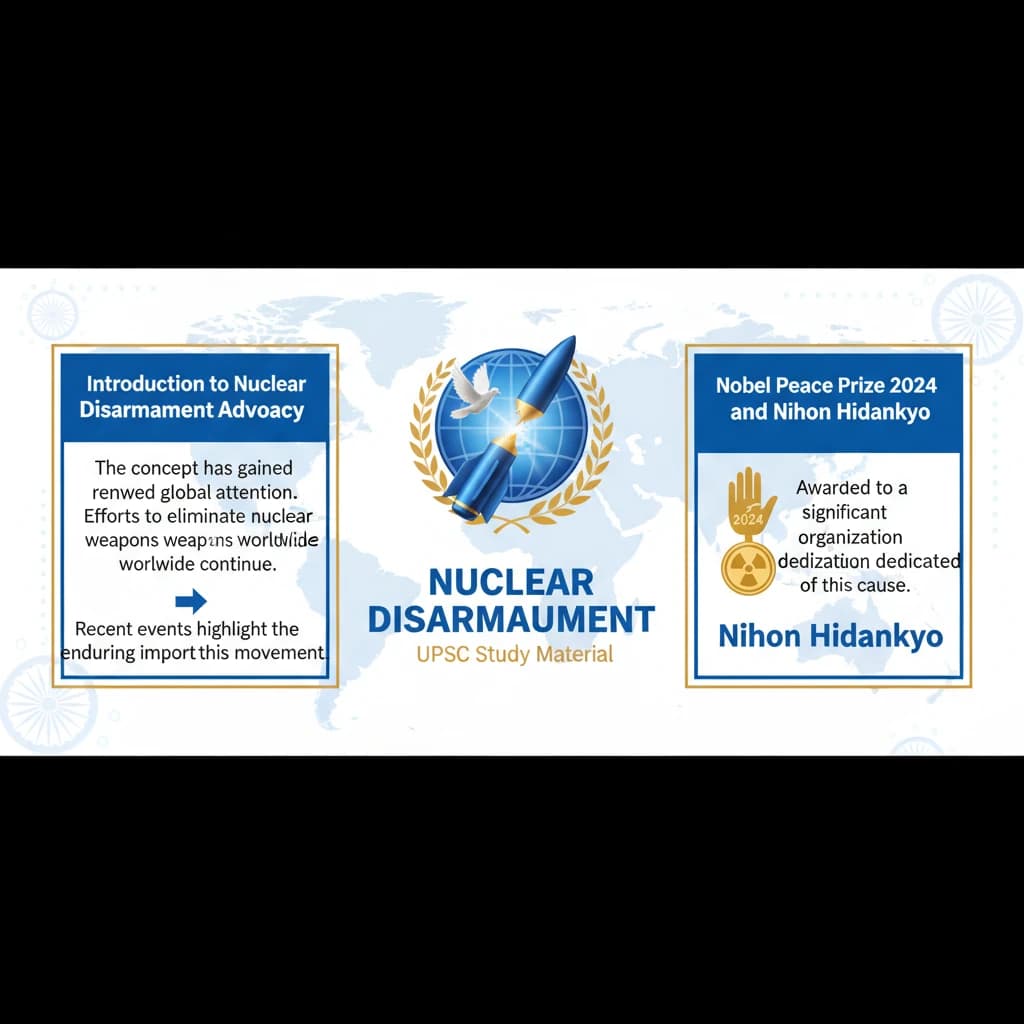
Nuclear Disarmament

Nuclear Disarmament

Medium⏱️ 7 min read✓ 95% Verified
international relations

📖 Introduction

<h4>Introduction to Nuclear Disarmament Advocacy</h4><p>The concept of <strong>nuclear disarmament</strong> has gained renewed global attention. This critical issue underscores the ongoing efforts to eliminate <strong>nuclear weapons</strong> worldwide.</p><p>Recent events highlight the enduring importance of this movement. The <strong>Nobel Peace Prize 2024</strong> was awarded to a significant organization dedicated to this cause.</p><h4>Nobel Peace Prize 2024 and Nihon Hidankyo</h4><p>The <strong>Nobel Peace Prize 2024</strong> was bestowed upon <strong>Nihon Hidankyo</strong>. This organization represents the <strong>Japanese atomic bomb survivors</strong>, often referred to as <strong>Hibakusha</strong>.</p><div class='info-box'><ul><li><strong>Nihon Hidankyo</strong>: A national body of atomic bomb survivors in Japan.</li><li><strong>Mission</strong>: To advocate for the abolition of nuclear weapons and provide support for survivors.</li></ul></div><p>The award recognizes their unwavering and dedicated efforts to achieve a <strong>nuclear-free world</strong>. It underscores the global community's acknowledgement of their struggle and advocacy.</p><h4>Roots in Catastrophic Impacts</h4><p>The impetus for <strong>nuclear disarmament advocacy</strong> is deeply rooted in historical tragedy. The catastrophic impacts of <strong>nuclear weapons</strong> were first experienced during World War II.</p><p>The bombings of <strong>Hiroshima</strong> and <strong>Nagasaki</strong> in <strong>August 1945</strong> serve as a stark reminder of the destructive power of these devices. These events led to immense human suffering and environmental devastation.</p><div class='key-point-box'><p>The experiences of <strong>Hibakusha</strong> from <strong>Hiroshima</strong> and <strong>Nagasaki</strong> provide a powerful moral argument against the existence and proliferation of <strong>nuclear weapons</strong>.</p></div><div class='exam-tip-box'><p>For <strong>UPSC Mains GS-II (International Relations)</strong>, understanding the humanitarian dimension of nuclear disarmament is crucial. Connect the Nobel Prize to broader global efforts and India's stance.</p></div>
Concept Diagram

💡 Key Takeaways

  • •Nobel Peace Prize 2024 awarded to Nihon Hidankyo, representing Japanese atomic bomb survivors (Hibakusha).
  • •The award emphasizes the critical importance of advocacy for nuclear disarmament.
  • •Nuclear disarmament efforts are deeply rooted in the catastrophic impacts of the Hiroshima and Nagasaki bombings (August 1945).
  • •Nihon Hidankyo (formed 1956) actively lobbies for a nuclear-free world, sharing survivor testimonies.
  • •The humanitarian consequences of nuclear weapons remain the core argument for their abolition and continued relevance in global security discussions.

🧠 Memory Techniques
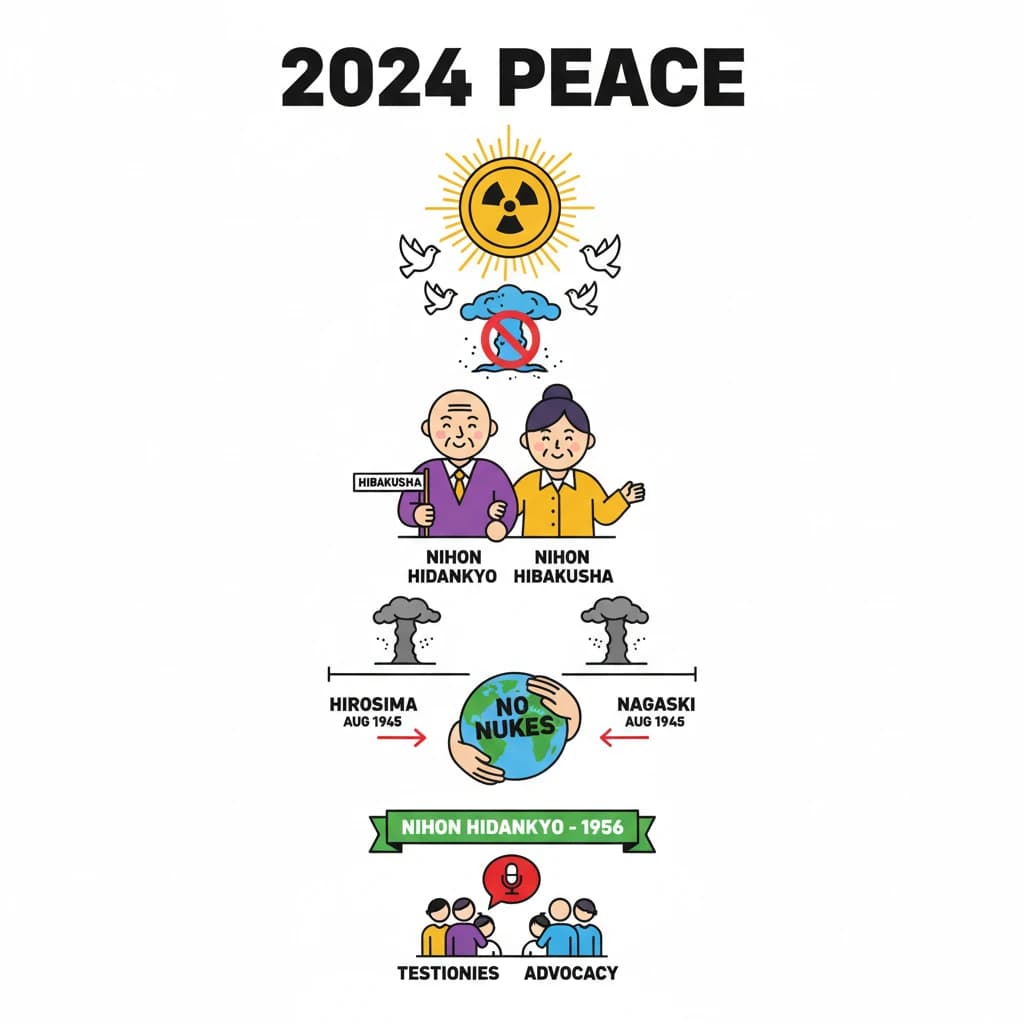
Memory Aid
95% Verified Content

📚 Reference Sources

•Nobel Prize Committee official website
•United Nations Office for Disarmament Affairs (UNODA)

Related Topics

Loading related topics...
Explore:International Relations Topics·All Subjects·Daily Current Affairs·Editorial Analysis·Previous Year Questions·UPSC GPT
Nuclear Disarmament - UPSC International Relations