Indian Expatriate - UPSC International Relations
What is Indian Expatriate in UPSC International Relations?
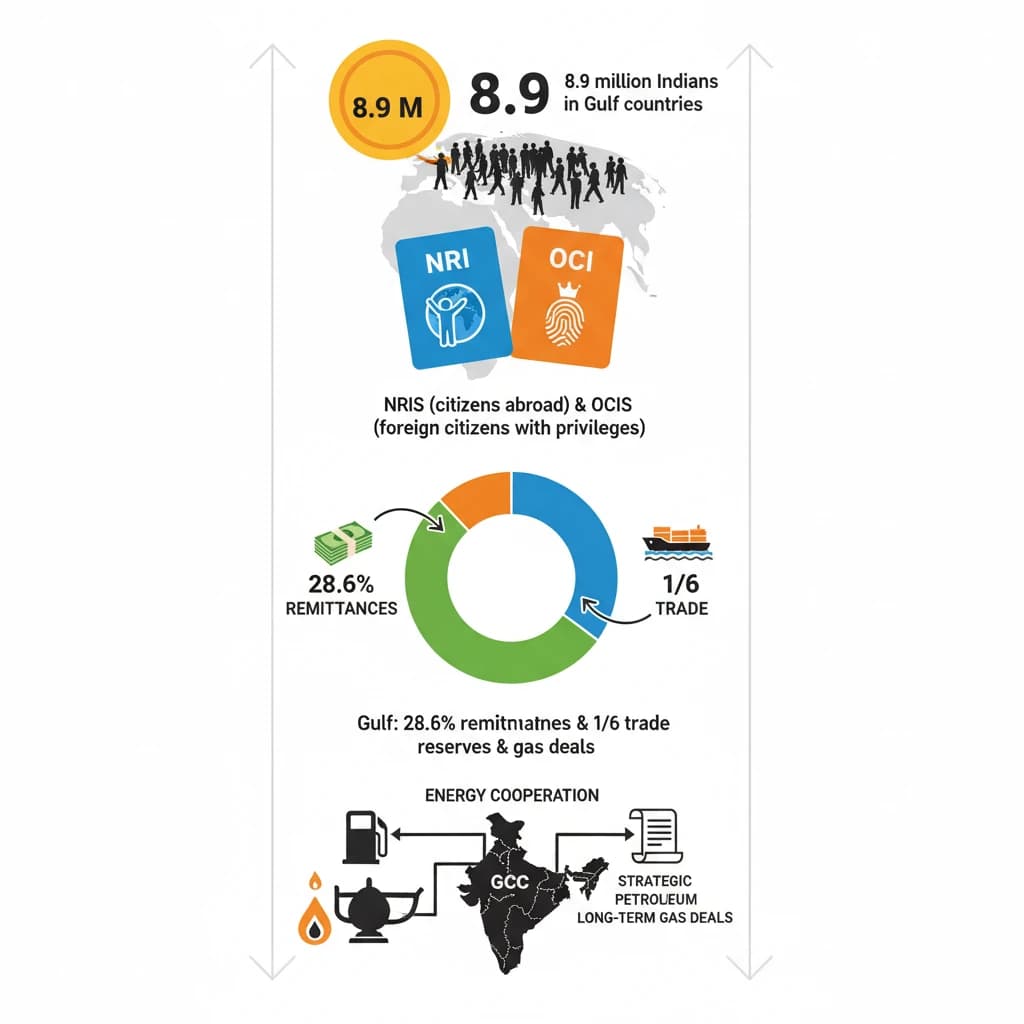
Indian Expatriate is a key topic under International Relations for UPSC Civil Services Examination. Key points include: Approximately 8.9 million Indians reside in Gulf countries, constituting a major part of India's overseas population.. NRIs are Indian citizens living abroad; OCIs are foreign citizens of Indian origin with specific privileges.. Gulf countries contribute 28.6% of India's total inward remittances and one-sixth of its total trade.. Understanding this topic is essential for both UPSC Prelims and Mains preparation.
Why is Indian Expatriate important for UPSC exam?
Indian Expatriate is a Medium-level topic in UPSC International Relations. It is tested in both Prelims (factual MCQs) and Mains (analytical answer writing). Previous year UPSC questions have frequently covered aspects of Indian Expatriate, making it essential for comprehensive IAS preparation.
How to prepare Indian Expatriate for UPSC?
To prepare Indian Expatriate for UPSC: (1) Study the comprehensive notes covering all key concepts on Vaidra. (2) Practice previous year questions on this topic. (3) Connect it with current affairs using daily updates. (4) Revise using key takeaways and mind maps available for International Relations. (5) Write practice answers linking Indian Expatriate to related GS Paper topics.
Key takeaways of Indian Expatriate for UPSC
- Approximately 8.9 million Indians reside in Gulf countries, constituting a major part of India's overseas population.
- NRIs are Indian citizens living abroad; OCIs are foreign citizens of Indian origin with specific privileges.
- Gulf countries contribute 28.6% of India's total inward remittances and one-sixth of its total trade.
- India seeks comprehensive energy cooperation with GCC, including strategic petroleum reserves and long-term gas deals.
- The 1991 Kuwait liberation and subsequent Indian evacuation highlighted the vulnerability and importance of the diaspora.
- Strong India-Gulf ties are crucial for India's energy security, economic growth, and diaspora welfare.
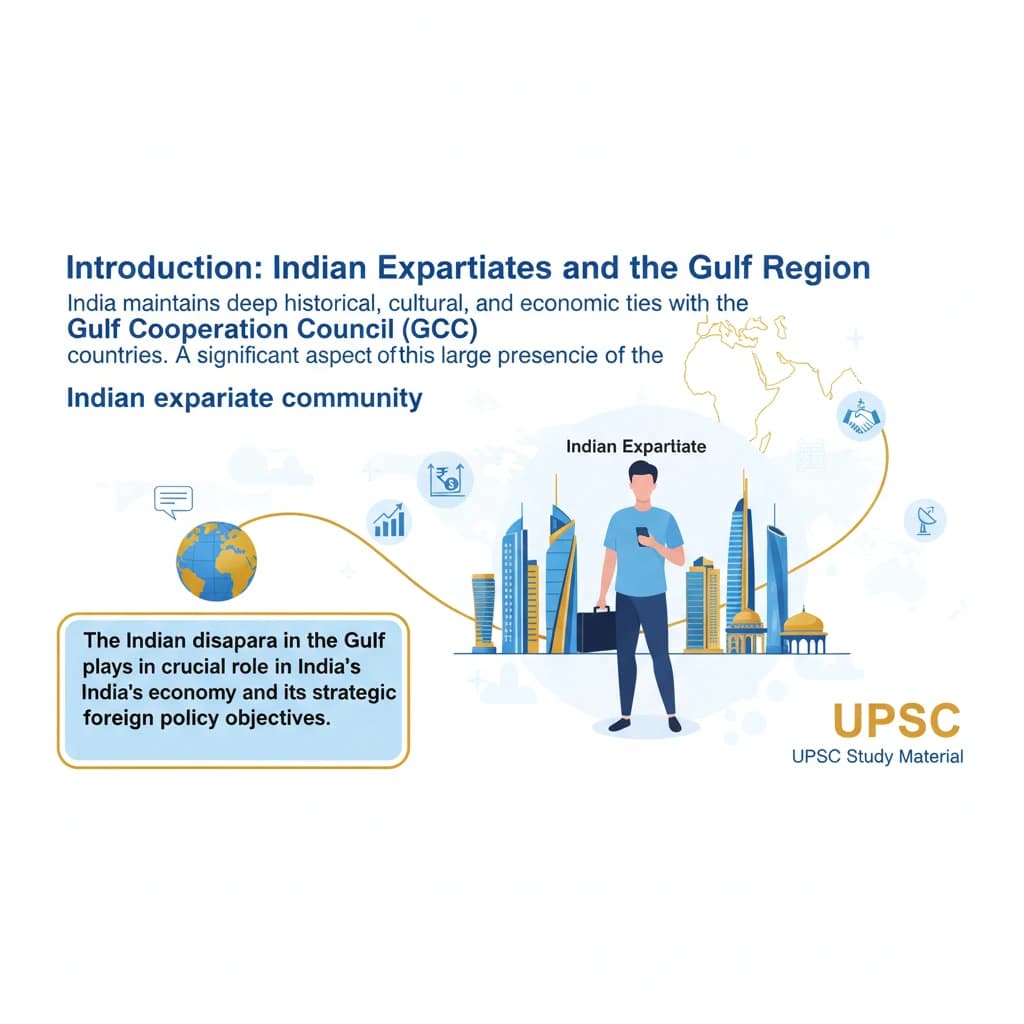
Indian Expatriate
📖 Introduction
💡 Key Takeaways
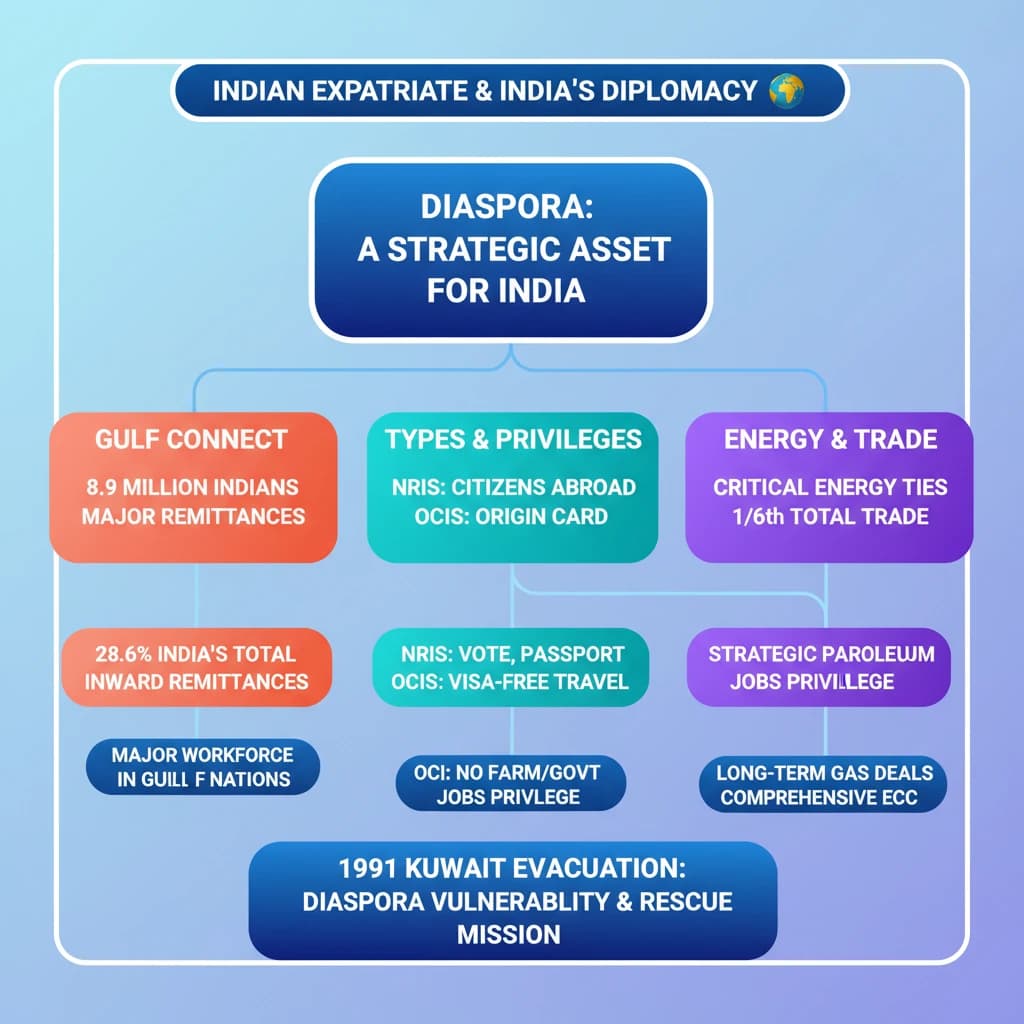
- •Approximately 8.9 million Indians reside in Gulf countries, constituting a major part of India's overseas population.
- •NRIs are Indian citizens living abroad; OCIs are foreign citizens of Indian origin with specific privileges.
- •Gulf countries contribute 28.6% of India's total inward remittances and one-sixth of its total trade.
- •India seeks comprehensive energy cooperation with GCC, including strategic petroleum reserves and long-term gas deals.
- •The 1991 Kuwait liberation and subsequent Indian evacuation highlighted the vulnerability and importance of the diaspora.
- •Strong India-Gulf ties are crucial for India's energy security, economic growth, and diaspora welfare.
🧠 Memory Techniques