Loading page, please wait…
Vaidra Logo
Vaidra

Top 4 items + smart groups

UPSC GPT
New
Current Affairs
Daily Solutions
Daily Puzzle
Mains Evaluator

Version 2.0.0 • Built with ❤️ for UPSC aspirants

Loading...
Loading...
Loading...
Loading...
Loading...
Loading...
Loading...
Loading...
Loading...
Loading...
Loading...
Loading...
Loading...
Back
All Subjects

Topics

0 topics • 0 completed

Loading topics...
Loading...
Loading...
Loading...
Loading...
Loading...
Overall Progress0%
What is Nuclear Disarmament? - UPSC International Relations

What is Nuclear Disarmament? - UPSC International Relations

What is What is Nuclear Disarmament? in UPSC International Relations?

What is Nuclear Disarmament? is a key topic under International Relations for UPSC Civil Services Examination. Key points include: Nuclear disarmament aims to eliminate nuclear weapons for global security.. Modern arsenals, including tactical weapons, heighten conflict risks.. Humanitarian, environmental, ethical, and economic costs necessitate disarmament.. Understanding this topic is essential for both UPSC Prelims and Mains preparation.

Why is What is Nuclear Disarmament? important for UPSC exam?

What is Nuclear Disarmament? is a Medium-level topic in UPSC International Relations. It is tested in both Prelims (factual MCQs) and Mains (analytical answer writing). Previous year UPSC questions have frequently covered aspects of What is Nuclear Disarmament?, making it essential for comprehensive IAS preparation.

How to prepare What is Nuclear Disarmament? for UPSC?

To prepare What is Nuclear Disarmament? for UPSC: (1) Study the comprehensive notes covering all key concepts on Vaidra. (2) Practice previous year questions on this topic. (3) Connect it with current affairs using daily updates. (4) Revise using key takeaways and mind maps available for International Relations. (5) Write practice answers linking What is Nuclear Disarmament? to related GS Paper topics.

Key takeaways of What is Nuclear Disarmament? for UPSC

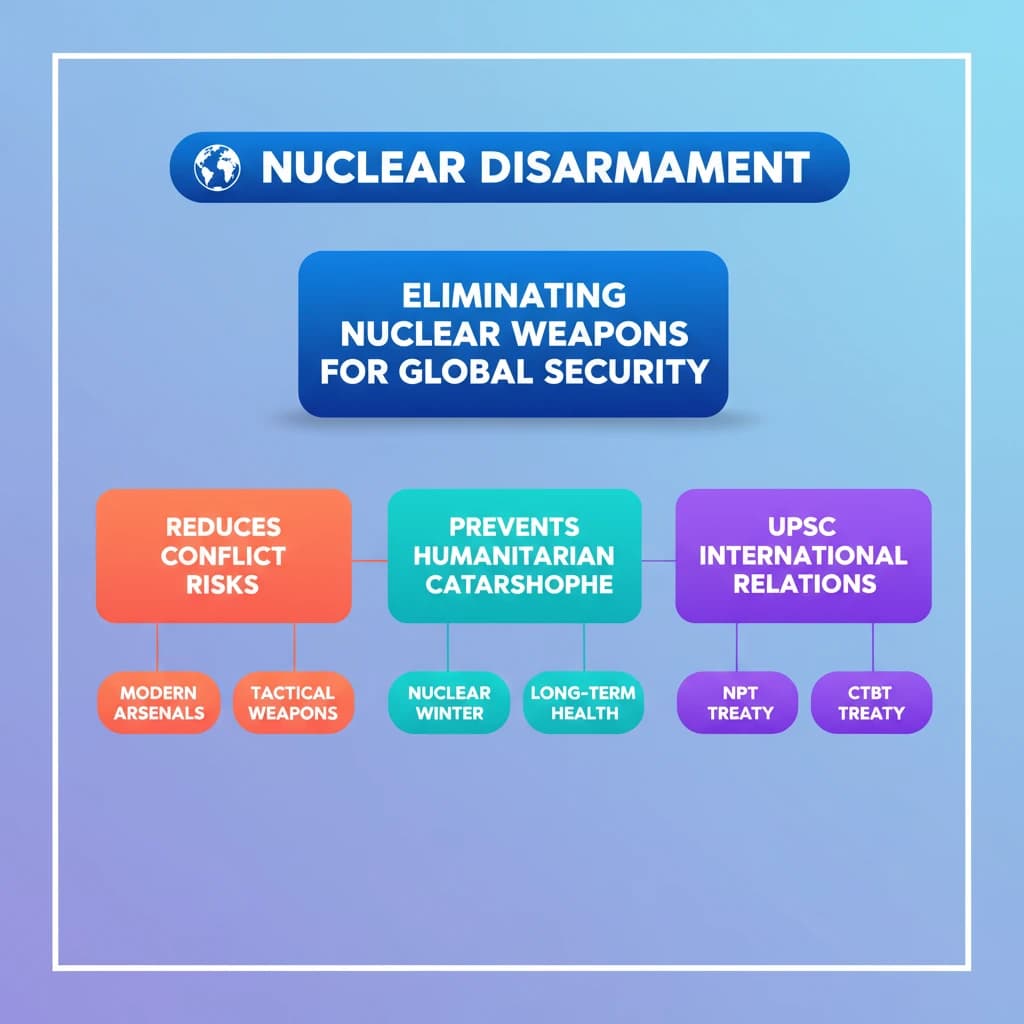
  • Nuclear disarmament aims to eliminate nuclear weapons for global security.
  • Modern arsenals, including tactical weapons, heighten conflict risks.
  • Humanitarian, environmental, ethical, and economic costs necessitate disarmament.
  • Nuclear winter and long-term health impacts are severe consequences.
  • Key treaties like NPT and CTBT are central to disarmament efforts.
  • Ongoing challenges include modernization, proliferation, and non-state actors.
What is Nuclear Disarmament?

What is Nuclear Disarmament?

Medium⏱️ 8 min read✓ 95% Verified
international relations

📖 Introduction

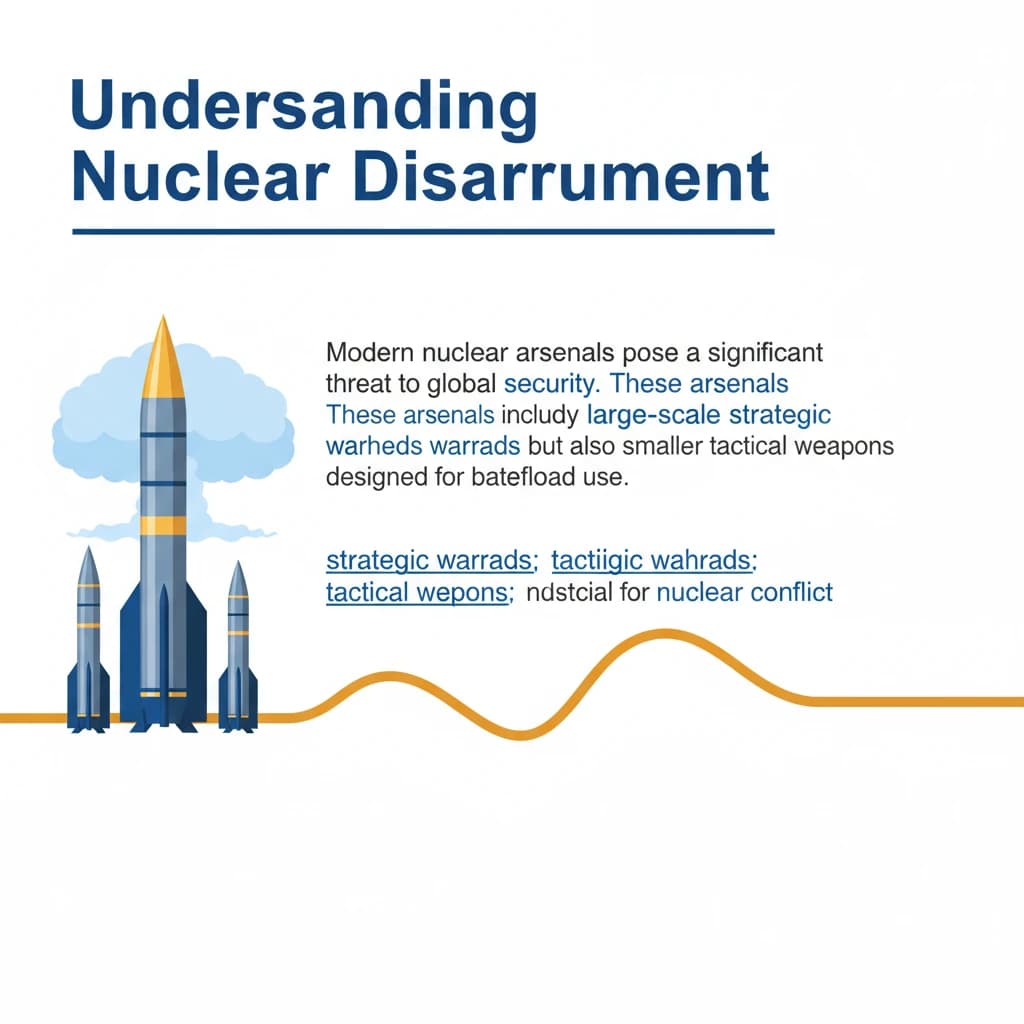
<h4>Understanding Nuclear Disarmament</h4><p>Modern <strong>nuclear arsenals</strong> pose a significant threat to global security. These arsenals include not only large-scale <strong>strategic warheads</strong> but also smaller <strong>tactical weapons</strong> designed for battlefield use. The presence and proliferation of such weapons significantly increase the risk of a potential <strong>nuclear conflict</strong>.</p><div class='key-point-box'><p>The core objective of <strong>nuclear disarmament</strong> is to mitigate and ultimately eliminate this existential threat, fostering a more secure and stable international environment.</p></div><h4>What is Nuclear Disarmament?</h4><div class='info-box'><p><strong>Nuclear disarmament</strong> refers to the systematic process of reducing, controlling, and ultimately eliminating <strong>nuclear weapons</strong>. Its primary goal is to promote global security and prevent the catastrophic consequences that would arise from <strong>nuclear warfare</strong>.</p></div><p>This comprehensive process involves various international efforts aimed at controlling and eventually abolishing existing <strong>nuclear arsenals</strong>. The ultimate vision is to achieve a completely <strong>nuclear-free world</strong>, free from the threat of atomic annihilation.</p><h4>Need for Nuclear Disarmament</h4><p>The imperative for <strong>nuclear disarmament</strong> stems from several critical factors, encompassing humanitarian, environmental, ethical, and economic considerations. These factors collectively highlight the profound dangers associated with nuclear weapons.</p><h5>Humanitarian Impact</h5><p>The immediate consequences of a <strong>nuclear explosion</strong> are devastating. They include widespread <strong>loss of life</strong>, mass destruction of infrastructure, severe burns, and acute <strong>radiation sickness</strong> among survivors. These effects are indiscriminate and catastrophic.</p><p>Beyond the immediate aftermath, long-term health effects such as various forms of <strong>cancer</strong> and irreversible <strong>genetic damage</strong> can plague survivors and their descendants for generations. The suffering caused extends far beyond the initial blast.</p><h5>Environmental Consequences</h5><p>A large-scale <strong>nuclear detonation</strong> would trigger immense environmental damage. A phenomenon known as <strong>“nuclear winter”</strong> could occur, where vast amounts of smoke and dust from explosions block sunlight from reaching the Earth's surface.</p><p>This blockage would lead to a drastic global cooling, widespread <strong>agricultural collapse</strong>, and severe disruptions to ecosystems worldwide. Such an event could fundamentally alter life on Earth and lead to mass extinctions.</p><h5>Ethical and Moral Considerations</h5><p>The sheer, unparalleled destructiveness of <strong>nuclear weapons</strong> raises profound ethical questions about their very existence and potential use. Their capacity for indiscriminate slaughter challenges fundamental moral principles.</p><p>The indiscriminate nature of their impact, which cannot differentiate between combatants and civilians, directly contravenes the principles of <strong>just war theory</strong> and established <strong>humanitarian law</strong>. Their use is seen by many as inherently immoral.</p><h5>Economic Costs</h5><p>Maintaining, modernizing, and upgrading vast <strong>nuclear arsenals</strong> demands enormous financial resources. These significant expenditures divert funds that could otherwise be allocated to pressing global issues.</p><p>Resources spent on nuclear weapons could instead be used for crucial development initiatives, poverty alleviation programs, or addressing urgent challenges like <strong>climate change</strong>. The opportunity cost is substantial and impacts global well-being.</p><div class='exam-tip-box'><p><strong>UPSC Mains General Studies Paper 2 (International Relations)</strong> often features questions on <strong>nuclear disarmament</strong>, its challenges, and India's stance. Understanding these core arguments is vital for a well-rounded answer.</p></div>
Concept Diagram

💡 Key Takeaways

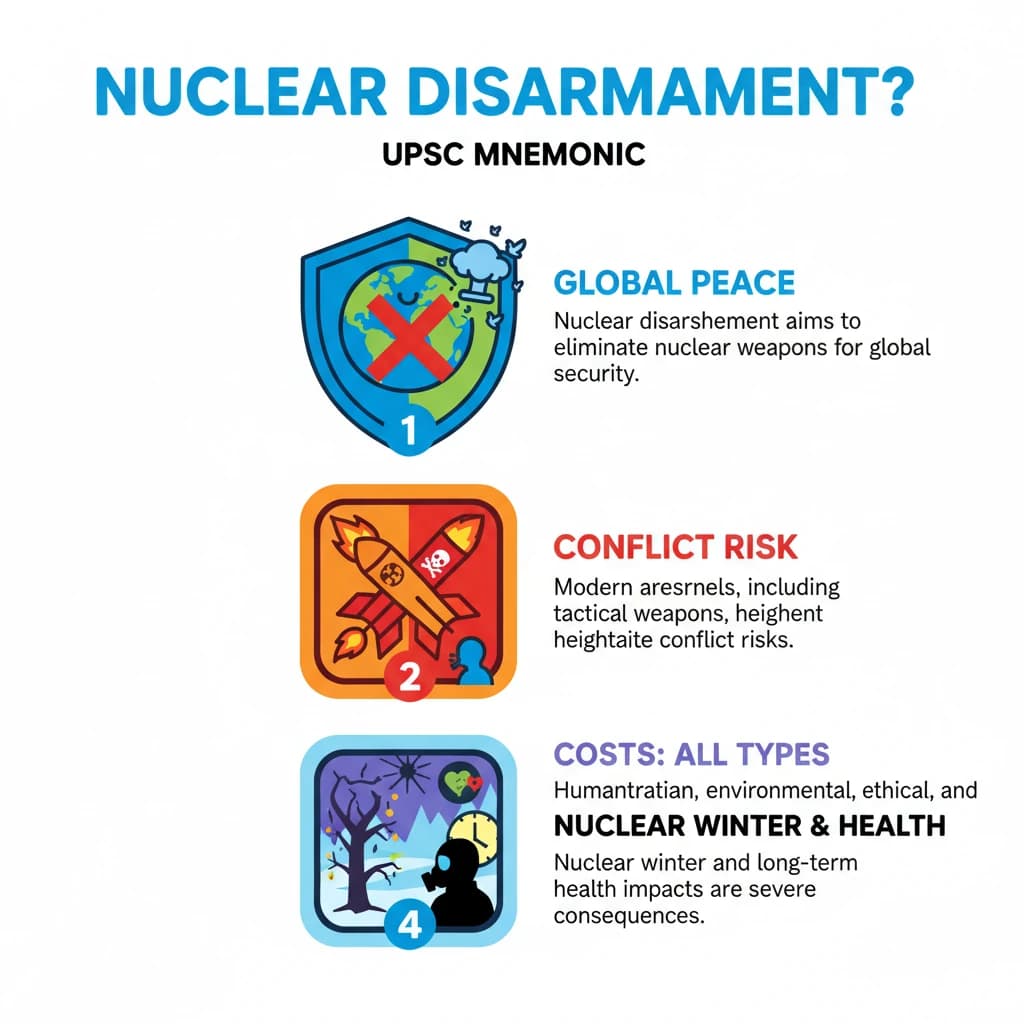
  • •Nuclear disarmament aims to eliminate nuclear weapons for global security.
  • •Modern arsenals, including tactical weapons, heighten conflict risks.
  • •Humanitarian, environmental, ethical, and economic costs necessitate disarmament.
  • •Nuclear winter and long-term health impacts are severe consequences.
  • •Key treaties like NPT and CTBT are central to disarmament efforts.
  • •Ongoing challenges include modernization, proliferation, and non-state actors.

🧠 Memory Techniques
Memory Aid
95% Verified Content

📚 Reference Sources

•United Nations Office for Disarmament Affairs (UNODA)
•International Atomic Energy Agency (IAEA)
•Federation of American Scientists (FAS) - Nuclear Information Project

Related Topics

Loading related topics...
Explore:International Relations Topics·All Subjects·Daily Current Affairs·Editorial Analysis·Previous Year Questions·UPSC GPT