Loading page, please wait…
Vaidra Logo
Vaidra

Top 4 items + smart groups

UPSC GPT
New
Current Affairs
Daily Solutions
Daily Puzzle
Mains Evaluator

Version 2.0.0 • Built with ❤️ for UPSC aspirants

Loading...
Loading...
Loading...
Loading...
Loading...
Loading...
Loading...
Loading...
Loading...
Loading...
Loading...
Loading...
Loading...
Back
All Subjects

Topics

0 topics • 0 completed

Loading topics...
Loading...
Loading...
Loading...
Loading...
Loading...
Overall Progress0%
Colombo Process - UPSC International Relations

Colombo Process - UPSC International Relations

What is Colombo Process in UPSC International Relations?

Colombo Process is a key topic under International Relations for UPSC Civil Services Examination. Key points include: Colombo Process is a regional consultative forum focused on overseas employment and migrant worker welfare.. Comprises 12 Asian member states, primarily from South and Southeast Asia.. India has become chair for the first time (2024-26) since its inception in 2003.. Understanding this topic is essential for both UPSC Prelims and Mains preparation.

Why is Colombo Process important for UPSC exam?

Colombo Process is a Medium-level topic in UPSC International Relations. It is tested in both Prelims (factual MCQs) and Mains (analytical answer writing). Previous year UPSC questions have frequently covered aspects of Colombo Process, making it essential for comprehensive IAS preparation.

How to prepare Colombo Process for UPSC?

To prepare Colombo Process for UPSC: (1) Study the comprehensive notes covering all key concepts on Vaidra. (2) Practice previous year questions on this topic. (3) Connect it with current affairs using daily updates. (4) Revise using key takeaways and mind maps available for International Relations. (5) Write practice answers linking Colombo Process to related GS Paper topics.

Key takeaways of Colombo Process for UPSC

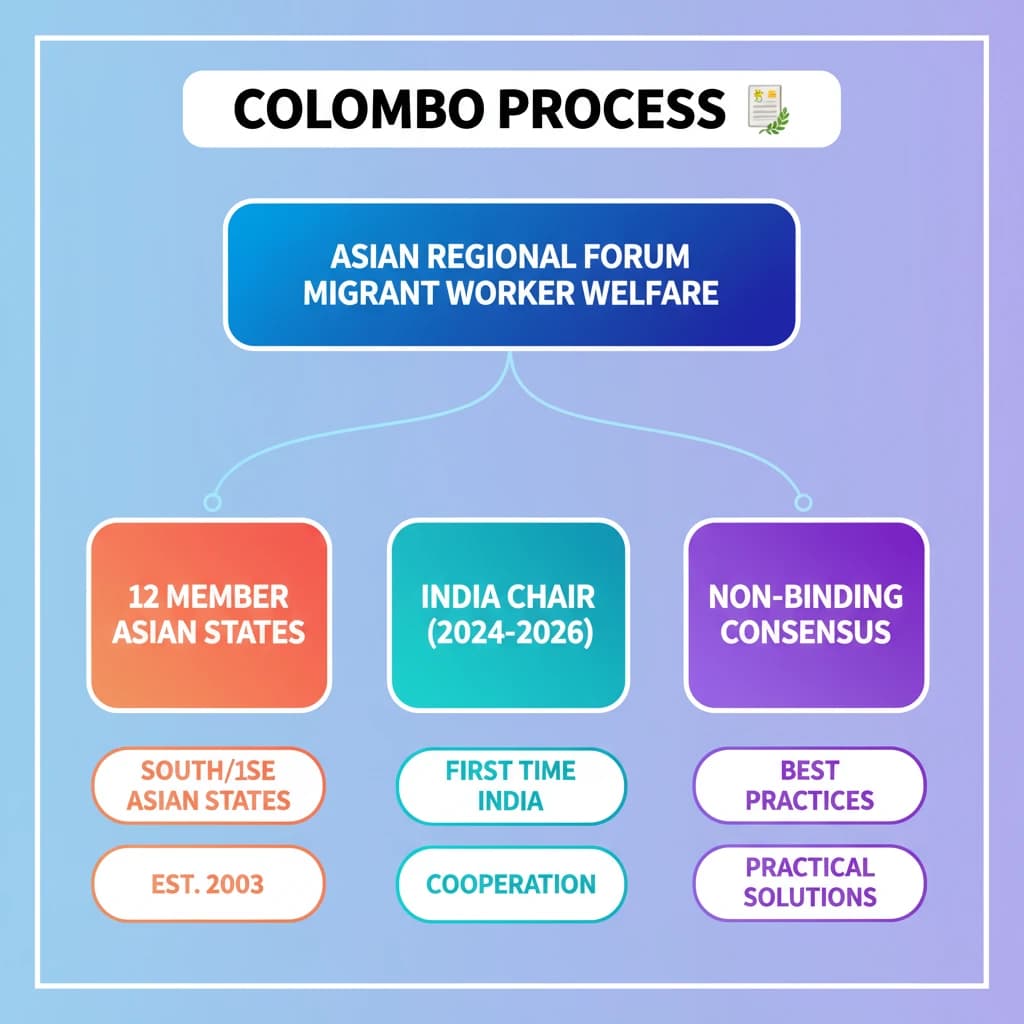
  • Colombo Process is a regional consultative forum focused on overseas employment and migrant worker welfare.
  • Comprises 12 Asian member states, primarily from South and Southeast Asia.
  • India has become chair for the first time (2024-26) since its inception in 2003.
  • Decisions are made by consensus and are non-binding, fostering cooperation.
  • Objectives include sharing best practices, consulting on worker issues, and offering practical solutions.
  • Chabahar Port is a separate strategic initiative by India to enhance its geopolitical influence and maritime security.
Colombo Process

Colombo Process

Medium⏱️ 8 min read✓ 95% Verified
international relations

📖 Introduction

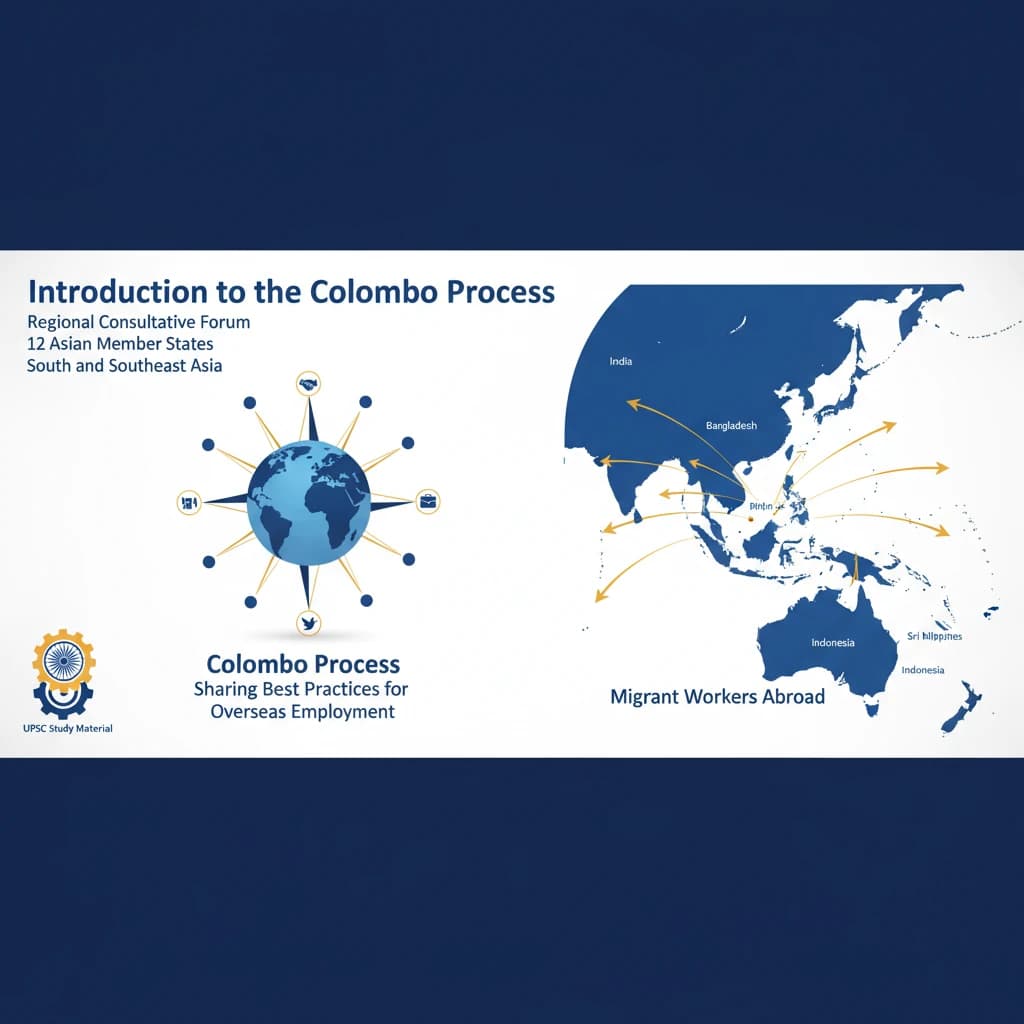
<h4>Introduction to the Colombo Process</h4><p>The <strong>Colombo Process</strong> is a significant <strong>regional consultative forum</strong> comprising <strong>12 Asian member states</strong>. It serves as a crucial platform for countries in <strong>South and Southeast Asia</strong> that send <strong>migrant workers abroad</strong>.</p><p>Its primary objective is to foster dialogue and promote the <strong>sharing of best practices</strong> related to <strong>overseas employment</strong>. This collaborative approach helps member states address common challenges faced by their citizens working abroad.</p><div class='info-box'><p>The <strong>Colombo Process</strong> was initially established in <strong>2003</strong>, reflecting a growing regional need for coordinated strategies on labor migration governance.</p></div><h4>India's Recent Leadership Role</h4><p>Significantly, <strong>India</strong> has recently assumed the <strong>chair of the Colombo Process</strong> for the period <strong>2024-26</strong>. This marks the <strong>first time</strong> India has led this regional grouping since its inception.</p><p>This leadership position provides India with a unique opportunity to shape regional discourse and initiatives concerning <strong>migrant worker welfare</strong> and <strong>ethical recruitment practices</strong>.</p><div class='exam-tip-box'><p><strong>UPSC Insight:</strong> India's chairship highlights its increasing engagement in <strong>regional multilateral forums</strong> and its commitment to addressing <strong>transnational social issues</strong>, relevant for <strong>GS Paper 2 (International Relations)</strong>.</p></div><h4>Core Mandate and Objectives</h4><p>The core mandate of the <strong>Colombo Process</strong> revolves around enhancing the protection and welfare of <strong>migrant workers</strong>. It aims to create a more supportive and equitable environment for those seeking employment overseas.</p><ul><li><strong>Share Experiences:</strong> Facilitates the exchange of knowledge, strategies, and lessons learned among member states regarding labor migration.</li><li><strong>Consult on Issues:</strong> Provides a platform to discuss pressing challenges faced by <strong>overseas workers</strong>, including exploitation, rights violations, and reintegration issues.</li><li><strong>Offer Practical Solutions:</strong> Works towards developing and implementing actionable solutions to improve the conditions and safety of <strong>migrant workers</strong>.</li></ul><h4>Member States and Structure</h4><p>The <strong>Colombo Process</strong> includes <strong>12 Asian member states</strong>, representing a significant portion of global labor-sending countries. These nations actively participate in discussions and initiatives.</p><p>The <strong>founding states</strong> played a pivotal role in establishing the forum and setting its initial agenda for cooperation on <strong>labor migration</strong>.</p><div class='info-box'><p><strong>Member States:</strong></p><ul><li><strong>Afghanistan</strong></li><li><strong>Bangladesh</strong></li><li><strong>Cambodia</strong></li><li><strong>China</strong></li><li><strong>India</strong></li><li><strong>Indonesia</strong></li><li><strong>Nepal</strong></li><li><strong>Pakistan</strong></li><li><strong>The Philippines</strong></li><li><strong>Sri Lanka</strong></li><li><strong>Thailand</strong></li><li><strong>Vietnam</strong></li></ul><p><strong>Founding States:</strong> <strong>Bangladesh, China, India, Indonesia, Nepal, Pakistan, the Philippines, Sri Lanka, Thailand, and Vietnam</strong>.</p></div><h4>Decision-Making Mechanism</h4><p>Decisions within the <strong>Colombo Process</strong> are made through a process of <strong>consensus</strong> among all participating member states. This approach ensures broad acceptance and ownership of agreed-upon strategies.</p><p>It is important to note that the decisions made under the <strong>Colombo Process</strong> are <strong>non-binding</strong>. This characteristic allows for flexibility and encourages voluntary implementation by member countries.</p><div class='key-point-box'><p>The <strong>non-binding nature</strong> of the decisions emphasizes cooperation and shared understanding rather than enforced compliance, which is common in many regional consultative processes.</p></div>
Concept Diagram

💡 Key Takeaways

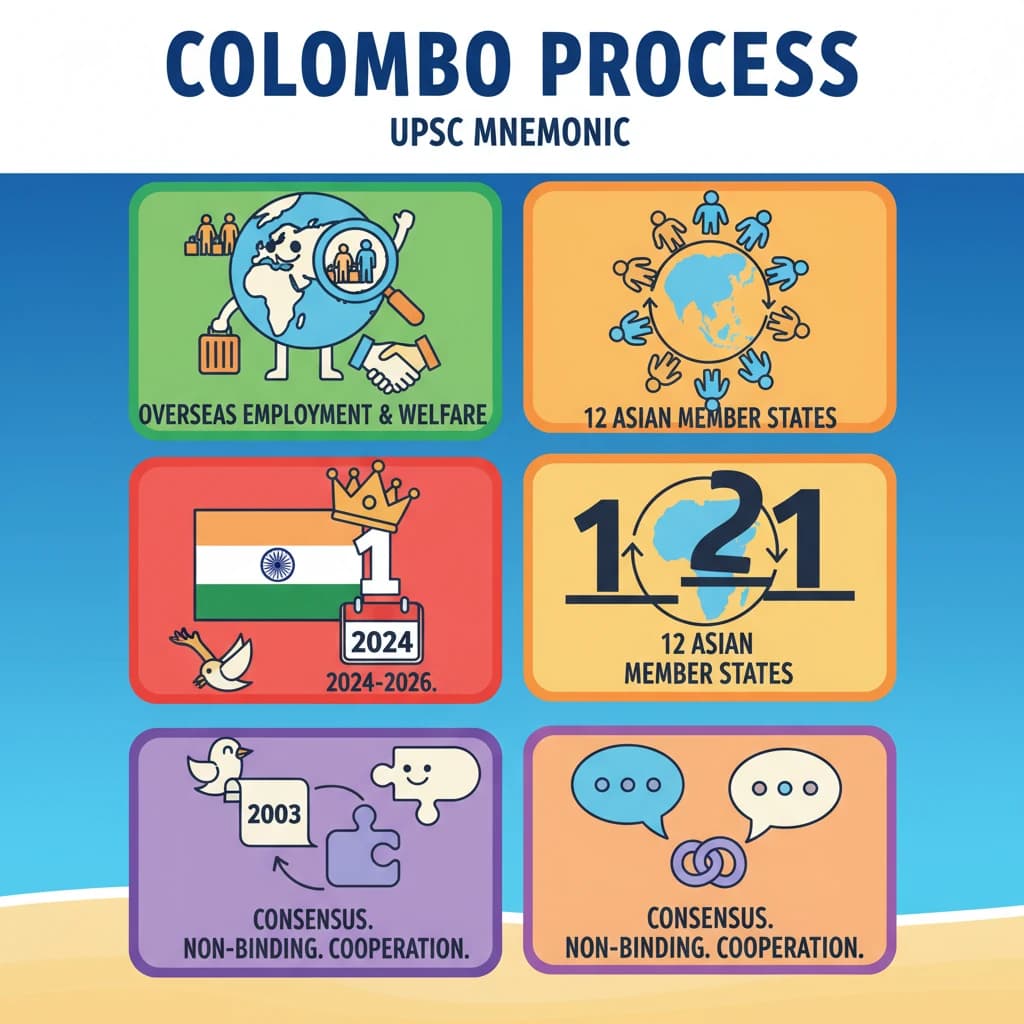
  • •Colombo Process is a regional consultative forum focused on overseas employment and migrant worker welfare.
  • •Comprises 12 Asian member states, primarily from South and Southeast Asia.
  • •India has become chair for the first time (2024-26) since its inception in 2003.
  • •Decisions are made by consensus and are non-binding, fostering cooperation.
  • •Objectives include sharing best practices, consulting on worker issues, and offering practical solutions.
  • •Chabahar Port is a separate strategic initiative by India to enhance its geopolitical influence and maritime security.

🧠 Memory Techniques
Memory Aid
95% Verified Content

Related Topics

Loading related topics...
Explore:International Relations Topics·All Subjects·Daily Current Affairs·Editorial Analysis·Previous Year Questions·UPSC GPT