Loading page, please wait…
Vaidra Logo
Vaidra

Top 4 items + smart groups

UPSC GPT
New
Current Affairs
Daily Solutions
Daily Puzzle
Mains Evaluator

Version 2.0.0 • Built with ❤️ for UPSC aspirants

Loading...
Loading...
Loading...
Loading...
Loading...
Loading...
Loading...
Loading...
Loading...
Loading...
Loading...
Loading...
Loading...
Back
All Subjects

Topics

0 topics • 0 completed

Loading topics...
Loading...
Loading...
Loading...
Loading...
Loading...
Overall Progress0%

India's Internal Security Apparatus: Key Agencies & Laws - UPSC International Relations

What is India's Internal Security Apparatus: Key Agencies & Laws in UPSC International Relations?

India's Internal Security Apparatus: Key Agencies & Laws is a key topic under International Relations for UPSC Civil Services Examination. Key points include: NIA is India's federal counter-terrorism investigation agency, formed post-26/11.. UAPA is India's primary anti-terrorism law, allowing designation of individuals as terrorists post-2019 amendment.. NATGRID aims to integrate various government databases for intelligence sharing to combat terrorism.. Understanding this topic is essential for both UPSC Prelims and Mains preparation.

Why is India's Internal Security Apparatus: Key Agencies & Laws important for UPSC exam?

India's Internal Security Apparatus: Key Agencies & Laws is a Medium-level topic in UPSC International Relations. It is tested in both Prelims (factual MCQs) and Mains (analytical answer writing). Previous year UPSC questions have frequently covered aspects of India's Internal Security Apparatus: Key Agencies & Laws, making it essential for comprehensive IAS preparation.

How to prepare India's Internal Security Apparatus: Key Agencies & Laws for UPSC?

To prepare India's Internal Security Apparatus: Key Agencies & Laws for UPSC: (1) Study the comprehensive notes covering all key concepts on Vaidra. (2) Practice previous year questions on this topic. (3) Connect it with current affairs using daily updates. (4) Revise using key takeaways and mind maps available for International Relations. (5) Write practice answers linking India's Internal Security Apparatus: Key Agencies & Laws to related GS Paper topics.

Key takeaways of India's Internal Security Apparatus: Key Agencies & Laws for UPSC

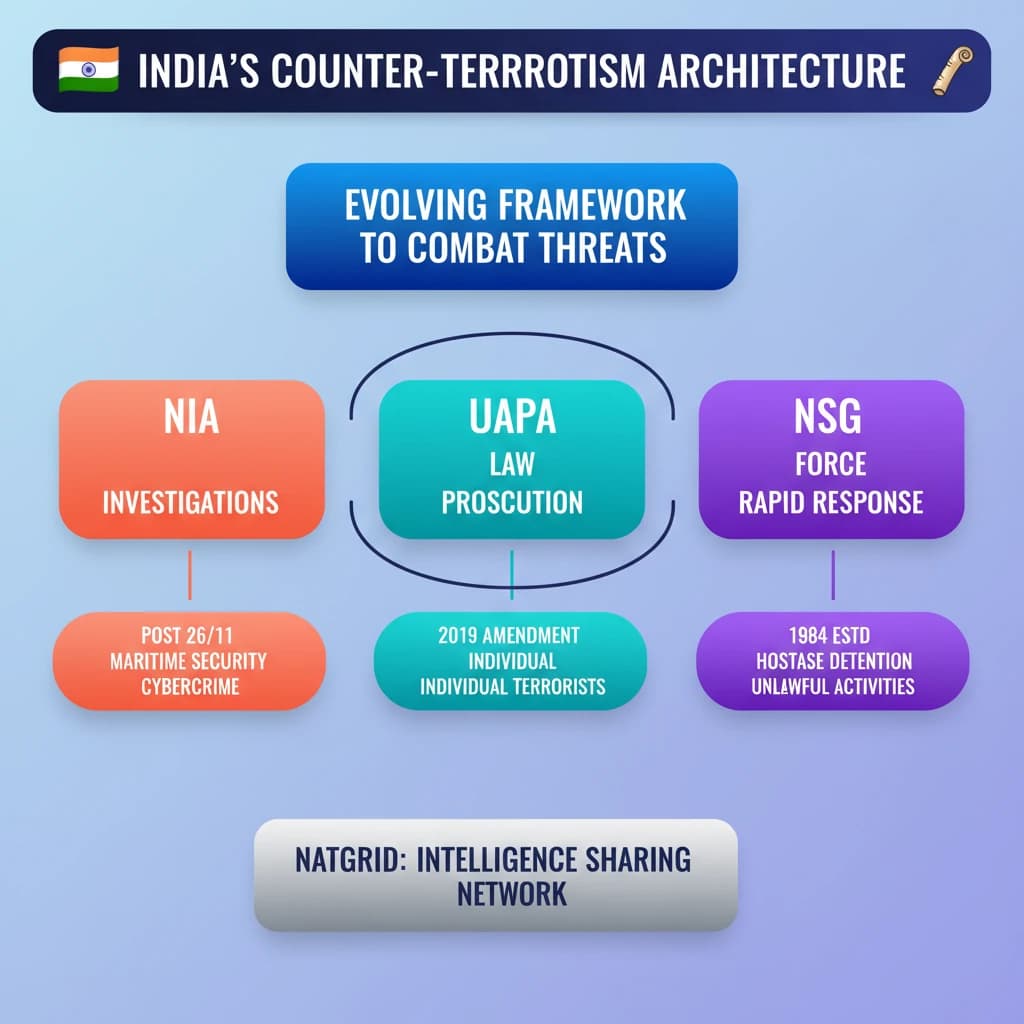
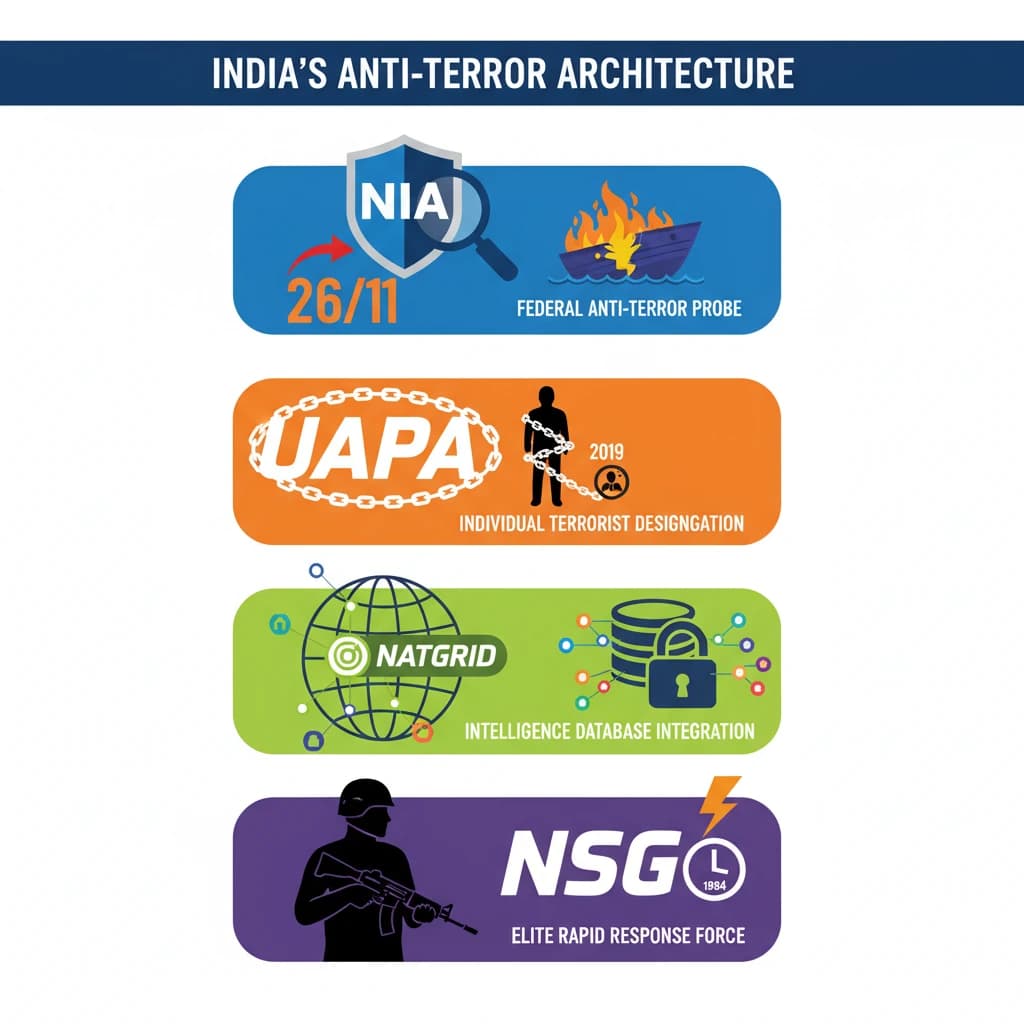
  • NIA is India's federal counter-terrorism investigation agency, formed post-26/11.
  • UAPA is India's primary anti-terrorism law, allowing designation of individuals as terrorists post-2019 amendment.
  • NATGRID aims to integrate various government databases for intelligence sharing to combat terrorism.
  • NSG is India's elite counter-terrorism commando force, established in 1984 for rapid response.
  • These institutions form crucial pillars of India's internal security architecture, constantly evolving to meet new threats.
India's Internal Security Apparatus: Key Agencies & Laws

India's Internal Security Apparatus: Key Agencies & Laws

Medium⏱️ 8 min read✓ 95% Verified
international relations

📖 Introduction

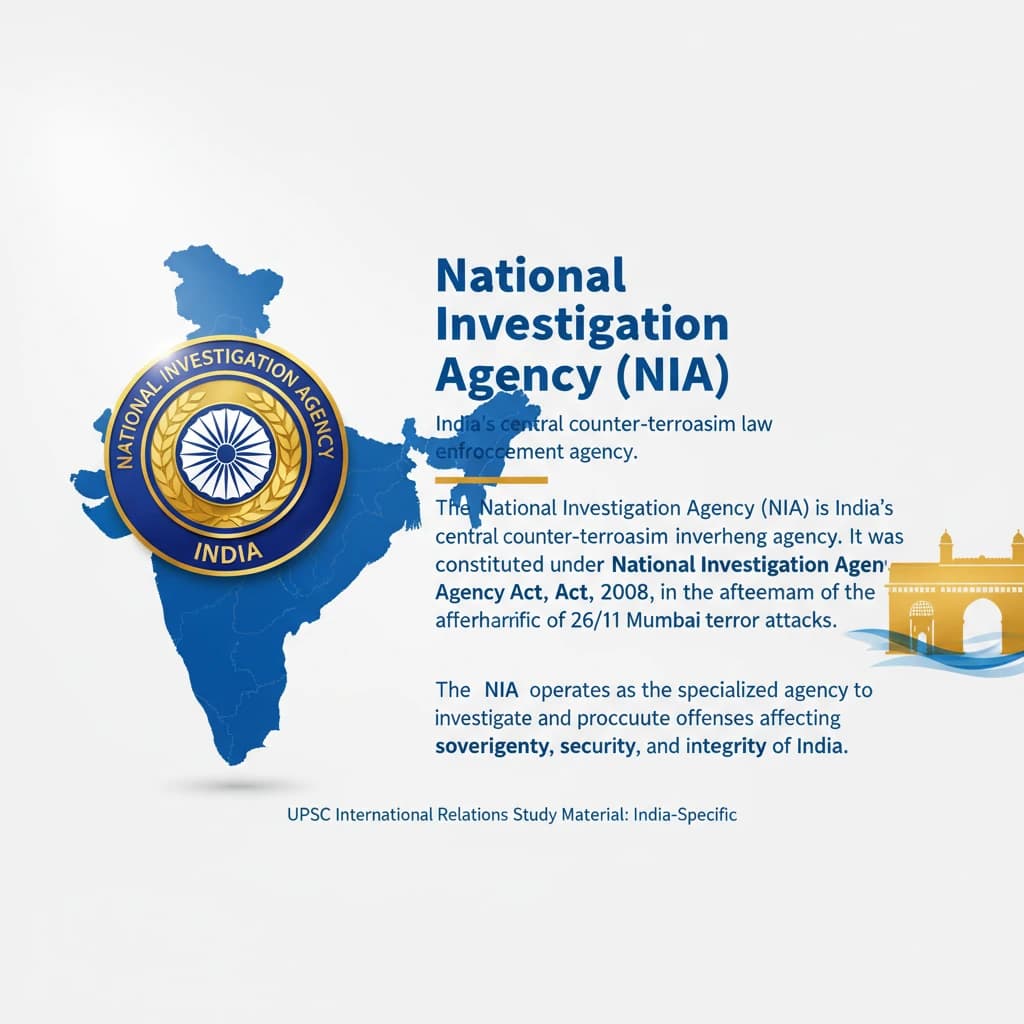
<h4>National Investigation Agency (NIA)</h4><p>The <strong>National Investigation Agency (NIA)</strong> is India's central counter-terrorism law enforcement agency. It was constituted under the <strong>National Investigation Agency Act, 2008</strong>, in the aftermath of the horrific <strong>26/11 Mumbai terror attacks</strong>.</p><p>The <strong>NIA</strong> operates as a specialized agency to investigate and prosecute offenses affecting the <strong>sovereignty, security, and integrity of India</strong>. These include terror acts, bomb blasts, hijacking, and other related crimes.</p><div class='info-box'><p><strong>Key Facts about NIA:</strong></p><ul><li><strong>Established:</strong> 2009</li><li><strong>Jurisdiction:</strong> Pan-India, with powers to investigate terror cases across states without special permission.</li><li><strong>Mandate:</strong> Combat terrorism and related offenses.</li></ul></div><div class='exam-tip-box'><p>UPSC often asks about the <strong>institutional reforms</strong> post-26/11. The establishment of <strong>NIA</strong> is a prime example of such a reform aimed at strengthening India's counter-terrorism framework.</p></div><h4>Unlawful Activities (Prevention) Amendment Act (UAPA)</h4><p>The <strong>Unlawful Activities (Prevention) Act (UAPA)</strong> is India's primary anti-terrorism legislation. It aims to effectively prevent unlawful activities associations in India. The Act has undergone several amendments since its inception.</p><p>The <strong>UAPA</strong> provides for stringent provisions to deal with terrorist activities. It grants significant powers to law enforcement agencies for investigation and prosecution of individuals and organizations involved in unlawful activities.</p><div class='key-point-box'><p><strong>Recent Amendments to UAPA:</strong></p><ul><li>The <strong>2019 amendment</strong> allowed the central government to designate individuals as terrorists.</li><li>It also empowered <strong>NIA officers</strong> of the rank of Inspector or above to investigate cases, previously requiring a DSP rank.</li></ul></div><div class='info-box'><p><strong>Purpose of UAPA:</strong> To ban organizations and individuals involved in activities that threaten India's territorial integrity and sovereignty, or promote terrorism.</p></div><h4>National Intelligence Grid (NATGRID)</h4><p>The <strong>National Intelligence Grid (NATGRID)</strong> is a proposed intelligence sharing framework. Its primary objective is to link various databases of the government to generate comprehensive intelligence for counter-terrorism efforts.</p><p><strong>NATGRID</strong> aims to be a robust mechanism for tracking terrorists and preventing attacks by providing investigators with quick access to a vast array of information from multiple agencies. This includes data from banks, airlines, railways, and immigration.</p><div class='info-box'><p><strong>NATGRID's Vision:</strong> To create a seamless and secure database of information for intelligence and law enforcement agencies, enhancing India's internal security architecture.</p></div><div class='key-point-box'><p><strong>Significance of NATGRID:</strong> It facilitates real-time access to crucial data, enabling better coordination and faster response mechanisms for security agencies.</p></div><h4>National Security Guard (NSG)</h4><p>The <strong>National Security Guard (NSG)</strong> is India's elite counter-terrorism unit. It was raised in <strong>1984</strong> following <strong>Operation Blue Star</strong> and the assassination of Prime Minister Indira Gandhi, with the aim of combating terrorism in all its manifestations.</p><p>The <strong>NSG</strong> comprises highly trained personnel from the Indian Army and Central Armed Police Forces. They specialize in various counter-terrorism roles, including hostage rescue, anti-hijacking operations, and VIP protection.</p><div class='info-box'><p><strong>NSG's Key Roles:</strong></p><ul><li><strong>Special Action Group (SAG):</strong> Primarily drawn from the Indian Army, handles counter-terrorism operations.</li><li><strong>Special Ranger Group (SRG):</strong> Drawn from CAPFs, provides VIP protection.</li></ul></div><div class='exam-tip-box'><p>The <strong>NSG's rapid deployment capability</strong> and specialized training make it a critical asset during major terror incidents, as seen during the <strong>26/11 Mumbai attacks</strong>.</p></div>
Concept Diagram

💡 Key Takeaways

  • •NIA is India's federal counter-terrorism investigation agency, formed post-26/11.
  • •UAPA is India's primary anti-terrorism law, allowing designation of individuals as terrorists post-2019 amendment.
  • •NATGRID aims to integrate various government databases for intelligence sharing to combat terrorism.
  • •NSG is India's elite counter-terrorism commando force, established in 1984 for rapid response.
  • •These institutions form crucial pillars of India's internal security architecture, constantly evolving to meet new threats.

🧠 Memory Techniques
Memory Aid
95% Verified Content

📚 Reference Sources

•The Unlawful Activities (Prevention) Act, 1967 (and subsequent amendments)
•Ministry of Home Affairs (MHA) Annual Reports
•Press Information Bureau (PIB) releases on NATGRID and NSG
•Reports by parliamentary committees on internal security

Related Topics

Loading related topics...
Explore:International Relations Topics·All Subjects·Daily Current Affairs·Editorial Analysis·Previous Year Questions·UPSC GPT
India's Internal Security Apparatus: Key Agencies & Laws - UPSC International Relations