India Acts East - UPSC International Relations
What is India Acts East in UPSC International Relations?
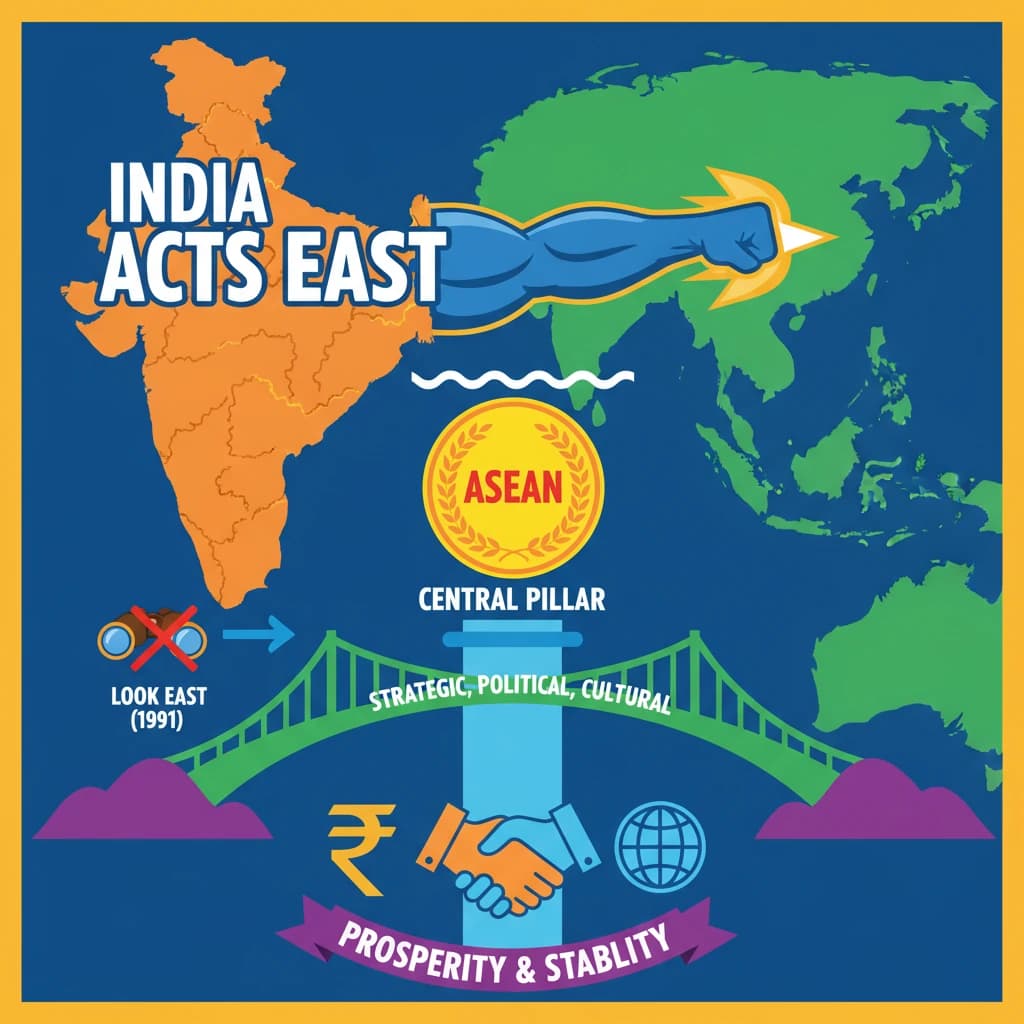
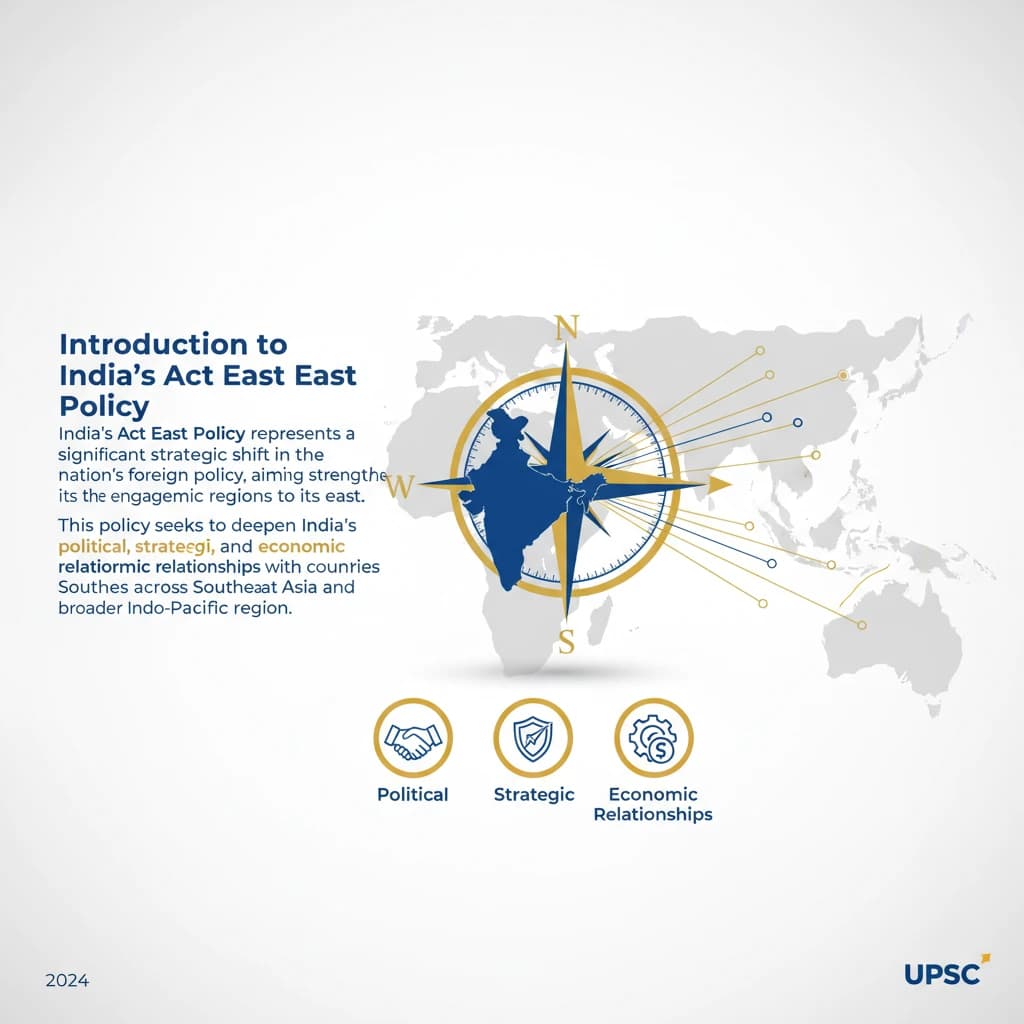
India Acts East is a key topic under International Relations for UPSC Civil Services Examination. Key points include: Act East Policy (AEP) is India's comprehensive strategy to deepen ties with Southeast Asia and the Indo-Pacific.. It evolved from the Look East Policy (1991), shifting from economic focus to broader strategic, political, and cultural engagement.. ASEAN is the central pillar and key driver of India's AEP.. Understanding this topic is essential for both UPSC Prelims and Mains preparation.
Why is India Acts East important for UPSC exam?
India Acts East is a Medium-level topic in UPSC International Relations. It is tested in both Prelims (factual MCQs) and Mains (analytical answer writing). Previous year UPSC questions have frequently covered aspects of India Acts East, making it essential for comprehensive IAS preparation.
How to prepare India Acts East for UPSC?
To prepare India Acts East for UPSC: (1) Study the comprehensive notes covering all key concepts on Vaidra. (2) Practice previous year questions on this topic. (3) Connect it with current affairs using daily updates. (4) Revise using key takeaways and mind maps available for International Relations. (5) Write practice answers linking India Acts East to related GS Paper topics.
Key takeaways of India Acts East for UPSC
- Act East Policy (AEP) is India's comprehensive strategy to deepen ties with Southeast Asia and the Indo-Pacific.
- It evolved from the Look East Policy (1991), shifting from economic focus to broader strategic, political, and cultural engagement.
- ASEAN is the central pillar and key driver of India's AEP.
- AEP aims to enhance political, strategic, and economic relationships for mutual prosperity and regional stability.
- It is crucial for India's Indo-Pacific vision, connectivity, and balancing geopolitical dynamics.
- Connectivity projects (Kaladan, Trilateral Highway) and defense cooperation (SIMBEX) are key components.
India Acts East
📖 Introduction
💡 Key Takeaways
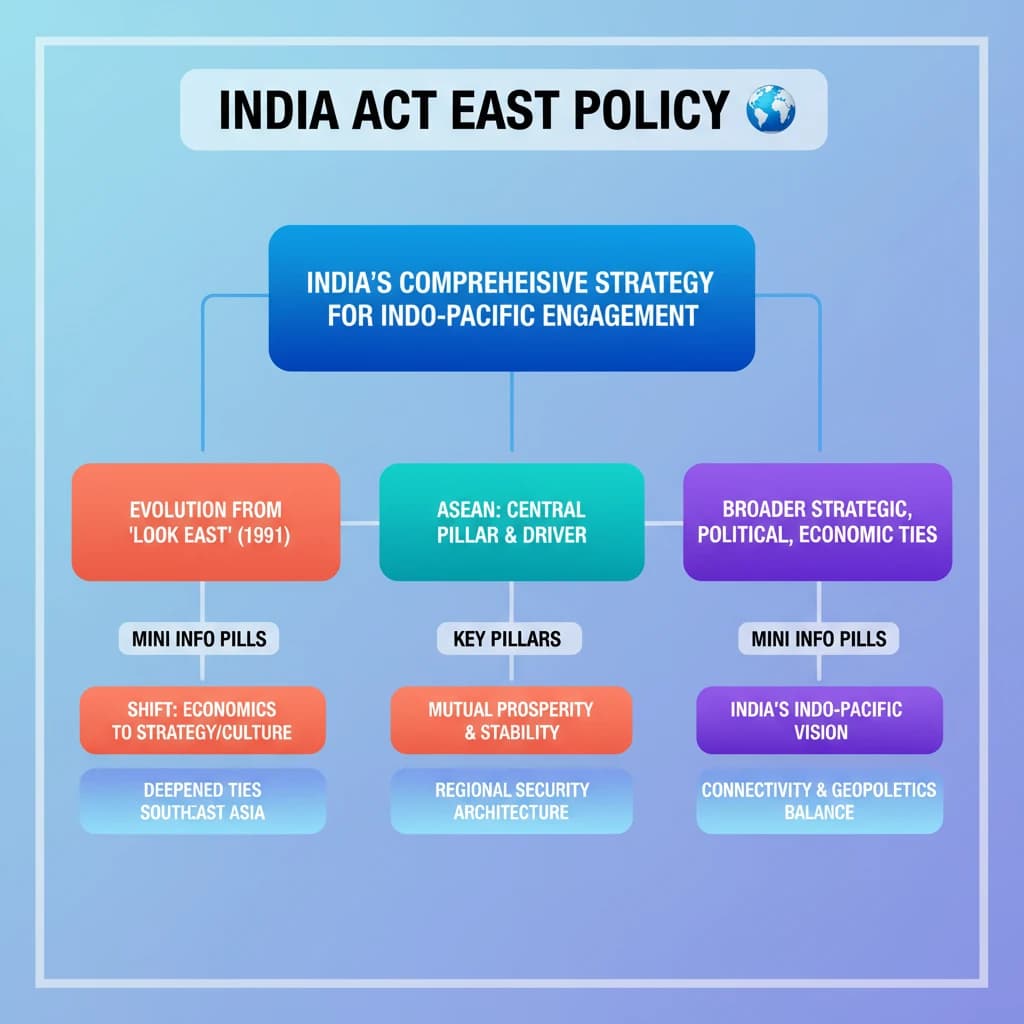
- •Act East Policy (AEP) is India's comprehensive strategy to deepen ties with Southeast Asia and the Indo-Pacific.
- •It evolved from the Look East Policy (1991), shifting from economic focus to broader strategic, political, and cultural engagement.
- •ASEAN is the central pillar and key driver of India's AEP.
- •AEP aims to enhance political, strategic, and economic relationships for mutual prosperity and regional stability.
- •It is crucial for India's Indo-Pacific vision, connectivity, and balancing geopolitical dynamics.
- •Connectivity projects (Kaladan, Trilateral Highway) and defense cooperation (SIMBEX) are key components.
🧠 Memory Techniques