Initiatives Taken to Combat Misinformation and Disinformation - UPSC International Relations
What is Initiatives Taken to Combat Misinformation and Disinformation in UPSC International Relations?
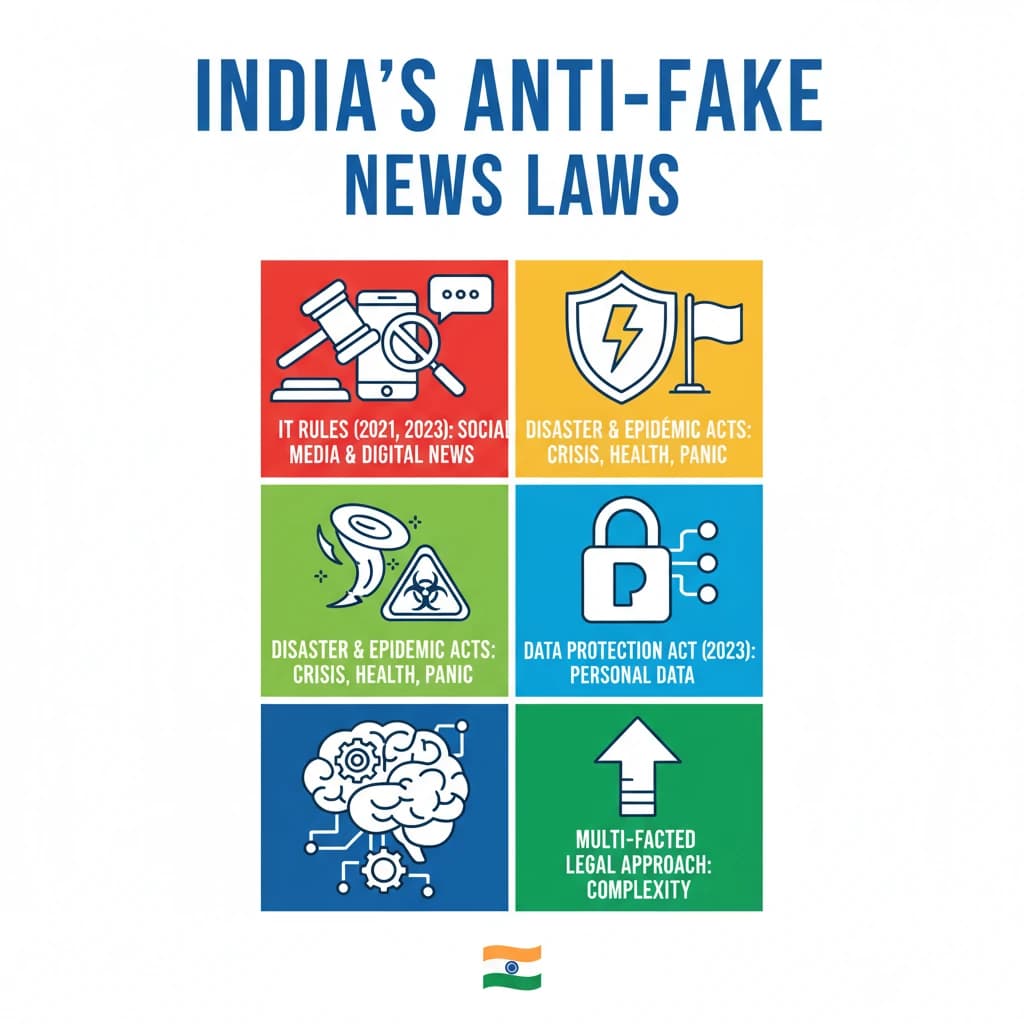
Initiatives Taken to Combat Misinformation and Disinformation is a key topic under International Relations for UPSC Civil Services Examination. Key points include: India employs a multi-faceted legal approach to combat misinformation and disinformation, reflecting the complexity of the issue.. Key legislations include the IT Rules (2021, 2023 amendments), Disaster Management Act (2005), Epidemic Diseases Act (1897), and the Digital Personal Data Protection Act (2023).. The IT Rules primarily target social media intermediaries and digital news content, establishing grievance mechanisms and due diligence requirements.. Understanding this topic is essential for both UPSC Prelims and Mains preparation.
Why is Initiatives Taken to Combat Misinformation and Disinformation important for UPSC exam?
Initiatives Taken to Combat Misinformation and Disinformation is a Medium-level topic in UPSC International Relations. It is tested in both Prelims (factual MCQs) and Mains (analytical answer writing). Previous year UPSC questions have frequently covered aspects of Initiatives Taken to Combat Misinformation and Disinformation, making it essential for comprehensive IAS preparation.
How to prepare Initiatives Taken to Combat Misinformation and Disinformation for UPSC?
To prepare Initiatives Taken to Combat Misinformation and Disinformation for UPSC: (1) Study the comprehensive notes covering all key concepts on Vaidra. (2) Practice previous year questions on this topic. (3) Connect it with current affairs using daily updates. (4) Revise using key takeaways and mind maps available for International Relations. (5) Write practice answers linking Initiatives Taken to Combat Misinformation and Disinformation to related GS Paper topics.
Key takeaways of Initiatives Taken to Combat Misinformation and Disinformation for UPSC
- India employs a multi-faceted legal approach to combat misinformation and disinformation, reflecting the complexity of the issue.
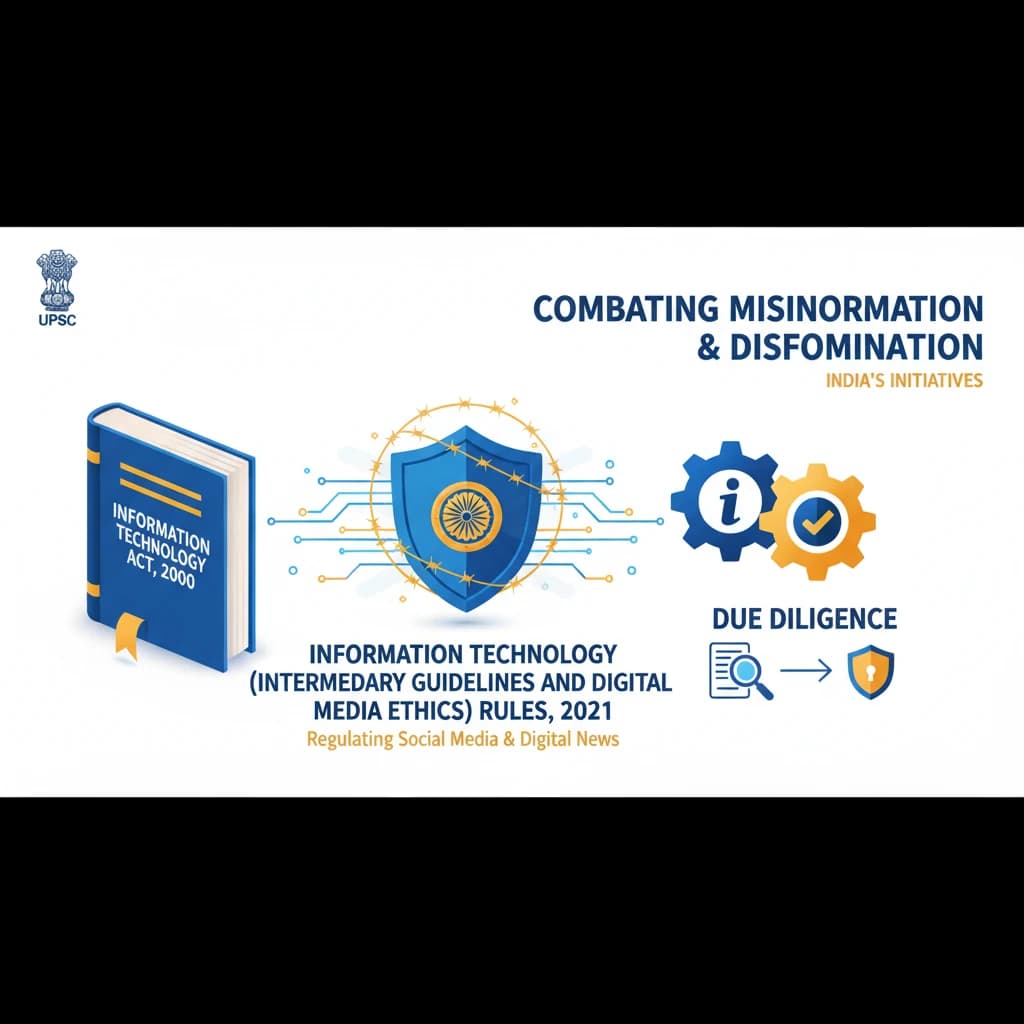
- Key legislations include the IT Rules (2021, 2023 amendments), Disaster Management Act (2005), Epidemic Diseases Act (1897), and the Digital Personal Data Protection Act (2023).
- The IT Rules primarily target social media intermediaries and digital news content, establishing grievance mechanisms and due diligence requirements.
- The Disaster Management Act and Epidemic Diseases Act are crucial during crises to counter false alarms and health-related misinformation, preventing panic and ensuring public safety.
- The Digital Personal Data Protection Act indirectly helps by regulating data misuse, which is often a foundational element for creating and spreading targeted disinformation campaigns.
- The proposed Fact Check Unit (under IT Amendment Rules, 2023) represents a significant, albeit debated, step towards official government-led fact-checking.
Initiatives Taken to Combat Misinformation and Disinformation
📖 Introduction
💡 Key Takeaways
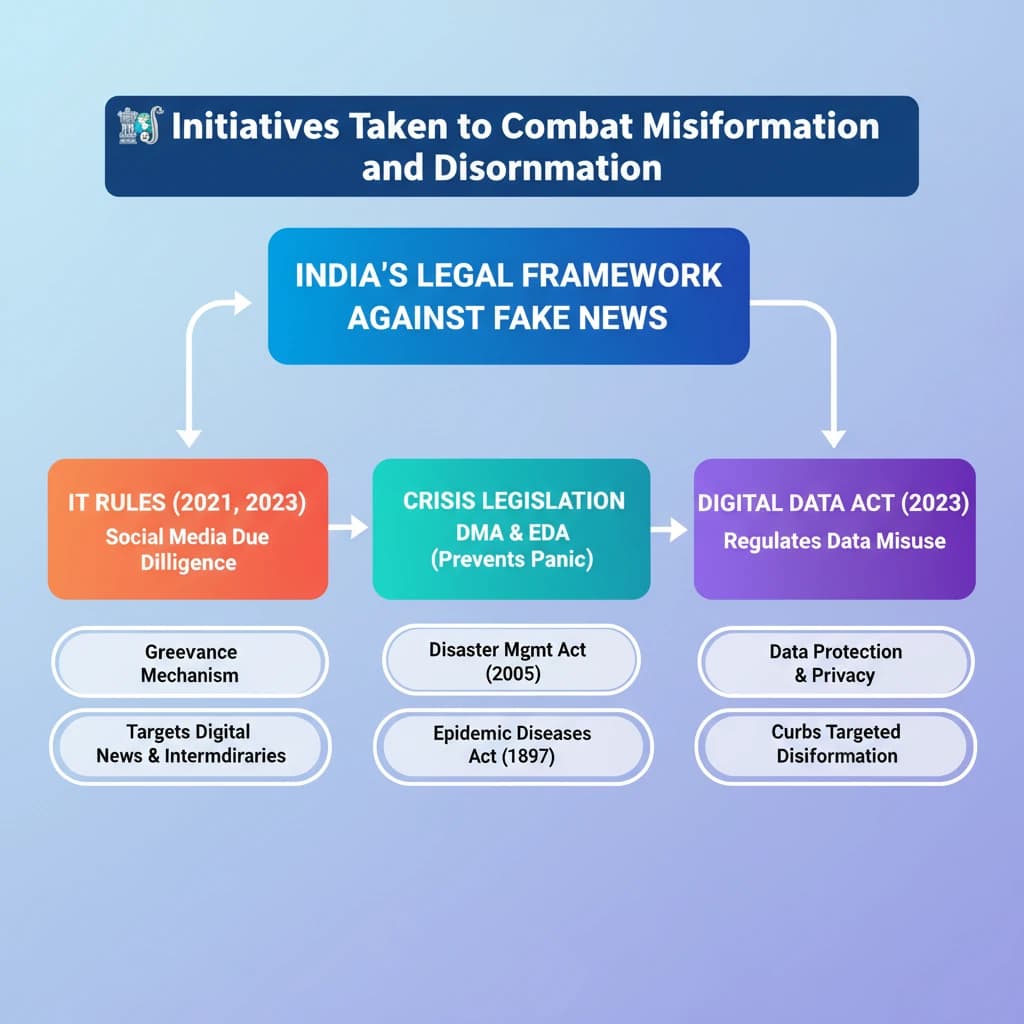
- •India employs a multi-faceted legal approach to combat misinformation and disinformation, reflecting the complexity of the issue.
- •Key legislations include the IT Rules (2021, 2023 amendments), Disaster Management Act (2005), Epidemic Diseases Act (1897), and the Digital Personal Data Protection Act (2023).
- •The IT Rules primarily target social media intermediaries and digital news content, establishing grievance mechanisms and due diligence requirements.
- •The Disaster Management Act and Epidemic Diseases Act are crucial during crises to counter false alarms and health-related misinformation, preventing panic and ensuring public safety.
- •The Digital Personal Data Protection Act indirectly helps by regulating data misuse, which is often a foundational element for creating and spreading targeted disinformation campaigns.
- •The proposed Fact Check Unit (under IT Amendment Rules, 2023) represents a significant, albeit debated, step towards official government-led fact-checking.
- •A continuous challenge for policymakers is balancing the fundamental right to freedom of speech with the imperative need to curb the spread of harmful and false content.
🧠 Memory Techniques