Loading page, please wait…
Vaidra Logo
Vaidra

Top 4 items + smart groups

UPSC GPT
New
Current Affairs
Daily Solutions
Daily Puzzle
Mains Evaluator

Version 2.0.0 • Built with ❤️ for UPSC aspirants

Loading...
Loading...
Loading...
Loading...
Loading...
Loading...
Loading...
Loading...
Loading...
Loading...
Loading...
Loading...
Loading...
Back
All Subjects

Topics

0 topics • 0 completed

Loading topics...
Loading...
Loading...
Loading...
Loading...
Loading...
Overall Progress0%
United Nations Office of Counter-Terrorism (UNOCT) - UPSC International Relations

United Nations Office of Counter-Terrorism (UNOCT) - UPSC International Relations

What is United Nations Office of Counter-Terrorism (UNOCT) in UPSC International Relations?

United Nations Office of Counter-Terrorism (UNOCT) is a key topic under International Relations for UPSC Civil Services Examination. Key points include: UNOCT was established by the UN General Assembly in 2017 to lead and coordinate UN counter-terrorism efforts.. Its core mandate includes enhancing coordination, providing leadership on UN counter-terrorism mandates, and supporting Member States.. UNOCT is crucial for implementing the UN Global Counter-Terrorism Strategy, a comprehensive framework.. Understanding this topic is essential for both UPSC Prelims and Mains preparation.

Why is United Nations Office of Counter-Terrorism (UNOCT) important for UPSC exam?

United Nations Office of Counter-Terrorism (UNOCT) is a Medium-level topic in UPSC International Relations. It is tested in both Prelims (factual MCQs) and Mains (analytical answer writing). Previous year UPSC questions have frequently covered aspects of United Nations Office of Counter-Terrorism (UNOCT), making it essential for comprehensive IAS preparation.

How to prepare United Nations Office of Counter-Terrorism (UNOCT) for UPSC?

To prepare United Nations Office of Counter-Terrorism (UNOCT) for UPSC: (1) Study the comprehensive notes covering all key concepts on Vaidra. (2) Practice previous year questions on this topic. (3) Connect it with current affairs using daily updates. (4) Revise using key takeaways and mind maps available for International Relations. (5) Write practice answers linking United Nations Office of Counter-Terrorism (UNOCT) to related GS Paper topics.

Key takeaways of United Nations Office of Counter-Terrorism (UNOCT) for UPSC

  • UNOCT was established by the UN General Assembly in 2017 to lead and coordinate UN counter-terrorism efforts.
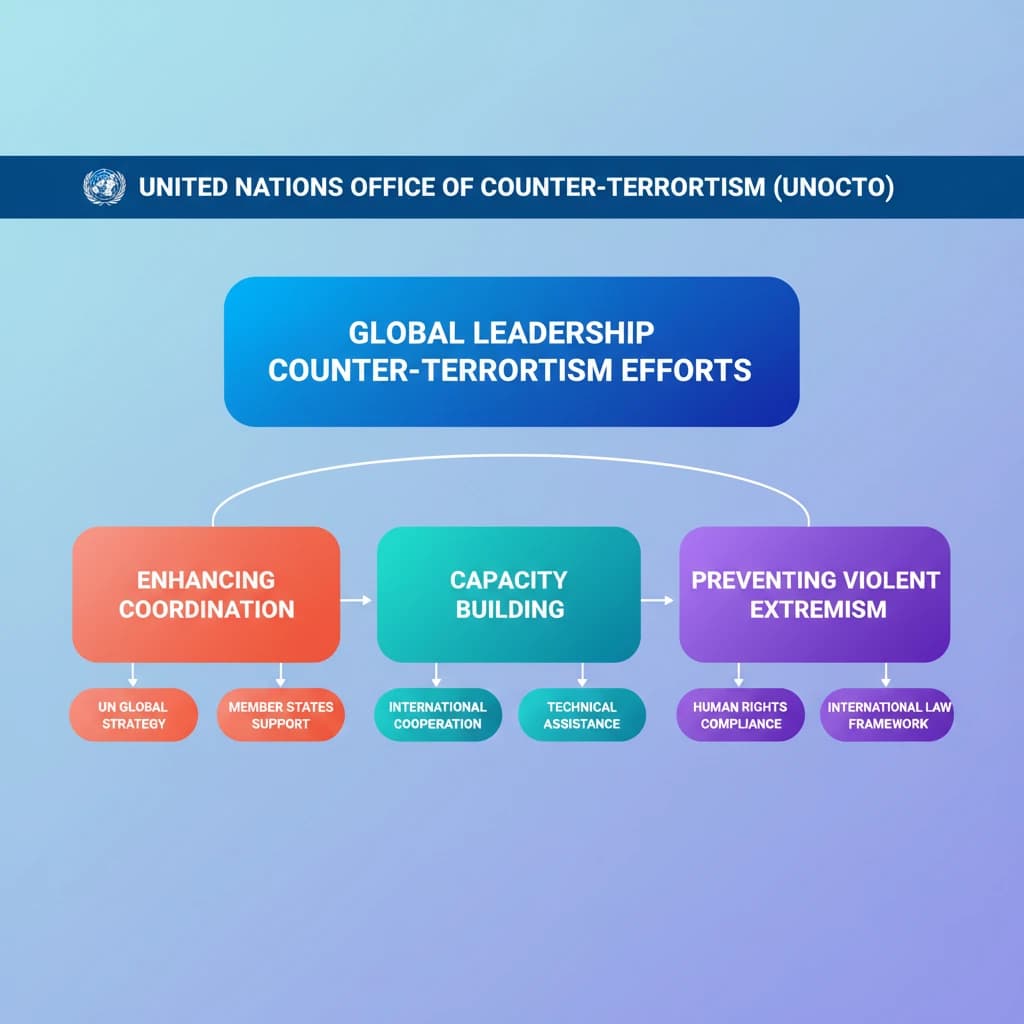
  • Its core mandate includes enhancing coordination, providing leadership on UN counter-terrorism mandates, and supporting Member States.
  • UNOCT is crucial for implementing the UN Global Counter-Terrorism Strategy, a comprehensive framework.
  • It focuses on capacity building for states, promoting international cooperation, and preventing violent extremism.
  • The office ensures UN counter-terrorism measures align with human rights and international law.
United Nations Office of Counter-Terrorism (UNOCT)

United Nations Office of Counter-Terrorism (UNOCT)

Medium⏱️ 10 min read✓ 98% Verified
international relations

📖 Introduction

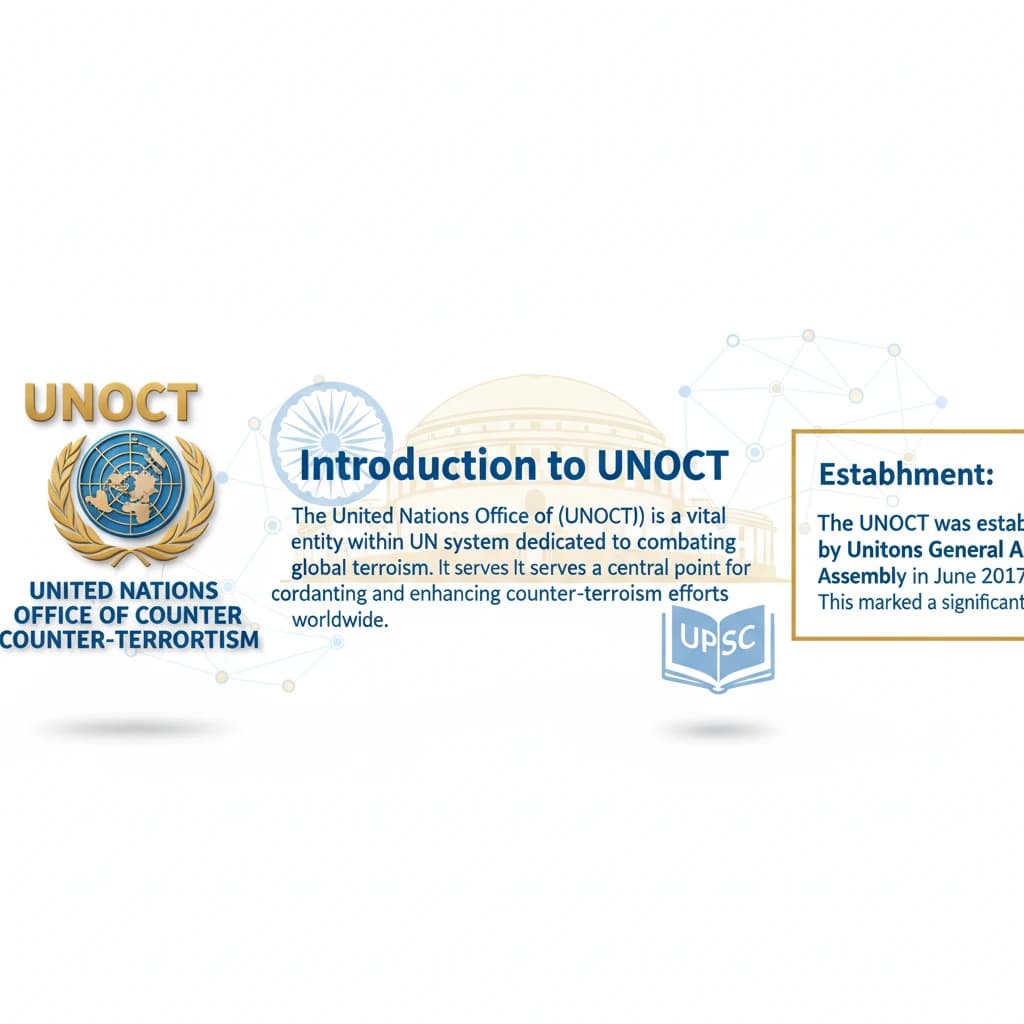
<h4>Introduction to UNOCT</h4><p>The <strong>United Nations Office of Counter-Terrorism (UNOCT)</strong> is a vital entity within the UN system dedicated to combating global terrorism. It serves as a central point for coordinating and enhancing counter-terrorism efforts worldwide.</p><div class='info-box'><p><strong>Establishment:</strong> The <strong>UNOCT</strong> was established by the <strong>United Nations General Assembly</strong> in <strong>June 2017</strong>. This marked a significant step in consolidating the UN's approach to counter-terrorism.</p></div><h4>Core Mandate and Objectives</h4><p>The primary purpose of the <strong>UNOCT</strong> is to provide strong leadership on the <strong>General Assembly’s counter-terrorism mandates</strong>. It ensures that UN efforts are coherent and effectively coordinated across various agencies and programs.</p><div class='key-point-box'><p><strong>Key Objectives:</strong><ul><li>To enhance <strong>coordination and coherence</strong> of counter-terrorism activities across the entire UN system.</li><li>To strengthen the capacity of <strong>Member States</strong> to prevent and combat terrorism.</li><li>To provide <strong>leadership</strong> for the General Assembly's counter-terrorism mandates.</li></ul></p></div><h4>Supporting the Global Strategy</h4><p>A crucial function of the <strong>UNOCT</strong> is to support <strong>Member States</strong> in implementing the <strong>UN Global Counter-Terrorism Strategy</strong>. This strategy is a unique global instrument to enhance national, regional, and international efforts to counter terrorism.</p><div class='exam-tip-box'><p><strong>UPSC Insight:</strong> Understanding the <strong>UNOCT's mandate</strong> and its connection to the <strong>UN Global Counter-Terrorism Strategy</strong> is crucial for questions on international organizations and global security in <strong>GS Paper II</strong> and <strong>GS Paper III</strong>.</p></div>
Concept Diagram

💡 Key Takeaways

  • •UNOCT was established by the UN General Assembly in 2017 to lead and coordinate UN counter-terrorism efforts.
  • •Its core mandate includes enhancing coordination, providing leadership on UN counter-terrorism mandates, and supporting Member States.
  • •UNOCT is crucial for implementing the UN Global Counter-Terrorism Strategy, a comprehensive framework.
  • •It focuses on capacity building for states, promoting international cooperation, and preventing violent extremism.
  • •The office ensures UN counter-terrorism measures align with human rights and international law.

🧠 Memory Techniques
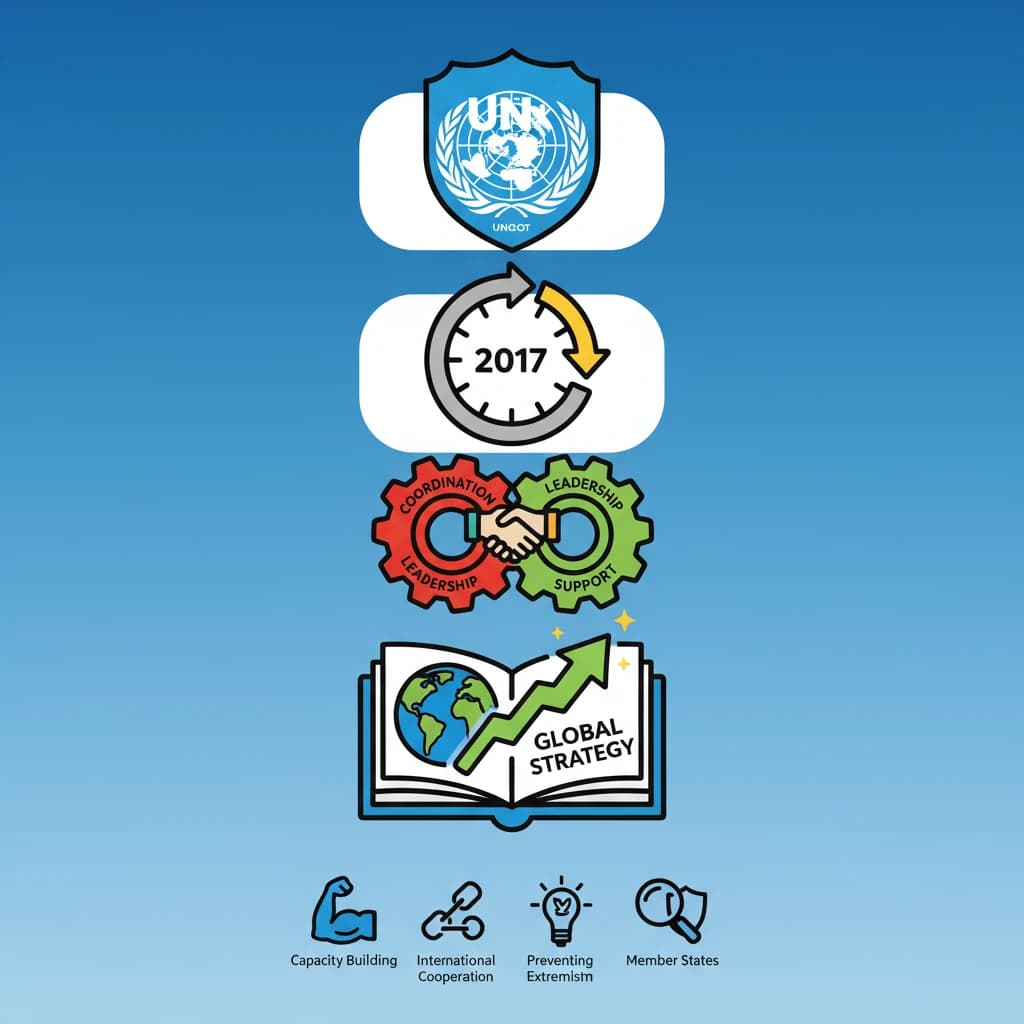
Memory Aid
98% Verified Content

📚 Reference Sources

•UN Global Counter-Terrorism Strategy documents
•UN General Assembly Resolutions on Counter-Terrorism
•Reports of the UN Secretary-General on the work of UNOCT

Related Topics

Loading related topics...
Explore:International Relations Topics·All Subjects·Daily Current Affairs·Editorial Analysis·Previous Year Questions·UPSC GPT