Loading page, please wait…
Vaidra Logo
Vaidra

Top 4 items + smart groups

UPSC GPT
New
Current Affairs
Daily Solutions
Daily Puzzle
Mains Evaluator

Version 2.0.0 • Built with ❤️ for UPSC aspirants

Loading...
Loading...
Loading...
Loading...
Loading...
Loading...
Loading...
Loading...
Loading...
Loading...
Loading...
Loading...
Loading...
Back
All Subjects

Topics

0 topics • 0 completed

Loading topics...
Loading...
Loading...
Loading...
Loading...
Loading...
Overall Progress0%

What are the Regions of Border Dispute Between India and Nepal? - UPSC International Relations

What is What are the Regions of Border Dispute Between India and Nepal? in UPSC International Relations?

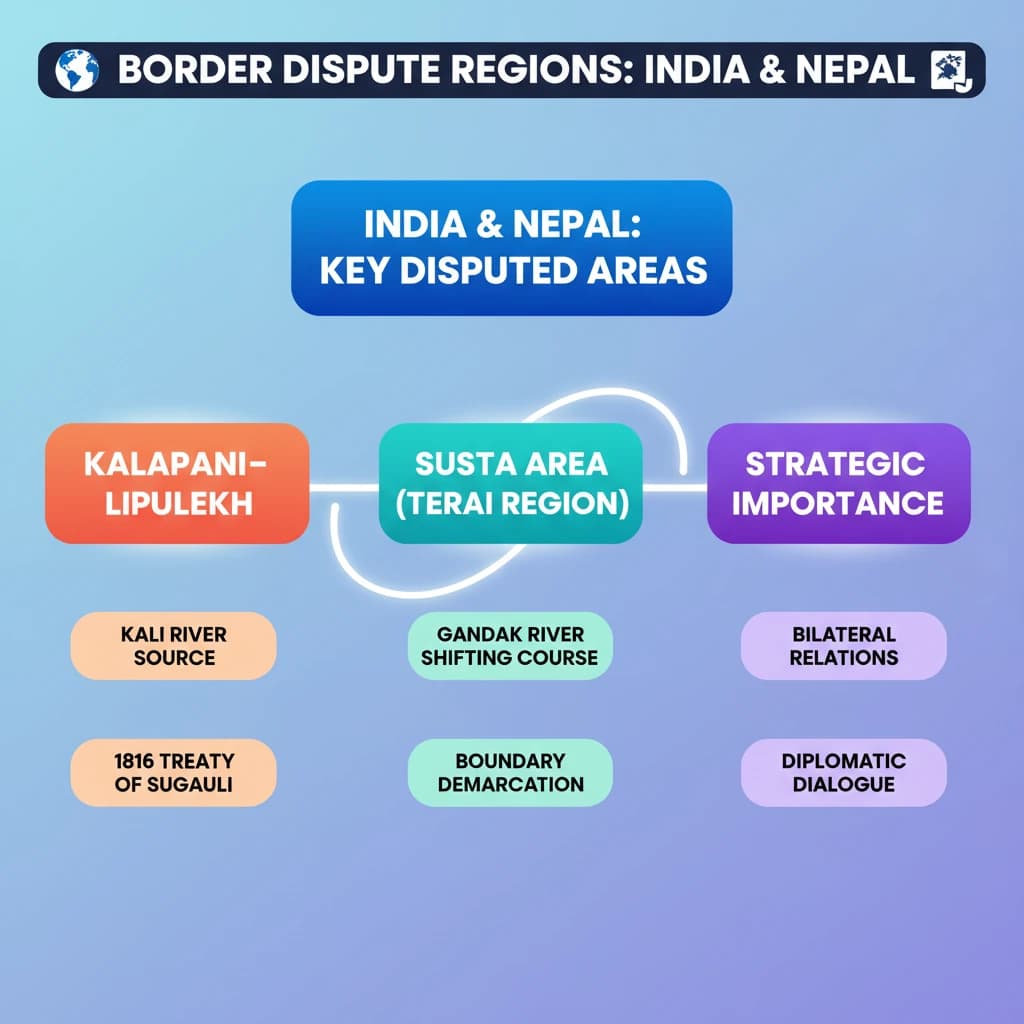
What are the Regions of Border Dispute Between India and Nepal? is a key topic under International Relations for UPSC Civil Services Examination. Key points include: India and Nepal primarily dispute the Kalapani-Limpiyadhura-Lipulekh trijunction and the Susta area.. The Kalapani dispute stems from differing interpretations of the Kali River's source, as defined by the 1816 Treaty of Sugauli.. The Susta dispute is primarily due to the shifting course of the Gandak River, causing ambiguities in demarcation.. Understanding this topic is essential for both UPSC Prelims and Mains preparation.

Why is What are the Regions of Border Dispute Between India and Nepal? important for UPSC exam?

What are the Regions of Border Dispute Between India and Nepal? is a Medium-level topic in UPSC International Relations. It is tested in both Prelims (factual MCQs) and Mains (analytical answer writing). Previous year UPSC questions have frequently covered aspects of What are the Regions of Border Dispute Between India and Nepal?, making it essential for comprehensive IAS preparation.

How to prepare What are the Regions of Border Dispute Between India and Nepal? for UPSC?

To prepare What are the Regions of Border Dispute Between India and Nepal? for UPSC: (1) Study the comprehensive notes covering all key concepts on Vaidra. (2) Practice previous year questions on this topic. (3) Connect it with current affairs using daily updates. (4) Revise using key takeaways and mind maps available for International Relations. (5) Write practice answers linking What are the Regions of Border Dispute Between India and Nepal? to related GS Paper topics.

Key takeaways of What are the Regions of Border Dispute Between India and Nepal? for UPSC

  • India and Nepal primarily dispute the Kalapani-Limpiyadhura-Lipulekh trijunction and the Susta area.
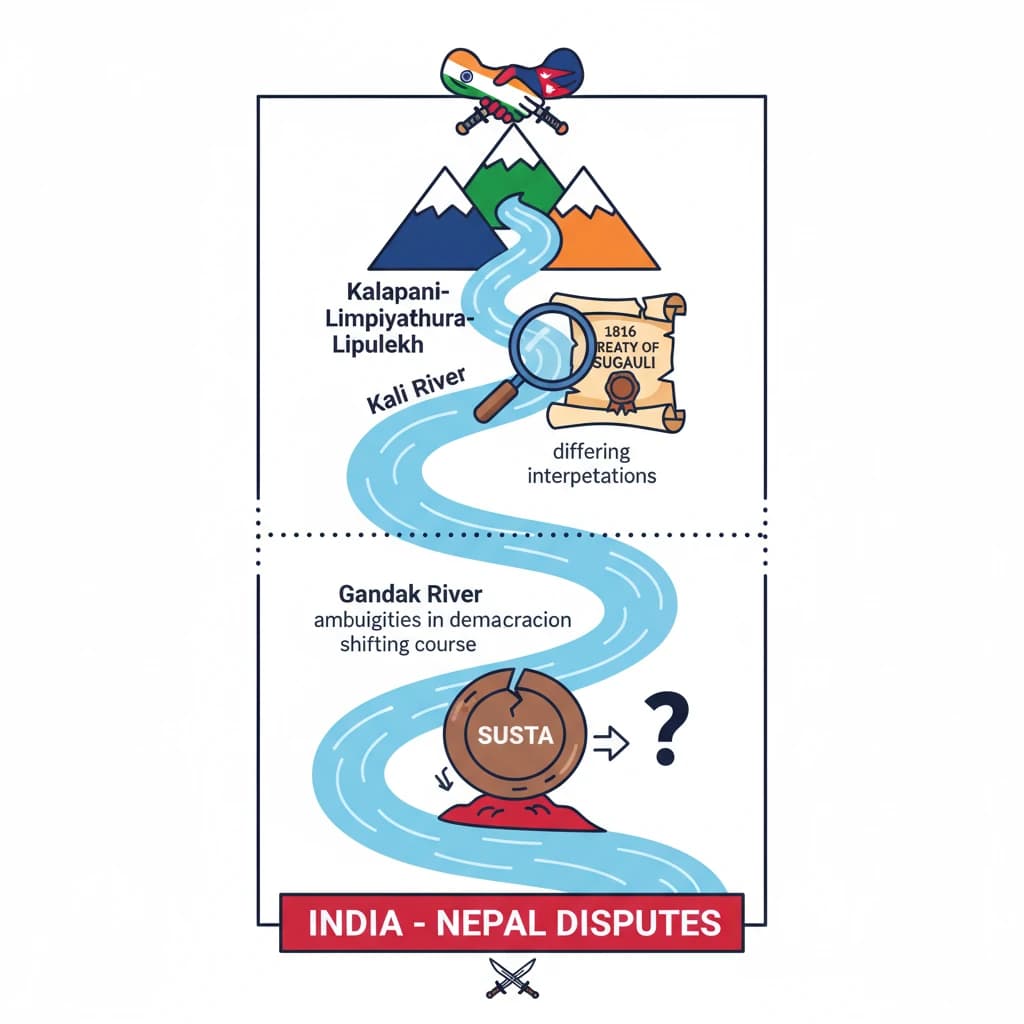
  • The Kalapani dispute stems from differing interpretations of the Kali River's source, as defined by the 1816 Treaty of Sugauli.
  • The Susta dispute is primarily due to the shifting course of the Gandak River, causing ambiguities in demarcation.
  • Both regions hold strategic importance and are sensitive issues impacting India-Nepal bilateral relations.
  • Resolution requires sustained diplomatic dialogue, mutual respect, and technical solutions for boundary demarcation.
  • These disputes highlight challenges in managing riverine borders and interpreting historical treaties.
What are the Regions of Border Dispute Between India and Nepal?

What are the Regions of Border Dispute Between India and Nepal?

Medium⏱️ 5 min read✓ 95% Verified
international relations

📖 Introduction

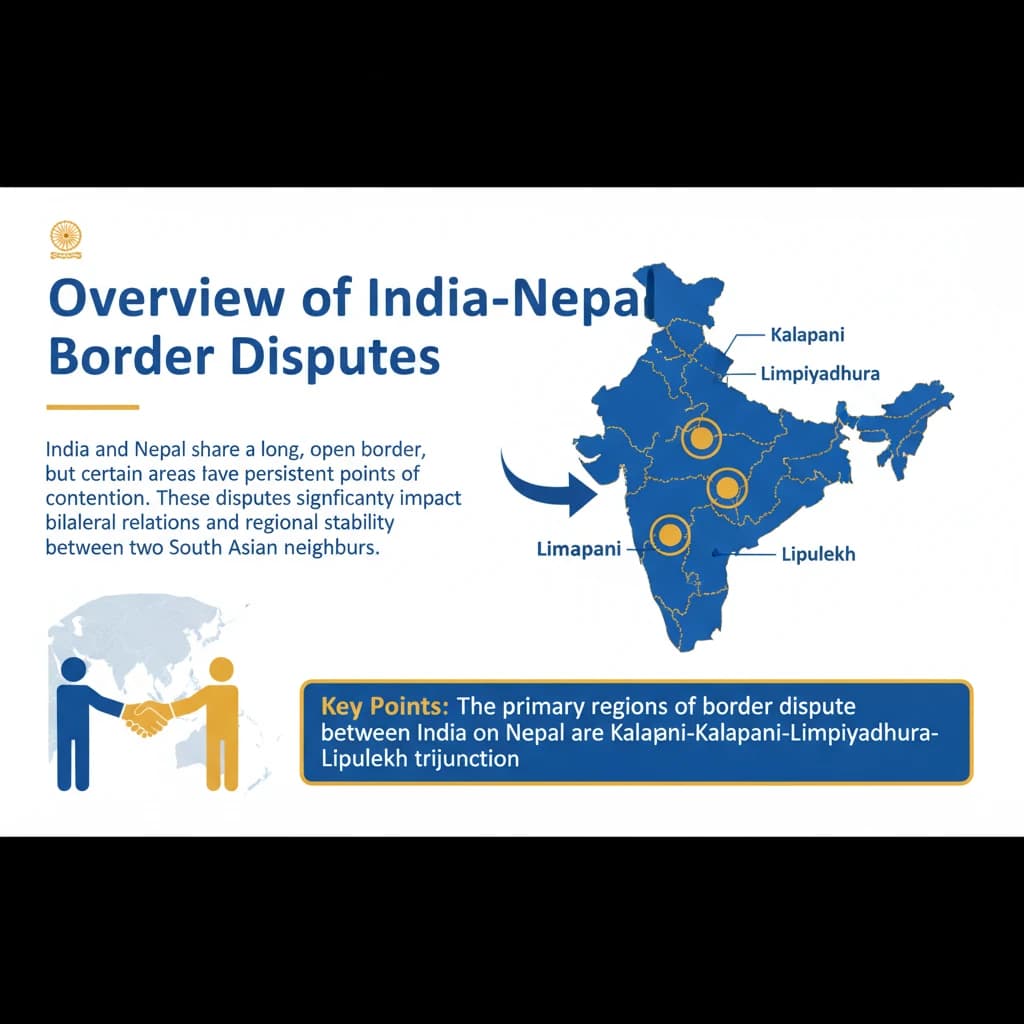
<h4>Overview of India-Nepal Border Disputes</h4><p><strong>India</strong> and <strong>Nepal</strong> share a long, open border, but certain areas have been persistent points of contention. These disputes significantly impact bilateral relations and regional stability between the two South Asian neighbours.</p><div class='key-point-box'>The primary regions of border dispute between <strong>India</strong> and <strong>Nepal</strong> are the <strong>Kalapani-Limpiyadhura-Lipulekh trijunction</strong> and the <strong>Susta area</strong>.</div><h4>The Kalapani-Limpiyadhura-Lipulekh Trijunction</h4><p>This region, often referred to as the <strong>Kalapani Region</strong>, is a strategically significant flashpoint. It is located near the crucial tri-junction where the borders of <strong>India</strong>, <strong>Nepal</strong>, and <strong>China</strong> meet.</p><div class='info-box'>The <strong>Kalapani-Limpiyadhura-Lipulekh trijunction</strong> encompasses an area of approximately <strong>35 square kilometres</strong>. Nepal claims this territory lies in its <strong>northwestern part</strong>.</div><p>The core of this dispute revolves around the precise origin of the <strong>Kali River</strong>. According to the <strong>Treaty of Sugauli (1816)</strong>, the <strong>Kali River</strong> forms the western boundary of <strong>Nepal</strong> with <strong>India</strong>. India maintains the river originates from <strong>Kalapani</strong>, while Nepal asserts its origin is further west at <strong>Limpiyadhura</strong>.</p><h4>The Susta Area Dispute</h4><p>The <strong>Susta area</strong> represents another long-standing border dispute between <strong>India</strong> and <strong>Nepal</strong>. This region is situated in the <strong>West Champaran district</strong> of <strong>Bihar</strong>, <strong>India</strong>, bordering <strong>Nawalparasi district</strong> of <strong>Nepal</strong>.</p><div class='info-box'>The <strong>Susta area</strong> dispute primarily arises from the changing course of the <strong>Gandak River</strong> (known as Narayani in Nepal). The river's shifting path has led to ambiguities in defining the exact international boundary.</div><p>Both countries claim sovereignty over parts of the fertile land within the <strong>Susta region</strong>. This issue has historical roots, linked to land surveys and challenges in demarcating riverine boundaries over time.</p>
Concept Diagram

💡 Key Takeaways

  • •India and Nepal primarily dispute the Kalapani-Limpiyadhura-Lipulekh trijunction and the Susta area.
  • •The Kalapani dispute stems from differing interpretations of the Kali River's source, as defined by the 1816 Treaty of Sugauli.
  • •The Susta dispute is primarily due to the shifting course of the Gandak River, causing ambiguities in demarcation.
  • •Both regions hold strategic importance and are sensitive issues impacting India-Nepal bilateral relations.
  • •Resolution requires sustained diplomatic dialogue, mutual respect, and technical solutions for boundary demarcation.
  • •These disputes highlight challenges in managing riverine borders and interpreting historical treaties.

🧠 Memory Techniques
Memory Aid
95% Verified Content

📚 Reference Sources

•Ministry of External Affairs (India) official statements and press releases
•Government of Nepal official statements and diplomatic notes
•Academic analyses and geopolitical reports on India-Nepal relations and border issues
•Historical records pertaining to the Treaty of Sugauli (1816)

Related Topics

Loading related topics...
Explore:International Relations Topics·All Subjects·Daily Current Affairs·Editorial Analysis·Previous Year Questions·UPSC GPT
What are the Regions of Border Dispute Between India and Nepal? - UPSC International Relations