Loading page, please wait…
Vaidra Logo
Vaidra

Top 4 items + smart groups

UPSC GPT
New
Current Affairs
Daily Solutions
Daily Puzzle
Mains Evaluator

Version 2.0.0 • Built with ❤️ for UPSC aspirants

Loading...
Loading...
Loading...
Loading...
Loading...
Loading...
Loading...
Loading...
Loading...
Loading...
Loading...
Loading...
Loading...
Back
All Subjects

Topics

0 topics • 0 completed

Loading topics...
Loading...
Loading...
Loading...
Loading...
Loading...
Overall Progress0%

What are Other Maritime Corridors Significant for India? - UPSC International Relations

What is What are Other Maritime Corridors Significant for India? in UPSC International Relations?

What are Other Maritime Corridors Significant for India? is a key topic under International Relations for UPSC Civil Services Examination. Key points include: INSTC is a 7,200 km multimodal route connecting India to Russia, Iran, Central Asia, and Europe.. Launched in 2000 by India, Iran, and Russia; now has 13 member countries.. Integrates ship, rail, and road to significantly reduce transit time and cost.. Understanding this topic is essential for both UPSC Prelims and Mains preparation.

Why is What are Other Maritime Corridors Significant for India? important for UPSC exam?

What are Other Maritime Corridors Significant for India? is a Medium-level topic in UPSC International Relations. It is tested in both Prelims (factual MCQs) and Mains (analytical answer writing). Previous year UPSC questions have frequently covered aspects of What are Other Maritime Corridors Significant for India?, making it essential for comprehensive IAS preparation.

How to prepare What are Other Maritime Corridors Significant for India? for UPSC?

To prepare What are Other Maritime Corridors Significant for India? for UPSC: (1) Study the comprehensive notes covering all key concepts on Vaidra. (2) Practice previous year questions on this topic. (3) Connect it with current affairs using daily updates. (4) Revise using key takeaways and mind maps available for International Relations. (5) Write practice answers linking What are Other Maritime Corridors Significant for India? to related GS Paper topics.

Key takeaways of What are Other Maritime Corridors Significant for India? for UPSC

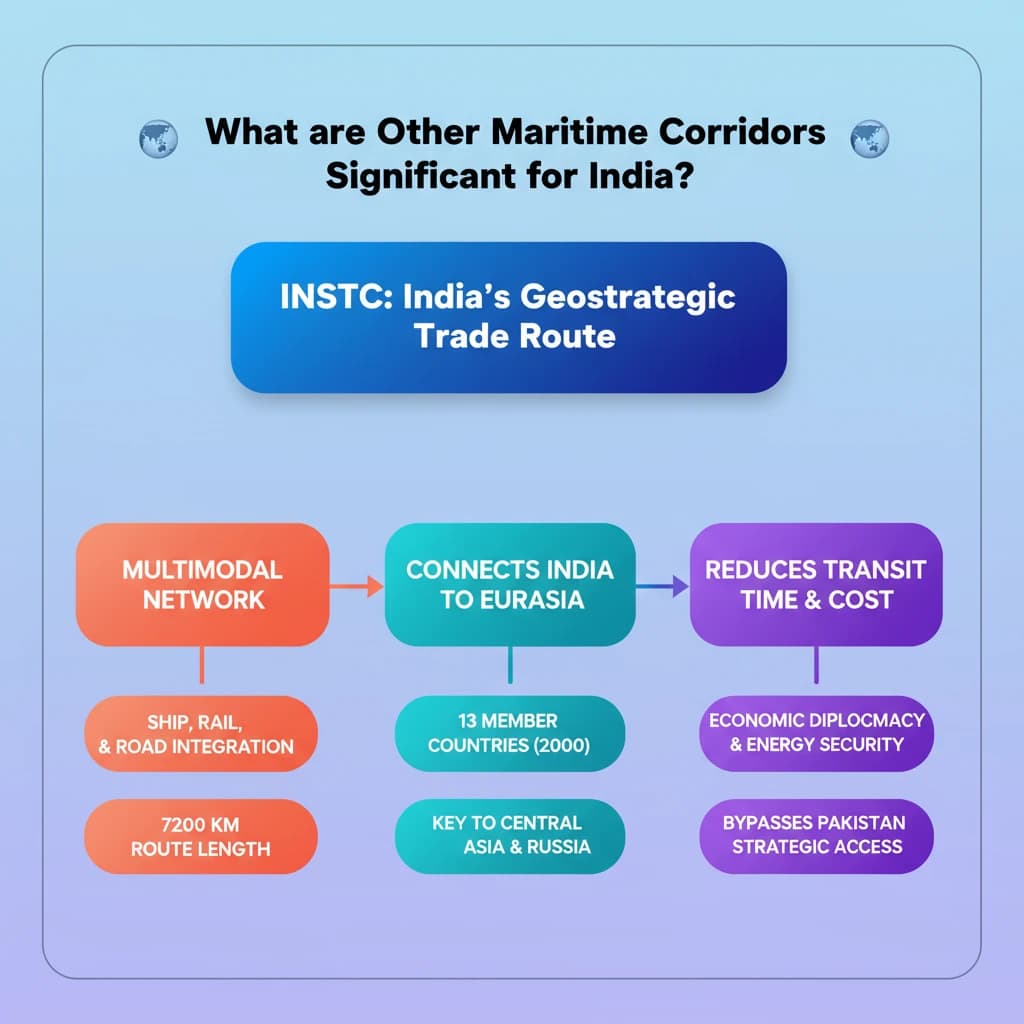
  • INSTC is a 7,200 km multimodal route connecting India to Russia, Iran, Central Asia, and Europe.
  • Launched in 2000 by India, Iran, and Russia; now has 13 member countries.
  • Integrates ship, rail, and road to significantly reduce transit time and cost.
  • Comprises three main routes: Central (India-Iran-Russia), Western (Azerbaijan-Iran-India), Eastern (Russia-Central Asia-India).
  • Crucial for India's economic diplomacy, energy security, and strategic access to Central Asia, bypassing Pakistan.
What are Other Maritime Corridors Significant for India?

What are Other Maritime Corridors Significant for India?

Medium⏱️ 8 min read✓ 95% Verified
international relations

📖 Introduction

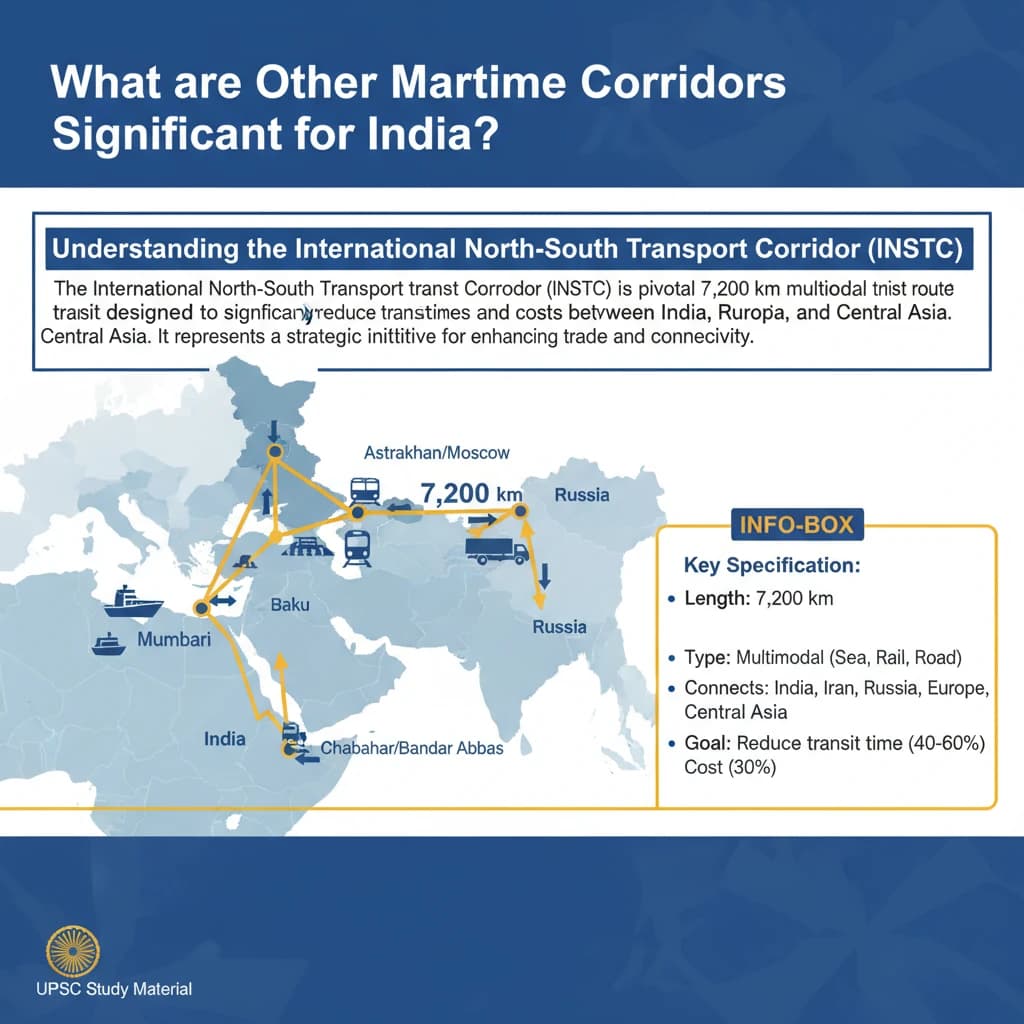
<h4>Understanding the International North-South Transport Corridor (INSTC)</h4><p>The <strong>International North-South Transport Corridor (INSTC)</strong> is a pivotal <strong>7,200 km multimodal transit route</strong> designed to significantly reduce transit times and costs between India, Russia, Iran, Europe, and Central Asia. It represents a strategic initiative for enhancing trade and connectivity.</p><div class='info-box'><p><strong>Key Specification:</strong></p><ul><li><strong>Length:</strong> 7,200 km</li><li><strong>Nature:</strong> Multimodal (ship, rail, road)</li><li><strong>Primary Link:</strong> Indian Ocean and Persian Gulf to the Caspian Sea via Iran, extending to Northern Europe (St. Petersburg, Russia).</li></ul></div><h4>Genesis and Evolution of INSTC</h4><p>The INSTC was formally launched in <strong>2000</strong> through a trilateral agreement. The founding members were <strong>India</strong>, <strong>Iran</strong>, and <strong>Russia</strong>, recognizing the mutual benefits of enhanced regional connectivity.</p><p>Since its inception, the corridor has seen substantial growth in its membership. It has expanded to include <strong>13 member countries</strong>, reflecting its growing regional importance and appeal to various nations seeking efficient trade routes.</p><div class='key-point-box'><p><strong>Founding Members (2000):</strong> <strong>India</strong>, <strong>Iran</strong>, <strong>Russia</strong></p><p><strong>Current Status:</strong> Expanded to <strong>13 member countries</strong>.</p></div><h4>Connectivity Framework of INSTC</h4><p>The corridor integrates various modes of transport, including <strong>ship</strong>, <strong>rail</strong>, and <strong>road routes</strong>. This multimodal approach ensures flexibility and efficiency in freight movement across diverse geographical terrains.</p><p>It establishes crucial linkages between key regions, connecting <strong>India</strong>, <strong>Iran</strong>, <strong>Azerbaijan</strong>, <strong>Russia</strong>, <strong>Central Asia</strong>, and <strong>Europe</strong>. This extensive network facilitates seamless trade and economic cooperation.</p><h4>Primary Routes within INSTC</h4><p>The INSTC is structured around three distinct corridors, each serving specific geographical connections and logistical pathways. These routes optimize transit based on origin and destination points.</p><ol><li><strong>Central Corridor:</strong> This route connects <strong>India to Russia via Iran</strong>, forming the core artery of the INSTC.</li><li><strong>Western Corridor:</strong> This pathway links <strong>Azerbaijan, Iran, and India</strong>, offering an alternative route with significant geopolitical implications.</li><li><strong>Eastern Corridor:</strong> Connecting <strong>Russia to India through Central Asia</strong>, this route leverages the vast landmass of Central Asian nations for transit.</li></ol><div class='exam-tip-box'><p><strong>UPSC Insight:</strong> Understanding the <strong>multimodal nature</strong> and the <strong>three main routes</strong> of INSTC is crucial. Questions often focus on its <strong>strategic significance</strong>, <strong>economic benefits</strong>, and <strong>geopolitical implications</strong> for India's foreign policy and trade relations. Be prepared to discuss its role in bypassing traditional routes and fostering regional integration.</p></div>
Concept Diagram

💡 Key Takeaways

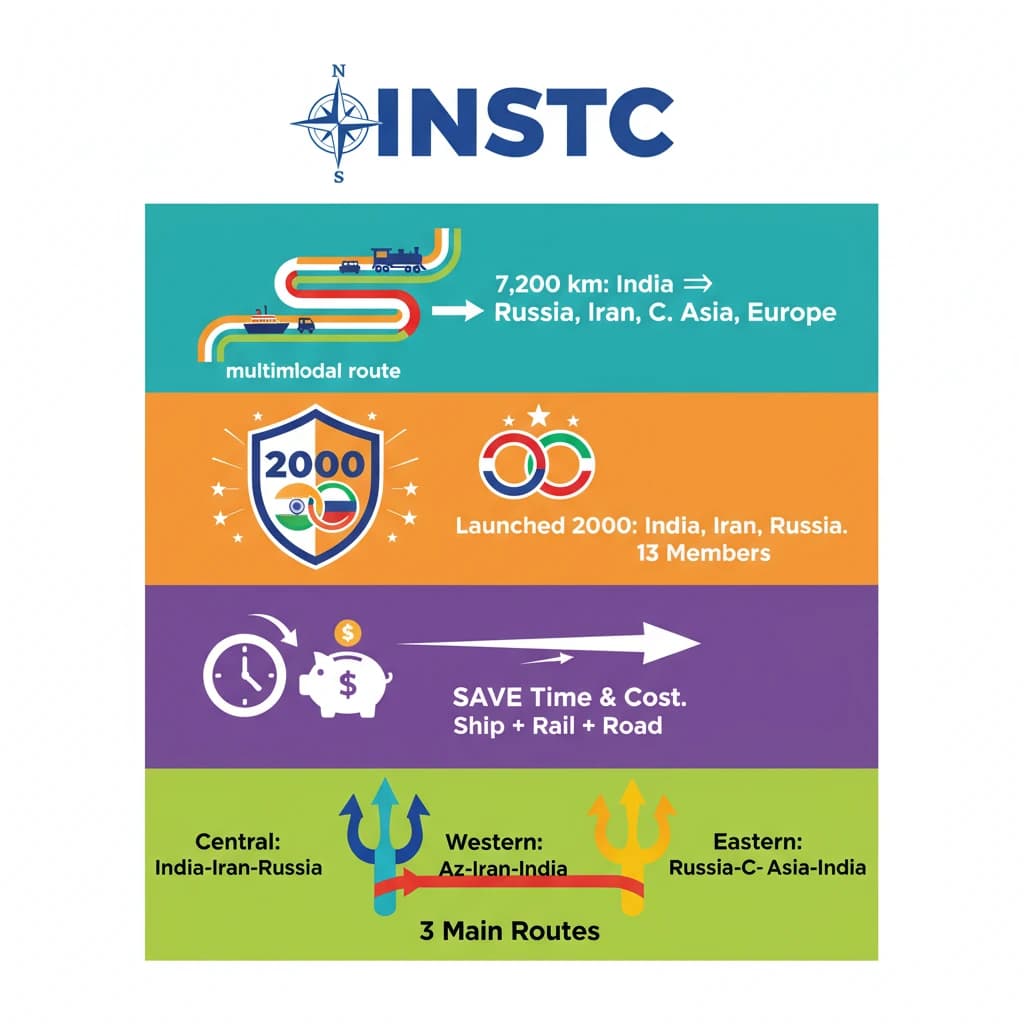
  • •INSTC is a 7,200 km multimodal route connecting India to Russia, Iran, Central Asia, and Europe.
  • •Launched in 2000 by India, Iran, and Russia; now has 13 member countries.
  • •Integrates ship, rail, and road to significantly reduce transit time and cost.
  • •Comprises three main routes: Central (India-Iran-Russia), Western (Azerbaijan-Iran-India), Eastern (Russia-Central Asia-India).
  • •Crucial for India's economic diplomacy, energy security, and strategic access to Central Asia, bypassing Pakistan.

🧠 Memory Techniques
Memory Aid
95% Verified Content

📚 Reference Sources

•Ministry of External Affairs, Government of India (Official Statements on INSTC)
•International North-South Transport Corridor (INSTC) Official Websites/Reports
•Think tank analyses on regional connectivity and trade routes

Related Topics

Loading related topics...
Explore:International Relations Topics·All Subjects·Daily Current Affairs·Editorial Analysis·Previous Year Questions·UPSC GPT
What are Other Maritime Corridors Significant for India? - UPSC International Relations