Loading page, please wait…
Vaidra Logo
Vaidra

Top 4 items + smart groups

UPSC GPT
New
Current Affairs
Daily Solutions
Daily Puzzle
Mains Evaluator

Version 2.0.0 • Built with ❤️ for UPSC aspirants

Loading...
Loading...
Loading...
Loading...
Loading...
Loading...
Loading...
Loading...
Loading...
Loading...
Loading...
Loading...
Loading...
Arrest Warrants ICC and Hamas Leaders - UPSC International Relations
Back
All Subjects

Topics

0 topics • 0 completed

Loading topics...
Loading...
Loading...
Loading...
Loading...
Loading...
Overall Progress0%

Arrest Warrants ICC and Hamas Leaders - UPSC International Relations

What is Arrest Warrants ICC and Hamas Leaders in UPSC International Relations?

Arrest Warrants ICC and Hamas Leaders is a key topic under International Relations for UPSC Civil Services Examination. Key points include: ICC prosecutor requested arrest warrants against Hamas leaders and Israel's Defence Minister.. Warrants are for alleged war crimes committed in Palestine.. Israel is not an ICC member, but Palestine joined in 2015, granting territorial jurisdiction.. Understanding this topic is essential for both UPSC Prelims and Mains preparation.

Why is Arrest Warrants ICC and Hamas Leaders important for UPSC exam?

Arrest Warrants ICC and Hamas Leaders is a Medium-level topic in UPSC International Relations. It is tested in both Prelims (factual MCQs) and Mains (analytical answer writing). Previous year UPSC questions have frequently covered aspects of Arrest Warrants ICC and Hamas Leaders, making it essential for comprehensive IAS preparation.

How to prepare Arrest Warrants ICC and Hamas Leaders for UPSC?

To prepare Arrest Warrants ICC and Hamas Leaders for UPSC: (1) Study the comprehensive notes covering all key concepts on Vaidra. (2) Practice previous year questions on this topic. (3) Connect it with current affairs using daily updates. (4) Revise using key takeaways and mind maps available for International Relations. (5) Write practice answers linking Arrest Warrants ICC and Hamas Leaders to related GS Paper topics.

Key takeaways of Arrest Warrants ICC and Hamas Leaders for UPSC

  • ICC prosecutor requested arrest warrants against Hamas leaders and Israel's Defence Minister.
  • Warrants are for alleged war crimes committed in Palestine.
  • Israel is not an ICC member, but Palestine joined in 2015, granting territorial jurisdiction.
  • Immediate prosecution risk for Israeli leaders is low, but warrants could lead to international isolation and travel restrictions.
  • The case highlights the complex interplay of international law, jurisdiction, and geopolitical pressure.
Arrest Warrants ICC and Hamas Leaders

Arrest Warrants ICC and Hamas Leaders

Medium⏱️ 6 min read✓ 98% Verified
international relations

📖 Introduction

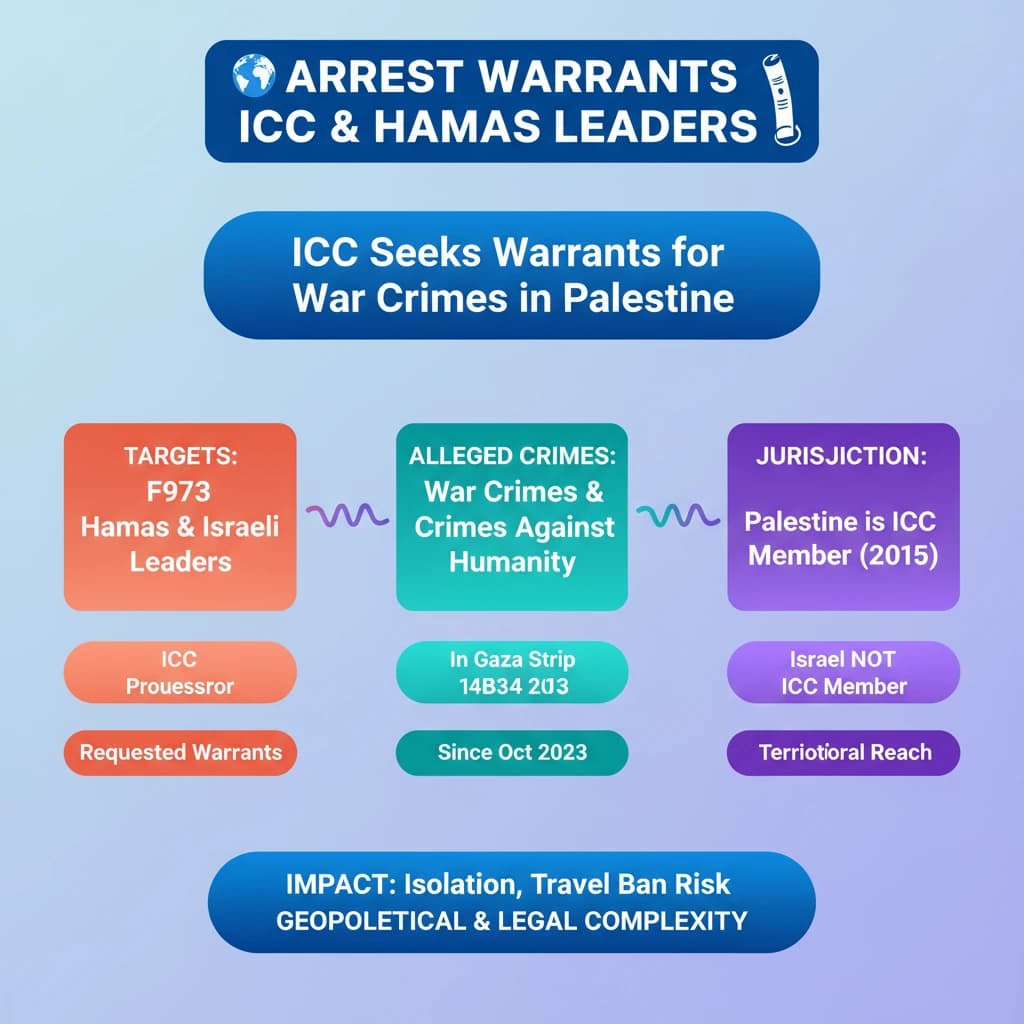
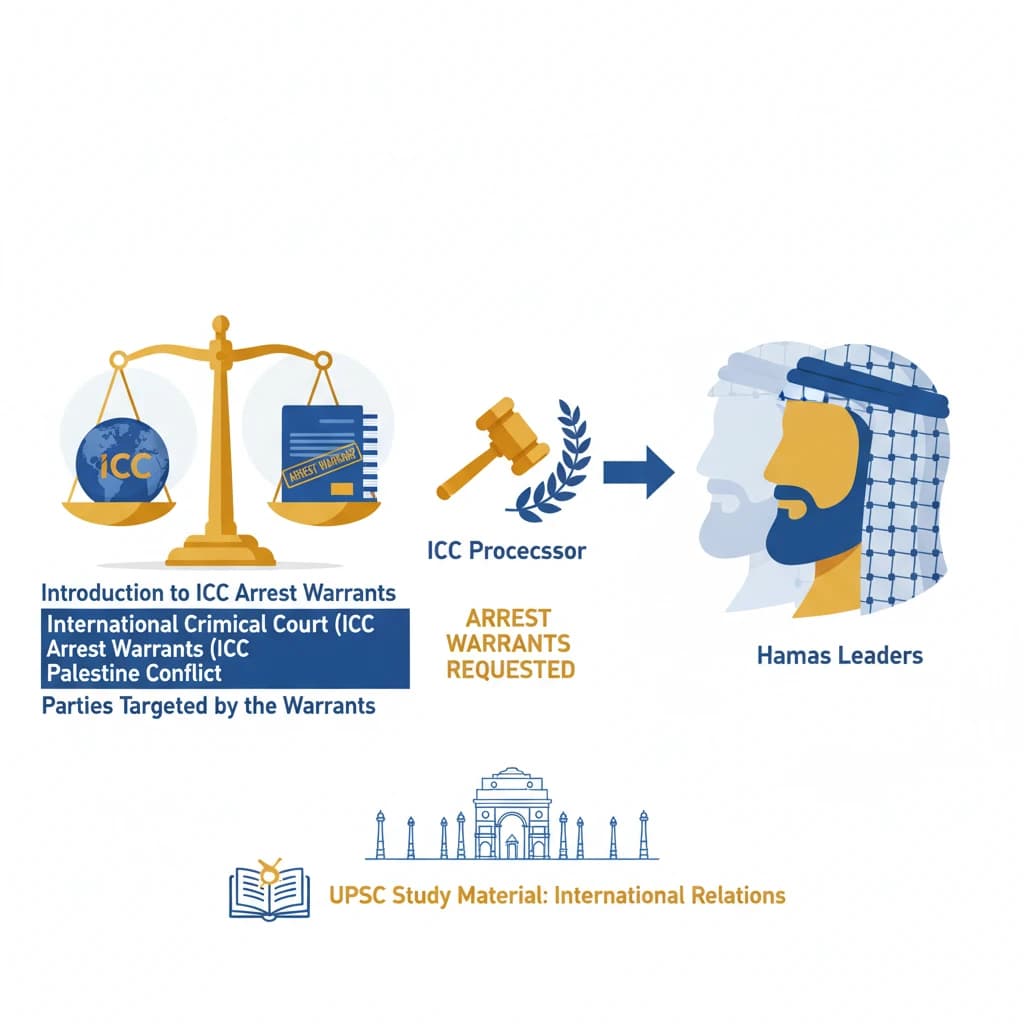
<h4>Introduction to ICC Arrest Warrants</h4><p>Recently, the <strong>International Criminal Court (ICC)</strong> prosecutor made a significant request. This request was for <strong>arrest warrants</strong> against key figures involved in the conflict in <strong>Palestine</strong>.</p><p>The move has drawn considerable international attention and highlights the complex interplay of international law and geopolitical realities.</p><h4>Parties Targeted by the Warrants</h4><p>The requested warrants target leaders from both sides of the conflict. Specifically, the prosecutor sought warrants against leaders of <strong>Hamas</strong>.</p><p>Additionally, a warrant was requested for the <strong>Defence Minister of Israel</strong>. These individuals are accused of committing <strong>war crimes</strong> in the region of <strong>Palestine</strong>.</p><div class='key-point-box'><p><strong>Key Request:</strong> Arrest warrants sought against <strong>Hamas leaders</strong> and <strong>Israel's Defence Minister</strong> for alleged <strong>war crimes</strong> in <strong>Palestine</strong>.</p></div><h4>ICC Jurisdiction and Membership Status</h4><p>A crucial aspect of this development is the membership status of the involved entities with the <strong>ICC</strong>. <strong>Israel is not a member of the International Criminal Court</strong>.</p><p>This non-membership has significant implications for the immediate enforceability of any potential warrants against Israeli officials.</p><div class='info-box'><p><strong>Palestine's ICC Membership:</strong> The <strong>ICC</strong> formally accepted <strong>“The State of Palestine”</strong> as a member state in <strong>2015</strong>. This membership grants the ICC jurisdiction over crimes committed on Palestinian territory.</p></div><h4>Implications of the Warrants</h4><p>Even if the <strong>arrest warrants</strong> are issued, the concerned <strong>Israeli leaders</strong> do not face any immediate risk of prosecution. This is due to <strong>Israel's non-membership</strong> in the <strong>ICC</strong>.</p><p>However, the issuance of such warrants could have other substantial consequences. It could further deepen <strong>Israel’s international isolation</strong>.</p><p>Moreover, it would likely make it significantly more difficult for the implicated <strong>Israeli leaders</strong> to travel abroad. This is because member states of the ICC would be obligated to cooperate with the court's warrants.</p><div class='exam-tip-box'><p><strong>UPSC Insight:</strong> Understand the distinction between <strong>ICC membership</strong> and its implications for <strong>jurisdiction</strong>. This case exemplifies how international legal actions can exert diplomatic and political pressure even without direct enforcement capabilities on non-member states. Focus on the concept of <strong>universal jurisdiction</strong> and the <strong>Rome Statute</strong>.</p></div>
Concept Diagram

💡 Key Takeaways

  • •ICC prosecutor requested arrest warrants against Hamas leaders and Israel's Defence Minister.
  • •Warrants are for alleged war crimes committed in Palestine.
  • •Israel is not an ICC member, but Palestine joined in 2015, granting territorial jurisdiction.
  • •Immediate prosecution risk for Israeli leaders is low, but warrants could lead to international isolation and travel restrictions.
  • •The case highlights the complex interplay of international law, jurisdiction, and geopolitical pressure.

🧠 Memory Techniques
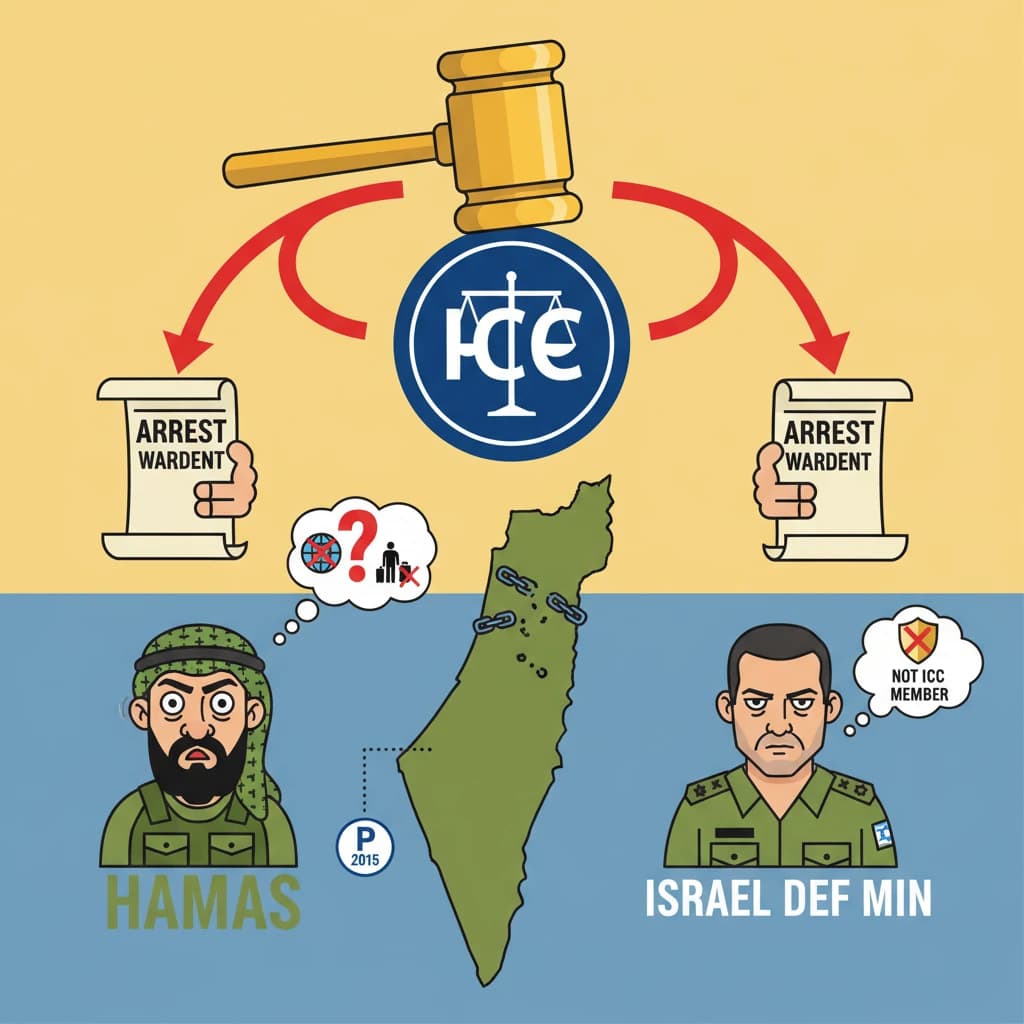
Memory Aid
98% Verified Content

📚 Reference Sources

•Official website of the International Criminal Court (ICC)
•United Nations documents on Palestine's ICC membership

Related Topics

Loading related topics...
Explore:International Relations Topics·All Subjects·Daily Current Affairs·Editorial Analysis·Previous Year Questions·UPSC GPT