Loading page, please wait…
Vaidra Logo
Vaidra

Top 4 items + smart groups

UPSC GPT
New
Current Affairs
Daily Solutions
Daily Puzzle
Mains Evaluator

Version 2.0.0 • Built with ❤️ for UPSC aspirants

Loading...
Loading...
Loading...
Loading...
Loading...
Loading...
Loading...
Loading...
Loading...
Loading...
Loading...
Loading...
Loading...
Back
All Subjects

Topics

0 topics • 0 completed

Loading topics...
Loading...
Loading...
Loading...
Loading...
Loading...
Overall Progress0%

What are the Major Aspects of India-Myanmar Relations? - UPSC International Relations

What is What are the Major Aspects of India-Myanmar Relations? in UPSC International Relations?

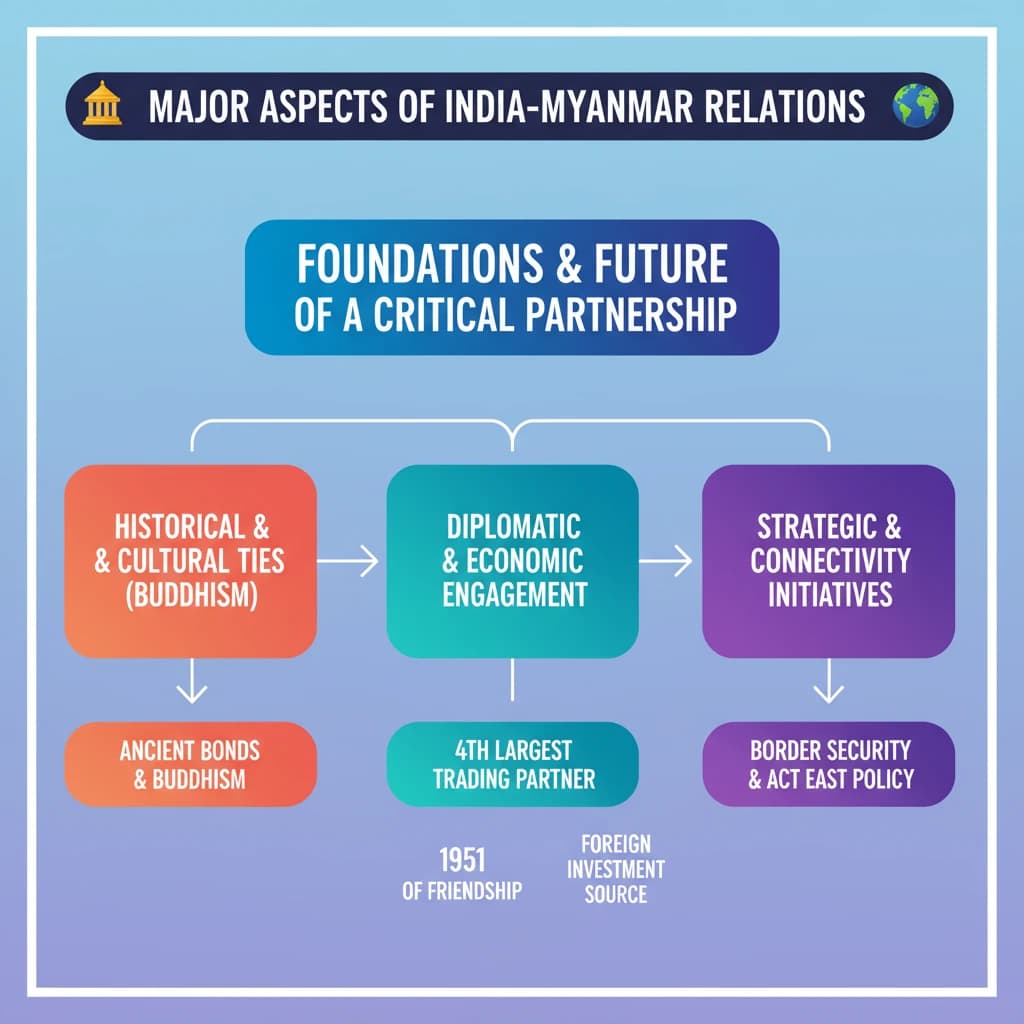
What are the Major Aspects of India-Myanmar Relations? is a key topic under International Relations for UPSC Civil Services Examination. Key points include: India-Myanmar ties are rooted in ancient cultural and religious bonds, especially Buddhism.. The 1951 Treaty of Friendship forms the diplomatic foundation of their modern relationship.. India is Myanmar's 4th largest trading partner and a significant source of foreign investment.. Understanding this topic is essential for both UPSC Prelims and Mains preparation.

Why is What are the Major Aspects of India-Myanmar Relations? important for UPSC exam?

What are the Major Aspects of India-Myanmar Relations? is a Medium-level topic in UPSC International Relations. It is tested in both Prelims (factual MCQs) and Mains (analytical answer writing). Previous year UPSC questions have frequently covered aspects of What are the Major Aspects of India-Myanmar Relations?, making it essential for comprehensive IAS preparation.

How to prepare What are the Major Aspects of India-Myanmar Relations? for UPSC?

To prepare What are the Major Aspects of India-Myanmar Relations? for UPSC: (1) Study the comprehensive notes covering all key concepts on Vaidra. (2) Practice previous year questions on this topic. (3) Connect it with current affairs using daily updates. (4) Revise using key takeaways and mind maps available for International Relations. (5) Write practice answers linking What are the Major Aspects of India-Myanmar Relations? to related GS Paper topics.

Key takeaways of What are the Major Aspects of India-Myanmar Relations? for UPSC

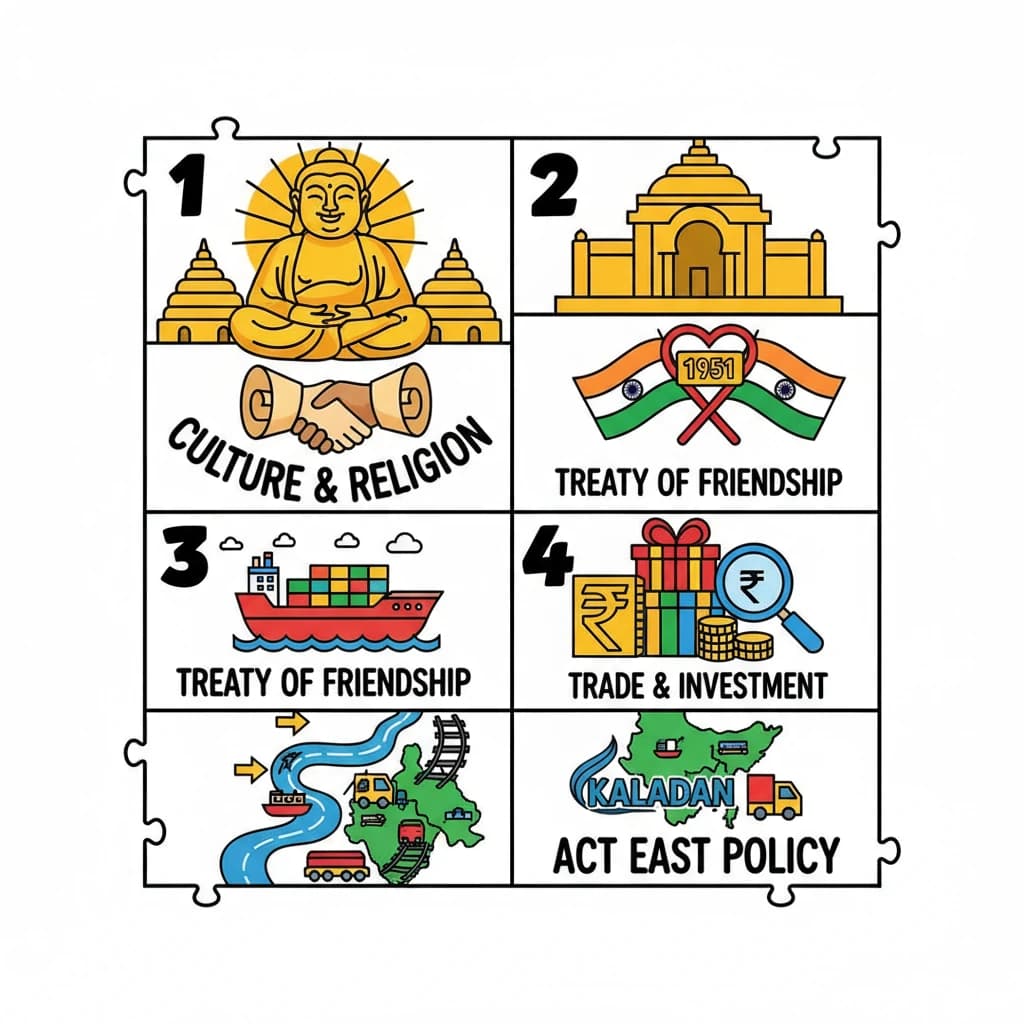
  • India-Myanmar ties are rooted in ancient cultural and religious bonds, especially Buddhism.
  • The 1951 Treaty of Friendship forms the diplomatic foundation of their modern relationship.
  • India is Myanmar's 4th largest trading partner and a significant source of foreign investment.
  • Connectivity projects like Kaladan Multi-Modal Transit Transport are vital for India's Northeast and Act East Policy.
  • Bilateral security cooperation is crucial for managing the shared border and tackling cross-border challenges.
  • Myanmar is strategically important for India's regional outreach and geopolitical balancing in Southeast Asia.
What are the Major Aspects of India-Myanmar Relations?

What are the Major Aspects of India-Myanmar Relations?

Medium⏱️ 7 min read✓ 95% Verified
international relations

📖 Introduction

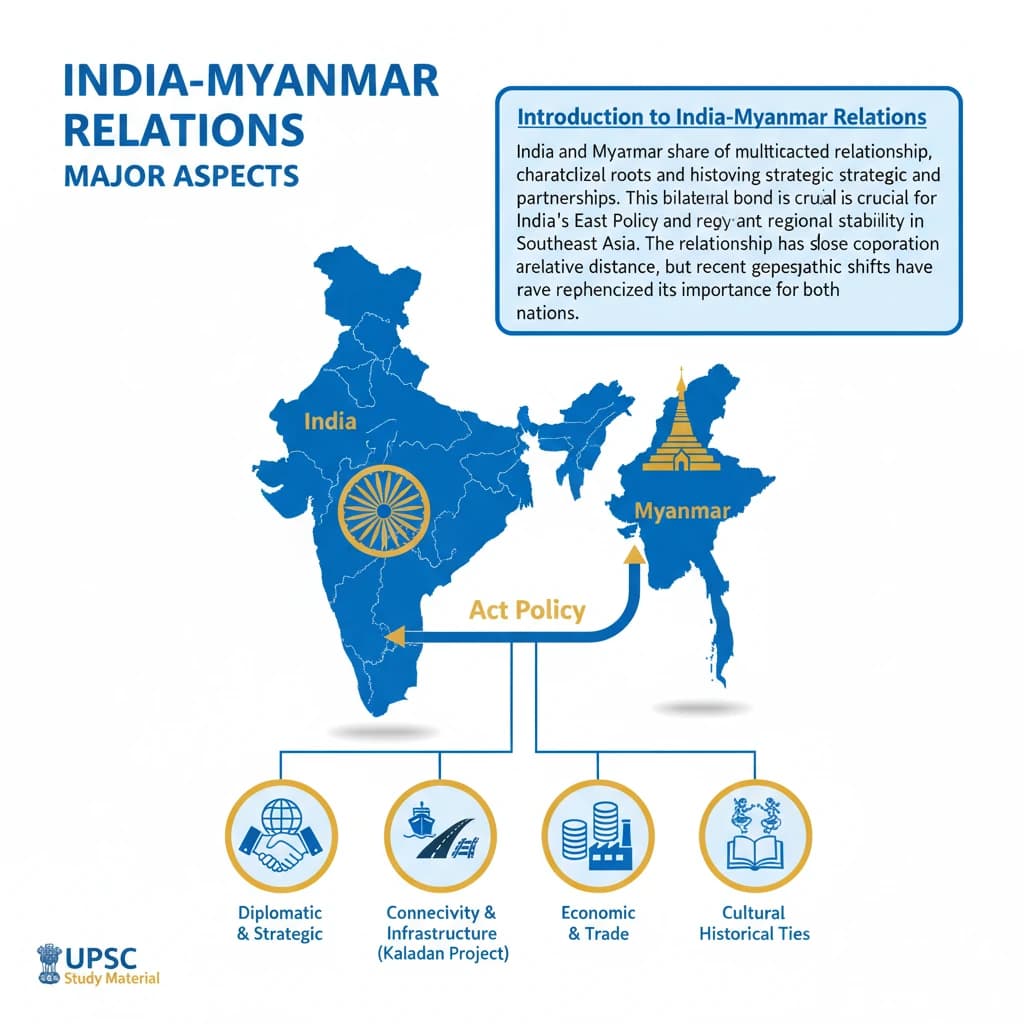
<h4>Introduction to India-Myanmar Relations</h4><p><strong>India</strong> and <strong>Myanmar</strong> share a multifaceted relationship, characterized by deep historical roots and evolving strategic and economic partnerships. This bilateral bond is crucial for India's <strong>Act East Policy</strong> and regional stability in Southeast Asia.</p><p>The relationship has seen periods of close cooperation and relative distance, but recent geopolitical shifts have re-emphasized its importance for both nations.</p><h4>Historical and Cultural Foundations</h4><p>The ties between <strong>India</strong> and <strong>Myanmar</strong> extend back centuries, predating modern nation-states. These connections are primarily built upon shared cultural and religious heritage.</p><p><strong>Buddhism</strong> plays a pivotal role, with its origins in India significantly influencing Myanmar's cultural landscape. Many historical sites and practices in Myanmar reflect this shared legacy, fostering strong people-to-people connections.</p><div class='info-box'><p>The formal diplomatic relations between independent <strong>India</strong> and <strong>Myanmar</strong> were solidified with the signing of the <strong>Treaty of Friendship</strong> in <strong>1951</strong>. This treaty laid the groundwork for peaceful coexistence and cooperation across various sectors.</p></div><h4>Economic Cooperation</h4><p><strong>Economic cooperation</strong> is a vital pillar of the <strong>India-Myanmar relationship</strong>. India is a significant player in Myanmar's trade and investment landscape, contributing to its economic development.</p><div class='info-box'><p>Currently, <strong>India</strong> stands as <strong>Myanmar's 4th largest trading partner</strong>. This highlights the substantial volume of bilateral trade, encompassing a range of goods from agricultural products to manufactured items.</p></div><p>Beyond trade, <strong>India</strong> is also a <strong>major source of investment</strong> for Myanmar. Indian companies have invested in various sectors including infrastructure, energy, manufacturing, and pharmaceuticals, contributing to Myanmar's economic growth.</p><div class='exam-tip-box'><p>When discussing economic ties, remember to mention specific connectivity projects like the <strong>Kaladan Multi-Modal Transit Transport Project</strong>. These are practical examples of India's commitment to enhancing regional trade and investment infrastructure.</p></div>
Concept Diagram

💡 Key Takeaways

  • •India-Myanmar ties are rooted in ancient cultural and religious bonds, especially Buddhism.
  • •The 1951 Treaty of Friendship forms the diplomatic foundation of their modern relationship.
  • •India is Myanmar's 4th largest trading partner and a significant source of foreign investment.
  • •Connectivity projects like Kaladan Multi-Modal Transit Transport are vital for India's Northeast and Act East Policy.
  • •Bilateral security cooperation is crucial for managing the shared border and tackling cross-border challenges.
  • •Myanmar is strategically important for India's regional outreach and geopolitical balancing in Southeast Asia.

🧠 Memory Techniques
Memory Aid
95% Verified Content

📚 Reference Sources

•Ministry of External Affairs (MEA), India
•Observer Research Foundation (ORF)
•Council on Foreign Relations (CFR)
•Press Information Bureau (PIB), Government of India

Related Topics

Loading related topics...
Explore:International Relations Topics·All Subjects·Daily Current Affairs·Editorial Analysis·Previous Year Questions·UPSC GPT
What are the Major Aspects of India-Myanmar Relations? - UPSC International Relations