Loading page, please wait…
Vaidra Logo
Vaidra

Top 4 items + smart groups

UPSC GPT
New
Current Affairs
Daily Solutions
Daily Puzzle
Mains Evaluator

Version 2.0.0 • Built with ❤️ for UPSC aspirants

Loading...
Loading...
Loading...
Loading...
Loading...
Loading...
Loading...
Loading...
Loading...
Loading...
Loading...
Loading...
Loading...
Back
All Subjects

Topics

0 topics • 0 completed

Loading topics...
Loading...
Loading...
Loading...
Loading...
Loading...
Overall Progress0%

What are the Different Frameworks for Nuclear Proliferation and Nuclear Disarmament - UPSC International Relations

What is What are the Different Frameworks for Nuclear Proliferation and Nuclear Disarmament in UPSC International Relations?

What are the Different Frameworks for Nuclear Proliferation and Nuclear Disarmament is a key topic under International Relations for UPSC Civil Services Examination. Key points include: Nuclear frameworks aim to prevent proliferation and achieve disarmament.. The IAEA monitors compliance and promotes peaceful nuclear technology use.. Regional Nuclear-Weapon-Free Zones (NWFZs) prohibit nuclear weapons in specific areas.. Understanding this topic is essential for both UPSC Prelims and Mains preparation.

Why is What are the Different Frameworks for Nuclear Proliferation and Nuclear Disarmament important for UPSC exam?

What are the Different Frameworks for Nuclear Proliferation and Nuclear Disarmament is a Medium-level topic in UPSC International Relations. It is tested in both Prelims (factual MCQs) and Mains (analytical answer writing). Previous year UPSC questions have frequently covered aspects of What are the Different Frameworks for Nuclear Proliferation and Nuclear Disarmament, making it essential for comprehensive IAS preparation.

How to prepare What are the Different Frameworks for Nuclear Proliferation and Nuclear Disarmament for UPSC?

To prepare What are the Different Frameworks for Nuclear Proliferation and Nuclear Disarmament for UPSC: (1) Study the comprehensive notes covering all key concepts on Vaidra. (2) Practice previous year questions on this topic. (3) Connect it with current affairs using daily updates. (4) Revise using key takeaways and mind maps available for International Relations. (5) Write practice answers linking What are the Different Frameworks for Nuclear Proliferation and Nuclear Disarmament to related GS Paper topics.

Key takeaways of What are the Different Frameworks for Nuclear Proliferation and Nuclear Disarmament for UPSC

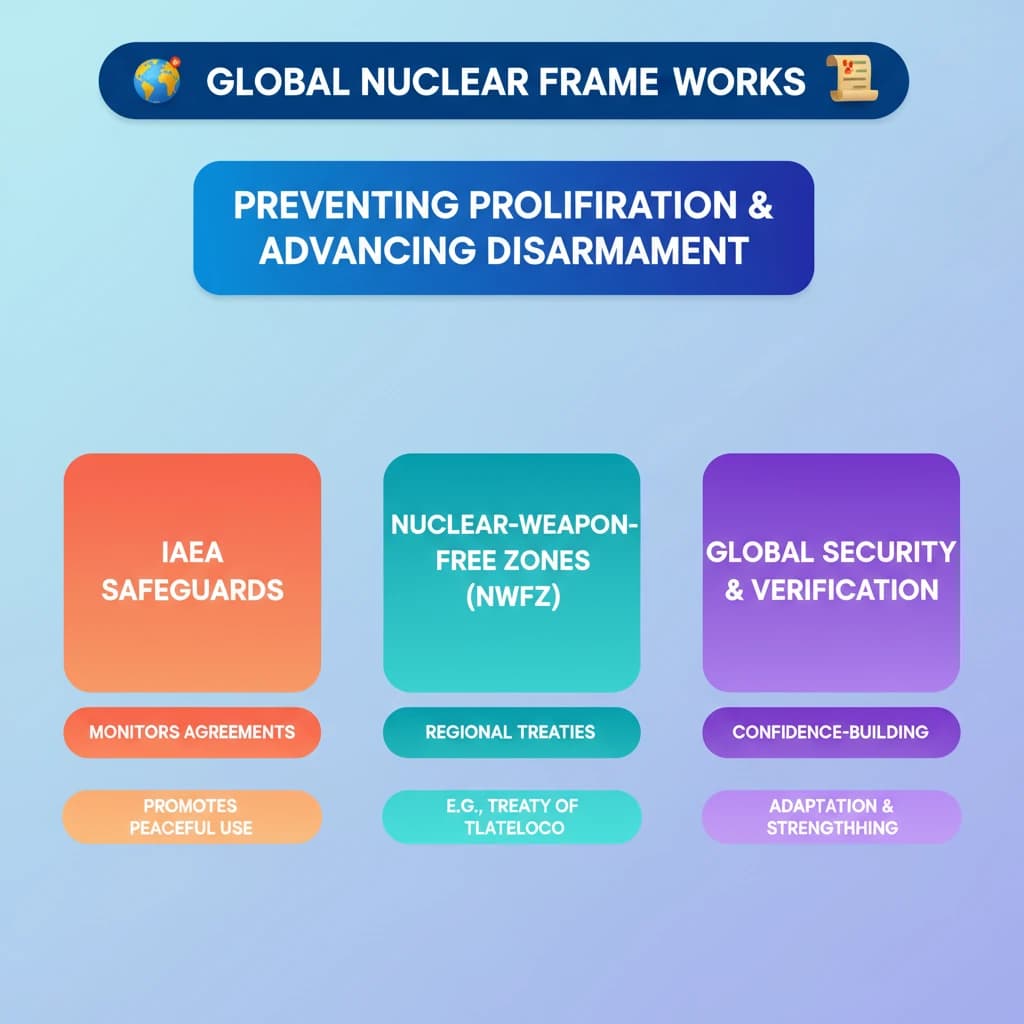
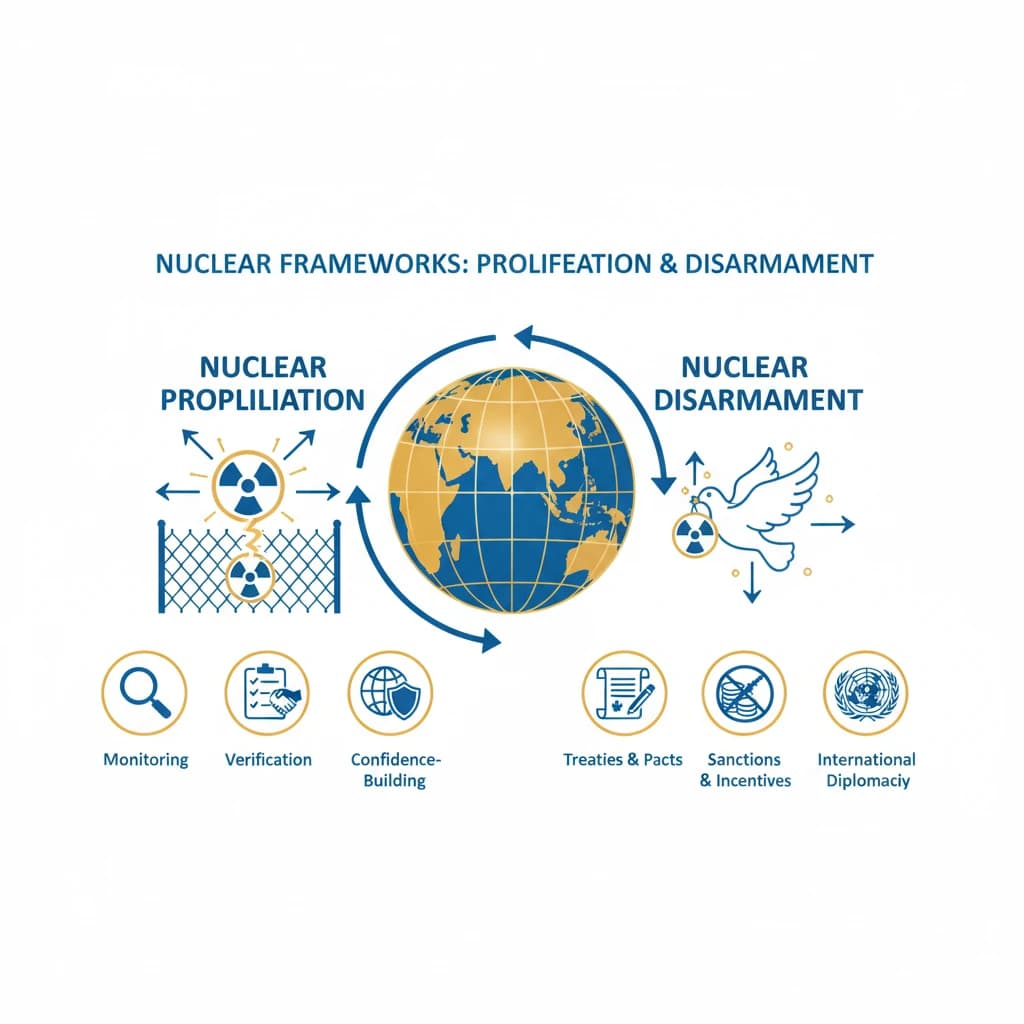
  • Nuclear frameworks aim to prevent proliferation and achieve disarmament.
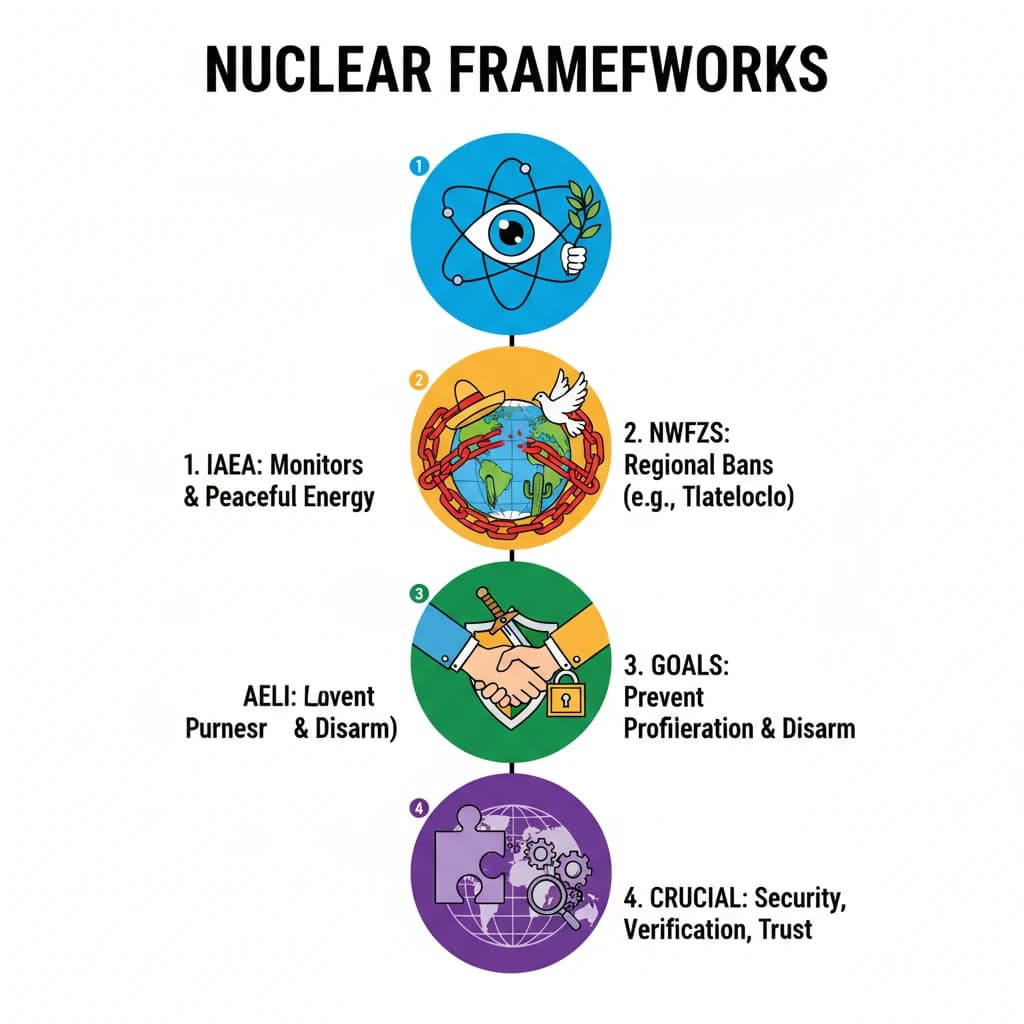
  • The IAEA monitors compliance and promotes peaceful nuclear technology use.
  • Regional Nuclear-Weapon-Free Zones (NWFZs) prohibit nuclear weapons in specific areas.
  • The Treaty of Tlatelolco was the first NWFZ, established in Latin America.
  • These frameworks are crucial for global security and stability amidst ongoing nuclear challenges.
What are the Different Frameworks for Nuclear Proliferation and Nuclear Disarmament

What are the Different Frameworks for Nuclear Proliferation and Nuclear Disarmament

Medium⏱️ 7 min read✓ 98% Verified
international relations

📖 Introduction

<h4>Understanding Nuclear Proliferation and Disarmament Frameworks</h4><p>The global community employs various frameworks to address the critical issues of <strong>nuclear proliferation</strong> and <strong>nuclear disarmament</strong>. These frameworks aim to prevent the spread of nuclear weapons and ultimately achieve a world free of them.</p><p>These mechanisms range from international organizations with monitoring mandates to regional treaties that establish weapon-free zones. Their collective goal is to enhance global security and stability.</p><h4>The International Atomic Energy Agency (IAEA)</h4><p>The <strong>International Atomic Energy Agency (IAEA)</strong> is a pivotal international organization established in <strong>1957</strong>. It operates under the aegis of the <strong>United Nations</strong> and serves as the world's central intergovernmental forum for scientific and technical cooperation in the nuclear field.</p><div class='info-box'><p>The <strong>IAEA's primary role</strong> is to promote the safe, secure, and peaceful use of nuclear technologies. Simultaneously, it works to prevent the diversion of nuclear material from peaceful uses to nuclear weapons programs.</p></div><p>The IAEA plays a crucial role in <strong>monitoring compliance</strong> with various international nuclear agreements, most notably the <strong>Treaty on the Non-Proliferation of Nuclear Weapons (NPT)</strong>. Its inspectors verify that nuclear materials are not being used for illicit purposes.</p><div class='key-point-box'><p>The <strong>IAEA's safeguards system</strong> is central to its mission. This system involves regular inspections, surveillance, and verification of nuclear facilities and materials in signatory states to ensure adherence to non-proliferation commitments.</p></div><h4>Regional Nuclear-Weapon-Free Zones (NWFZs)</h4><p><strong>Regional Nuclear-Weapon-Free Zones (NWFZs)</strong> represent another significant framework for nuclear disarmament. These are treaties by which a group of states agrees to prohibit the development, manufacture, control, possession, testing, stationing, or transport of nuclear weapons within their respective territories.</p><p>The establishment of NWFZs signifies a strong regional commitment to non-proliferation and disarmament. They contribute to regional stability and can build momentum for broader global disarmament efforts.</p><div class='info-box'><p>The <strong>first NWFZ</strong> was established in <strong>Latin America</strong> through the <strong>Treaty of Tlatelolco</strong>. This treaty marked a groundbreaking achievement in regional disarmament.</p></div><div class='exam-tip-box'><p>Understanding the distinction between global frameworks like the <strong>NPT</strong> (supported by <strong>IAEA</strong> safeguards) and regional initiatives like <strong>NWFZs</strong> is vital for UPSC Mains. Discuss their complementary roles in answer writing.</p></div>
Concept Diagram

💡 Key Takeaways

  • •Nuclear frameworks aim to prevent proliferation and achieve disarmament.
  • •The IAEA monitors compliance and promotes peaceful nuclear technology use.
  • •Regional Nuclear-Weapon-Free Zones (NWFZs) prohibit nuclear weapons in specific areas.
  • •The Treaty of Tlatelolco was the first NWFZ, established in Latin America.
  • •These frameworks are crucial for global security and stability amidst ongoing nuclear challenges.

🧠 Memory Techniques
Memory Aid
98% Verified Content

📚 Reference Sources

•International Atomic Energy Agency (IAEA) Official Website
•United Nations Office for Disarmament Affairs (UNODA) Website
•Treaty of Tlatelolco Text and Background Information

Related Topics

Loading related topics...
Explore:International Relations Topics·All Subjects·Daily Current Affairs·Editorial Analysis·Previous Year Questions·UPSC GPT
What are the Different Frameworks for Nuclear Proliferation and Nuclear Disarmament - UPSC International Relations