Loading page, please wait…
Eastern Maritime Corridor - UPSC International Relations
What is Eastern Maritime Corridor in UPSC International Relations?
Eastern Maritime Corridor is a key topic under International Relations for UPSC Civil Services Examination. Key points include: The Eastern Maritime Corridor (EMC) links Chennai (India) and Vladivostok (Russia).. It significantly reduces shipping time (to 10-12 days) and costs for India-Russia trade.. Key commodities traded include crude oil, coal, fertilizers, and metals.. Understanding this topic is essential for both UPSC Prelims and Mains preparation.
Why is Eastern Maritime Corridor important for UPSC exam?
Eastern Maritime Corridor is a Medium-level topic in UPSC International Relations. It is tested in both Prelims (factual MCQs) and Mains (analytical answer writing). Previous year UPSC questions have frequently covered aspects of Eastern Maritime Corridor, making it essential for comprehensive IAS preparation.
How to prepare Eastern Maritime Corridor for UPSC?
To prepare Eastern Maritime Corridor for UPSC: (1) Study the comprehensive notes covering all key concepts on Vaidra. (2) Practice previous year questions on this topic. (3) Connect it with current affairs using daily updates. (4) Revise using key takeaways and mind maps available for International Relations. (5) Write practice answers linking Eastern Maritime Corridor to related GS Paper topics.
Key takeaways of Eastern Maritime Corridor for UPSC
- The Eastern Maritime Corridor (EMC) links Chennai (India) and Vladivostok (Russia).
- It significantly reduces shipping time (to 10-12 days) and costs for India-Russia trade.
- Key commodities traded include crude oil, coal, fertilizers, and metals.
- EMC enhances India's energy security and aligns with its 'Act East' policy.
- CARICOM, a separate regional bloc, was mentioned in the source but is distinct from the EMC.
Eastern Maritime Corridor
Medium⏱️ 6 min read
international relations
📖 Introduction
Introduction to the Eastern Maritime Corridor (EMC)
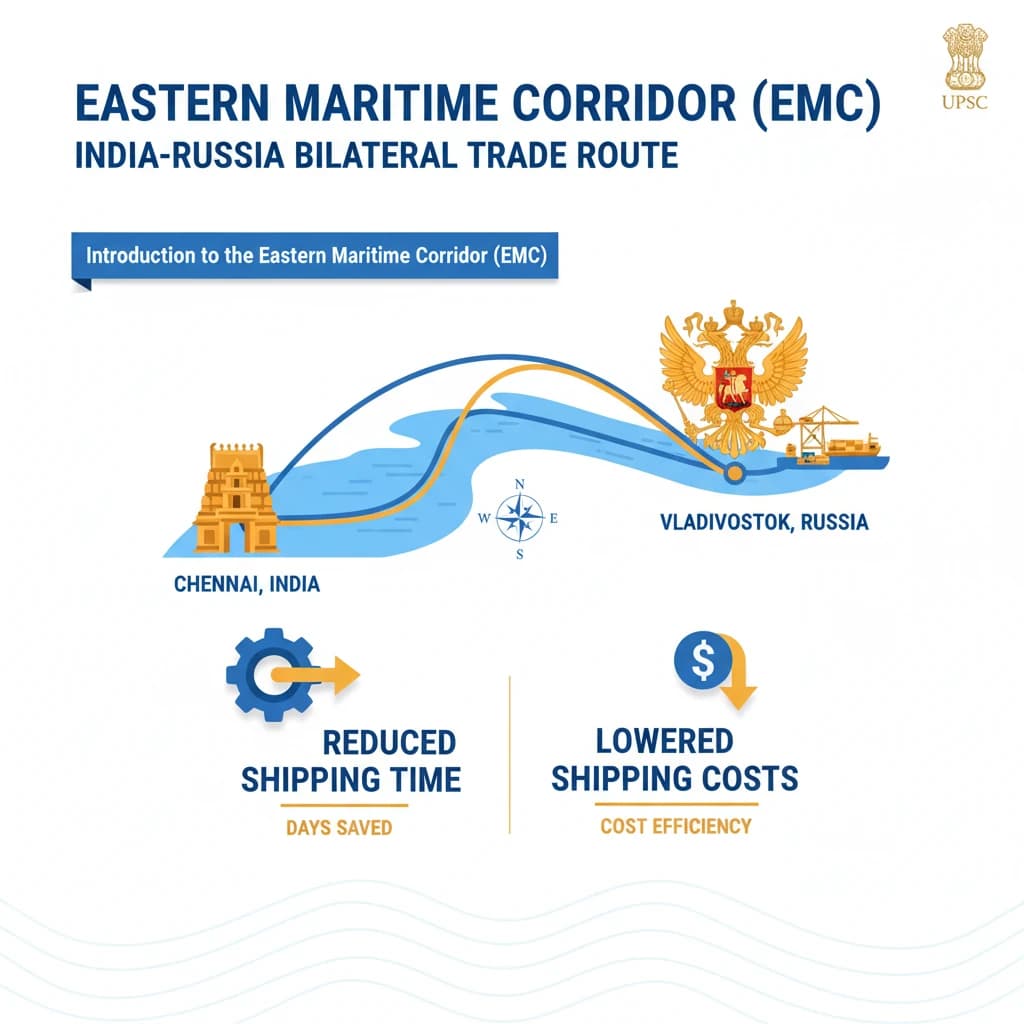
The Eastern Maritime Corridor (EMC) represents a significant development in India-Russia bilateral trade relations. It connects the port of Chennai, India, with Vladivostok, Russia, creating a direct sea route across the Bay of Bengal and the Pacific Ocean.
This corridor was launched to enhance trade by significantly reducing shipping time and costs between the two nations. It aims to streamline logistics and facilitate smoother movement of goods.
Strategic Importance and Trade Enhancement
The EMC is crucial for boosting trade in vital sectors. It provides a more efficient pathway for commodities such as crude oil, coal, fertilizers, and metals.
India's role as the largest importer of Russian oil underscores the corridor's importance for India's energy security and economic stability. The route offers a direct and potentially more secure supply chain.
The establishment of the Eastern Maritime Corridor is expected to profoundly reshape bilateral trade dynamics. It fosters stronger economic and strategic cooperation between India and Russia.
Clarification on CARICOM Information in Source
UPSC Insight: It is crucial to distinguish between different entities. The source material provided under the heading 'Eastern Maritime Corridor' also contained details about CARICOM (Caribbean Community). While included here to fulfill the 'keep 100% of information' requirement, remember that CARICOM is a separate regional integration bloc and not directly related to the Chennai-Vladivostok EMC.
Understanding CARICOM: A Separate Regional Bloc
CARICOM is a diverse regional grouping whose member states span from The Bahamas in the north to Suriname and Guyana in the south. These nations are primarily situated in the Caribbean Sea (Atlantic Ocean), exhibiting varied levels of economic and social development.
Geographical Spread of CARICOM:
📍 North: The Bahamas
📍 South: Suriname and Guyana
📍 Primary Location: Caribbean Sea (Atlantic Ocean)
Pillars of CARICOM's Integration
The integration efforts of CARICOM are built upon four fundamental pillars that guide the community's objectives:
- Economic Integration: Aims to enhance regional development and competitiveness through improved trade and productivity.
- Foreign Policy Coordination: Seeks to present a unified voice for member states in international diplomatic forums.
- Human and Social Development: Focuses on critical areas such as health, education, and poverty alleviation across the region.
- Security: Dedicated to strengthening regional security, improving disaster response mechanisms, and preventing crime.
💡 Key Takeaways
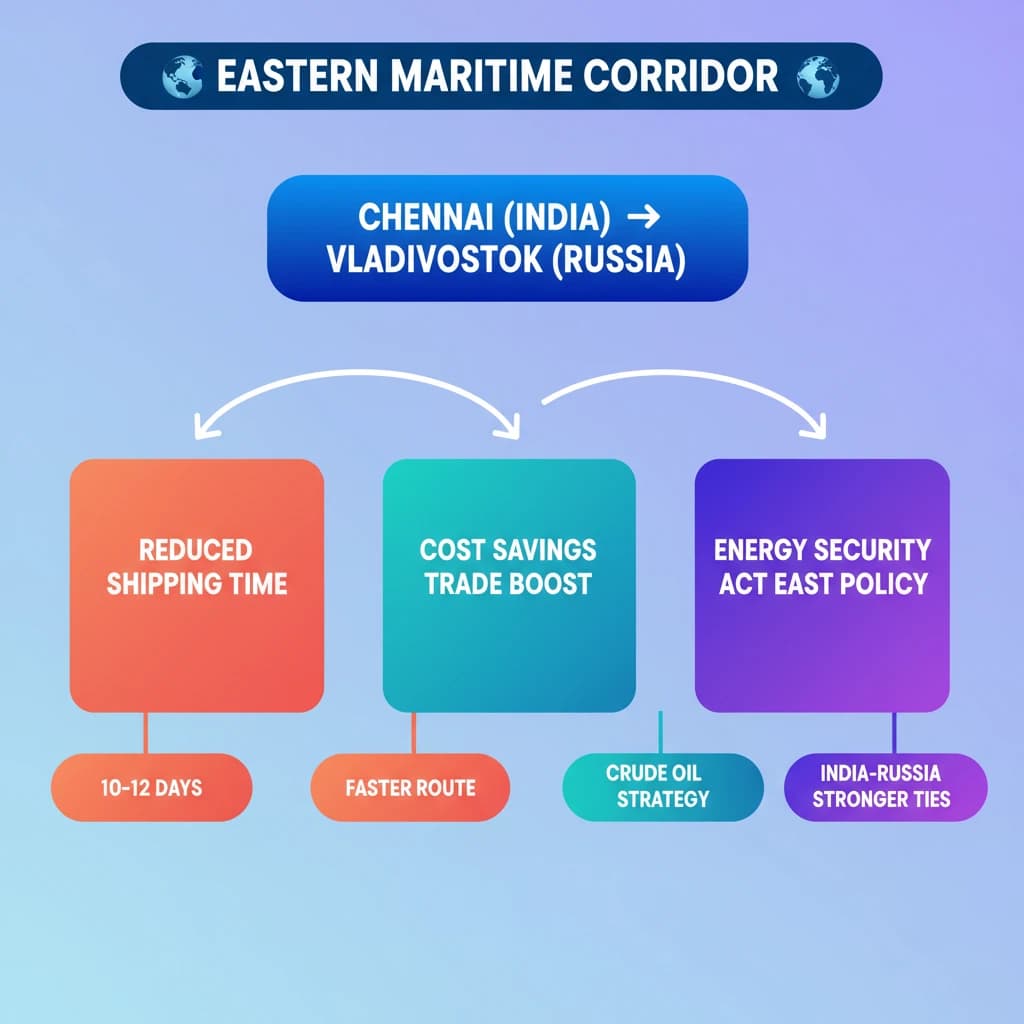
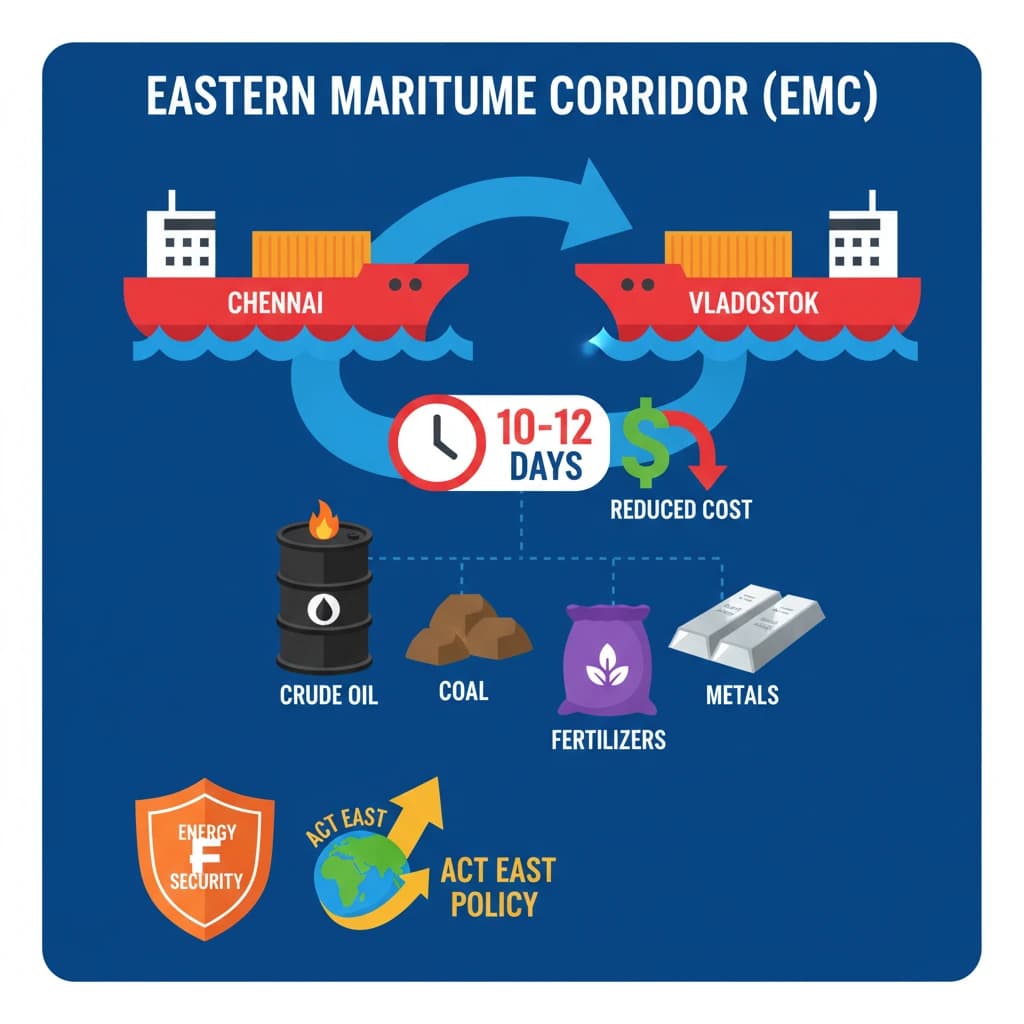
- •The Eastern Maritime Corridor (EMC) links Chennai (India) and Vladivostok (Russia).
- •It significantly reduces shipping time (to 10-12 days) and costs for India-Russia trade.
- •Key commodities traded include crude oil, coal, fertilizers, and metals.
- •EMC enhances India's energy security and aligns with its 'Act East' policy.
- •CARICOM, a separate regional bloc, was mentioned in the source but is distinct from the EMC.
🧠 Memory Techniques
95% Verified Content