Loading page, please wait…
Efforts Taken to bring Peace between Israel and Its Neighbours - UPSC International Relations
What is Efforts Taken to bring Peace between Israel and Its Neighbours in UPSC International Relations?
Efforts Taken to bring Peace between Israel and Its Neighbours is a key topic under International Relations for UPSC Civil Services Examination. Key points include: The Oslo Accords (1993) were a significant milestone for Israeli-Palestinian peace, involving mutual recognition between Israel and the PLO.. Facilitated by the US, Oslo I and II established the Palestinian Authority and outlined a phased self-governance leading to a permanent settlement.. The process has largely stalled due to complex issues like settlements, Jerusalem's status, and ongoing violence.. Understanding this topic is essential for both UPSC Prelims and Mains preparation.
Why is Efforts Taken to bring Peace between Israel and Its Neighbours important for UPSC exam?
Efforts Taken to bring Peace between Israel and Its Neighbours is a Medium-level topic in UPSC International Relations. It is tested in both Prelims (factual MCQs) and Mains (analytical answer writing). Previous year UPSC questions have frequently covered aspects of Efforts Taken to bring Peace between Israel and Its Neighbours, making it essential for comprehensive IAS preparation.
How to prepare Efforts Taken to bring Peace between Israel and Its Neighbours for UPSC?
To prepare Efforts Taken to bring Peace between Israel and Its Neighbours for UPSC: (1) Study the comprehensive notes covering all key concepts on Vaidra. (2) Practice previous year questions on this topic. (3) Connect it with current affairs using daily updates. (4) Revise using key takeaways and mind maps available for International Relations. (5) Write practice answers linking Efforts Taken to bring Peace between Israel and Its Neighbours to related GS Paper topics.
Key takeaways of Efforts Taken to bring Peace between Israel and Its Neighbours for UPSC
- The Oslo Accords (1993) were a significant milestone for Israeli-Palestinian peace, involving mutual recognition between Israel and the PLO.
- Facilitated by the US, Oslo I and II established the Palestinian Authority and outlined a phased self-governance leading to a permanent settlement.
- The process has largely stalled due to complex issues like settlements, Jerusalem's status, and ongoing violence.
- Oslo's legacy includes the PA but also highlights the challenges of implementing lasting peace in deeply entrenched conflicts.
- Understanding Oslo is crucial for comprehending current West Asian geopolitics and the complexities of conflict resolution.
Efforts Taken to bring Peace between Israel and Its Neighbours
Medium⏱️ 7 min read
international relations
📖 Introduction
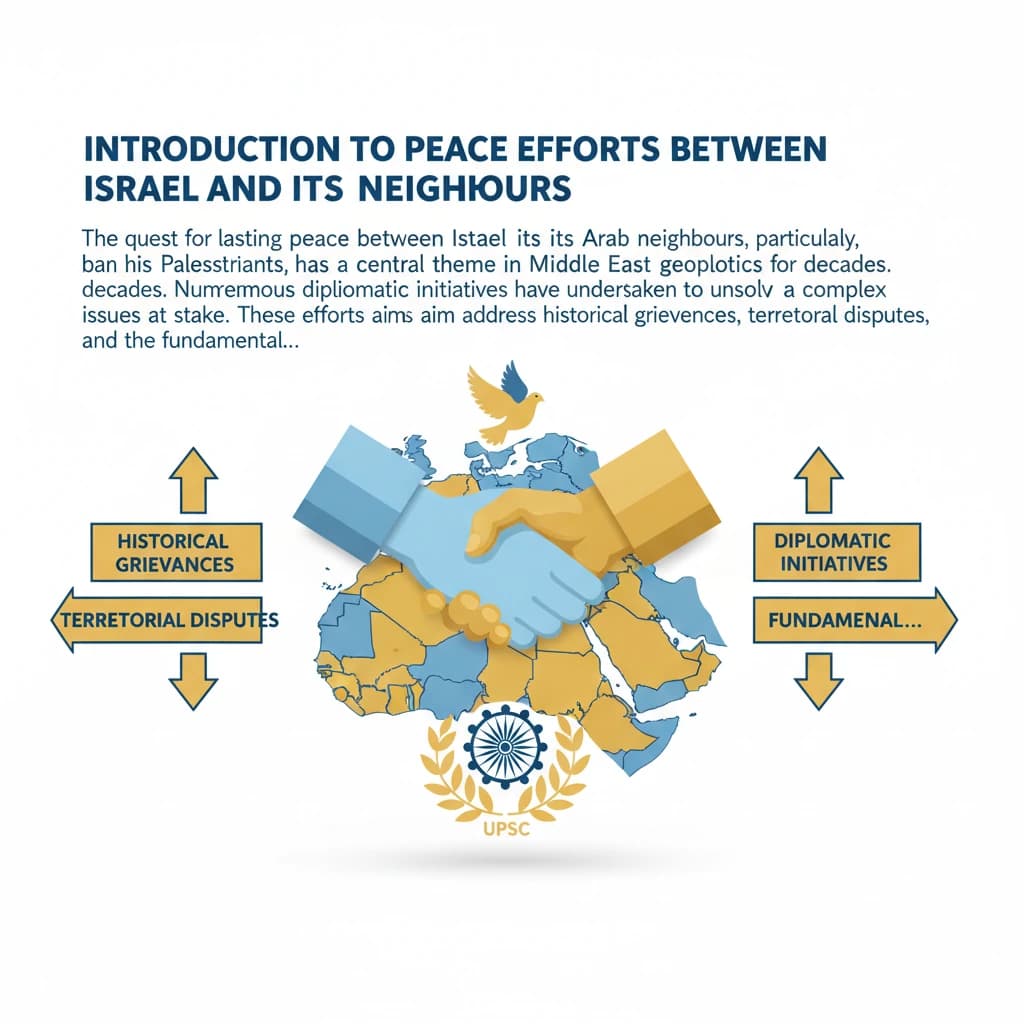
Introduction to Peace Efforts between Israel and its Neighbours
The quest for lasting peace between Israel and its Arab neighbours, particularly the Palestinians, has been a central theme in Middle East geopolitics for decades. Numerous diplomatic initiatives have been undertaken to resolve the complex issues at stake.
These efforts aim to address historical grievances, territorial disputes, and the fundamental rights of various populations in the region. Understanding these initiatives is crucial for comprehending the current state of affairs.
The Oslo Accords: A Landmark Initiative
The Oslo Accords, signed in 1993, represent a pivotal moment in the history of Israeli-Palestinian peace efforts. They marked the first direct, face-to-face agreements between the government of Israel and the Palestine Liberation Organization (PLO).
These accords were a series of agreements that aimed to establish a framework for future relations and a peaceful resolution to the conflict. They were facilitated by the United States, demonstrating the critical role of external mediation.
Key Facts about Oslo Accords:
- Signed: September 13, 1993 (Oslo I) and September 28, 1995 (Oslo II)
- Parties: Israel and the Palestine Liberation Organization (PLO)
- Facilitator: United States, with significant Norwegian assistance.
- Location: Secret negotiations in Oslo, Norway, leading to a public signing ceremony in Washington D.C.
Key Features and Objectives of the Oslo Accords
The accords were designed as a step-by-step process, envisioning a transitional period of Palestinian self-governance leading to a permanent settlement. They laid the groundwork for the establishment of the Palestinian Authority (PA).
The agreements outlined the withdrawal of Israeli forces from parts of the Gaza Strip and the West Bank, and transferred authority to the PA in specified areas. They also included provisions for economic cooperation and security arrangements.
The Oslo Accords were significant because they represented mutual recognition between Israel and the PLO. Israel recognized the PLO as the representative of the Palestinian people, and the PLO recognized Israel's right to exist in peace and security.
Current Status and Challenges
Despite the initial optimism, the peace process initiated by the Oslo Accords has largely stalled. Numerous challenges, including continued settlement expansion, violence, and a lack of trust, have hampered further progress.
The unresolved core issues, such as the status of Jerusalem, borders, settlements, and the right of return for Palestinian refugees, remain significant obstacles to a comprehensive and lasting peace agreement.
For UPSC Mains GS-II, understanding the Oslo Accords is vital when discussing West Asian geopolitics, the role of international mediation, and the complexities of conflict resolution. Be prepared to analyze why such significant efforts have not yielded lasting peace.
💡 Key Takeaways
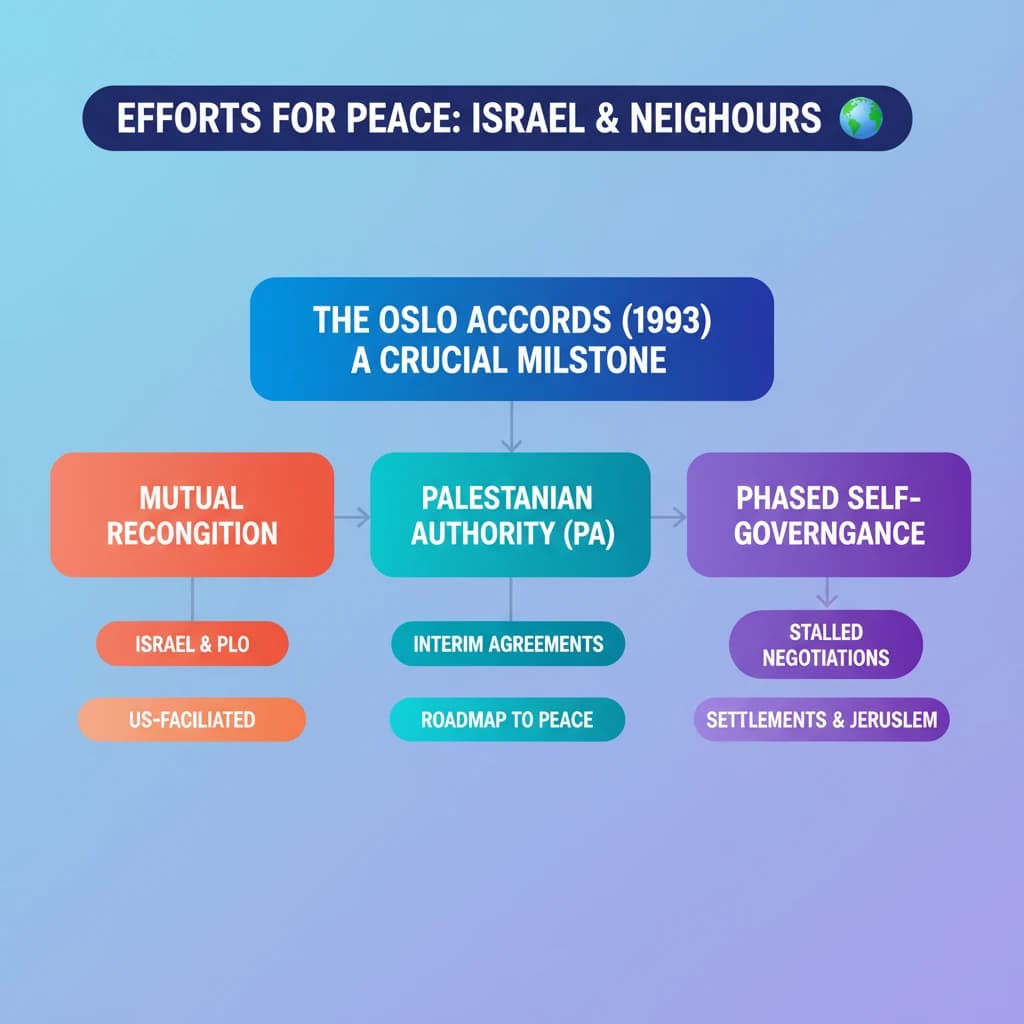
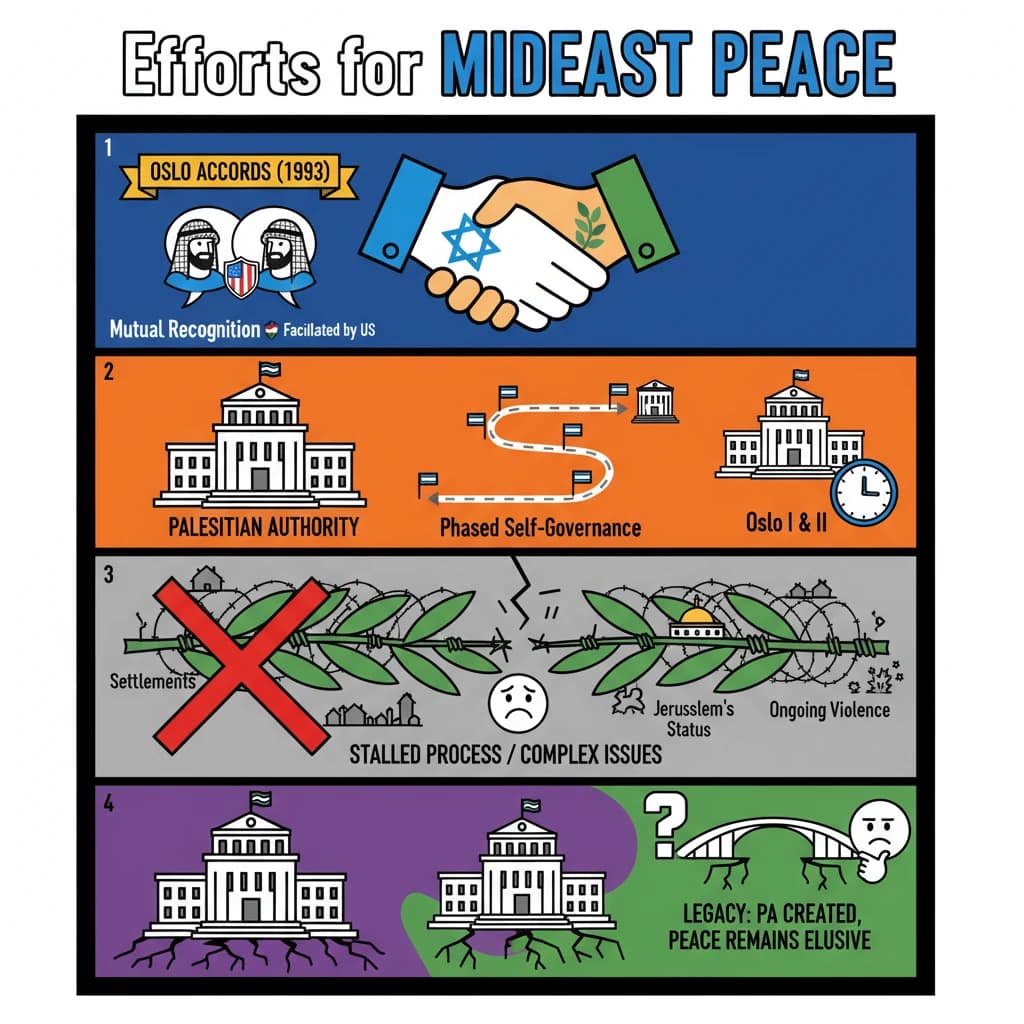
- •The Oslo Accords (1993) were a significant milestone for Israeli-Palestinian peace, involving mutual recognition between Israel and the PLO.
- •Facilitated by the US, Oslo I and II established the Palestinian Authority and outlined a phased self-governance leading to a permanent settlement.
- •The process has largely stalled due to complex issues like settlements, Jerusalem's status, and ongoing violence.
- •Oslo's legacy includes the PA but also highlights the challenges of implementing lasting peace in deeply entrenched conflicts.
- •Understanding Oslo is crucial for comprehending current West Asian geopolitics and the complexities of conflict resolution.
🧠 Memory Techniques
95% Verified Content
📚 Reference Sources
•United Nations official documents on Israeli-Palestinian conflict
•Council on Foreign Relations (CFR) analyses on Oslo Accords
•Historical accounts of the Israeli-Palestinian peace process