What is the Silk Road? - UPSC International Relations
What is What is the Silk Road? in UPSC International Relations?
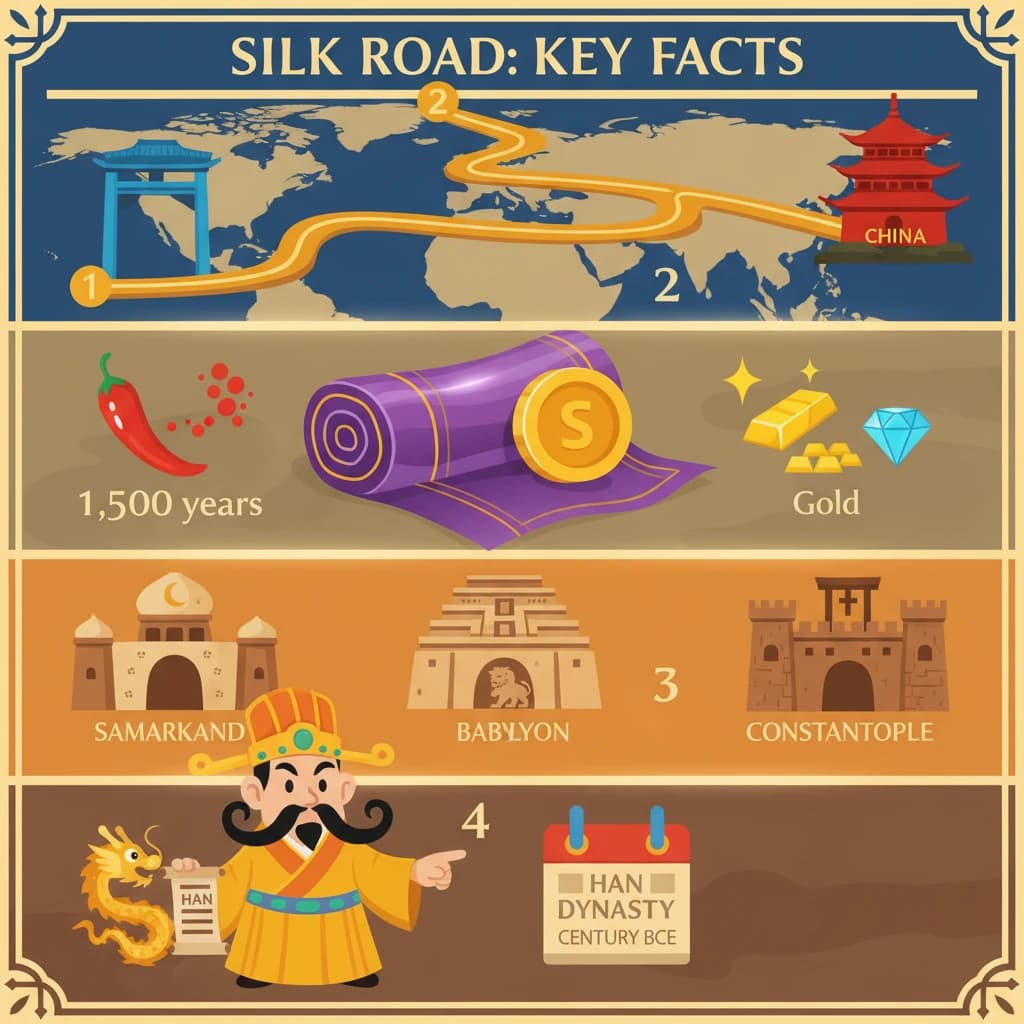
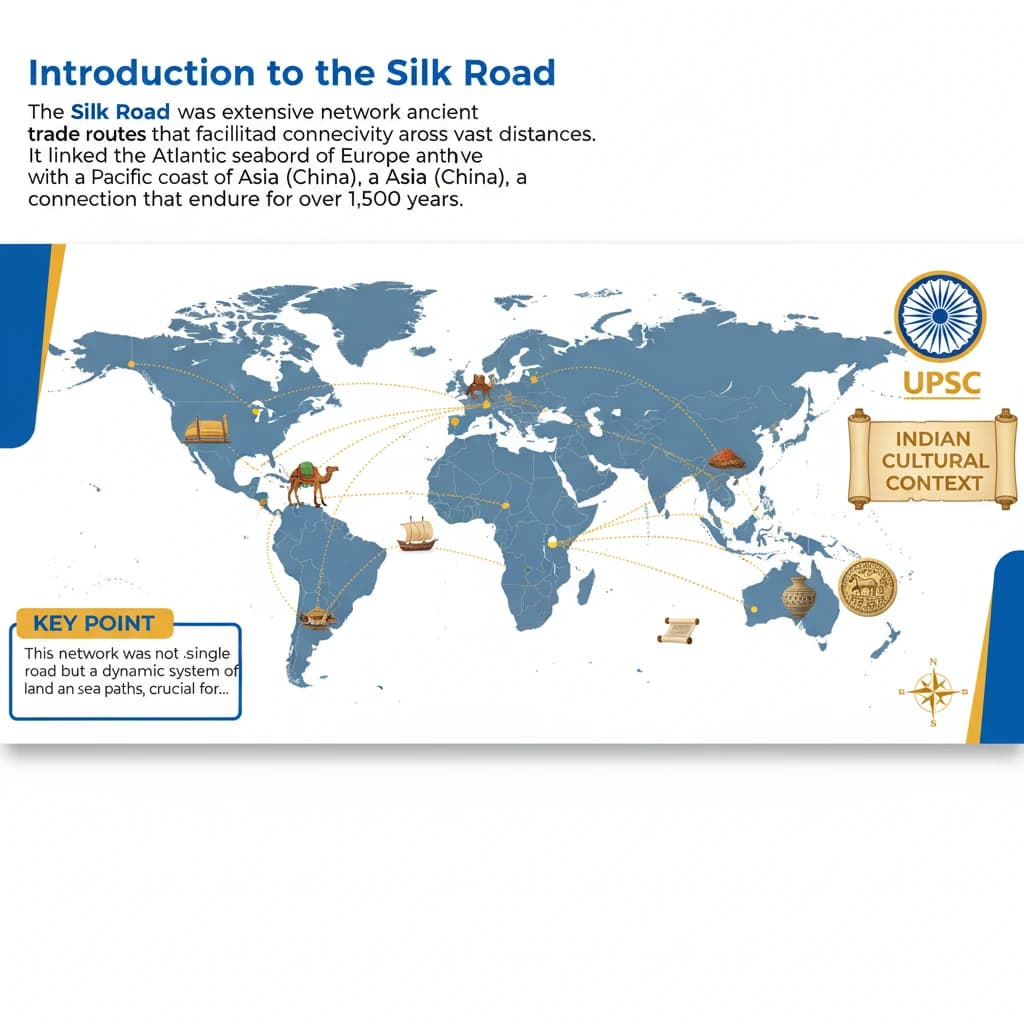
What is the Silk Road? is a key topic under International Relations for UPSC Civil Services Examination. Key points include: The Silk Road was a vast network of trade routes connecting the Atlantic seaboard of Europe with the Pacific coast of Asia (China) for over 1,500 years.. It was named for the lucrative silk trade from China but also transported spices, gold, and precious stones.. Key cities along its path included Samarkand, Babylon, and Constantinople.. Understanding this topic is essential for both UPSC Prelims and Mains preparation.
Why is What is the Silk Road? important for UPSC exam?
What is the Silk Road? is a Medium-level topic in UPSC International Relations. It is tested in both Prelims (factual MCQs) and Mains (analytical answer writing). Previous year UPSC questions have frequently covered aspects of What is the Silk Road?, making it essential for comprehensive IAS preparation.
How to prepare What is the Silk Road? for UPSC?
To prepare What is the Silk Road? for UPSC: (1) Study the comprehensive notes covering all key concepts on Vaidra. (2) Practice previous year questions on this topic. (3) Connect it with current affairs using daily updates. (4) Revise using key takeaways and mind maps available for International Relations. (5) Write practice answers linking What is the Silk Road? to related GS Paper topics.
Key takeaways of What is the Silk Road? for UPSC
- The Silk Road was a vast network of trade routes connecting the Atlantic seaboard of Europe with the Pacific coast of Asia (China) for over 1,500 years.
- It was named for the lucrative silk trade from China but also transported spices, gold, and precious stones.
- Key cities along its path included Samarkand, Babylon, and Constantinople.
- Its formal establishment is linked to Emperor Wu of the Chinese Han Dynasty in the 2nd century BCE.
- Diplomat Zhang Qian is credited as the 'Father of the Silk Road' for his expeditions that opened the Tarim Basin route.
- Beyond trade, it facilitated significant cultural, religious, and technological exchange between diverse civilizations.
- The historical Silk Road serves as an inspiration and context for modern connectivity projects like China's Belt and Road Initiative (BRI).
What is the Silk Road?
📖 Introduction

💡 Key Takeaways
- •The Silk Road was a vast network of trade routes connecting the Atlantic seaboard of Europe with the Pacific coast of Asia (China) for over 1,500 years.
- •It was named for the lucrative silk trade from China but also transported spices, gold, and precious stones.
- •Key cities along its path included Samarkand, Babylon, and Constantinople.
- •Its formal establishment is linked to Emperor Wu of the Chinese Han Dynasty in the 2nd century BCE.
- •Diplomat Zhang Qian is credited as the 'Father of the Silk Road' for his expeditions that opened the Tarim Basin route.
- •Beyond trade, it facilitated significant cultural, religious, and technological exchange between diverse civilizations.
- •The historical Silk Road serves as an inspiration and context for modern connectivity projects like China's Belt and Road Initiative (BRI).
🧠 Memory Techniques