Loading page, please wait…
Food Safety and Standards Authority of India - UPSC International Relations
What is Food Safety and Standards Authority of India in UPSC International Relations?
Food Safety and Standards Authority of India is a key topic under International Relations for UPSC Civil Services Examination. Key points include: FSSAI is an autonomous statutory body under the Food Safety and Standards Act, 2006.. Its primary role is to protect and promote public health by regulating food safety and quality in India.. Operates under the administrative control of the Ministry of Health & Family Welfare.. Understanding this topic is essential for both UPSC Prelims and Mains preparation.
Why is Food Safety and Standards Authority of India important for UPSC exam?
Food Safety and Standards Authority of India is a Easy-level topic in UPSC International Relations. It is tested in both Prelims (factual MCQs) and Mains (analytical answer writing). Previous year UPSC questions have frequently covered aspects of Food Safety and Standards Authority of India, making it essential for comprehensive IAS preparation.
How to prepare Food Safety and Standards Authority of India for UPSC?
To prepare Food Safety and Standards Authority of India for UPSC: (1) Study the comprehensive notes covering all key concepts on Vaidra. (2) Practice previous year questions on this topic. (3) Connect it with current affairs using daily updates. (4) Revise using key takeaways and mind maps available for International Relations. (5) Write practice answers linking Food Safety and Standards Authority of India to related GS Paper topics.
Key takeaways of Food Safety and Standards Authority of India for UPSC
- FSSAI is an autonomous statutory body under the Food Safety and Standards Act, 2006.
- Its primary role is to protect and promote public health by regulating food safety and quality in India.
- Operates under the administrative control of the Ministry of Health & Family Welfare.
- India shared FSSAI's guidelines on recycling post-consumer PET for food contact applications internationally.
- FSSAI's initiatives contribute to addressing global challenges like climate change, environmental protection, and sustainability.
Food Safety and Standards Authority of India
Easy⏱️ 7 min read
international relations
📖 Introduction
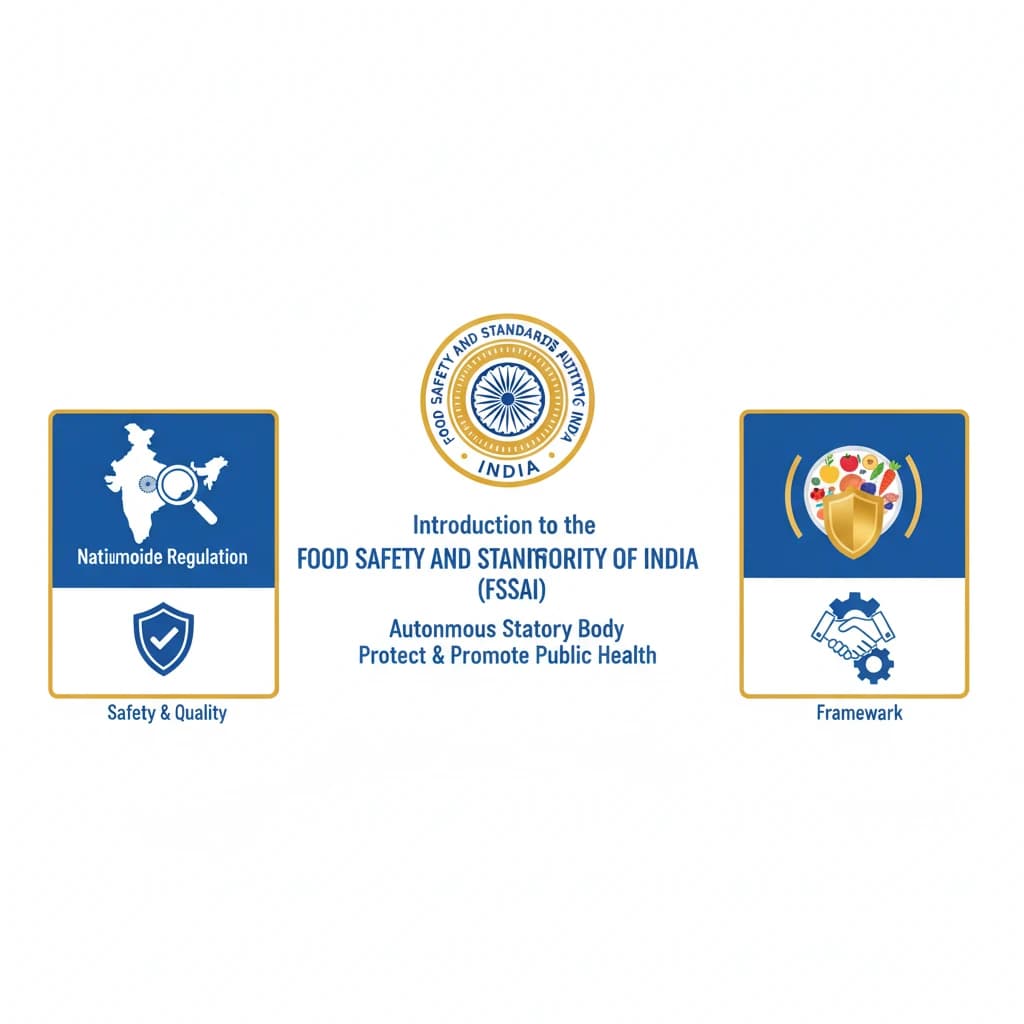
Introduction to the Food Safety and Standards Authority of India (FSSAI)
The Food Safety and Standards Authority of India (FSSAI) is a pivotal institution in India's public health framework. It operates as an autonomous statutory body, established to ensure the safety and quality of food products consumed across the nation.
FSSAI's mandate is to protect and promote public health. It achieves this by actively regulating and supervising food safety and quality standards throughout India. This comprehensive oversight covers everything from production to consumption.
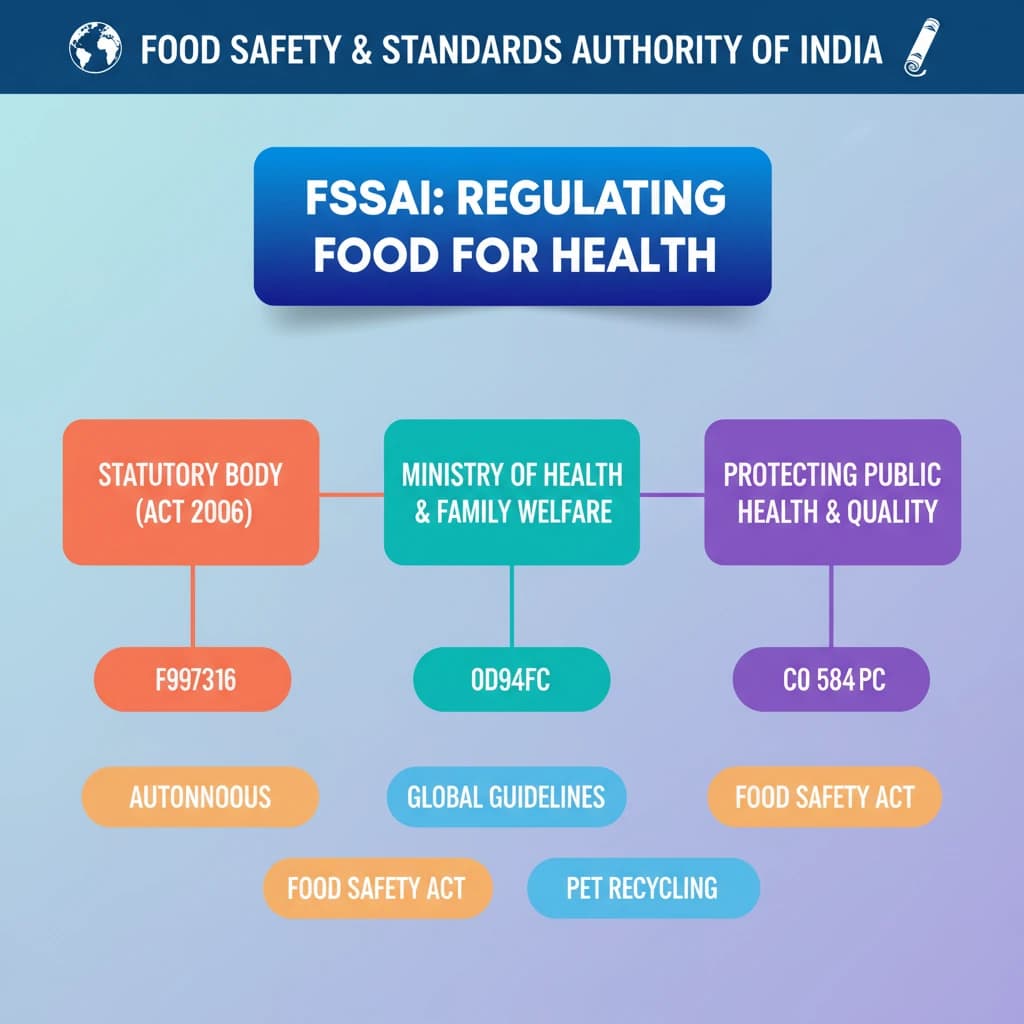
Establishment: FSSAI was established under the Food Safety and Standards Act, 2006. This Act consolidated various food laws into a single, comprehensive framework.
Parent Ministry: The Authority functions under the administrative control of the Ministry of Health & Family Welfare, Government of India.
FSSAI's role extends beyond national borders. India has proactively shared its valuable experience regarding guidelines developed by FSSAI on recycling post-consumer PET (Polyethylene terephthalate) for food contact applications.
This initiative underscores FSSAI's contribution to addressing broader global challenges. Its work is crucial for topics like climate change, environmental protection, and fostering sustainability within the food industry and packaging sector.
Core Responsibilities of FSSAI
The primary responsibility of FSSAI is to set science-based standards for food articles and to regulate their manufacture, storage, distribution, sale, and import. This ensures that safe and wholesome food is available to consumers.
- Standard Setting: Developing and enforcing food safety standards for various food products.
- Licensing & Registration: Granting licenses and registrations to food businesses to ensure compliance.
- Surveillance & Monitoring: Conducting regular checks and surveillance to monitor food quality and safety across the supply chain.
- Consumer Awareness: Educating consumers about food safety and healthy eating practices.
For UPSC, understand FSSAI not just as a regulatory body but also as a contributor to sustainable practices and global best practices, as evidenced by its PET recycling guidelines. Mentioning its statutory nature and parent ministry is key.
💡 Key Takeaways
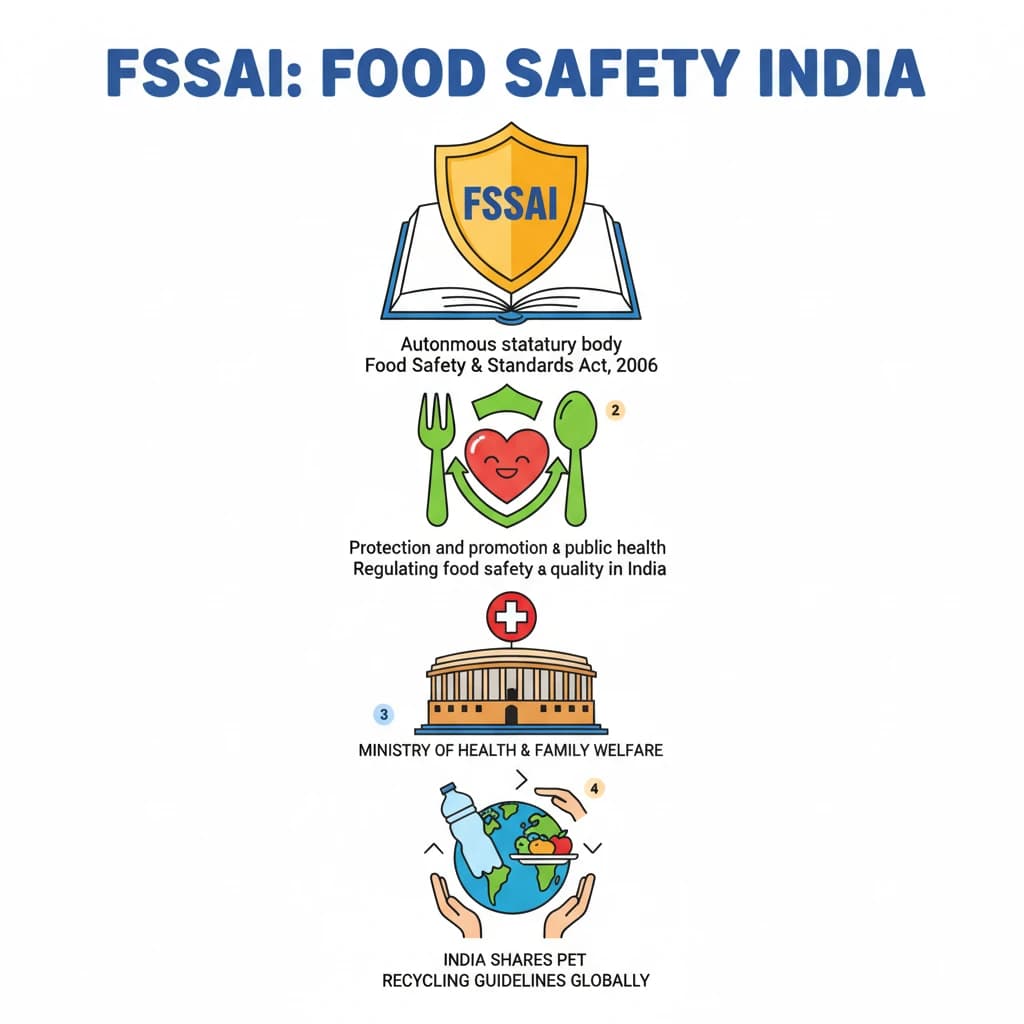
- •FSSAI is an autonomous statutory body under the Food Safety and Standards Act, 2006.
- •Its primary role is to protect and promote public health by regulating food safety and quality in India.
- •Operates under the administrative control of the Ministry of Health & Family Welfare.
- •India shared FSSAI's guidelines on recycling post-consumer PET for food contact applications internationally.
- •FSSAI's initiatives contribute to addressing global challenges like climate change, environmental protection, and sustainability.
🧠 Memory Techniques
98% Verified Content
📚 Reference Sources
•Food Safety and Standards Act, 2006
•Official website of Food Safety and Standards Authority of India (FSSAI)
•Ministry of Health & Family Welfare, Government of India