Loading page, please wait…
How have Relations Between India and Sri Lanka Been? - UPSC International Relations
What is How have Relations Between India and Sri Lanka Been? in UPSC International Relations?
How have Relations Between India and Sri Lanka Been? is a key topic under International Relations for UPSC Civil Services Examination. Key points include: India actively supports Sri Lanka's energy sector, especially in northern/eastern regions, via NTPC and Adani Group.. The energy projects integrate wind, solar, battery, and diesel power, addressing island communities' needs.. India's assistance-based model contrasts with China's loan-based projects, reflecting a broader geopolitical competition in the IOR.. Understanding this topic is essential for both UPSC Prelims and Mains preparation.
Why is How have Relations Between India and Sri Lanka Been? important for UPSC exam?
How have Relations Between India and Sri Lanka Been? is a Medium-level topic in UPSC International Relations. It is tested in both Prelims (factual MCQs) and Mains (analytical answer writing). Previous year UPSC questions have frequently covered aspects of How have Relations Between India and Sri Lanka Been?, making it essential for comprehensive IAS preparation.
How to prepare How have Relations Between India and Sri Lanka Been? for UPSC?
To prepare How have Relations Between India and Sri Lanka Been? for UPSC: (1) Study the comprehensive notes covering all key concepts on Vaidra. (2) Practice previous year questions on this topic. (3) Connect it with current affairs using daily updates. (4) Revise using key takeaways and mind maps available for International Relations. (5) Write practice answers linking How have Relations Between India and Sri Lanka Been? to related GS Paper topics.
Key takeaways of How have Relations Between India and Sri Lanka Been? for UPSC
- India actively supports Sri Lanka's energy sector, especially in northern/eastern regions, via NTPC and Adani Group.
- The energy projects integrate wind, solar, battery, and diesel power, addressing island communities' needs.
- India's assistance-based model contrasts with China's loan-based projects, reflecting a broader geopolitical competition in the IOR.
- Deep historical, cultural, and religious ties (Buddhism) form the bedrock of India-Sri Lanka relations.
- India provided crucial USD 4 billion aid during Sri Lanka's 2022 economic crisis and played a key role in debt restructuring with the IMF.
How have Relations Between India and Sri Lanka Been?
Medium⏱️ 7 min read
international relations
📖 Introduction
India's Energy Initiatives in Sri Lanka
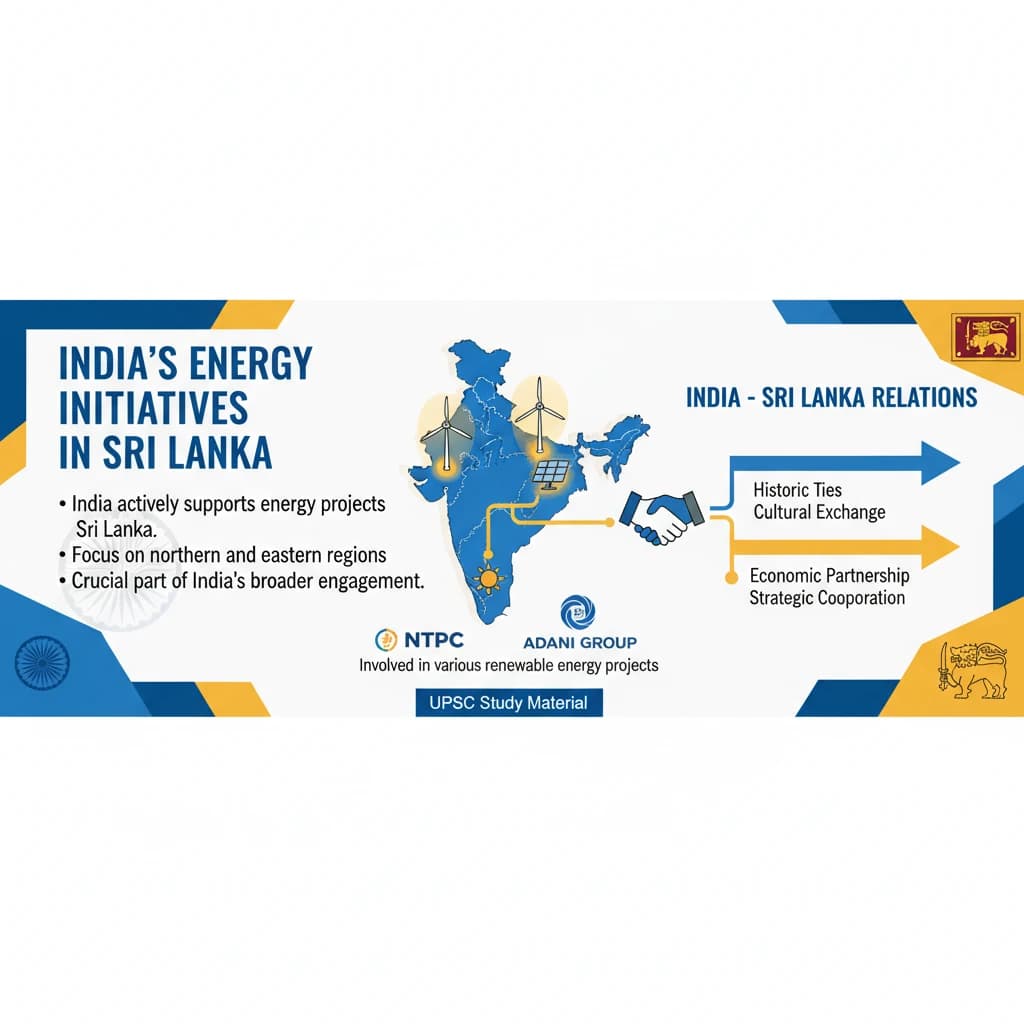
India is actively supporting energy projects in Sri Lanka, particularly focusing on the northern and eastern regions. This forms a crucial part of India's broader engagement.
Prominent Indian entities like the National Thermal Power Corporation (NTPC) and the Adani Group are involved in various renewable energy projects across different parts of the island nation.
Specific Project Focus: This initiative specifically addresses the energy needs of inhabitants on three islands in Sri Lanka.
Project Capacity and Components
The energy project is designed to provide a robust and diversified power supply. It integrates multiple sources to ensure reliability and sustainability for the local population.
Energy Mix:
- Wind Power: 170 kW
- Solar Power: 630 kW
- Battery Storage: 2,400 kWh
- Standby Diesel System: 2,500 kW (for emergency backup)
Geopolitical Implications of Energy Projects
India's involvement in these energy projects is deeply intertwined with regional geopolitical dynamics. It represents a strategic move to counter rival influences.
This assistance-based model from India stands in contrast to China's loan-based project proposals in the region. This distinction addresses concerns about debt traps and long-term sovereignty.
This reflects a broader competition for influence between India and China within the strategically vital Indian Ocean region. Energy infrastructure is a key battleground.
Beyond meeting energy demands, these projects carry significant geopolitical implications, underscoring the strategic importance of developing and controlling energy infrastructure in the region.
Enduring Historical and Cultural Bonds
India and Sri Lanka share a profound and extensive history of cultural, religious, and trade ties, stretching back to ancient times.
These strong cultural connections are evident as many Sri Lankans trace their heritage back to India. This shared ancestry forms a bedrock of bilateral relations.
Religious Connection: Buddhism, which originated in India, is a predominant and highly significant religion in Sri Lanka, further cementing cultural links.
India's Crucial Financial Aid During Economic Crisis
During Sri Lanka's unprecedented economic crisis, India extended substantial financial assistance, providing approximately USD 4 billion in aid.
This aid package was absolutely critical, playing a vital role in helping Sri Lanka navigate and survive the severe financial downturn it faced.
Crisis Overview: Sri Lanka experienced a catastrophic financial crisis in 2022, its worst since gaining independence from Britain in 1948. This was primarily due to a severe paucity of foreign exchange reserves.
India's Role in Sri Lanka's Debt Restructuring
India has actively collaborated with international bodies and creditors to support Sri Lanka in its efforts to restructure its substantial national debt.
This collaboration involves working closely with institutions like the International Monetary Fund (IMF) and various bilateral and multilateral creditors to find sustainable solutions.
💡 Key Takeaways
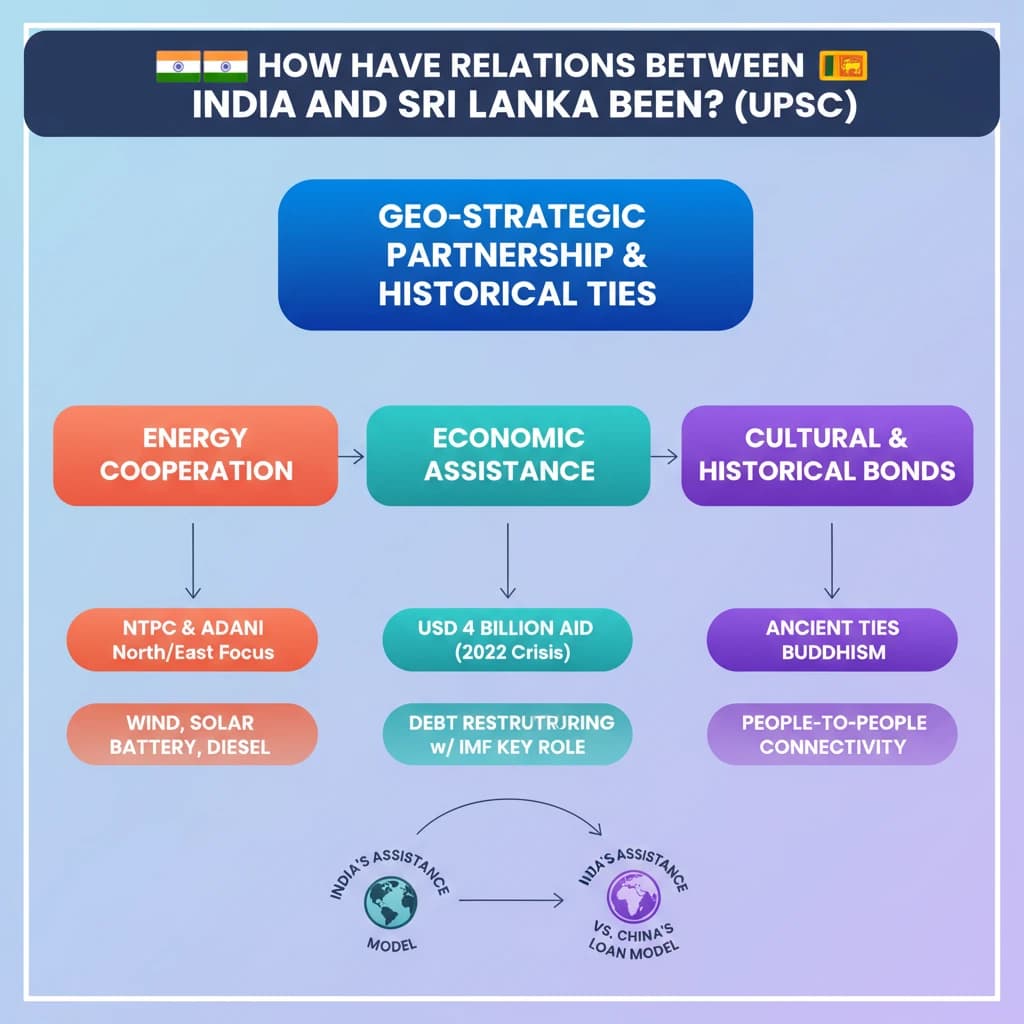
- •India actively supports Sri Lanka's energy sector, especially in northern/eastern regions, via NTPC and Adani Group.
- •The energy projects integrate wind, solar, battery, and diesel power, addressing island communities' needs.
- •India's assistance-based model contrasts with China's loan-based projects, reflecting a broader geopolitical competition in the IOR.
- •Deep historical, cultural, and religious ties (Buddhism) form the bedrock of India-Sri Lanka relations.
- •India provided crucial USD 4 billion aid during Sri Lanka's 2022 economic crisis and played a key role in debt restructuring with the IMF.
🧠 Memory Techniques
95% Verified Content