Loading page, please wait…
ICC vs. ICJ: Key Differences for UPSC International Relations - UPSC International Relations
What is ICC vs. ICJ: Key Differences for UPSC International Relations in UPSC International Relations?
ICC vs. ICJ: Key Differences for UPSC International Relations is a key topic under International Relations for UPSC Civil Services Examination. Key points include: ICC prosecutes individuals for genocide, war crimes, crimes against humanity, and aggression.. ICJ settles legal disputes between states and gives advisory opinions.. ICC is independent of the UN; ICJ is the principal judicial organ of the UN.. Understanding this topic is essential for both UPSC Prelims and Mains preparation.
Why is ICC vs. ICJ: Key Differences for UPSC International Relations important for UPSC exam?
ICC vs. ICJ: Key Differences for UPSC International Relations is a Medium-level topic in UPSC International Relations. It is tested in both Prelims (factual MCQs) and Mains (analytical answer writing). Previous year UPSC questions have frequently covered aspects of ICC vs. ICJ: Key Differences for UPSC International Relations, making it essential for comprehensive IAS preparation.
How to prepare ICC vs. ICJ: Key Differences for UPSC International Relations for UPSC?
To prepare ICC vs. ICJ: Key Differences for UPSC International Relations for UPSC: (1) Study the comprehensive notes covering all key concepts on Vaidra. (2) Practice previous year questions on this topic. (3) Connect it with current affairs using daily updates. (4) Revise using key takeaways and mind maps available for International Relations. (5) Write practice answers linking ICC vs. ICJ: Key Differences for UPSC International Relations to related GS Paper topics.
Key takeaways of ICC vs. ICJ: Key Differences for UPSC International Relations for UPSC
- ICC prosecutes individuals for genocide, war crimes, crimes against humanity, and aggression.
- ICJ settles legal disputes between states and gives advisory opinions.
- ICC is independent of the UN; ICJ is the principal judicial organ of the UN.
- ICC jurisdiction requires State Party consent or UNSC referral; ICJ jurisdiction requires state consent.
- Both are located in The Hague, Netherlands, but have distinct mandates and legal bases.
- India is not a signatory to the Rome Statute (ICC) but accepts ICJ's compulsory jurisdiction in certain cases.
ICC vs. ICJ: Key Differences for UPSC International Relations
Medium⏱️ 8 min read
international relations
📖 Introduction
Understanding International Justice Bodies
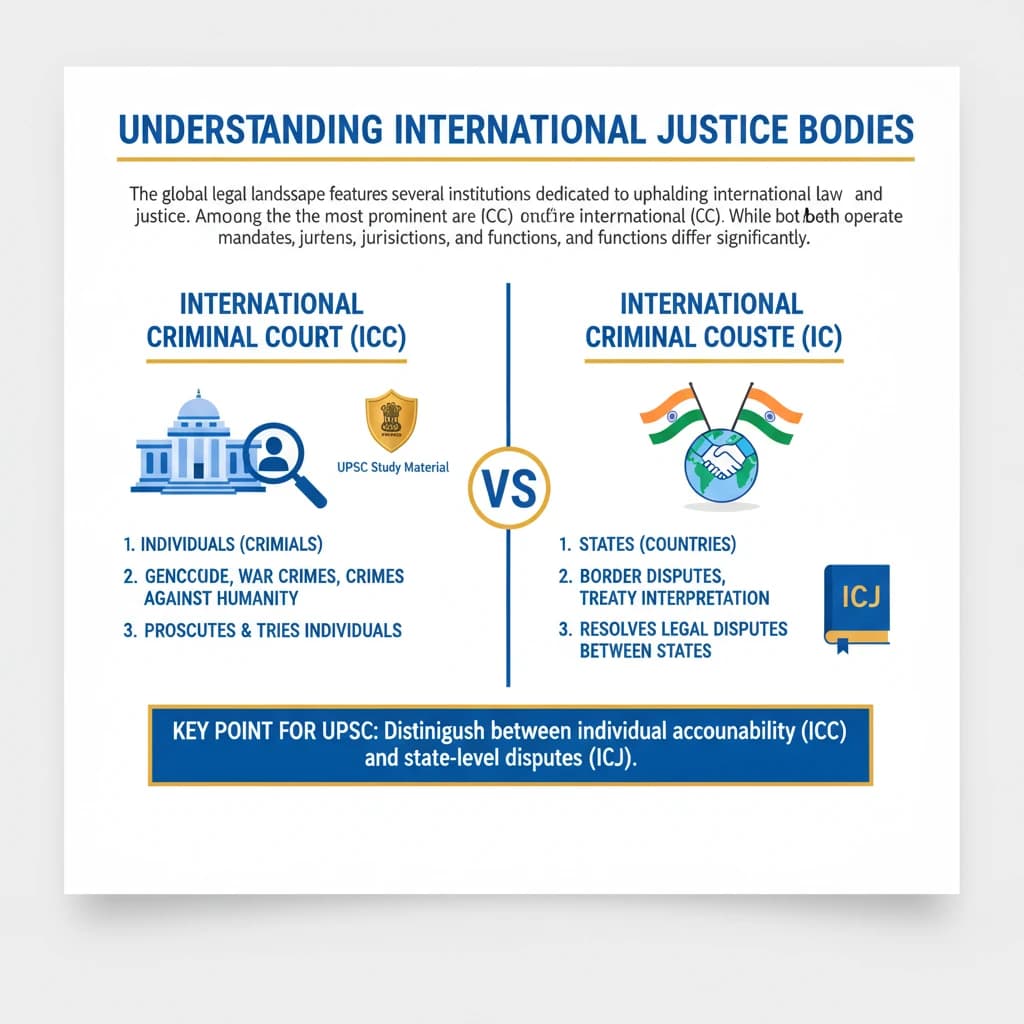
The global legal landscape features several institutions dedicated to upholding international law and justice. Among the most prominent are the International Criminal Court (ICC) and the International Court of Justice (ICJ). While both operate under international law, their mandates, jurisdictions, and functions differ significantly.
It is crucial for UPSC aspirants to distinguish clearly between the ICC and the ICJ, as questions often test their specific roles and areas of operation.
Key Differences: ICC vs. ICJ
The fundamental distinction lies in who they prosecute and what types of cases they hear. The ICC deals with individuals for international crimes, while the ICJ resolves disputes between states.
| Feature | International Criminal Court (ICC) | International Court of Justice (ICJ) |
|---|---|---|
| Establishment | Established by the Rome Statute (1998), which entered into force in 2002. It is an independent international organization. | Established in 1945 by the Charter of the United Nations. It began work in 1946 as the principal judicial organ of the UN. |
| Relationship to UN | Not part of the United Nations system, though it has a cooperation agreement with the UN. | The principal judicial organ of the United Nations. All UN member states are automatically parties to the ICJ Statute. |
| Parties Involved | Prosecutes individuals (persons) for the most serious international crimes. | Resolves legal disputes between states (countries). |
| Jurisdiction (Subject Matter) | Jurisdiction over genocide, crimes against humanity, war crimes, and the crime of aggression. | Jurisdiction over disputes concerning international law, including treaties, customary international law, and general principles of law. Also provides advisory opinions. |
| Jurisdiction (Consent) | Jurisdiction applies to crimes committed in the territory of a State Party or by a national of a State Party. A case can also be referred by the UN Security Council. | Jurisdiction is based on the consent of states involved in the dispute. Consent can be given via special agreement, treaty provisions, or optional clause declarations. |
| Seat | Located in The Hague, Netherlands. | Located in The Hague, Netherlands (Peace Palace). |
| Applicable Law | Applies the Rome Statute, elements of crimes, and general principles of law derived from national legal systems. | Applies international conventions, international custom, general principles of law, and judicial decisions/teachings of publicists. |
| Enforcement | Relies on cooperation from State Parties for arrests, evidence collection, and enforcement of sentences. | Its judgments are binding on the parties concerned and are final. The UN Security Council can enforce judgments, but its power is subject to the veto of permanent members. |
Mandate and Purpose
The ICC's primary mandate is to end impunity for perpetrators of the most serious crimes of concern to the international community. It acts as a court of last resort, intervening only when national courts are unwilling or unable to genuinely carry out investigations or prosecutions.
The ICJ's purpose is to settle, in accordance with international law, legal disputes submitted to it by states and to give advisory opinions on legal questions referred to it by authorized United Nations organs and specialized agencies.
Remember that India is not a signatory to the Rome Statute of the ICC, primarily due to concerns over state sovereignty and the definition of 'aggression'. This is a frequent point of inquiry in UPSC Mains.
💡 Key Takeaways
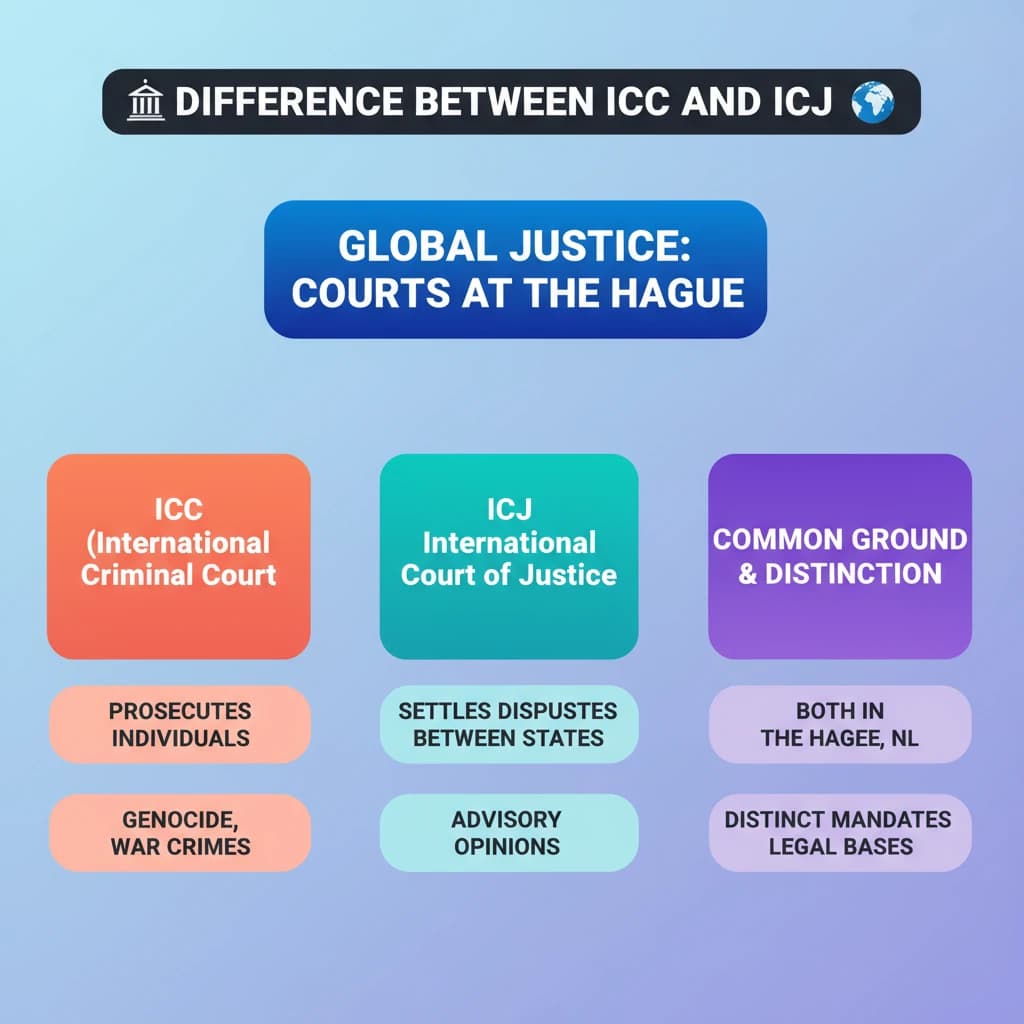
- •ICC prosecutes individuals for genocide, war crimes, crimes against humanity, and aggression.
- •ICJ settles legal disputes between states and gives advisory opinions.
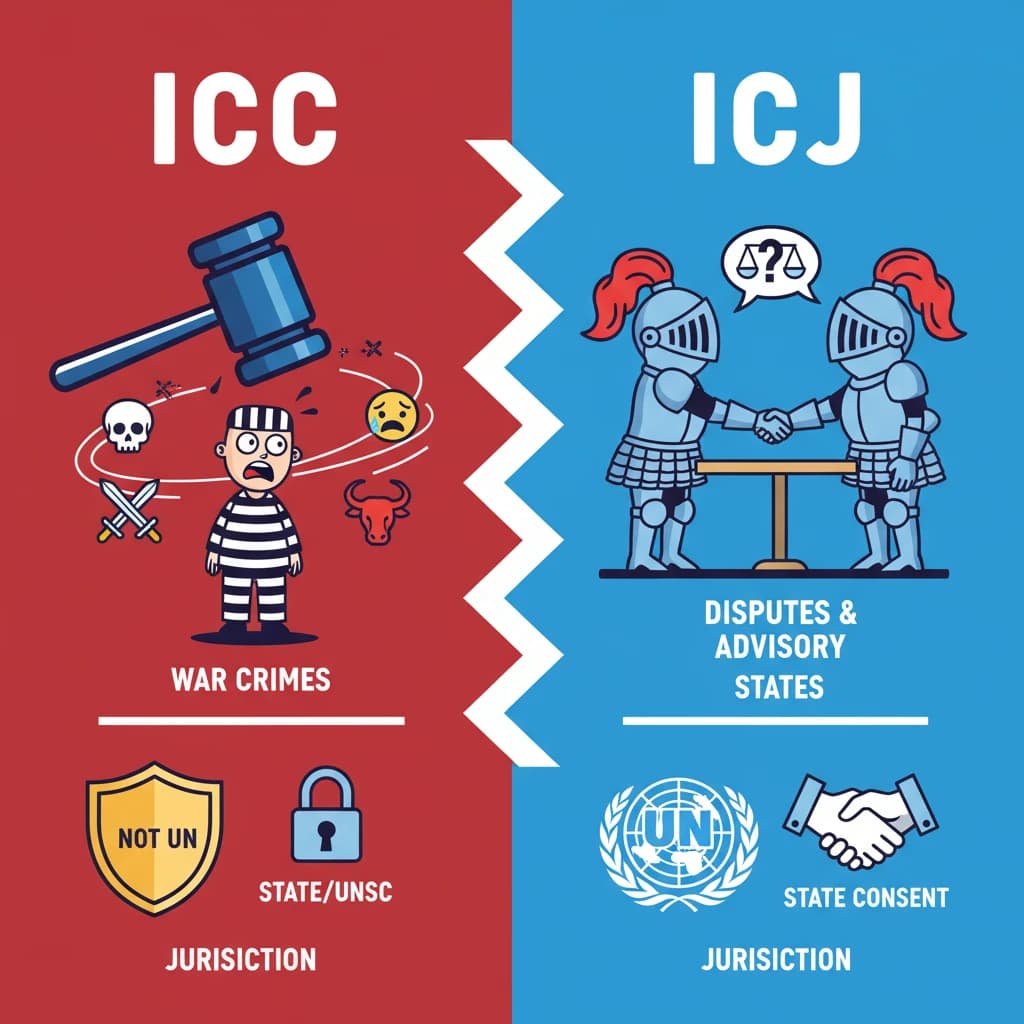
- •ICC is independent of the UN; ICJ is the principal judicial organ of the UN.
- •ICC jurisdiction requires State Party consent or UNSC referral; ICJ jurisdiction requires state consent.
- •Both are located in The Hague, Netherlands, but have distinct mandates and legal bases.
- •India is not a signatory to the Rome Statute (ICC) but accepts ICJ's compulsory jurisdiction in certain cases.
🧠 Memory Techniques
98% Verified Content
📚 Reference Sources
•Official Website of the International Court of Justice (ICJ)
•United Nations Charter
•Rome Statute of the International Criminal Court
•Drishti IAS notes on International Relations