Loading page, please wait…
India-China Border Infrastructure & Dispute Resolution Efforts - UPSC International Relations
What is India-China Border Infrastructure & Dispute Resolution Efforts in UPSC International Relations?
India-China Border Infrastructure & Dispute Resolution Efforts is a key topic under International Relations for UPSC Civil Services Examination. Key points include: India is actively enhancing border infrastructure, especially along the India-China border, for strategic advantage.. The Border Roads Organisation (BRO) has completed 90 projects worth Rs 2,941 crore to bolster connectivity.. Historical attempts to resolve border disputes include the Shimla Agreement (1914) and the Panchsheel Agreement (1954).. Understanding this topic is essential for both UPSC Prelims and Mains preparation.
Why is India-China Border Infrastructure & Dispute Resolution Efforts important for UPSC exam?
India-China Border Infrastructure & Dispute Resolution Efforts is a Medium-level topic in UPSC International Relations. It is tested in both Prelims (factual MCQs) and Mains (analytical answer writing). Previous year UPSC questions have frequently covered aspects of India-China Border Infrastructure & Dispute Resolution Efforts, making it essential for comprehensive IAS preparation.
How to prepare India-China Border Infrastructure & Dispute Resolution Efforts for UPSC?
To prepare India-China Border Infrastructure & Dispute Resolution Efforts for UPSC: (1) Study the comprehensive notes covering all key concepts on Vaidra. (2) Practice previous year questions on this topic. (3) Connect it with current affairs using daily updates. (4) Revise using key takeaways and mind maps available for International Relations. (5) Write practice answers linking India-China Border Infrastructure & Dispute Resolution Efforts to related GS Paper topics.
Key takeaways of India-China Border Infrastructure & Dispute Resolution Efforts for UPSC
- India is actively enhancing border infrastructure, especially along the India-China border, for strategic advantage.
- The Border Roads Organisation (BRO) has completed 90 projects worth Rs 2,941 crore to bolster connectivity.
- Historical attempts to resolve border disputes include the Shimla Agreement (1914) and the Panchsheel Agreement (1954).
- India recognizes the Shimla Agreement and McMahon Line; China rejects them.
- The Panchsheel Agreement, initially accepted, faced challenges during the 1962 Sino-Indian War.
- Border infrastructure is crucial for national security, troop mobility, logistical support, and countering regional influence.
India-China Border Infrastructure & Dispute Resolution Efforts
Medium⏱️ 6 min read
international relations
📖 Introduction
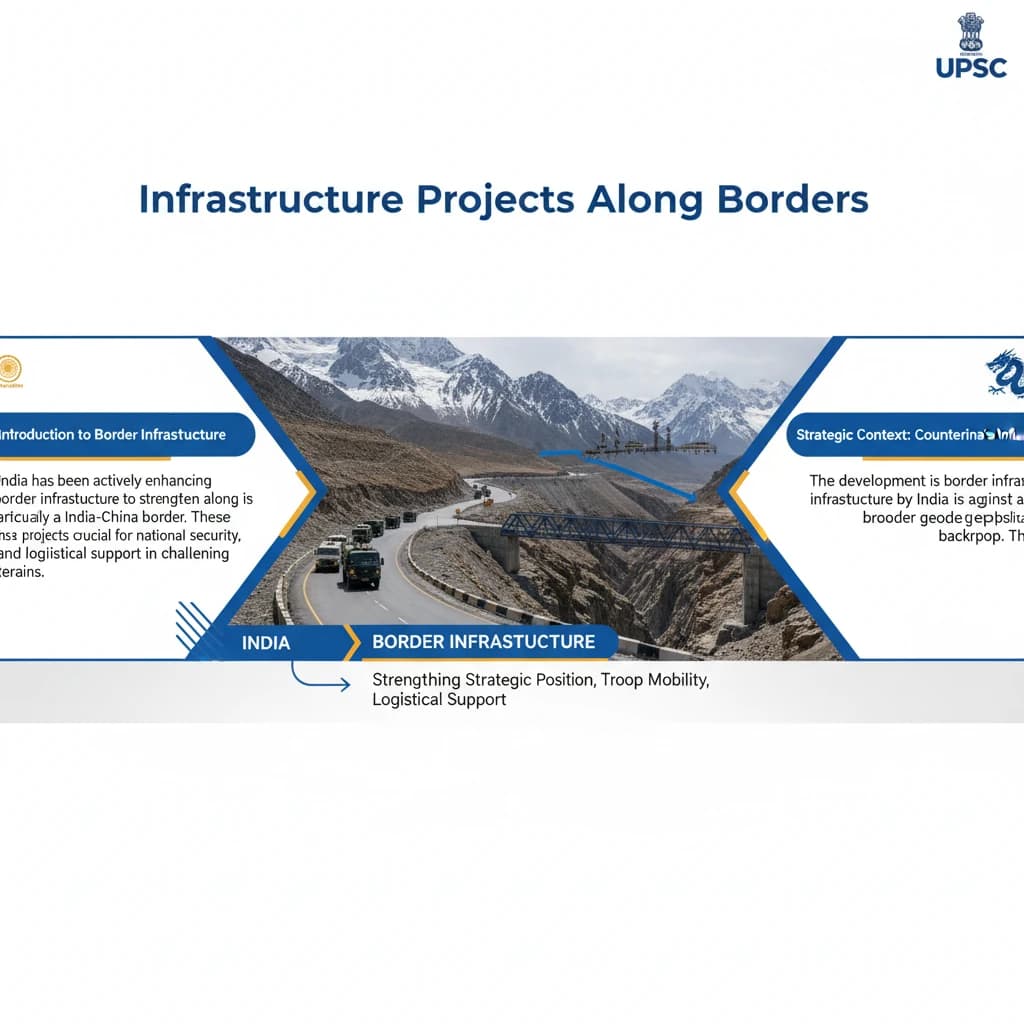
Introduction to Border Infrastructure
India has been actively enhancing its border infrastructure to strengthen its strategic position, particularly along the India-China border. These projects are crucial for national security, troop mobility, and logistical support in challenging terrains.
Strategic Context: Countering China's Influence
The development of border infrastructure by India is set against a broader geopolitical backdrop. This includes efforts to counter China’s military network and influence in the Indo-Pacific and Indian Ocean regions.
A wider strategy involves enhancing naval presence, expanding military bases, and strengthening diplomatic ties with regional nations. These actions collectively aim to balance regional power dynamics.
India's Border Infrastructure Development
India's focus on border infrastructure is a direct response to evolving geopolitical realities and security requirements. It ensures better connectivity and preparedness for any contingencies.
Key Focus: Strengthening India's position along the India-China border through robust infrastructure development.
Role of Border Roads Organisation (BRO)
The Border Roads Organisation (BRO) plays a pivotal role in constructing and maintaining India's border infrastructure. Its work is vital for improving accessibility and strategic mobility in remote and difficult border areas.
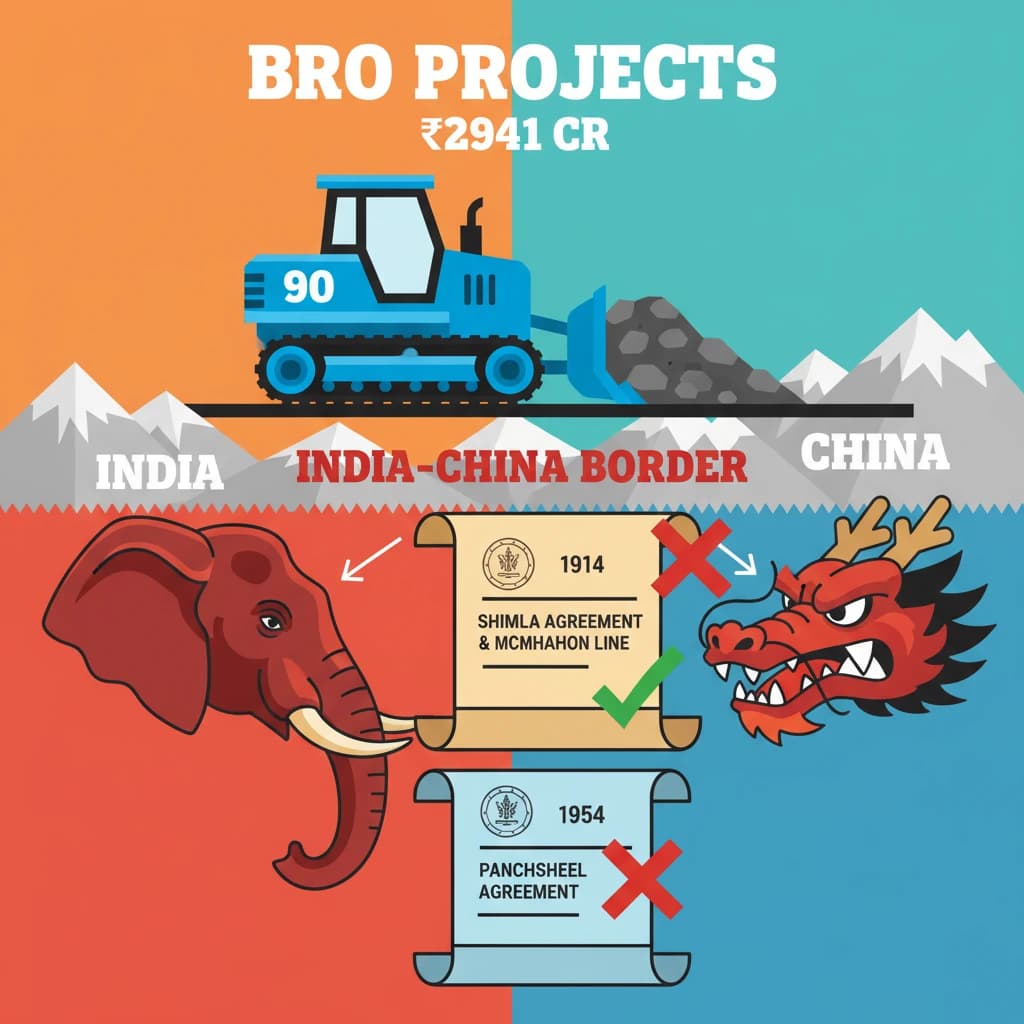
BRO Achievements: The BRO has completed 90 infrastructure projects along the India-China border, with a total worth of Rs 2,941 crore.
Previous Efforts to Settle Indo-China Border Disputes
Historical attempts have been made to resolve the complex Indo-China border disputes. These agreements provide important context to the ongoing strategic developments.
The Shimla Agreement of 1914
The Shimla Agreement of 1914 was a significant early attempt to define the boundary. It aimed to demarcate the border between Tibet and North East India.
A convention was held in Shimla in 1914, with representatives from Tibet, China, and British India participating in the discussions.
Key Outcome: The agreement was signed by British India and Tibet, but Chinese officials did not sign it.
Presently, India recognizes both the Shimla Agreement and the McMahon Line as valid boundaries. However, China has rejected both of these.
The Panchsheel Agreement of 1954
The Panchsheel Agreement of 1954 laid down five principles of peaceful coexistence, aiming to guide bilateral relations between India and China.
Core Principle: The doctrine clearly indicated the willingness to ‘Respect each other’s sovereignty and territorial integrity’.
China initially accepted these Panchsheel principles, and the agreement served as a foundational basis for bilateral relations between the two countries.
However, over time, the Panchsheel Agreement faced challenges, particularly during the Sino-Indian War of 1962, which significantly impacted its efficacy.
UPSC Insight: Understanding the historical agreements like Shimla (1914) and Panchsheel (1954) is crucial for Mains answers on India-China relations and border disputes. Note the differing recognition by India and China.
💡 Key Takeaways
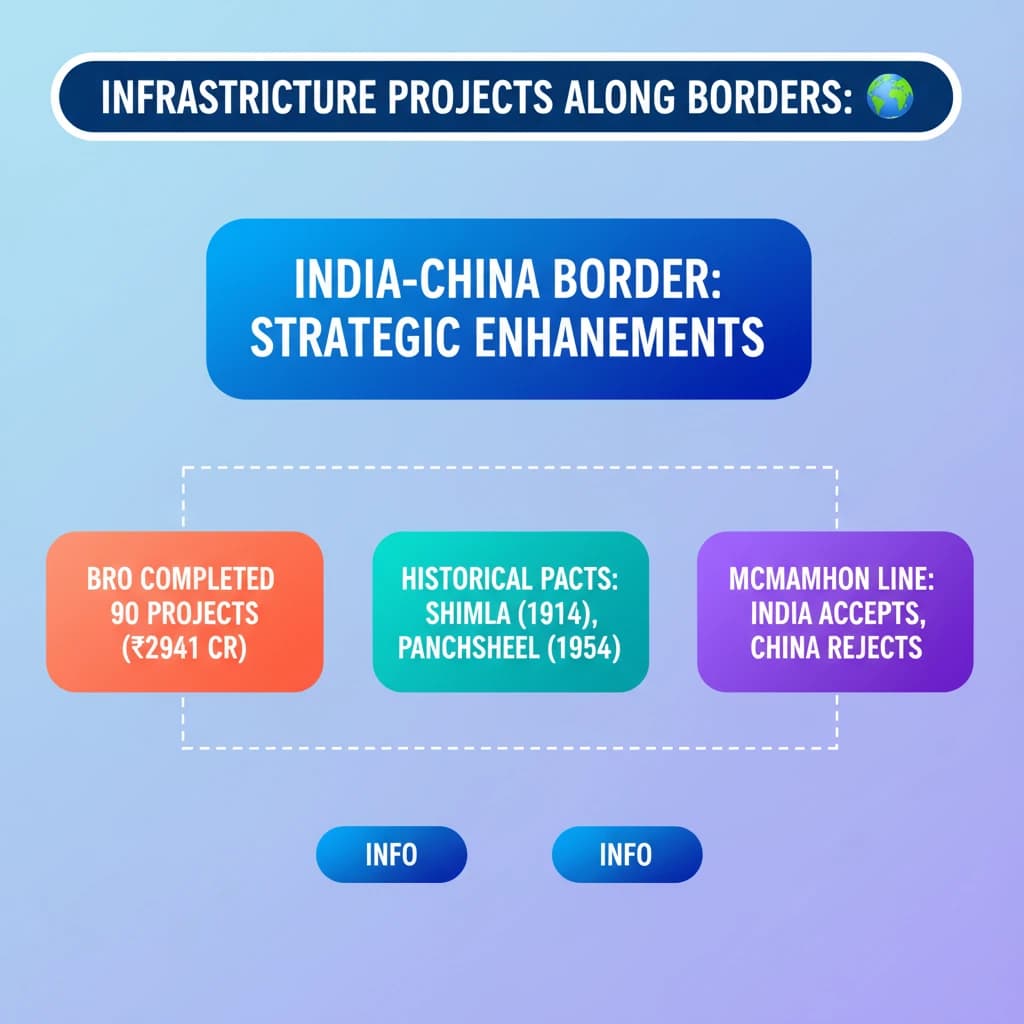
- •India is actively enhancing border infrastructure, especially along the India-China border, for strategic advantage.
- •The Border Roads Organisation (BRO) has completed 90 projects worth Rs 2,941 crore to bolster connectivity.
- •Historical attempts to resolve border disputes include the Shimla Agreement (1914) and the Panchsheel Agreement (1954).
- •India recognizes the Shimla Agreement and McMahon Line; China rejects them.
- •The Panchsheel Agreement, initially accepted, faced challenges during the 1962 Sino-Indian War.
- •Border infrastructure is crucial for national security, troop mobility, logistical support, and countering regional influence.
🧠 Memory Techniques
95% Verified Content