Loading page, please wait…
India-Sri Lanka Economic Ties: Trade and Investment - UPSC International Relations
What is India-Sri Lanka Economic Ties: Trade and Investment in UPSC International Relations?
India-Sri Lanka Economic Ties: Trade and Investment is a key topic under International Relations for UPSC Civil Services Examination. Key points include: India is Sri Lanka's third largest export destination, after the US and UK.. Over 60% of Sri Lanka's exports to India benefit from the India-Sri Lanka Free Trade Agreement (ISLFTA).. India is a major investor in Sri Lanka, with significant Foreign Direct Investment (FDI).. Understanding this topic is essential for both UPSC Prelims and Mains preparation.
Why is India-Sri Lanka Economic Ties: Trade and Investment important for UPSC exam?
India-Sri Lanka Economic Ties: Trade and Investment is a Medium-level topic in UPSC International Relations. It is tested in both Prelims (factual MCQs) and Mains (analytical answer writing). Previous year UPSC questions have frequently covered aspects of India-Sri Lanka Economic Ties: Trade and Investment, making it essential for comprehensive IAS preparation.
How to prepare India-Sri Lanka Economic Ties: Trade and Investment for UPSC?
To prepare India-Sri Lanka Economic Ties: Trade and Investment for UPSC: (1) Study the comprehensive notes covering all key concepts on Vaidra. (2) Practice previous year questions on this topic. (3) Connect it with current affairs using daily updates. (4) Revise using key takeaways and mind maps available for International Relations. (5) Write practice answers linking India-Sri Lanka Economic Ties: Trade and Investment to related GS Paper topics.
Key takeaways of India-Sri Lanka Economic Ties: Trade and Investment for UPSC
- India is Sri Lanka's third largest export destination, after the US and UK.
- Over 60% of Sri Lanka's exports to India benefit from the India-Sri Lanka Free Trade Agreement (ISLFTA).
- India is a major investor in Sri Lanka, with significant Foreign Direct Investment (FDI).
- Indian FDI amounted to approximately USD 1.7 billion between 2005 and 2019.
- These economic ties are crucial for regional stability and India's Neighbourhood First Policy.
India-Sri Lanka Economic Ties: Trade and Investment
Medium⏱️ 6 min read
international relations
📖 Introduction
Overview of India-Sri Lanka Economic Ties
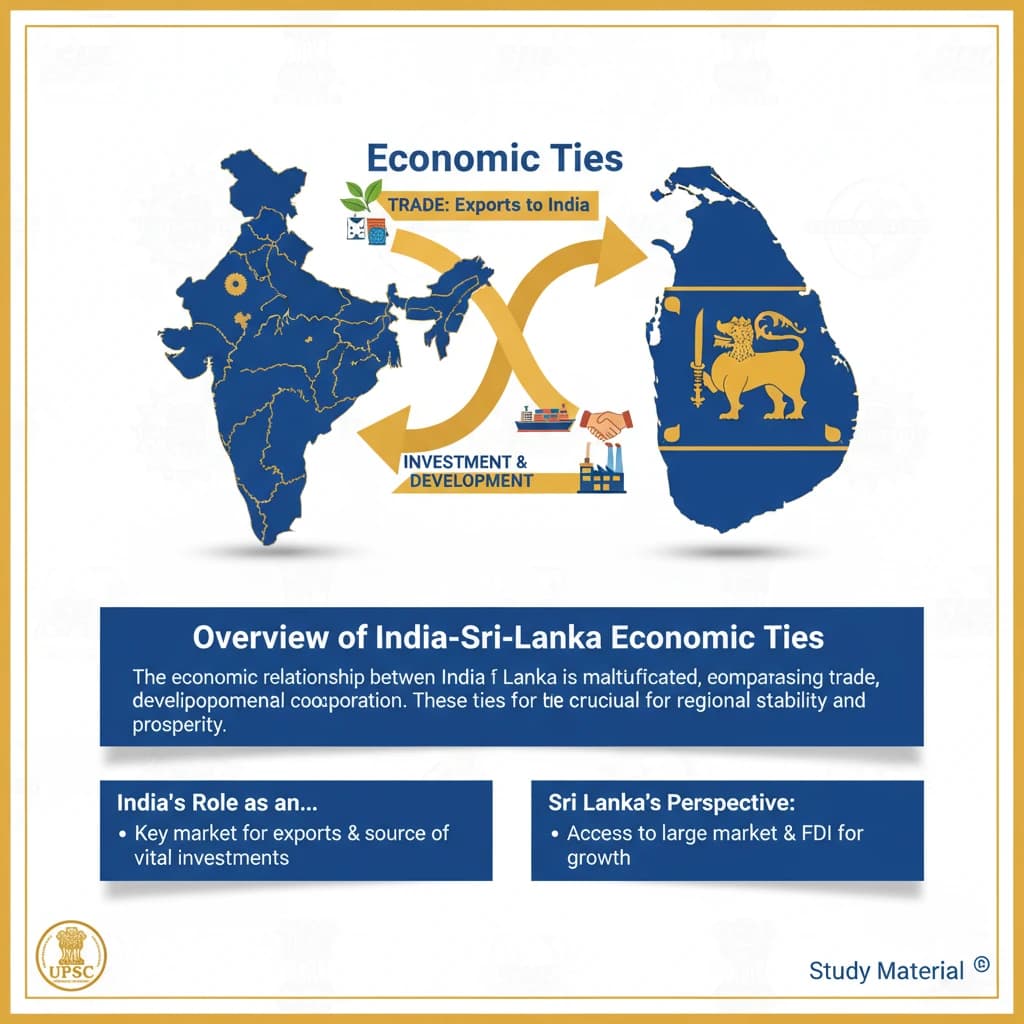
The economic relationship between India and Sri Lanka is multifaceted, encompassing trade, investment, and developmental cooperation. These ties are crucial for regional stability and prosperity.
India plays a significant role in Sri Lanka's international trade landscape, serving as a key market for its exports and a source of vital investments.
India's Role as an Export Destination
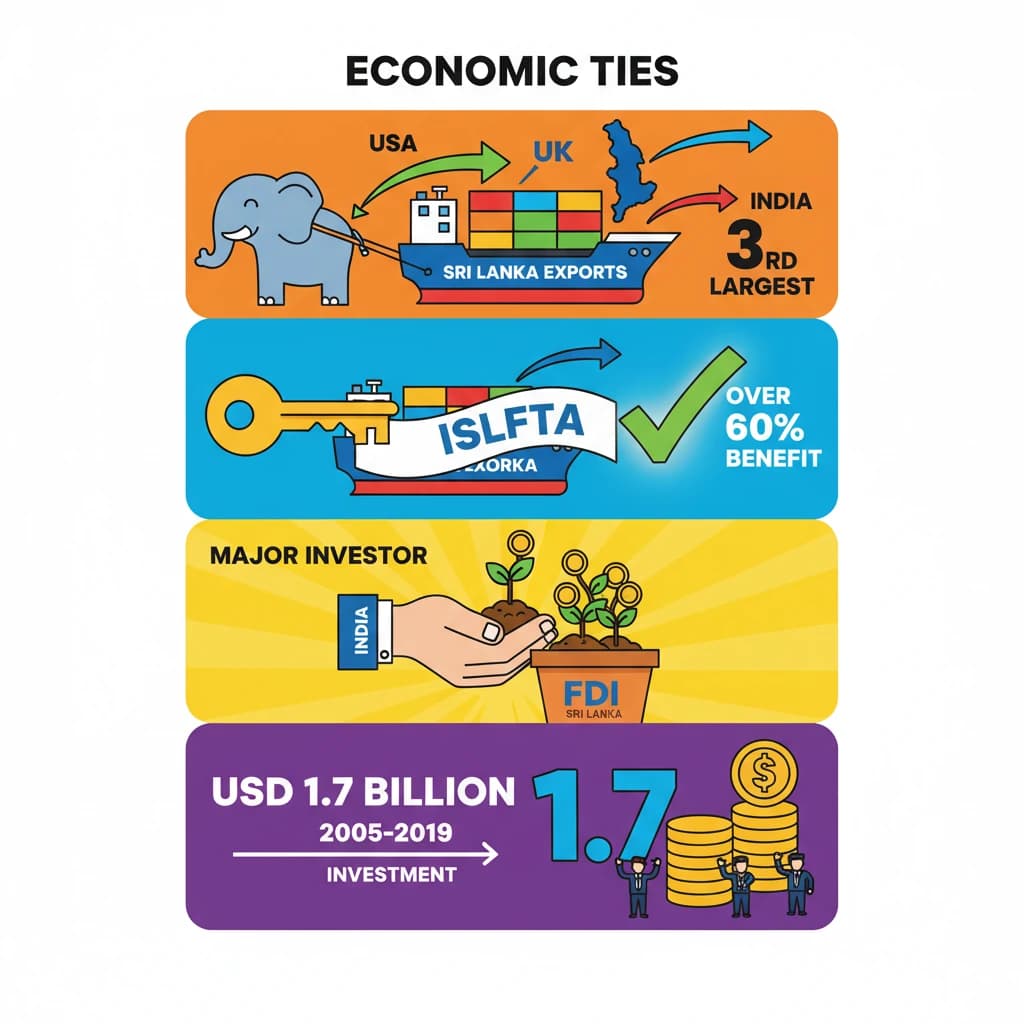
India stands as Sri Lanka's third largest export destination globally. This position highlights the substantial trade volume and economic interdependence between the two nations.
Key Fact: India is Sri Lanka's third largest export destination, following only the United States (US) and the United Kingdom (UK).
Impact of India-Sri Lanka Free Trade Agreement (ISLFTA)
A substantial portion of Sri Lanka's exports to India benefits from preferential trade arrangements. This is primarily facilitated by the India-Sri Lanka Free Trade Agreement (ISLFTA).
Trade Benefit: More than 60% of Sri Lanka's exports to India enjoy the benefits of the India-Sri Lanka Free Trade Agreement (ISLFTA).
The ISLFTA, implemented in 2000, aims to boost bilateral trade by reducing tariffs and non-tariff barriers, thereby fostering greater economic integration.
India as a Major Investor in Sri Lanka
Beyond trade, India is also a major investor in Sri Lanka. Indian companies have made significant capital commitments across various sectors of the Sri Lankan economy.
Investment Significance: India's Foreign Direct Investment (FDI) contributes significantly to Sri Lanka's economic development and job creation.
Foreign Direct Investment (FDI) Trends from India
The cumulative Foreign Direct Investment (FDI) from India to Sri Lanka has shown a consistent upward trend over the past two decades, reflecting growing confidence and opportunities.
FDI Data: Foreign Direct Investment (FDI) from India amounted to approximately USD 1.7 billion over the period from 2005 to 2019.
UPSC Insight: Understanding the specific figures and the impact of agreements like ISLFTA is crucial for Mains answers on India's Neighbourhood First Policy and economic diplomacy.
💡 Key Takeaways
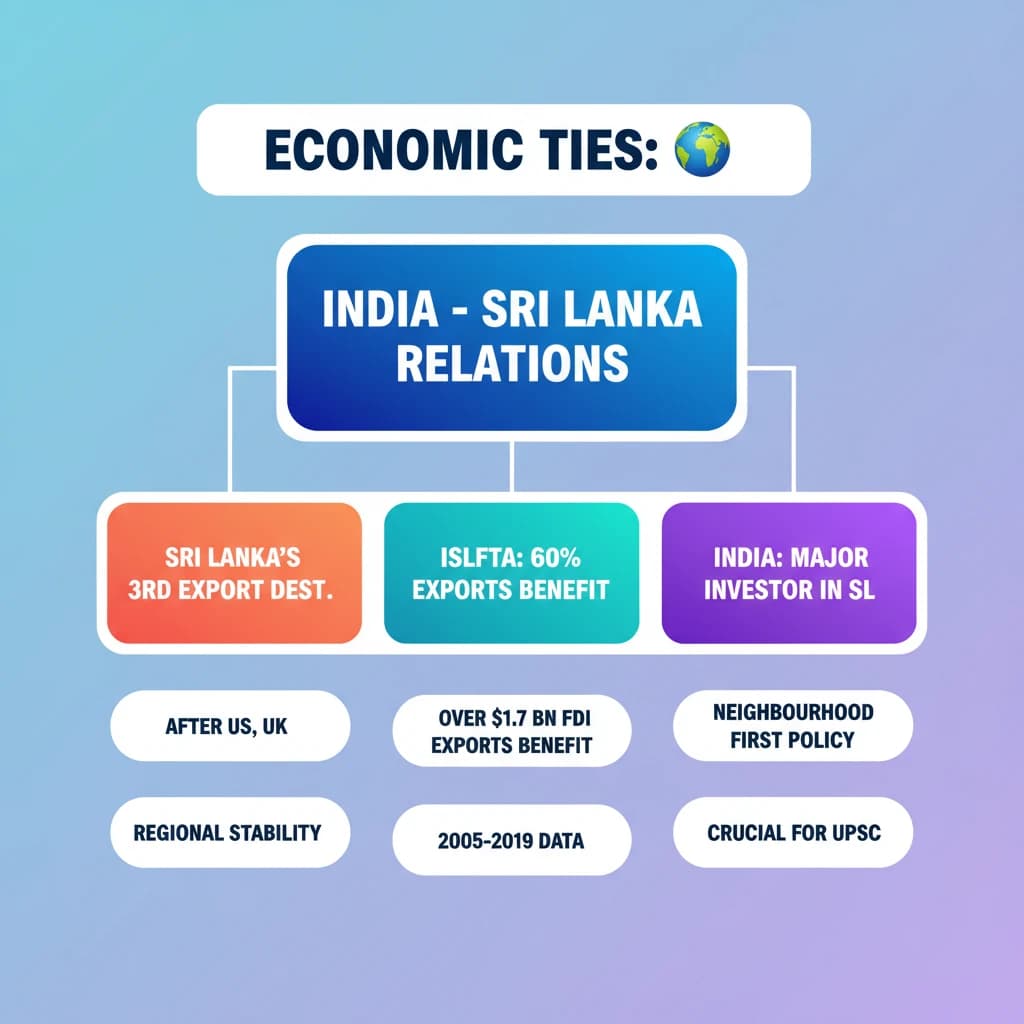
- •India is Sri Lanka's third largest export destination, after the US and UK.
- •Over 60% of Sri Lanka's exports to India benefit from the India-Sri Lanka Free Trade Agreement (ISLFTA).
- •India is a major investor in Sri Lanka, with significant Foreign Direct Investment (FDI).
- •Indian FDI amounted to approximately USD 1.7 billion between 2005 and 2019.
- •These economic ties are crucial for regional stability and India's Neighbourhood First Policy.
🧠 Memory Techniques
95% Verified Content
📚 Reference Sources
•Ministry of External Affairs, Government of India (MEA)
•Reserve Bank of India (RBI) publications on FDI
•Department of Commerce, Government of India