Loading page, please wait…
India-Sri Lanka Petroleum Pipeline Project: Energy Security & Cooperation - UPSC International Relations
What is India-Sri Lanka Petroleum Pipeline Project: Energy Security & Cooperation in UPSC International Relations?
India-Sri Lanka Petroleum Pipeline Project: Energy Security & Cooperation is a key topic under International Relations for UPSC Civil Services Examination. Key points include: India and Sri Lanka agreed to establish a multi-product petroleum pipeline.. The pipeline will run from Southern India to Sri Lanka.. Its main objective is to ensure affordable and reliable energy supply for Sri Lanka.. Understanding this topic is essential for both UPSC Prelims and Mains preparation.
Why is India-Sri Lanka Petroleum Pipeline Project: Energy Security & Cooperation important for UPSC exam?
India-Sri Lanka Petroleum Pipeline Project: Energy Security & Cooperation is a Medium-level topic in UPSC International Relations. It is tested in both Prelims (factual MCQs) and Mains (analytical answer writing). Previous year UPSC questions have frequently covered aspects of India-Sri Lanka Petroleum Pipeline Project: Energy Security & Cooperation, making it essential for comprehensive IAS preparation.
How to prepare India-Sri Lanka Petroleum Pipeline Project: Energy Security & Cooperation for UPSC?
To prepare India-Sri Lanka Petroleum Pipeline Project: Energy Security & Cooperation for UPSC: (1) Study the comprehensive notes covering all key concepts on Vaidra. (2) Practice previous year questions on this topic. (3) Connect it with current affairs using daily updates. (4) Revise using key takeaways and mind maps available for International Relations. (5) Write practice answers linking India-Sri Lanka Petroleum Pipeline Project: Energy Security & Cooperation to related GS Paper topics.
Key takeaways of India-Sri Lanka Petroleum Pipeline Project: Energy Security & Cooperation for UPSC
- India and Sri Lanka agreed to establish a multi-product petroleum pipeline.
- The pipeline will run from Southern India to Sri Lanka.
- Its main objective is to ensure affordable and reliable energy supply for Sri Lanka.
- The project is driven by the critical role of energy in economic development.
- It exemplifies India's Neighbourhood First Policy and strengthens bilateral ties.
India-Sri Lanka Petroleum Pipeline Project: Energy Security & Cooperation
Medium⏱️ 7 min read
international relations
📖 Introduction
Overview of the Multi-Product Petroleum Pipeline Agreement
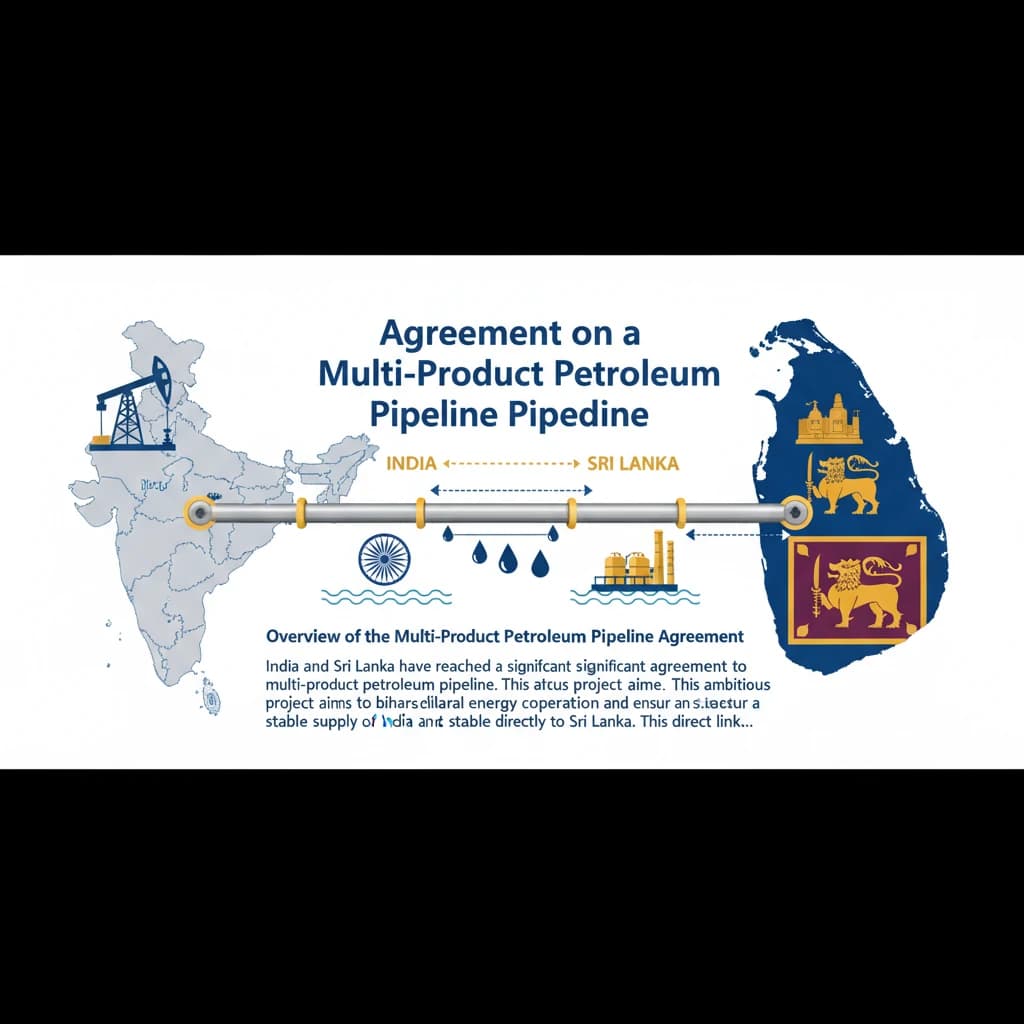
India and Sri Lanka have reached a significant agreement to establish a multi-product petroleum pipeline. This ambitious project aims to enhance bilateral energy cooperation and ensure a stable supply of vital resources.
The proposed pipeline will originate from the southern part of India and extend directly to Sri Lanka. This direct link is designed to streamline the transportation of various petroleum products between the two nations.
Key Details of the Agreement:
- Parties Involved: India and Sri Lanka
- Project Type: Multi-product petroleum pipeline
- Route: Southern India to Sri Lanka
Objectives of the Pipeline Project
The primary goal of establishing this pipeline is to provide an affordable and reliable supply of energy resources to Sri Lanka. This addresses a critical need for stable energy access, which is fundamental for national development.
Ensuring energy security for Sri Lanka is a key driver. A dedicated pipeline reduces dependence on more volatile and costly methods of energy import, such as sea-based tankers.
Core Objective: To guarantee an affordable and reliable energy supply for Sri Lanka, fostering its economic stability and growth.
Strategic Rationale and Economic Importance
The agreement underscores the mutual recognition of energy's critical role in driving economic development and progress. Both countries acknowledge that robust energy infrastructure is a prerequisite for sustained growth.
For Sri Lanka, this pipeline represents a significant step towards bolstering its energy independence and reducing logistical challenges associated with energy imports. It provides a secure channel for essential fuel supplies.
UPSC Insight: This agreement exemplifies India's Neighbourhood First Policy and its commitment to regional stability and development. It's relevant for GS-II (International Relations) and GS-III (Energy Security, Infrastructure).
💡 Key Takeaways
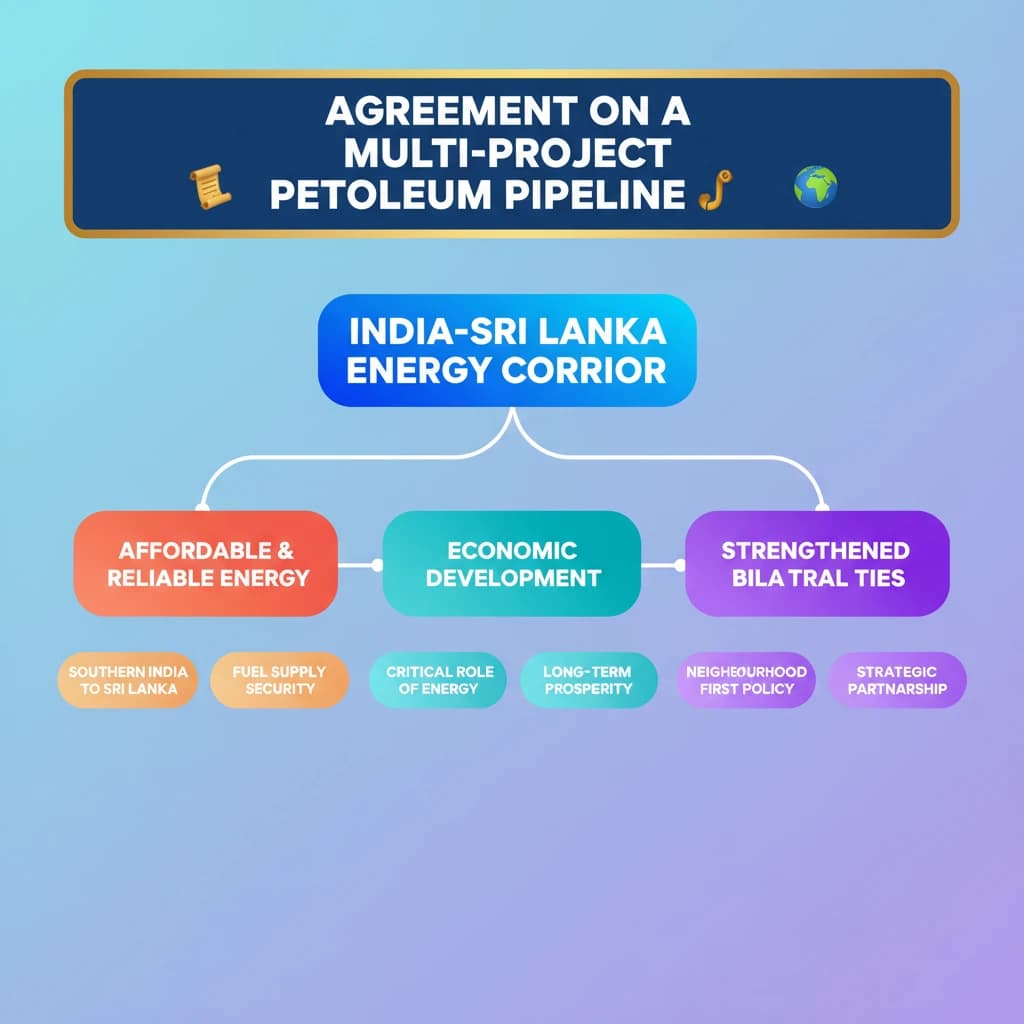
- •India and Sri Lanka agreed to establish a multi-product petroleum pipeline.
- •The pipeline will run from Southern India to Sri Lanka.
- •Its main objective is to ensure affordable and reliable energy supply for Sri Lanka.
- •The project is driven by the critical role of energy in economic development.
- •It exemplifies India's Neighbourhood First Policy and strengthens bilateral ties.
🧠 Memory Techniques
95% Verified Content
📚 Reference Sources
•Ministry of External Affairs (MEA), Government of India press releases (general context for India-Sri Lanka relations and Neighbourhood First Policy)
•News reports from reputable Indian and Sri Lankan media outlets (for pipeline agreement details and IBFPL)