Loading page, please wait…
India Sri Lanka Relations - UPSC International Relations
What is India Sri Lanka Relations in UPSC International Relations?
India Sri Lanka Relations is a key topic under International Relations for UPSC Civil Services Examination. Key points include: India is actively engaged in Sri Lanka's renewable energy sector through grant assistance.. The recent project in Jaffna islands replaces a Chinese venture, highlighting geopolitical competition.. India's 'Neighbourhood First' policy is demonstrated through development cooperation.. Understanding this topic is essential for both UPSC Prelims and Mains preparation.
Why is India Sri Lanka Relations important for UPSC exam?
India Sri Lanka Relations is a Medium-level topic in UPSC International Relations. It is tested in both Prelims (factual MCQs) and Mains (analytical answer writing). Previous year UPSC questions have frequently covered aspects of India Sri Lanka Relations, making it essential for comprehensive IAS preparation.
How to prepare India Sri Lanka Relations for UPSC?
To prepare India Sri Lanka Relations for UPSC: (1) Study the comprehensive notes covering all key concepts on Vaidra. (2) Practice previous year questions on this topic. (3) Connect it with current affairs using daily updates. (4) Revise using key takeaways and mind maps available for International Relations. (5) Write practice answers linking India Sri Lanka Relations to related GS Paper topics.
Key takeaways of India Sri Lanka Relations for UPSC
- India is actively engaged in Sri Lanka's renewable energy sector through grant assistance.
- The recent project in Jaffna islands replaces a Chinese venture, highlighting geopolitical competition.
- India's 'Neighbourhood First' policy is demonstrated through development cooperation.
- Grant assistance is a key tool in India's soft power diplomacy, fostering goodwill without debt.
- The project contributes to Sri Lanka's energy security and sustainable development goals.
India Sri Lanka Relations
Medium⏱️ 6 min read
international relations
📖 Introduction
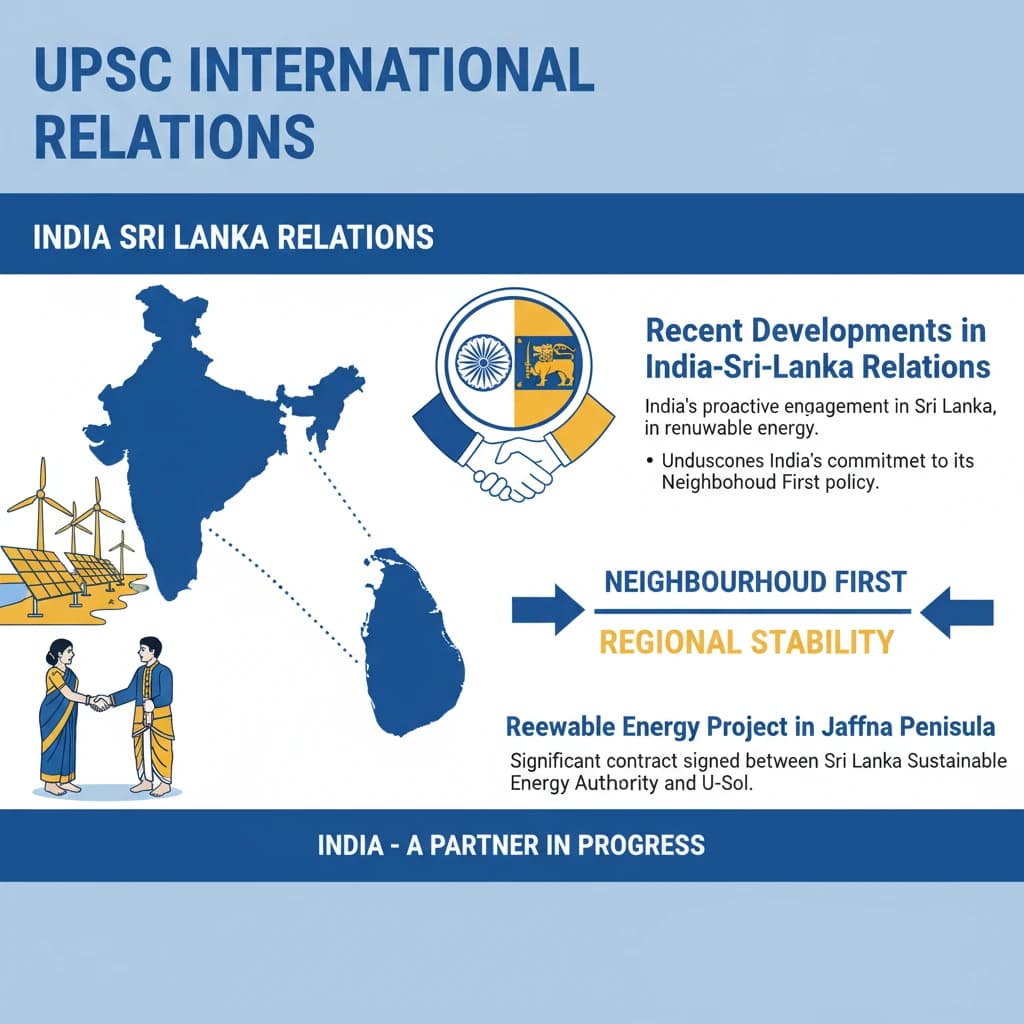
Recent Developments in India-Sri Lanka Relations
Recent developments highlight India's proactive engagement in Sri Lanka, particularly in the renewable energy sector. This engagement underscores India's commitment to its Neighbourhood First policy and regional stability.
Renewable Energy Project in Jaffna Peninsula
A significant contract has been signed between the Sri Lanka Sustainable Energy Authority and U-Solar Clean Energy Solutions, an Indian company. This agreement pertains to the construction of “Hybrid Renewable Energy Systems” in several islands off the Jaffna peninsula.
Project Locations: The islands benefiting from this project include Delft, Siranur, Neduntheevu, Nainativu, and Analaitivu. These islands are strategically located off the northern coast of Sri Lanka.
Funding and Support from India
The entire project is being supported through a substantial grant assistance from the Government of India. This financial aid demonstrates India's dedication to Sri Lanka's sustainable development and energy independence.
Grant Amount: The Government of India is providing USD 11 million in grant assistance for the implementation of these renewable energy systems.
Strategic Shift: India Replaces China
Notably, this Indian-backed project replaces an earlier approved venture involving a Chinese joint venture, Sinosoar-Etechwin. The Sri Lankan Cabinet had initially cleared the Chinese company to execute renewable energy projects in three of these islands.
This replacement signifies a crucial strategic shift, reinforcing India's role as a preferred development partner for Sri Lanka, especially in areas of critical infrastructure and energy security.
UPSC Insight: This development is vital for understanding India's soft power diplomacy and its efforts to counter increasing Chinese influence in its immediate neighbourhood. It reflects the practical application of India's Neighbourhood First policy. Questions on regional geopolitics (GS Paper 2) or India's foreign policy (GS Paper 2) could feature this example.
💡 Key Takeaways
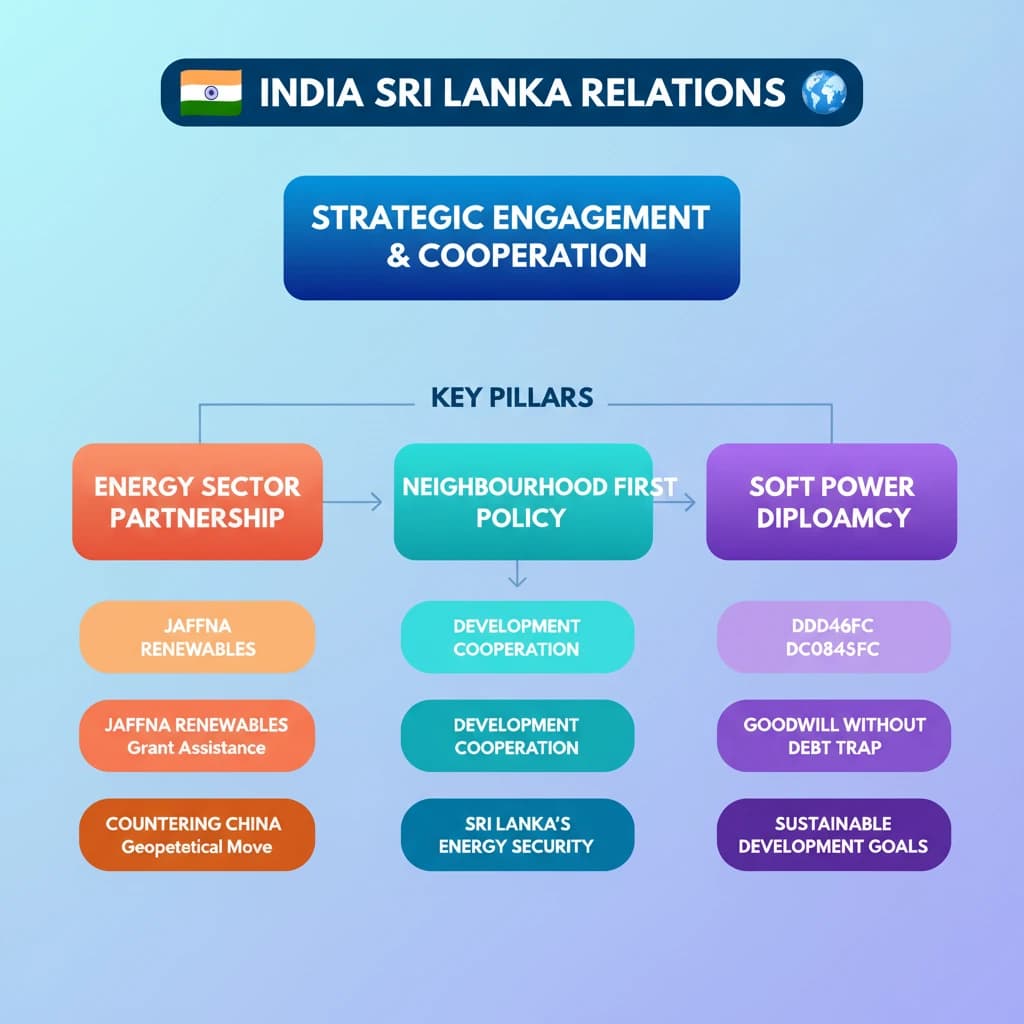
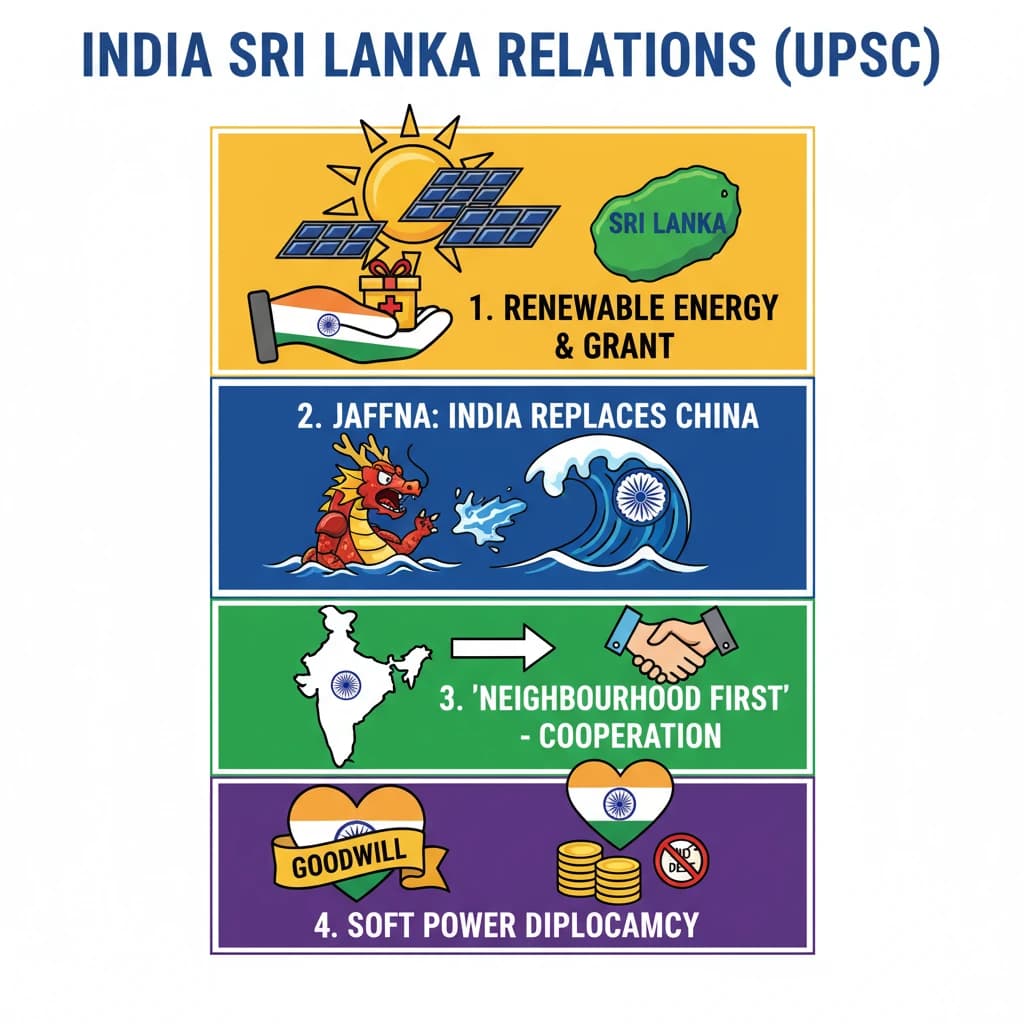
- •India is actively engaged in Sri Lanka's renewable energy sector through grant assistance.
- •The recent project in Jaffna islands replaces a Chinese venture, highlighting geopolitical competition.
- •India's 'Neighbourhood First' policy is demonstrated through development cooperation.
- •Grant assistance is a key tool in India's soft power diplomacy, fostering goodwill without debt.
- •The project contributes to Sri Lanka's energy security and sustainable development goals.
🧠 Memory Techniques
95% Verified Content
📚 Reference Sources
•General knowledge of India-Sri Lanka relations and geopolitical dynamics