Loading page, please wait…
India’s Aid to Papua New Guinea - UPSC International Relations
What is India’s Aid to Papua New Guinea in UPSC International Relations?
India’s Aid to Papua New Guinea is a key topic under International Relations for UPSC Civil Services Examination. Key points include: India provided USD 1 million in immediate aid to Papua New Guinea after floods and landslides.. Papua New Guinea is a close friend and partner of India under the FIPIC framework.. FIPIC (Forum for India-Pacific Islands Cooperation) was launched in 2014 to strengthen India's ties with 14 Pacific Island Countries (PICs).. Understanding this topic is essential for both UPSC Prelims and Mains preparation.
Why is India’s Aid to Papua New Guinea important for UPSC exam?
India’s Aid to Papua New Guinea is a Medium-level topic in UPSC International Relations. It is tested in both Prelims (factual MCQs) and Mains (analytical answer writing). Previous year UPSC questions have frequently covered aspects of India’s Aid to Papua New Guinea, making it essential for comprehensive IAS preparation.
How to prepare India’s Aid to Papua New Guinea for UPSC?
To prepare India’s Aid to Papua New Guinea for UPSC: (1) Study the comprehensive notes covering all key concepts on Vaidra. (2) Practice previous year questions on this topic. (3) Connect it with current affairs using daily updates. (4) Revise using key takeaways and mind maps available for International Relations. (5) Write practice answers linking India’s Aid to Papua New Guinea to related GS Paper topics.
Key takeaways of India’s Aid to Papua New Guinea for UPSC
- India provided USD 1 million in immediate aid to Papua New Guinea after floods and landslides.
- Papua New Guinea is a close friend and partner of India under the FIPIC framework.
- FIPIC (Forum for India-Pacific Islands Cooperation) was launched in 2014 to strengthen India's ties with 14 Pacific Island Countries (PICs).
- PICs are strategically located in the Pacific Ocean, northeast of Australia.
- This aid reflects India's humanitarian diplomacy and Act East Policy commitment.
- India's engagement aims at fostering South-South cooperation and regional stability.
India’s Aid to Papua New Guinea
Medium⏱️ 6 min read
international relations
📖 Introduction
India's Humanitarian Aid to Papua New Guinea
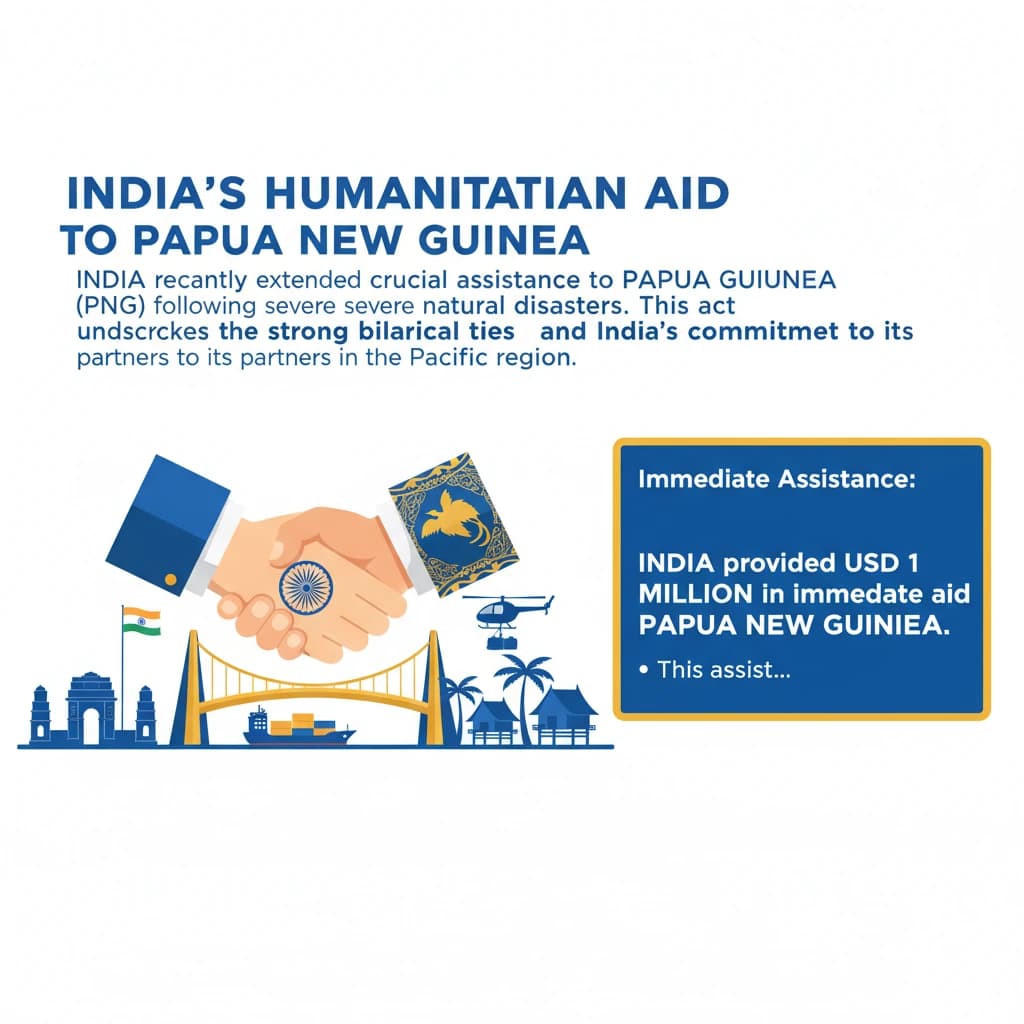
India recently extended crucial assistance to Papua New Guinea (PNG) following severe natural disasters. This act underscores the strong bilateral ties and India's commitment to its partners in the Pacific region.
Immediate Assistance: India provided USD 1 million in immediate aid to Papua New Guinea. This assistance was crucial after the island nation was severely impacted by devastating floods and landslides.
Papua New Guinea: A Key Pacific Partner
Papua New Guinea holds a significant position as a close friend and partner of India. This relationship is further solidified through regional cooperation mechanisms.
Geographical Location: Papua New Guinea is an island nation situated in the southwestern Pacific Ocean. It encompasses the eastern part of the large island of New Guinea.
Forum for India-Pacific Islands Cooperation (FIPIC)
The bilateral relationship between India and Papua New Guinea is strengthened under the umbrella of FIPIC, a key platform for regional engagement.
FIPIC Overview: The Forum for India-Pacific Islands Cooperation (FIPIC) was launched in 2014. Its primary objective is to enhance and deepen India's ties with 14 Pacific Island Countries (PICs).
These Pacific Island Countries are strategically located in the Pacific Ocean, generally to the northeast of Australia, making them vital partners for regional stability and cooperation.
- FIPIC Member Countries:
- Cook Islands
- Fiji
- Kiribati
- Marshall Islands
- Micronesia
- Nauru
- Niue
- Palau
- Papua New Guinea
- Samoa
- Solomon Islands
- Tonga
- Tuvalu
- Vanuatu
UPSC Insight: Understanding FIPIC and its member countries is crucial for questions on India's foreign policy, especially its Act East Policy and engagement with smaller island nations. Note the year of its establishment: 2014.
💡 Key Takeaways
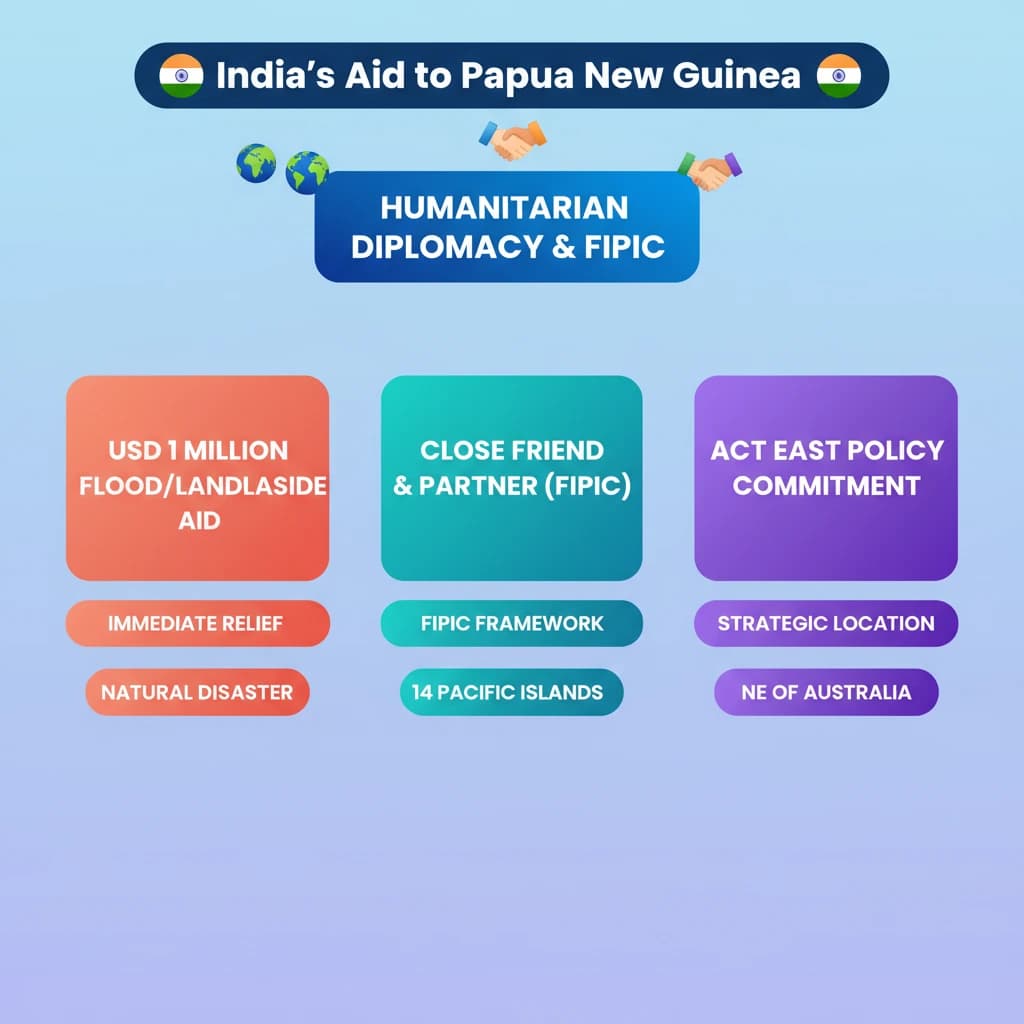
- •India provided USD 1 million in immediate aid to Papua New Guinea after floods and landslides.
- •Papua New Guinea is a close friend and partner of India under the FIPIC framework.
- •FIPIC (Forum for India-Pacific Islands Cooperation) was launched in 2014 to strengthen India's ties with 14 Pacific Island Countries (PICs).
- •PICs are strategically located in the Pacific Ocean, northeast of Australia.
- •This aid reflects India's humanitarian diplomacy and Act East Policy commitment.
- •India's engagement aims at fostering South-South cooperation and regional stability.
🧠 Memory Techniques
95% Verified Content