Loading page, please wait…
India's UPI Adoption by Sri Lanka: Fintech & Economic Implications - UPSC International Relations
What is India's UPI Adoption by Sri Lanka: Fintech & Economic Implications in UPSC International Relations?
India's UPI Adoption by Sri Lanka: Fintech & Economic Implications is a key topic under International Relations for UPSC Civil Services Examination. Key points include: Sri Lanka adopted India's UPI, enhancing fintech connectivity and supporting its economy.. Rupee trade settlement further aids Sri Lanka's economic recovery by reducing reliance on foreign currency.. These steps are crucial for strengthening bilateral economic ties between India and Sri Lanka.. Understanding this topic is essential for both UPSC Prelims and Mains preparation.
Why is India's UPI Adoption by Sri Lanka: Fintech & Economic Implications important for UPSC exam?
India's UPI Adoption by Sri Lanka: Fintech & Economic Implications is a Medium-level topic in UPSC International Relations. It is tested in both Prelims (factual MCQs) and Mains (analytical answer writing). Previous year UPSC questions have frequently covered aspects of India's UPI Adoption by Sri Lanka: Fintech & Economic Implications, making it essential for comprehensive IAS preparation.
How to prepare India's UPI Adoption by Sri Lanka: Fintech & Economic Implications for UPSC?
To prepare India's UPI Adoption by Sri Lanka: Fintech & Economic Implications for UPSC: (1) Study the comprehensive notes covering all key concepts on Vaidra. (2) Practice previous year questions on this topic. (3) Connect it with current affairs using daily updates. (4) Revise using key takeaways and mind maps available for International Relations. (5) Write practice answers linking India's UPI Adoption by Sri Lanka: Fintech & Economic Implications to related GS Paper topics.
Key takeaways of India's UPI Adoption by Sri Lanka: Fintech & Economic Implications for UPSC
- Sri Lanka adopted India's UPI, enhancing fintech connectivity and supporting its economy.
- Rupee trade settlement further aids Sri Lanka's economic recovery by reducing reliance on foreign currency.
- These steps are crucial for strengthening bilateral economic ties between India and Sri Lanka.
- UPI is a key component of India's digital diplomacy and soft power projection.
- The initiatives contribute to the internationalization of the Indian Rupee and regional economic integration.
India's UPI Adoption by Sri Lanka: Fintech & Economic Implications
Medium⏱️ 6 min read
international relations
📖 Introduction
Introduction to UPI Adoption
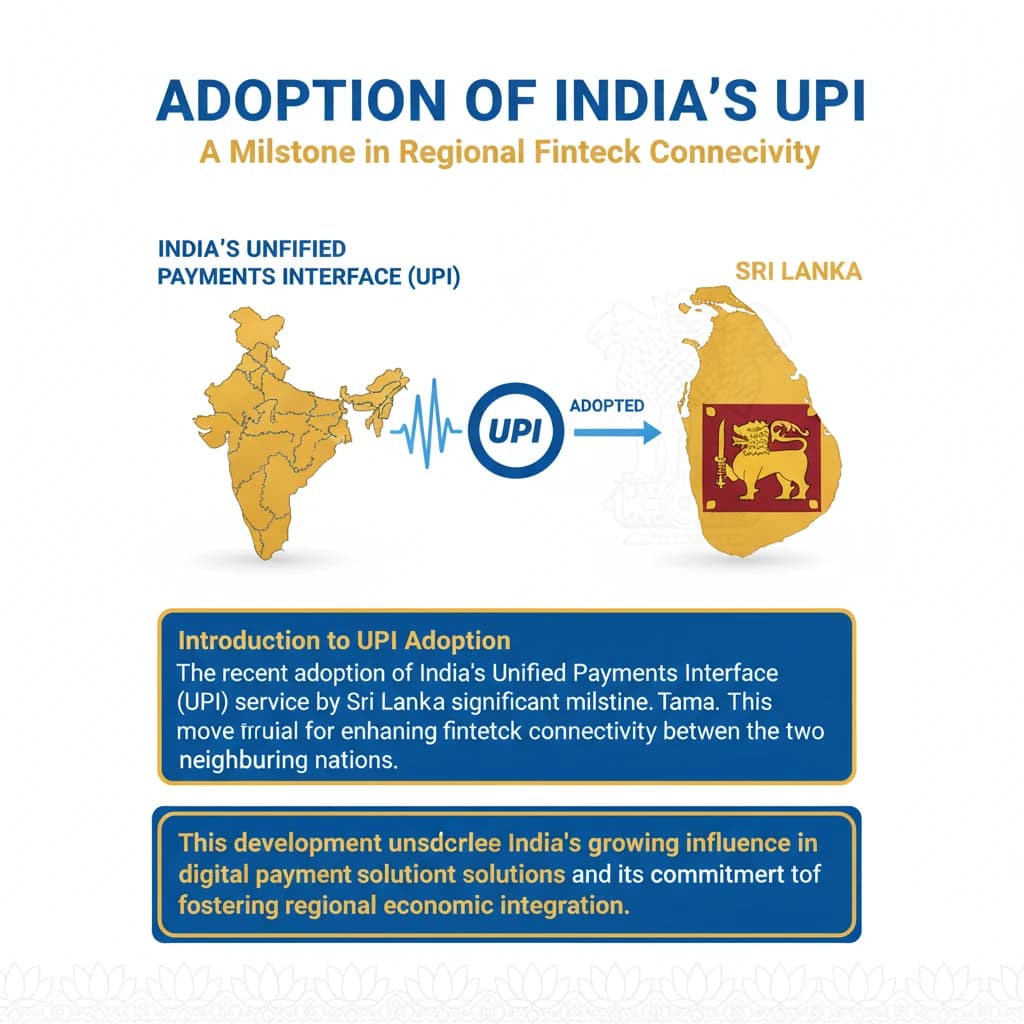
The recent adoption of India's Unified Payments Interface (UPI) service by Sri Lanka marks a significant milestone. This move is crucial for enhancing fintech connectivity between the two neighbouring nations.
This development underscores India's growing influence in digital payment solutions and its commitment to fostering regional economic integration.
Enhancing Fintech Connectivity
The integration of UPI allows for seamless, real-time digital transactions. This directly benefits individuals and businesses by providing an efficient, secure, and cost-effective payment mechanism across borders.
It simplifies cross-border remittances and boosts tourism, making transactions easier for Indian tourists in Sri Lanka and vice-versa.
Role of Rupee for Trade Settlement
Beyond UPI, the use of the Indian Rupee (INR) for trade settlement is another pivotal step. This mechanism enables businesses in both countries to conduct trade directly in their local currencies, bypassing the need for third-party currencies like the US Dollar.
Rupee trade settlement reduces foreign exchange conversion costs and risks. It also conserves foreign exchange reserves for Sri Lanka, which is vital for its economic stability.
Support for Sri Lanka's Economic Recovery
These initiatives – UPI adoption and rupee trade settlement – are concrete measures designed to bolster Sri Lanka's economic recovery and growth. They provide immediate financial benefits and strengthen bilateral economic ties.
UPSC Insight: This case study exemplifies India's Neighbourhood First Policy and its role in promoting regional economic stability through digital infrastructure and currency cooperation. It's relevant for GS-2 (International Relations) and GS-3 (Indian Economy).
💡 Key Takeaways
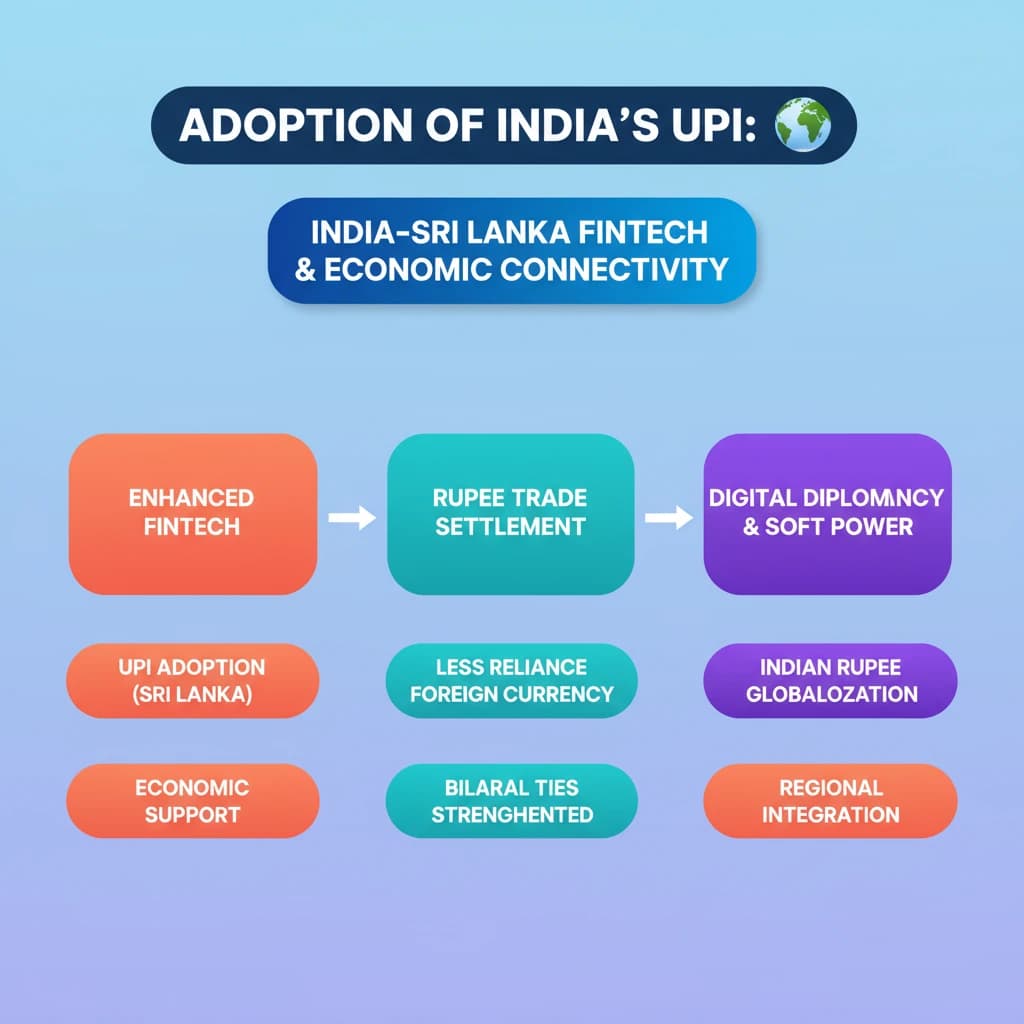
- •Sri Lanka adopted India's UPI, enhancing fintech connectivity and supporting its economy.
- •Rupee trade settlement further aids Sri Lanka's economic recovery by reducing reliance on foreign currency.
- •These steps are crucial for strengthening bilateral economic ties between India and Sri Lanka.
- •UPI is a key component of India's digital diplomacy and soft power projection.
- •The initiatives contribute to the internationalization of the Indian Rupee and regional economic integration.
🧠 Memory Techniques
98% Verified Content
📚 Reference Sources
•Reserve Bank of India (RBI) official statements on Rupee Trade Settlement
•National Payments Corporation of India (NPCI) reports on UPI internationalization
•Ministry of External Affairs (MEA) press releases on India-Sri Lanka cooperation
•News reports from reputable Indian and international media outlets (e.g., The Hindu, Livemint, Reuters)