Loading page, please wait…
Iran-Israel Conflict - UPSC International Relations
What is Iran-Israel Conflict in UPSC International Relations?
Iran-Israel Conflict is a key topic under International Relations for UPSC Civil Services Examination. Key points include: The Iran-Israel conflict is a complex geopolitical rivalry, not a direct conventional war.. It is primarily a 'shadow war' involving proxies, intelligence operations, and cyberattacks.. The conflict significantly impacts the security of the Indian diaspora and India's energy interests in the Gulf.. Understanding this topic is essential for both UPSC Prelims and Mains preparation.
Why is Iran-Israel Conflict important for UPSC exam?
Iran-Israel Conflict is a Medium-level topic in UPSC International Relations. It is tested in both Prelims (factual MCQs) and Mains (analytical answer writing). Previous year UPSC questions have frequently covered aspects of Iran-Israel Conflict, making it essential for comprehensive IAS preparation.
How to prepare Iran-Israel Conflict for UPSC?
To prepare Iran-Israel Conflict for UPSC: (1) Study the comprehensive notes covering all key concepts on Vaidra. (2) Practice previous year questions on this topic. (3) Connect it with current affairs using daily updates. (4) Revise using key takeaways and mind maps available for International Relations. (5) Write practice answers linking Iran-Israel Conflict to related GS Paper topics.
Key takeaways of Iran-Israel Conflict for UPSC
- The Iran-Israel conflict is a complex geopolitical rivalry, not a direct conventional war.
- It is primarily a 'shadow war' involving proxies, intelligence operations, and cyberattacks.
- The conflict significantly impacts the security of the Indian diaspora and India's energy interests in the Gulf.
- Historical ties shifted from covert alliance (pre-1979) to open hostility (post-1979 Islamic Revolution).
- Key drivers include ideological differences, regional hegemony, and Iran's nuclear program.
- India maintains a delicate diplomatic balance due to strong ties with both nations.
Iran-Israel Conflict
Medium⏱️ 10 min read
international relations
📖 Introduction
Introduction to the Iran-Israel Conflict
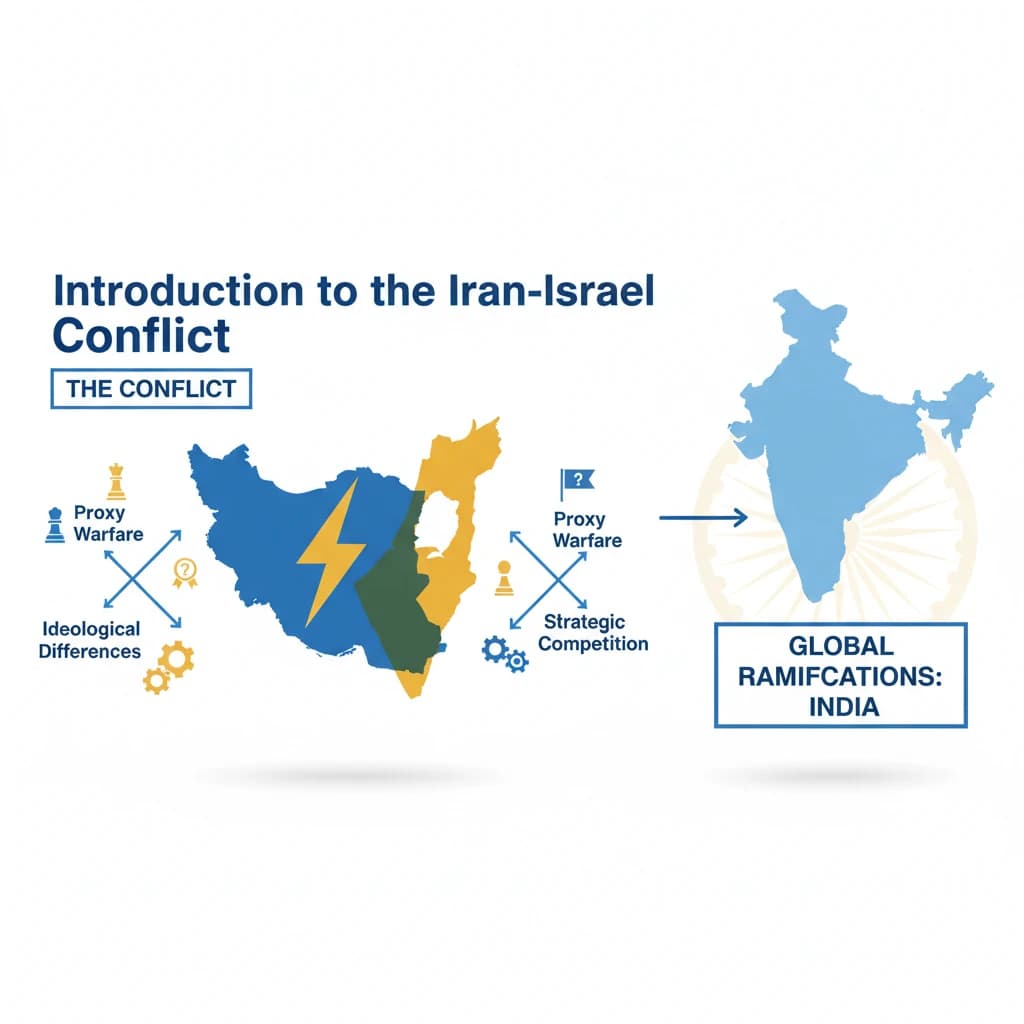
The Iran-Israel conflict represents a complex and multifaceted geopolitical rivalry in the Middle East. This ongoing tension significantly impacts regional stability and has global ramifications, including for countries like India.
The conflict is characterized by proxy warfare, ideological differences, and strategic competition rather than direct conventional military engagement between the two states.
Why the Conflict is in News
Recent escalations and developments in the Iran-Israel conflict frequently bring it into international headlines. These events often highlight the volatile nature of the Middle East and the intricate web of alliances and antagonisms.
The immediate trigger for the conflict being in news often relates to specific incidents. These can include missile strikes, cyberattacks, or actions by proxy groups supported by either nation.
Impact on the Indian Diaspora
One of the critical concerns for India stemming from this conflict is the security and well-being of the large Indian diaspora in the Gulf region. Any significant escalation could directly threaten their safety and economic stability.
The Gulf region hosts millions of Indian expatriates who contribute significantly to both the host economies and India through remittances. Their security is a paramount concern for Indian foreign policy.
Turmoil in the Gulf can lead to disruptions in oil supplies, increased shipping costs, and economic instability, all of which have direct implications for India's energy security and trade interests.
Nature of the Conflict
The Iran-Israel conflict is primarily an indirect confrontation. Both nations leverage various non-state actors and regional alliances to advance their strategic objectives and undermine the other's influence.
- Iran's Strategy: Supports groups like Hezbollah in Lebanon, Hamas and Palestinian Islamic Jihad in Gaza, and various militias in Iraq and Syria, forming an 'Axis of Resistance'.
- Israel's Strategy: Focuses on intelligence operations, targeted strikes against Iranian assets or proxies, and diplomatic efforts to isolate Iran.
For UPSC, understand that this is not a conventional war but a 'shadow war' or 'proxy conflict'. Focus on the strategic implications and India's stakes, especially in GS Paper 2 (International Relations).
💡 Key Takeaways
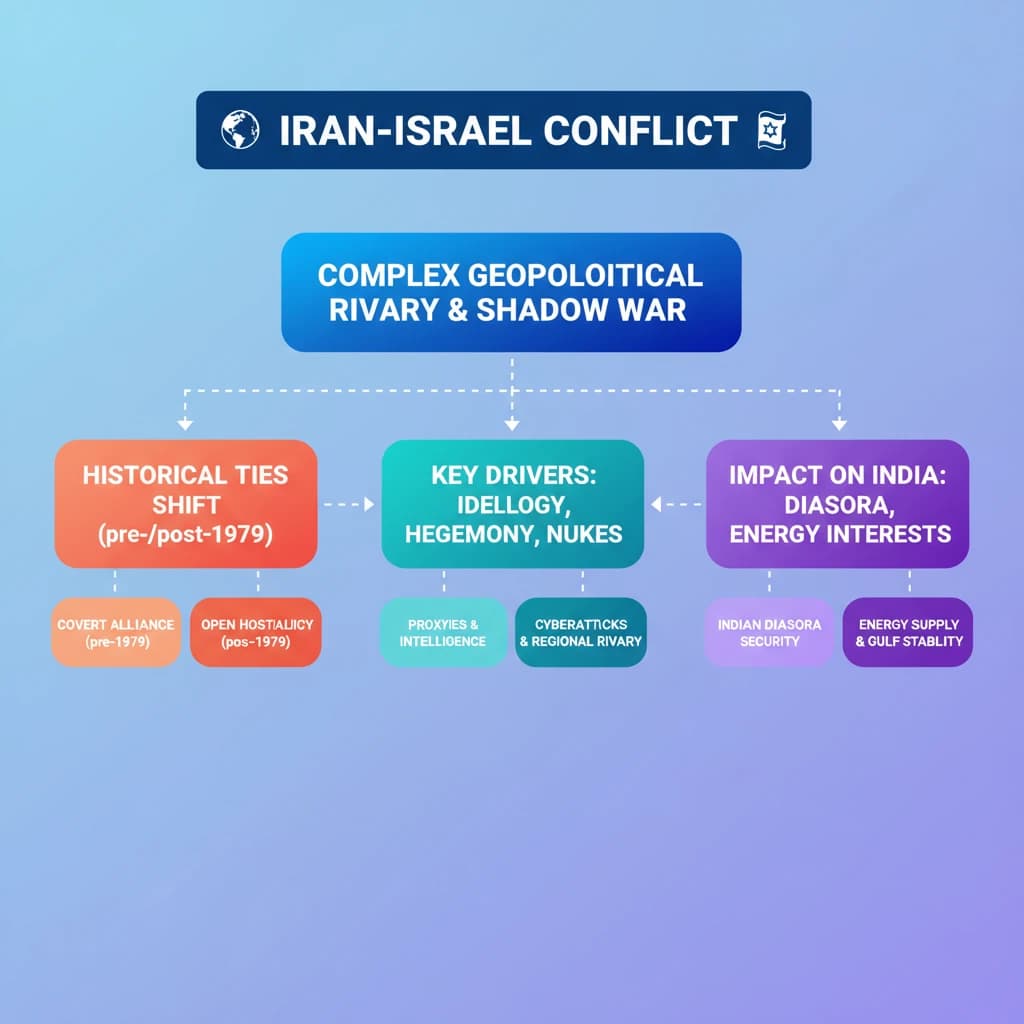
- •The Iran-Israel conflict is a complex geopolitical rivalry, not a direct conventional war.
- •It is primarily a 'shadow war' involving proxies, intelligence operations, and cyberattacks.
- •The conflict significantly impacts the security of the Indian diaspora and India's energy interests in the Gulf.
- •Historical ties shifted from covert alliance (pre-1979) to open hostility (post-1979 Islamic Revolution).
- •Key drivers include ideological differences, regional hegemony, and Iran's nuclear program.
- •India maintains a delicate diplomatic balance due to strong ties with both nations.
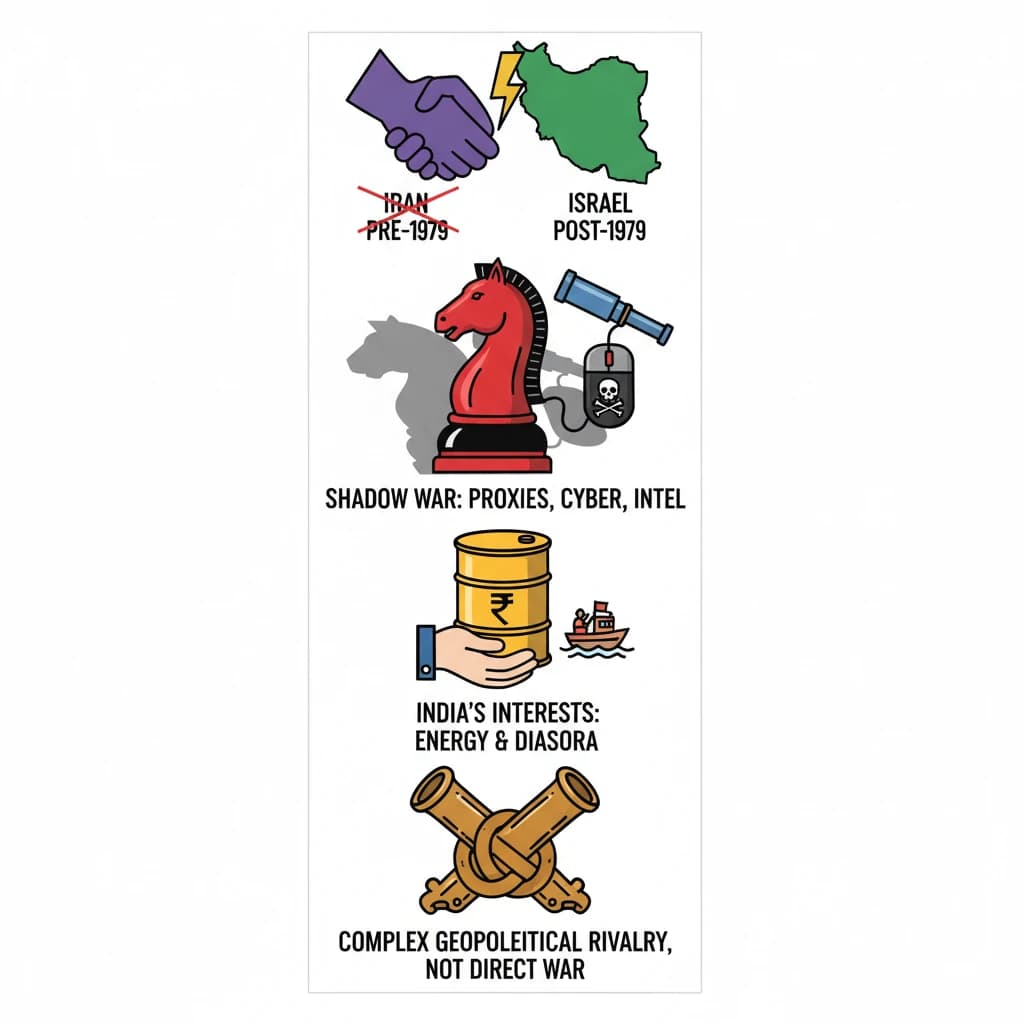
🧠 Memory Techniques
95% Verified Content
📚 Reference Sources
•Council on Foreign Relations (CFR) analyses on Iran-Israel conflict
•Al Jazeera reports on Middle East geopolitics
•The Economic Times articles on India's Gulf diaspora and energy security