Loading page, please wait…
Misinformation, Disinformation and Hate Speech - UPSC International Relations
What is Misinformation, Disinformation and Hate Speech in UPSC International Relations?
Misinformation, Disinformation and Hate Speech is a key topic under International Relations for UPSC Civil Services Examination. Key points include: Misinformation is false information shared without intent to harm.. Disinformation is intentionally false information spread to deceive.. Hate speech targets groups based on inherent characteristics, inciting hatred or violence.. Understanding this topic is essential for both UPSC Prelims and Mains preparation.
Why is Misinformation, Disinformation and Hate Speech important for UPSC exam?
Misinformation, Disinformation and Hate Speech is a Medium-level topic in UPSC International Relations. It is tested in both Prelims (factual MCQs) and Mains (analytical answer writing). Previous year UPSC questions have frequently covered aspects of Misinformation, Disinformation and Hate Speech, making it essential for comprehensive IAS preparation.
How to prepare Misinformation, Disinformation and Hate Speech for UPSC?
To prepare Misinformation, Disinformation and Hate Speech for UPSC: (1) Study the comprehensive notes covering all key concepts on Vaidra. (2) Practice previous year questions on this topic. (3) Connect it with current affairs using daily updates. (4) Revise using key takeaways and mind maps available for International Relations. (5) Write practice answers linking Misinformation, Disinformation and Hate Speech to related GS Paper topics.
Key takeaways of Misinformation, Disinformation and Hate Speech for UPSC
- Misinformation is false information shared without intent to harm.
- Disinformation is intentionally false information spread to deceive.
- Hate speech targets groups based on inherent characteristics, inciting hatred or violence.
- The intent (or lack thereof) is the primary differentiator between misinformation and disinformation.
- Digital platforms have significantly amplified the spread and impact of all three.
- These phenomena pose serious threats to democracy, public health, and social cohesion.
- Combating them requires a multi-faceted approach involving legal frameworks, media literacy, and technological solutions.
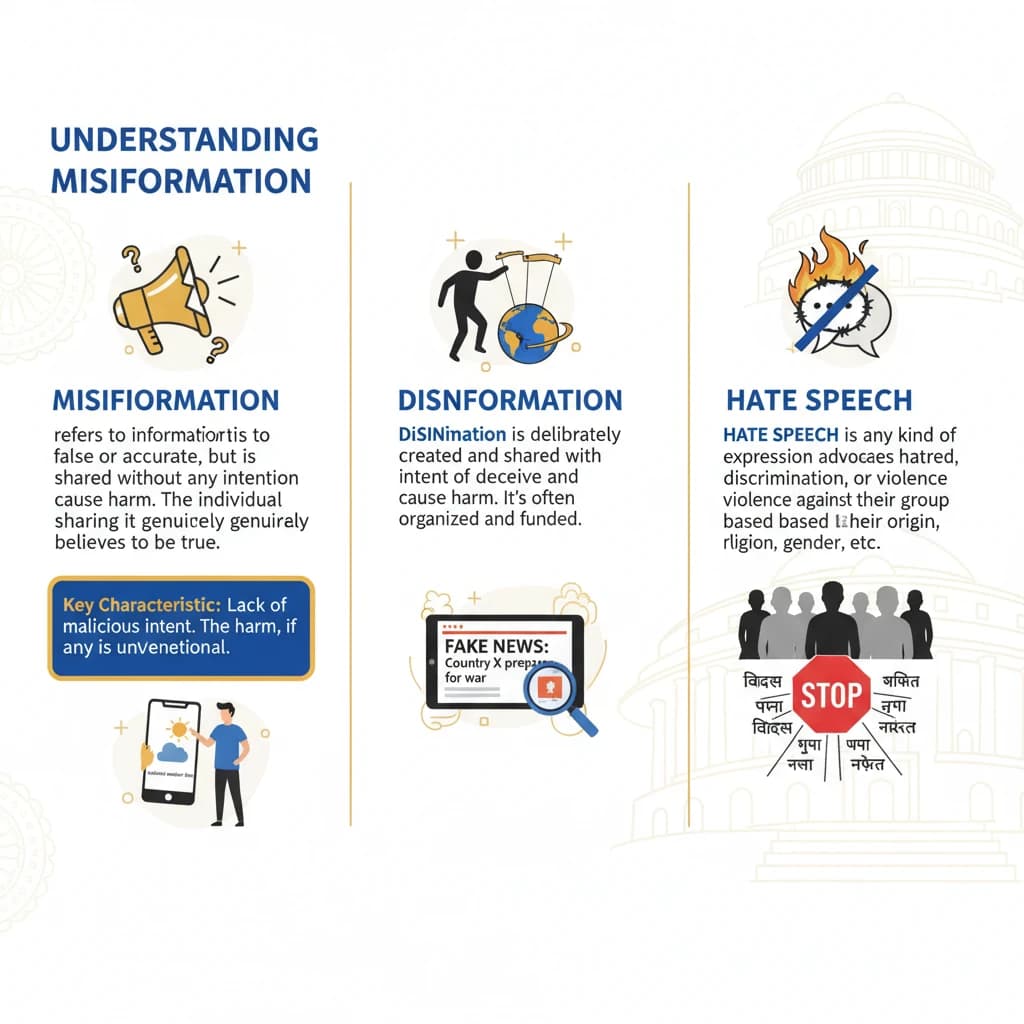
Misinformation, Disinformation and Hate Speech
Medium⏱️ 10 min read
international relations
📖 Introduction
Understanding Misinformation
Misinformation refers to information that is false or inaccurate, but is shared without any intention to cause harm. The individual sharing it genuinely believes it to be true.
Key Characteristic: Lack of malicious intent. The harm, if any, is unintentional.
An everyday example of misinformation is when someone shares an outdated weather forecast, genuinely believing it to be current and accurate. They are not trying to deceive anyone.
Understanding Disinformation
Disinformation, in contrast, is intentionally false or misleading information. It is disseminated with a clear purpose to deceive or mislead others, often for political, financial, or social gain.
Key Characteristic: Deliberate intent to deceive. It is a calculated act to manipulate public perception or behavior.
A classic example involves a fake news website publishing a fabricated story about a public health crisis. The goal is to cause panic, distrust among the population, or even financial market instability.
Understanding Hate Speech
Hate Speech refers to any form of offensive discourse that specifically targets a group or an individual. This targeting is based on their inherent characteristics, such as race, religion, gender, sexual orientation, disability, or other similar attributes.
Key Characteristic: Targets specific groups/individuals based on inherent traits, often threatening social peace and inciting hatred or violence.
It typically involves the use of epithets, malicious stereotypes, and statements designed to incite hatred, discrimination, or violence against a particular group. This can significantly destabilize social harmony and public order.
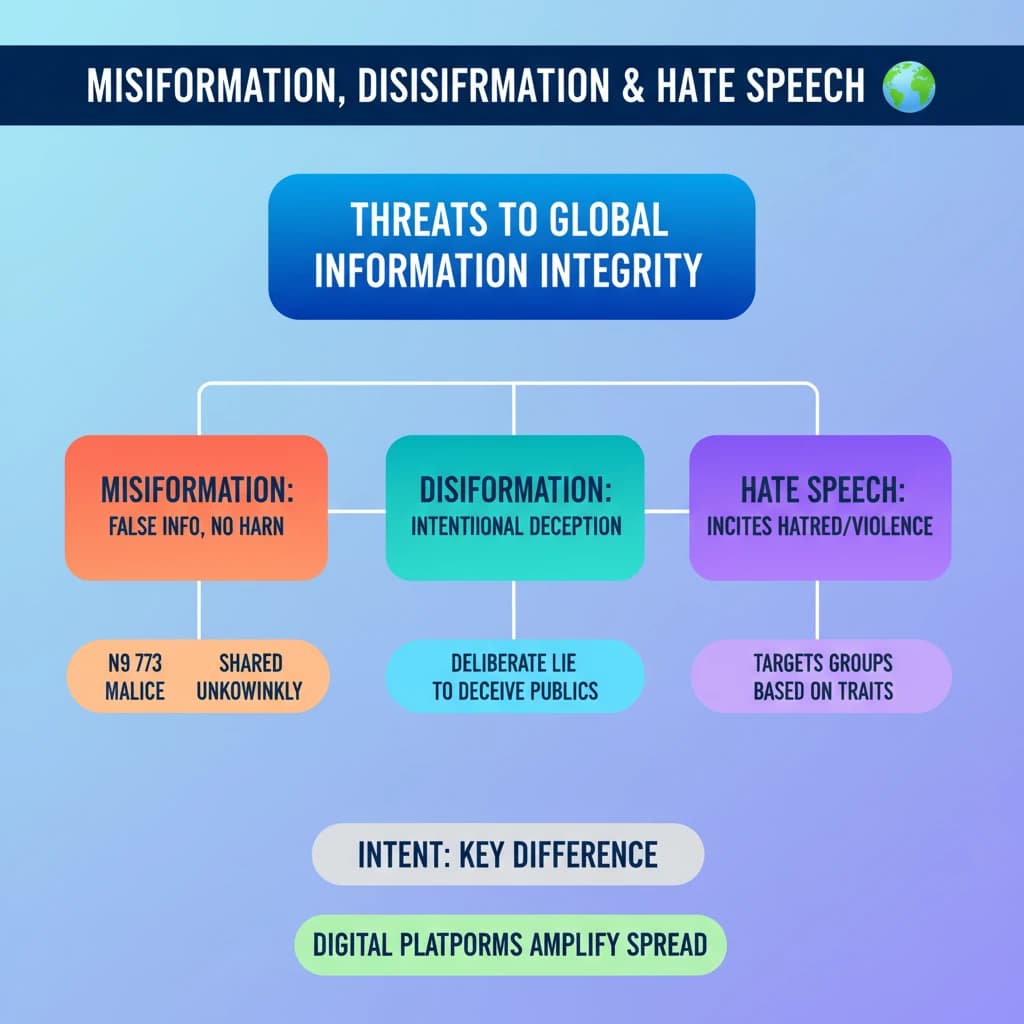
💡 Key Takeaways
- •Misinformation is false information shared without intent to harm.
- •Disinformation is intentionally false information spread to deceive.
- •Hate speech targets groups based on inherent characteristics, inciting hatred or violence.
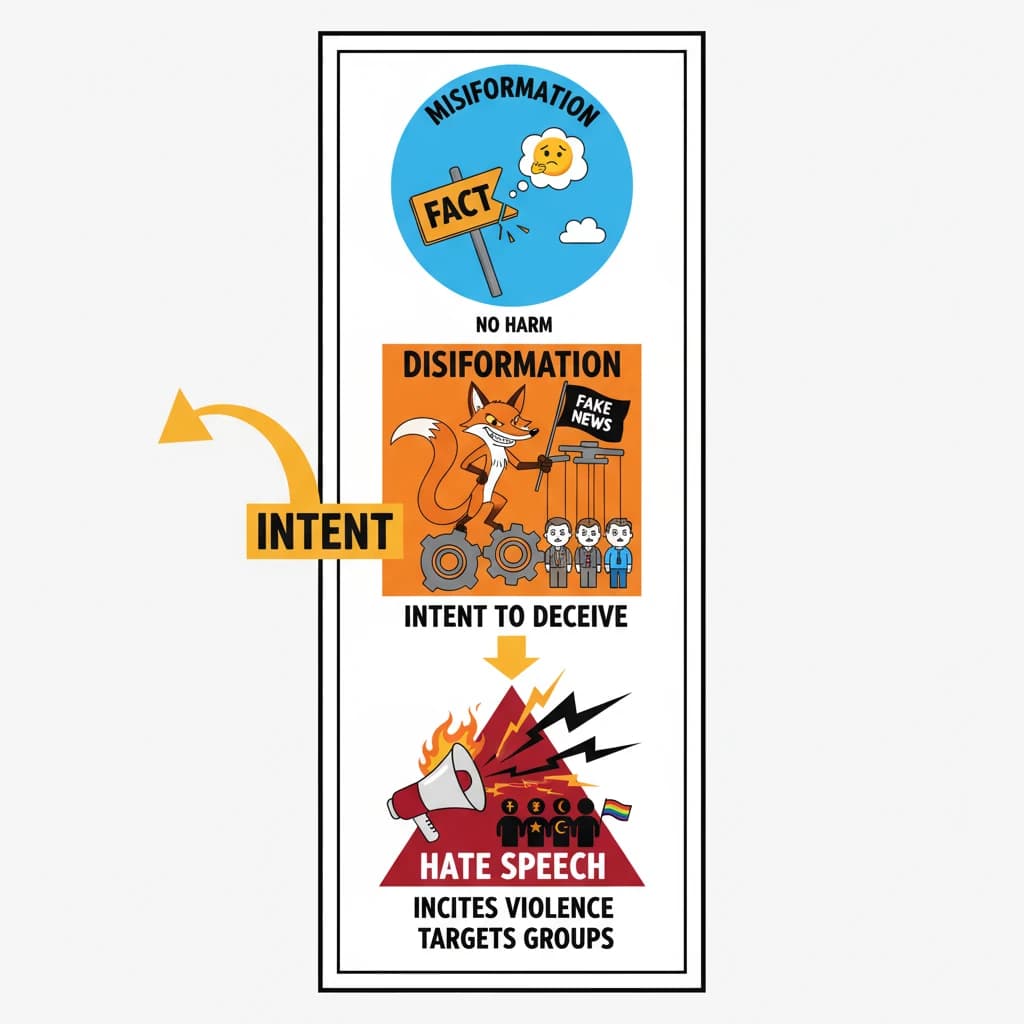
- •The intent (or lack thereof) is the primary differentiator between misinformation and disinformation.
- •Digital platforms have significantly amplified the spread and impact of all three.
- •These phenomena pose serious threats to democracy, public health, and social cohesion.
- •Combating them requires a multi-faceted approach involving legal frameworks, media literacy, and technological solutions.
🧠 Memory Techniques
98% Verified Content
📚 Reference Sources
•United Nations Strategy and Plan of Action on Hate Speech
•Indian Penal Code, 1860 (Sections 153A, 295A)
•Information Technology Act, 2000 (Section 69A)