Loading page, please wait…
St. Martin's Island: Historical Evolution and Naming - UPSC International Relations
What is St. Martin's Island: Historical Evolution and Naming in UPSC International Relations?
St. Martin's Island: Historical Evolution and Naming is a key topic under International Relations for UPSC Civil Services Examination. Key points include: St. Martin's Island evolved from a peninsula, submerged, and resurfaced over millennia.. It held names like "Jazira" and "Narikel Jinjira" before British annexation.. British India renamed it "St. Martin's Island" in 1900.. Understanding this topic is essential for both UPSC Prelims and Mains preparation.
Why is St. Martin's Island: Historical Evolution and Naming important for UPSC exam?
St. Martin's Island: Historical Evolution and Naming is a Medium-level topic in UPSC International Relations. It is tested in both Prelims (factual MCQs) and Mains (analytical answer writing). Previous year UPSC questions have frequently covered aspects of St. Martin's Island: Historical Evolution and Naming, making it essential for comprehensive IAS preparation.
How to prepare St. Martin's Island: Historical Evolution and Naming for UPSC?
To prepare St. Martin's Island: Historical Evolution and Naming for UPSC: (1) Study the comprehensive notes covering all key concepts on Vaidra. (2) Practice previous year questions on this topic. (3) Connect it with current affairs using daily updates. (4) Revise using key takeaways and mind maps available for International Relations. (5) Write practice answers linking St. Martin's Island: Historical Evolution and Naming to related GS Paper topics.
Key takeaways of St. Martin's Island: Historical Evolution and Naming for UPSC
- St. Martin's Island evolved from a peninsula, submerged, and resurfaced over millennia.
- It held names like "Jazira" and "Narikel Jinjira" before British annexation.
- British India renamed it "St. Martin's Island" in 1900.
- It transitioned from British India to Pakistan, then to independent Bangladesh.
- The island is crucial for Bangladesh's maritime strategy and biodiversity.
- It faces significant threats from climate change and requires sustainable management.
St. Martin's Island: Historical Evolution and Naming
Medium⏱️ 7 min read
international relations
📖 Introduction
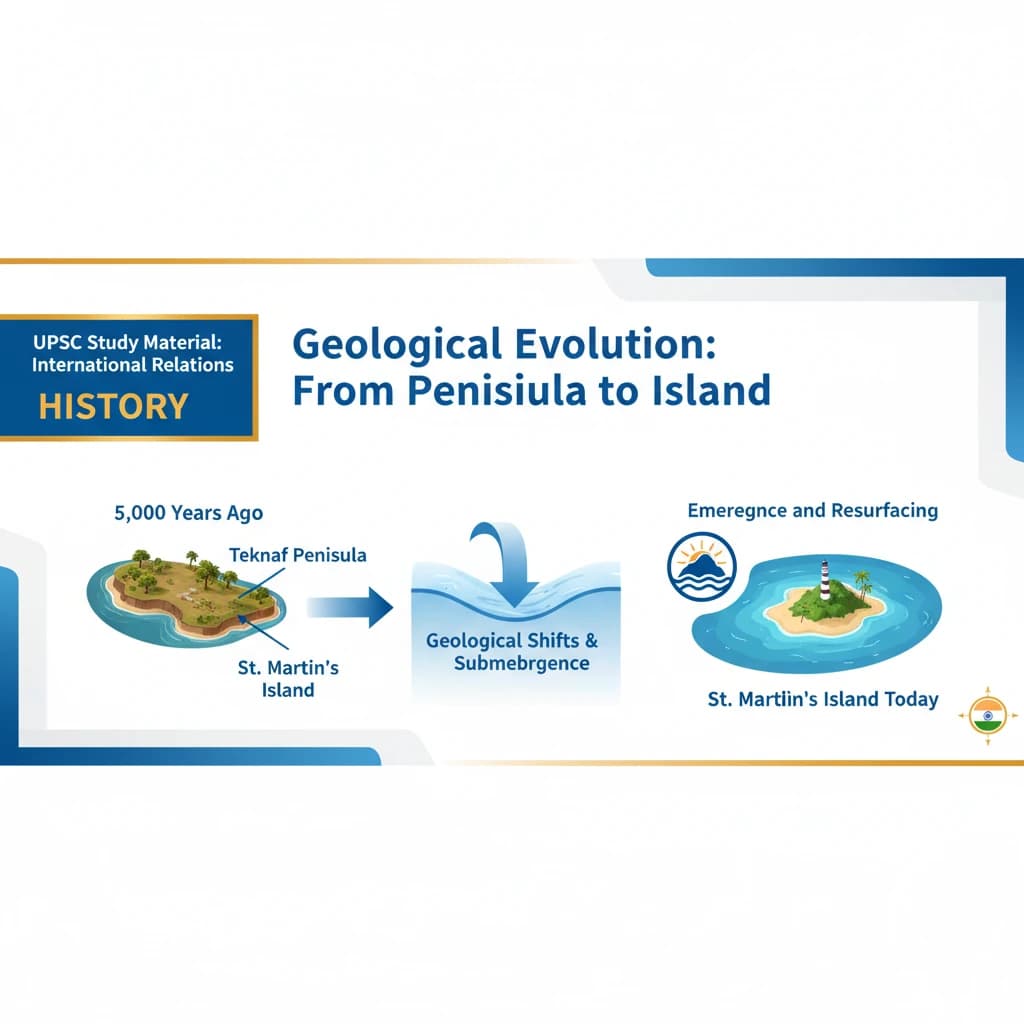
Geological Evolution: From Peninsula to Island
Around 5,000 years ago, the landmass now known as St. Martin's Island was an integral part of the Teknaf peninsula. This connection signifies a vastly different ancient coastline.
Over time, significant geological shifts led to the gradual submergence of this land into the sea, altering the region's geography dramatically.
Emergence and Resurfacing
Approximately 450 years ago, a remarkable geological event occurred: the southern suburbs of what is now St. Martin's Island began to resurface from the sea.
Within the subsequent 100 years, the remaining northern and other parts of the island also rose above sea level, completing its re-emergence as a distinct landform.
Early Inhabitants and Indigenous Naming
The first recorded settlers on the island were Arab merchants, who arrived in the 18th Century. Their presence marked the beginning of documented human settlement.
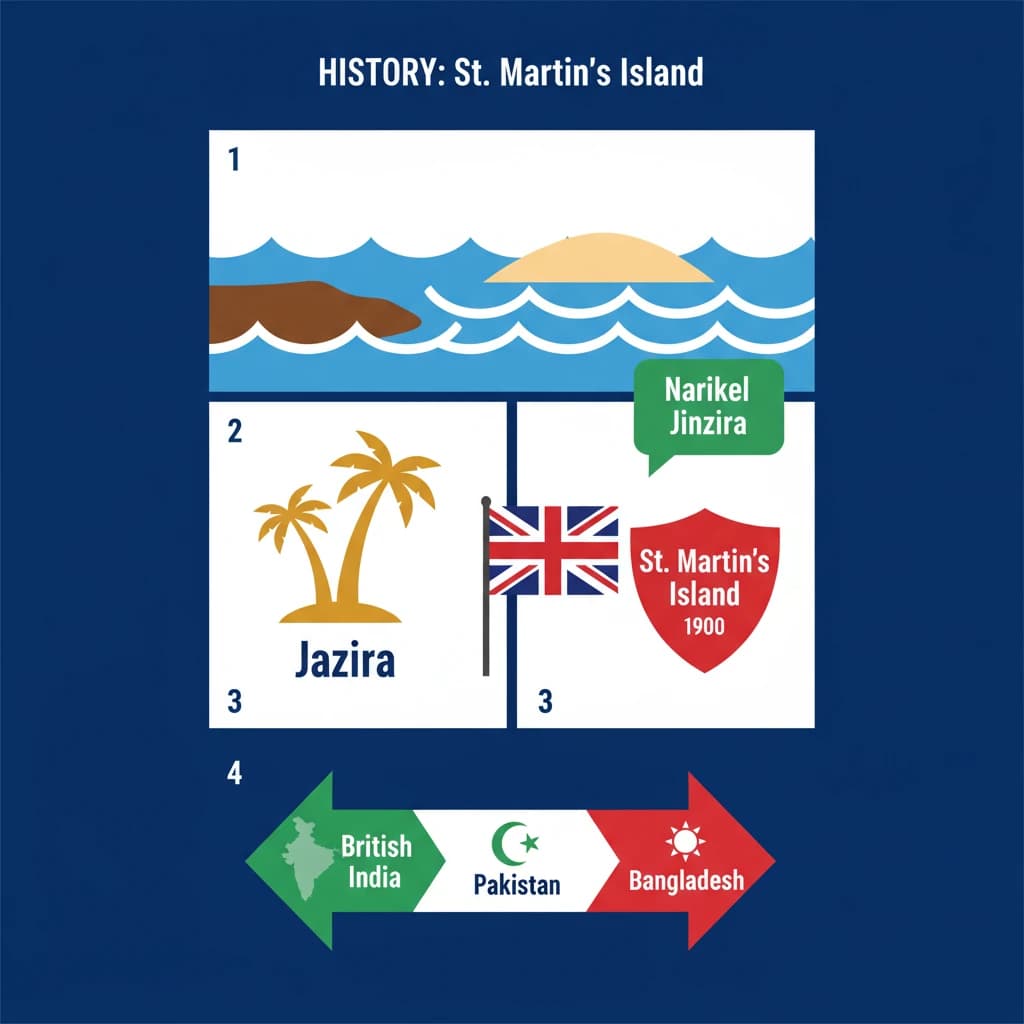
The Arab settlers initially named the island "Jazira", which simply means "the island" in Arabic, reflecting its isolated nature.
Later, the local populace adopted a new name, calling it "Narikel Jinjira" or "Coconut Island". This name likely stemmed from the abundance of coconut trees found on the island.
British Annexation and Colonial Renaming
In 1900, during a comprehensive land survey, British India annexed the island. This marked its formal incorporation into the British colonial administration.
It was during this period that the island received its current name, St. Martin's Island. It was named after Martin, who was then the Deputy Commissioner of Chittagong.
Post-Colonial Transitions
Following the partition of British India in 1947, St. Martin's Island became a part of the newly formed nation of Pakistan.
Ultimately, after the 1971 Liberation War, the island became an integral territory of independent Bangladesh, reflecting the region's broader political shifts.
Understanding the chronological sequence of naming and political control is crucial for UPSC. Note the shift from indigenous/settler names to colonial names and then post-independence status.
💡 Key Takeaways
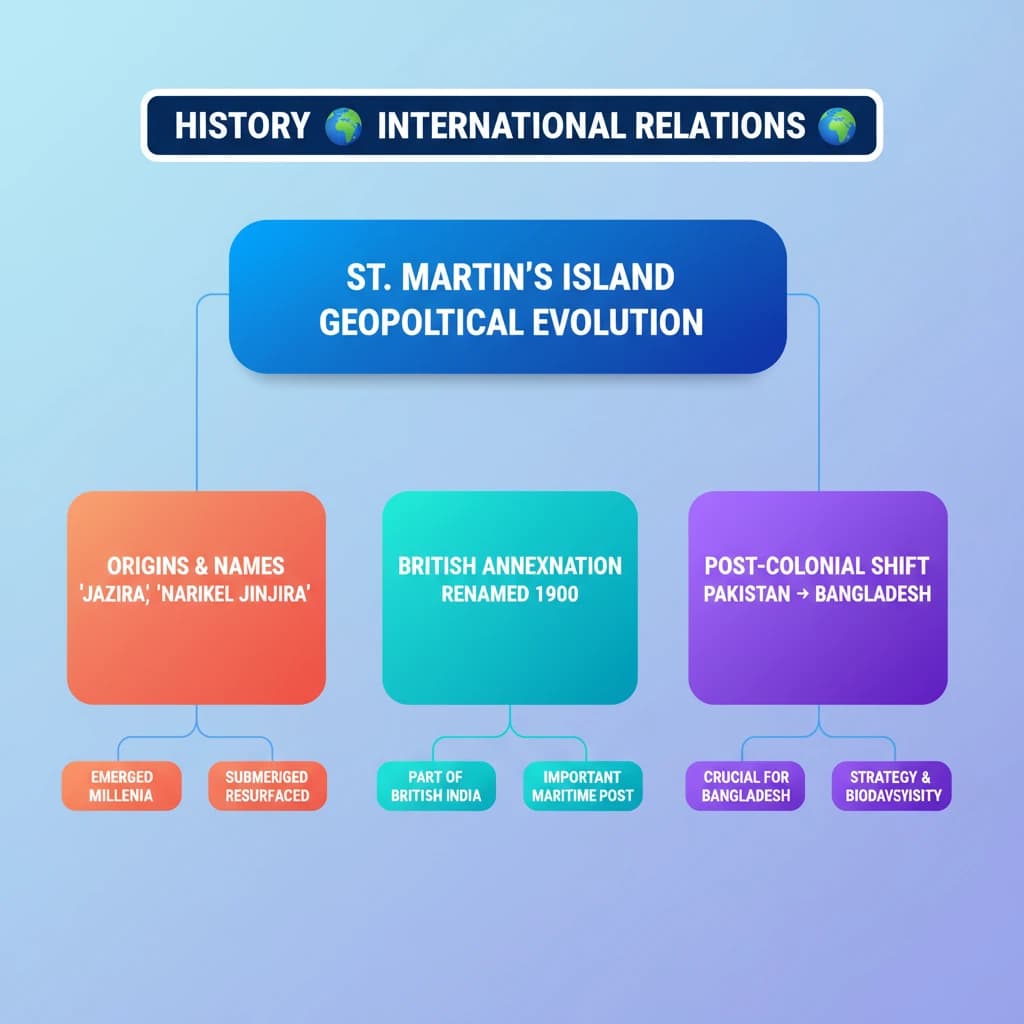
- •St. Martin's Island evolved from a peninsula, submerged, and resurfaced over millennia.
- •It held names like "Jazira" and "Narikel Jinjira" before British annexation.
- •British India renamed it "St. Martin's Island" in 1900.
- •It transitioned from British India to Pakistan, then to independent Bangladesh.
- •The island is crucial for Bangladesh's maritime strategy and biodiversity.
- •It faces significant threats from climate change and requires sustainable management.
🧠 Memory Techniques
95% Verified Content
📚 Reference Sources
•General geographical and historical knowledge of the Bay of Bengal region
•Public domain information on St. Martin's Island