Loading page, please wait…
UN Global Principles for Information Integrity - UPSC International Relations
What is UN Global Principles for Information Integrity in UPSC International Relations?
UN Global Principles for Information Integrity is a key topic under International Relations for UPSC Civil Services Examination. Key points include: UN Global Principles aim to curb online misinformation, disinformation, and hate speech.. The initiative prioritizes human rights, sustainable development, democracy, and peace.. There are five core principles: Societal Trust, Independent Media, Transparency, Public Empowerment, and Incentives/Safeguards.. Understanding this topic is essential for both UPSC Prelims and Mains preparation.
Why is UN Global Principles for Information Integrity important for UPSC exam?
UN Global Principles for Information Integrity is a Medium-level topic in UPSC International Relations. It is tested in both Prelims (factual MCQs) and Mains (analytical answer writing). Previous year UPSC questions have frequently covered aspects of UN Global Principles for Information Integrity, making it essential for comprehensive IAS preparation.
How to prepare UN Global Principles for Information Integrity for UPSC?
To prepare UN Global Principles for Information Integrity for UPSC: (1) Study the comprehensive notes covering all key concepts on Vaidra. (2) Practice previous year questions on this topic. (3) Connect it with current affairs using daily updates. (4) Revise using key takeaways and mind maps available for International Relations. (5) Write practice answers linking UN Global Principles for Information Integrity to related GS Paper topics.
Key takeaways of UN Global Principles for Information Integrity for UPSC
- UN Global Principles aim to curb online misinformation, disinformation, and hate speech.
- The initiative prioritizes human rights, sustainable development, democracy, and peace.
- There are five core principles: Societal Trust, Independent Media, Transparency, Public Empowerment, and Incentives/Safeguards.
- They provide a framework for governments and digital platforms to ensure information integrity.
- Critical for combating 'infodemics' and protecting democratic processes in the digital age.
UN Global Principles for Information Integrity
Medium⏱️ 10 min read
international relations
📖 Introduction
Introduction to UN Global Principles for Information Integrity
The United Nations Secretary-General recently unveiled a crucial set of guidelines known as the ‘United Nations Global Principles for Information Integrity’. These principles are designed to combat the pervasive issues of online misinformation, disinformation, and hate speech.
The initiative seeks to address the widespread harm caused by false information across various digital platforms. It represents a global effort to foster a healthier and more reliable information environment.
UPSC Relevance: This topic is highly relevant for GS Paper II (International Relations) and GS Paper III (Internal Security, Cyber Security). Questions may focus on global governance, media ethics, and the challenges of digital age.
The Vision Behind the Principles
These principles lay the groundwork for a vision of a more humane and trustworthy information ecosystem. The overarching goal is to prioritize human rights and actively support critical global objectives.
These objectives include fostering sustainable development, advancing climate action, strengthening democracy, and promoting peace worldwide. The integrity of information is seen as fundamental to achieving these goals.
The Five Global Principles for Information Integrity
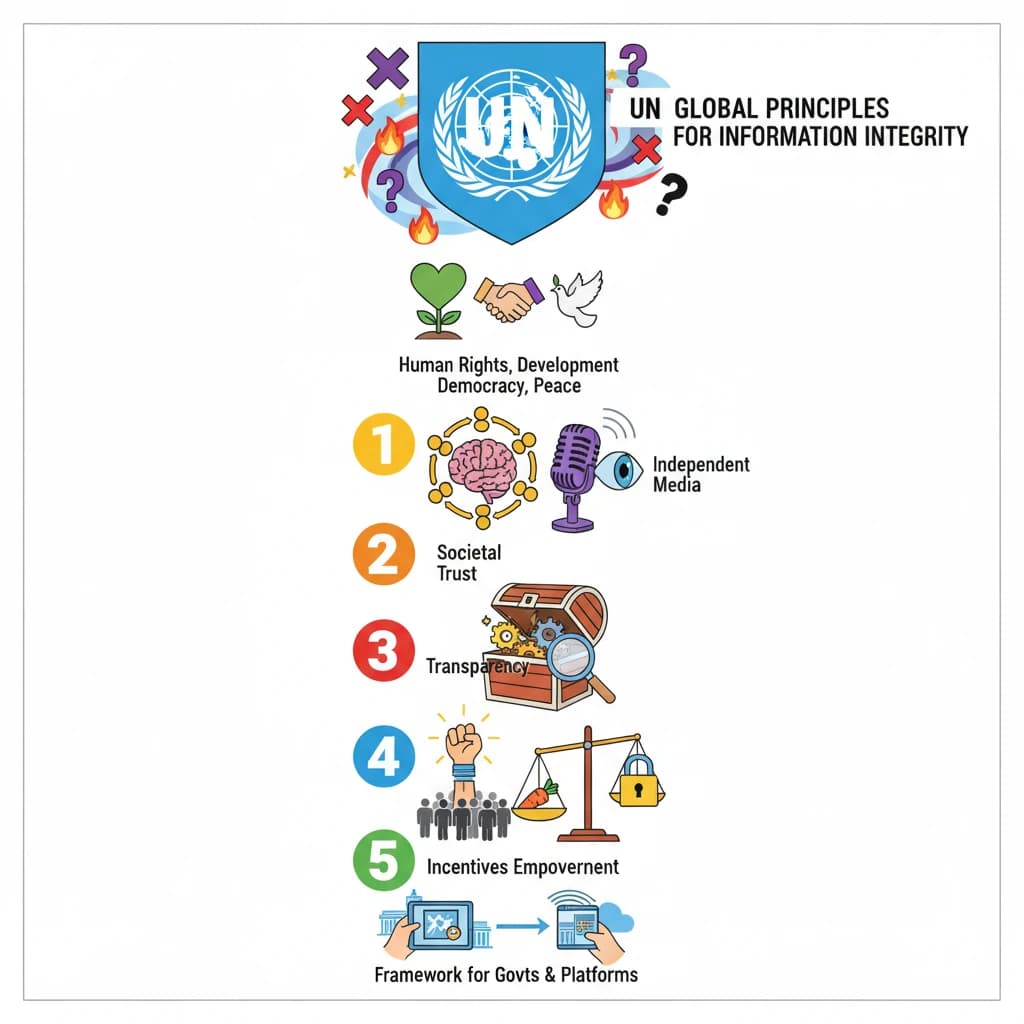
The framework consists of five core principles, each addressing a vital aspect of information integrity in the digital age. They collectively aim to build a robust defense against harmful online content.
- 1. Societal Trust and Resilience: This principle focuses on building strong societal trust and enhancing resilience among populations. It aims to effectively counteract the proliferation and impact of misinformation and hate speech.
- 2. Independent, Free, and Pluralistic Media: Emphasizes the critical need for media independence, freedom, and diversity. This supports the production of high-quality, reliable journalism and ensures the representation of diverse viewpoints.
- 3. Transparency and Research: Advocates for greater transparency in the operations of digital platforms. It also stresses the importance of supporting independent research into the complex dynamics of the modern information ecosystem.
- 4. Public Empowerment: Centers on equipping individuals with essential digital literacy and critical thinking skills. This empowers citizens to navigate the vast and often challenging information landscape more effectively.
- 5. Incentives and Safeguards: Calls for aligning the business models of digital platforms with fundamental human rights. It also seeks to establish clear mechanisms for accountability regarding harmful content spread through these platforms.
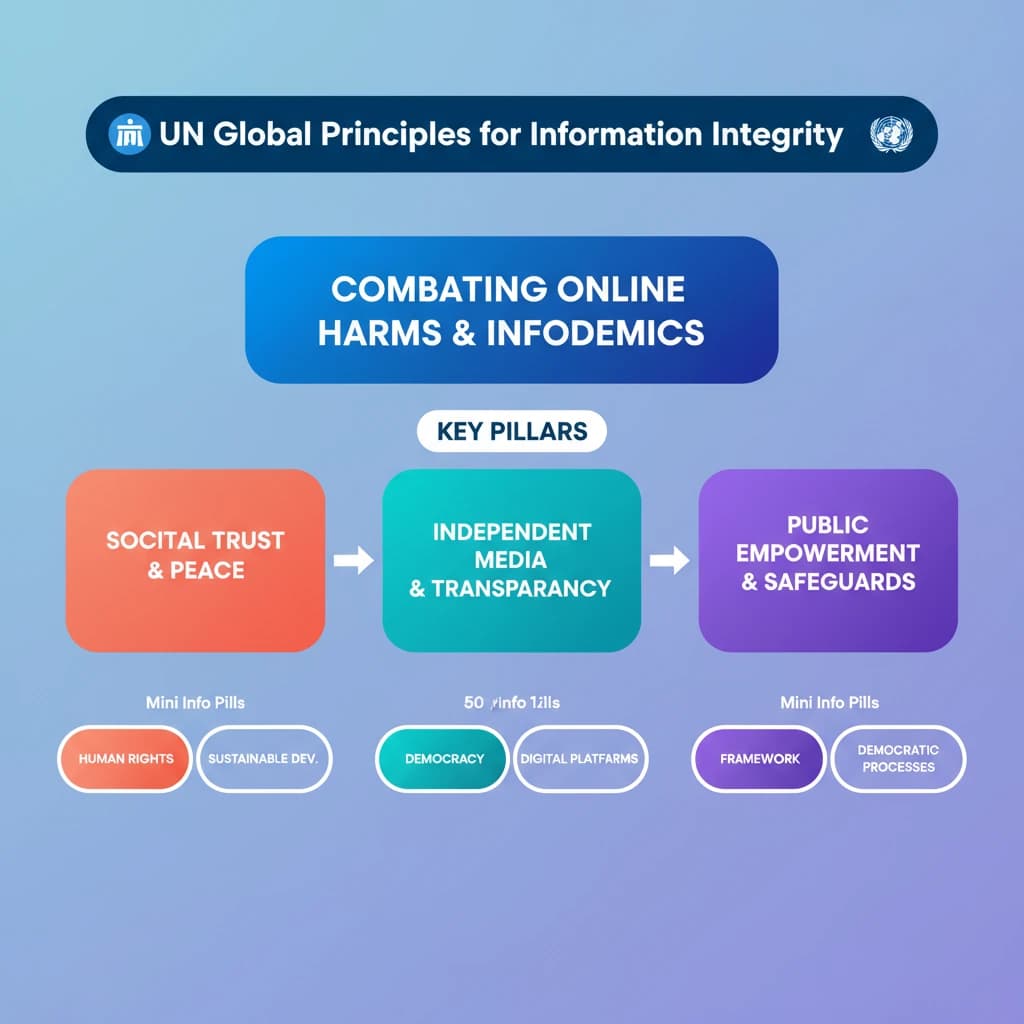
💡 Key Takeaways
- •UN Global Principles aim to curb online misinformation, disinformation, and hate speech.
- •The initiative prioritizes human rights, sustainable development, democracy, and peace.
- •There are five core principles: Societal Trust, Independent Media, Transparency, Public Empowerment, and Incentives/Safeguards.
- •They provide a framework for governments and digital platforms to ensure information integrity.
- •Critical for combating 'infodemics' and protecting democratic processes in the digital age.
🧠 Memory Techniques
98% Verified Content
📚 Reference Sources
•UN Secretary-General's statements on Information Integrity
•Reputable news sources covering the launch of the UN Global Principles for Information Integrity (e.g., The Guardian, Reuters, Associated Press)