Loading page, please wait…
What are Key Findings of the Global Risks Report 2025? - UPSC International Relations
What is What are Key Findings of the Global Risks Report 2025? in UPSC International Relations?
What are Key Findings of the Global Risks Report 2025? is a key topic under International Relations for UPSC Civil Services Examination. Key points include: Global Risks Report 2025 identifies top immediate and long-term global threats.. For India, key risks include water shortages, misinformation, human rights erosion, pollution, and labour shortages.. Immediate global risks: misinformation, extreme weather, state-based conflict.. Understanding this topic is essential for both UPSC Prelims and Mains preparation.
Why is What are Key Findings of the Global Risks Report 2025? important for UPSC exam?
What are Key Findings of the Global Risks Report 2025? is a Medium-level topic in UPSC International Relations. It is tested in both Prelims (factual MCQs) and Mains (analytical answer writing). Previous year UPSC questions have frequently covered aspects of What are Key Findings of the Global Risks Report 2025?, making it essential for comprehensive IAS preparation.
How to prepare What are Key Findings of the Global Risks Report 2025? for UPSC?
To prepare What are Key Findings of the Global Risks Report 2025? for UPSC: (1) Study the comprehensive notes covering all key concepts on Vaidra. (2) Practice previous year questions on this topic. (3) Connect it with current affairs using daily updates. (4) Revise using key takeaways and mind maps available for International Relations. (5) Write practice answers linking What are Key Findings of the Global Risks Report 2025? to related GS Paper topics.
Key takeaways of What are Key Findings of the Global Risks Report 2025? for UPSC
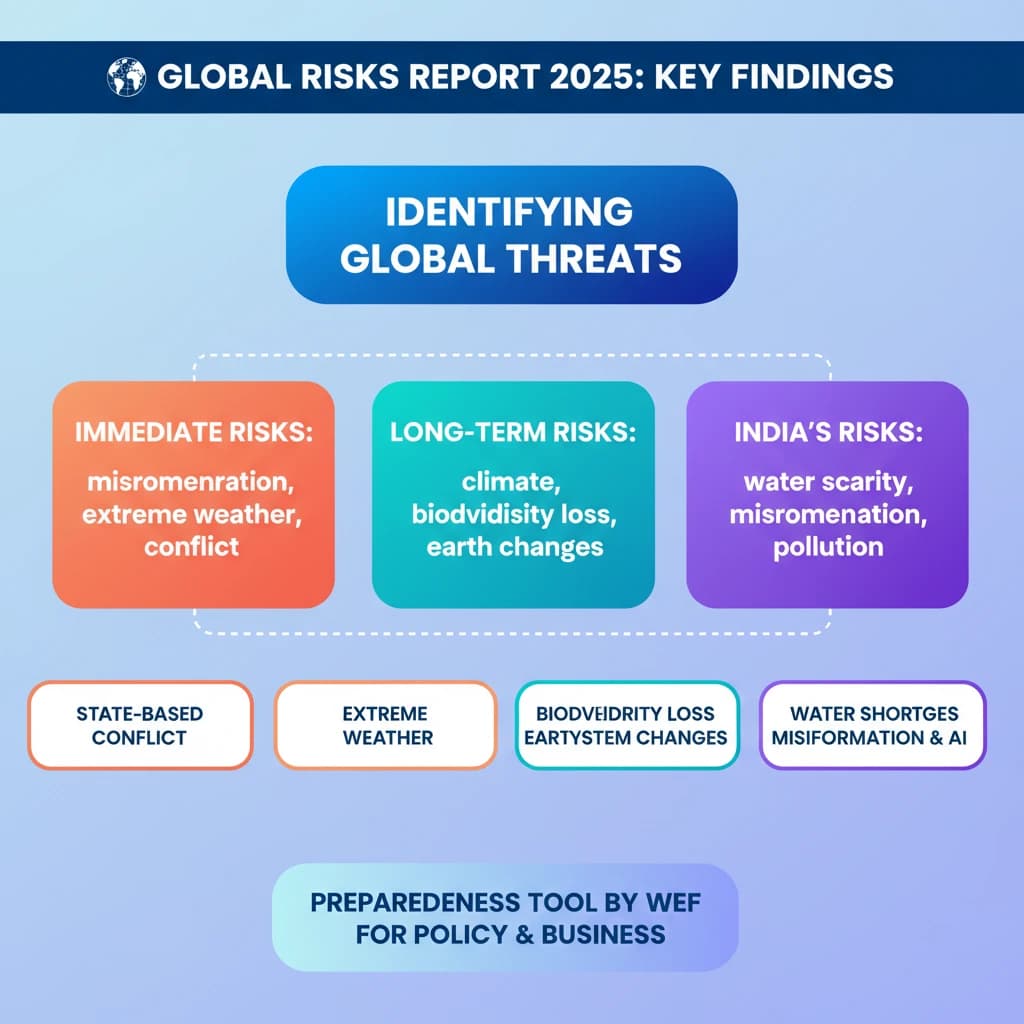
- Global Risks Report 2025 identifies top immediate and long-term global threats.
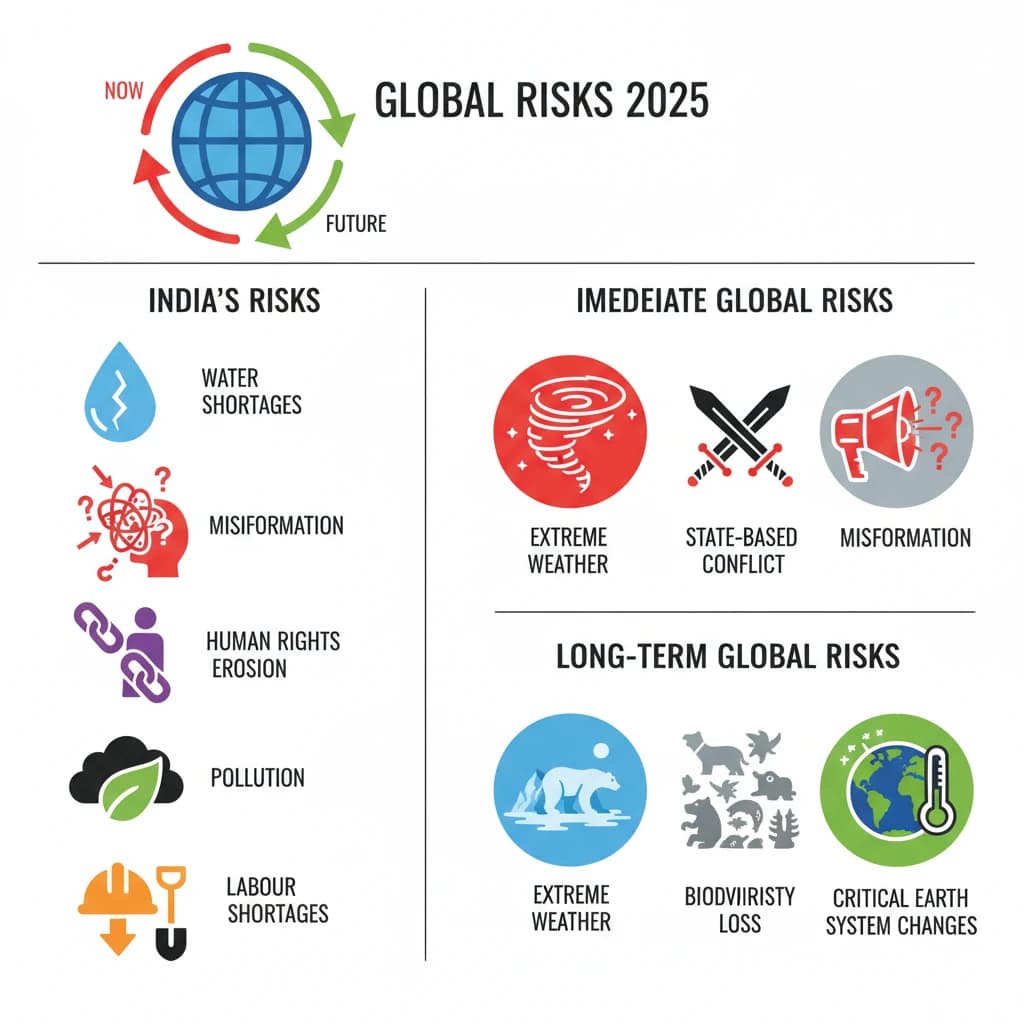
- For India, key risks include water shortages, misinformation, human rights erosion, pollution, and labour shortages.
- Immediate global risks: misinformation, extreme weather, state-based conflict.
- Long-term global risks: extreme weather, biodiversity loss, critical earth system changes.
- The report by WEF serves as a crucial tool for policy, business, and societal preparedness.
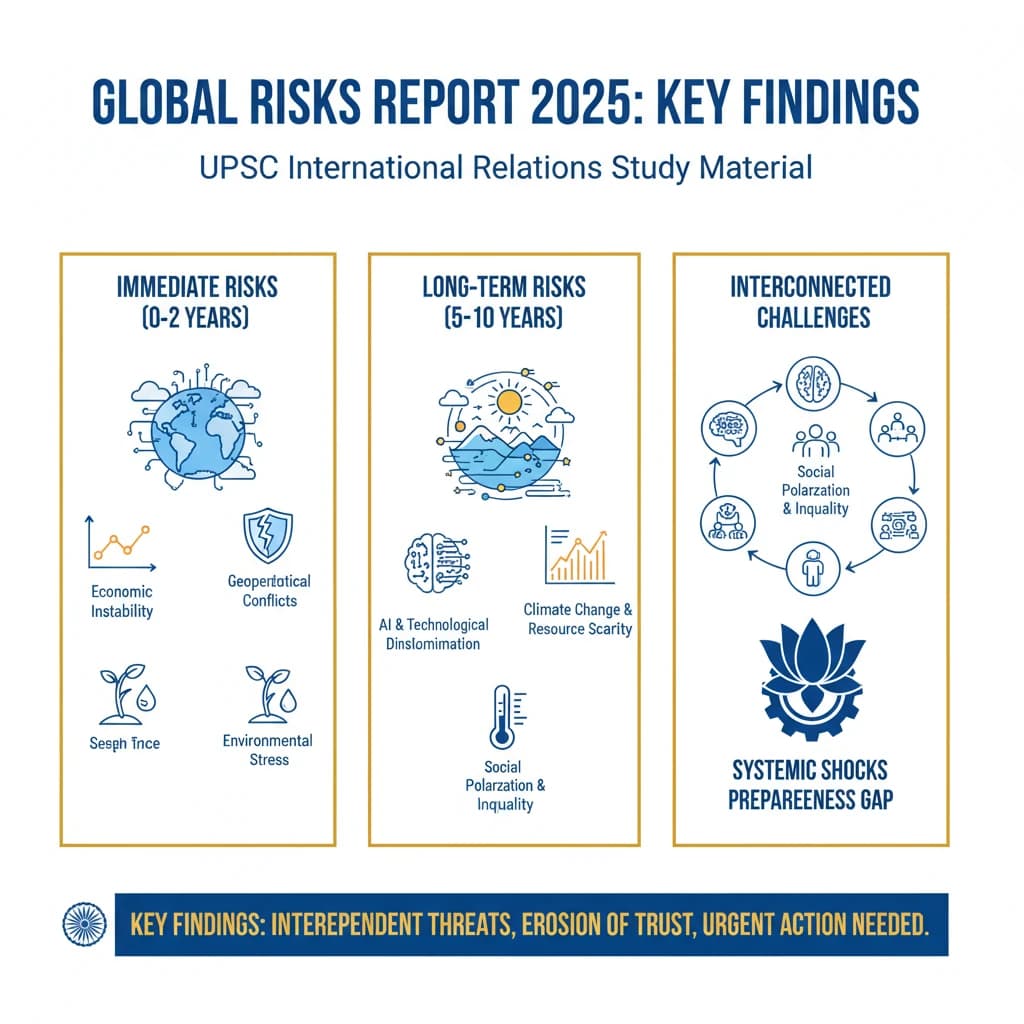
What are Key Findings of the Global Risks Report 2025?
Medium⏱️ 8 min read
international relations
📖 Introduction
Understanding the Global Risks Report 2025
The Global Risks Report 2025 provides a crucial assessment of the most significant threats facing the world in the near and long term. Published annually, it serves as a vital tool for policymakers, businesses, and civil society to understand and prepare for potential future challenges.
This report categorizes risks by their potential impact and likelihood, offering insights into both immediate and long-term global concerns.
Top Risks Identified for India
The Global Risks Report 2025 specifically highlights several critical risks that India is expected to face. These challenges span environmental, social, and governance dimensions, demanding comprehensive policy responses.
- Water Supply Shortages: A persistent and escalating threat, impacting agriculture, industry, and public health across various regions in India.
- Misinformation and Disinformation: The spread of false or misleading information poses significant risks to social cohesion, public trust, and democratic processes.
- Erosion of Human Rights and Civic Freedoms: Concerns regarding the shrinking space for civil society and potential infringements on fundamental rights.
- Pollution (Air, Water, and Soil): Widespread environmental degradation continues to be a major health and economic burden for the nation.
- Labour and Talent Shortages: A growing challenge impacting economic productivity and requiring strategic interventions in education and skill development.
For UPSC, understanding India's specific risks helps in answering questions related to governance, environment, social issues, and economic development (GS-I, GS-II, GS-III).
Immediate Global Risks (Next 2 Years)
The report identifies several risks that are expected to manifest with significant impact within the next two years. These require urgent attention and proactive measures from global leaders.
- Misinformation and Disinformation: Ranked as a top immediate threat, highlighting its potential to destabilize societies and political systems globally.
- Extreme Weather Events: Increasingly frequent and intense weather phenomena continue to cause widespread damage and humanitarian crises.
- State-based Armed Conflict: Geopolitical tensions and conflicts between states remain a critical concern, threatening international peace and stability.
Long-Term Global Risks (Next 10 Years)
Looking further ahead, the report outlines systemic risks that pose profound challenges over the next decade. These require sustained international cooperation and transformative solutions.
- Extreme Weather Events: Continues to be a dominant long-term risk, underscoring the escalating climate crisis.
- Biodiversity Loss and Ecosystem Collapse: The rapid decline in species and degradation of natural habitats threaten planetary health and human well-being.
- Critical Changes to Earth Systems: Encompasses large-scale, irreversible alterations to the planet's climate and ecological systems, such as melting ice sheets or ocean acidification.
The distinction between immediate and long-term risks helps in prioritizing policy interventions and resource allocation for both crisis management and strategic planning.
💡 Key Takeaways
- •Global Risks Report 2025 identifies top immediate and long-term global threats.
- •For India, key risks include water shortages, misinformation, human rights erosion, pollution, and labour shortages.
- •Immediate global risks: misinformation, extreme weather, state-based conflict.
- •Long-term global risks: extreme weather, biodiversity loss, critical earth system changes.
- •The report by WEF serves as a crucial tool for policy, business, and societal preparedness.
🧠 Memory Techniques
95% Verified Content
📚 Reference Sources
•Drishti IAS Summary (provided source content)