Loading page, please wait…
What are the Different Frameworks for Nuclear Proliferation and Nuclear Disarmament? - UPSC International Relations
What is What are the Different Frameworks for Nuclear Proliferation and Nuclear Disarmament? in UPSC International Relations?
What are the Different Frameworks for Nuclear Proliferation and Nuclear Disarmament? is a key topic under International Relations for UPSC Civil Services Examination. Key points include: IAEA monitors nuclear agreements and promotes peaceful nuclear energy use.. NWFZs are regional treaties prohibiting nuclear weapons, like the Treaty of Tlatelolco.. These frameworks aim to prevent nuclear proliferation and advance disarmament.. Understanding this topic is essential for both UPSC Prelims and Mains preparation.
Why is What are the Different Frameworks for Nuclear Proliferation and Nuclear Disarmament? important for UPSC exam?
What are the Different Frameworks for Nuclear Proliferation and Nuclear Disarmament? is a Medium-level topic in UPSC International Relations. It is tested in both Prelims (factual MCQs) and Mains (analytical answer writing). Previous year UPSC questions have frequently covered aspects of What are the Different Frameworks for Nuclear Proliferation and Nuclear Disarmament?, making it essential for comprehensive IAS preparation.
How to prepare What are the Different Frameworks for Nuclear Proliferation and Nuclear Disarmament? for UPSC?
To prepare What are the Different Frameworks for Nuclear Proliferation and Nuclear Disarmament? for UPSC: (1) Study the comprehensive notes covering all key concepts on Vaidra. (2) Practice previous year questions on this topic. (3) Connect it with current affairs using daily updates. (4) Revise using key takeaways and mind maps available for International Relations. (5) Write practice answers linking What are the Different Frameworks for Nuclear Proliferation and Nuclear Disarmament? to related GS Paper topics.
Key takeaways of What are the Different Frameworks for Nuclear Proliferation and Nuclear Disarmament? for UPSC
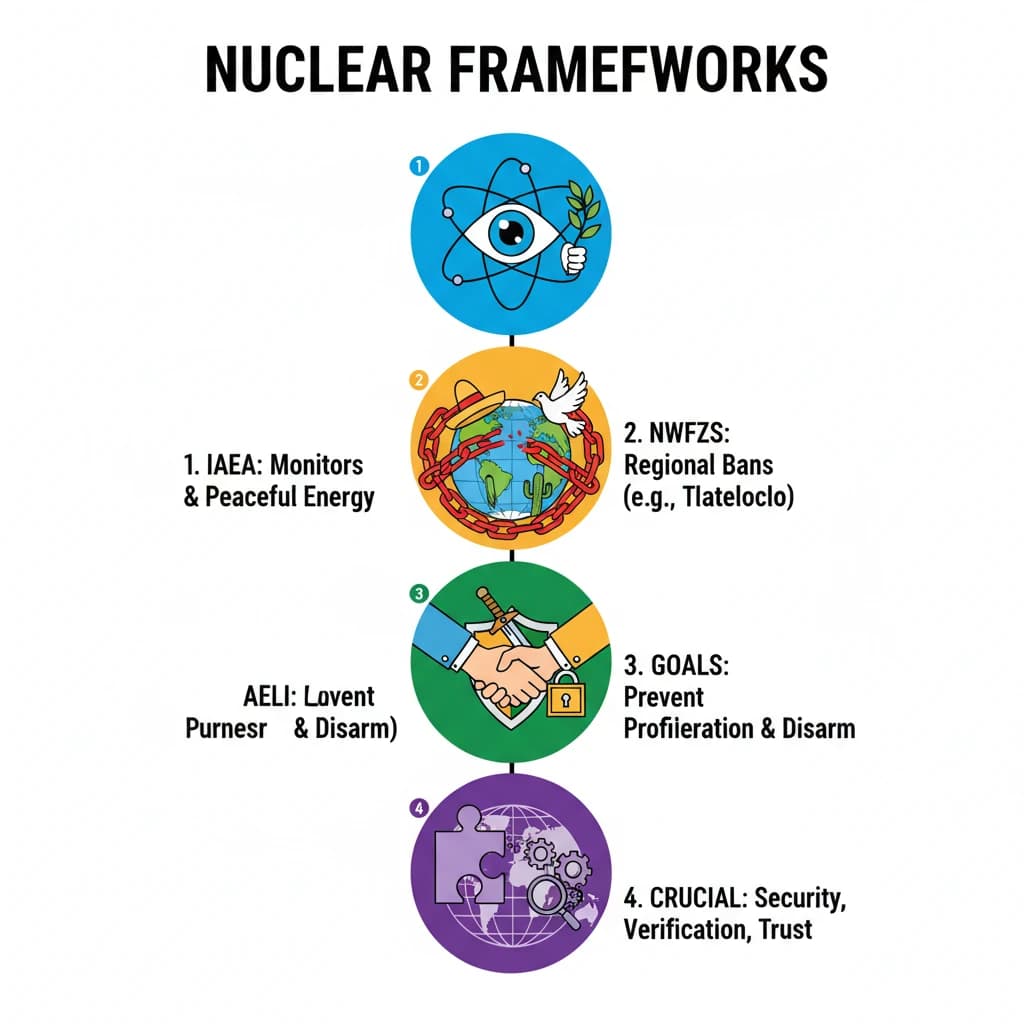
- IAEA monitors nuclear agreements and promotes peaceful nuclear energy use.
- NWFZs are regional treaties prohibiting nuclear weapons, like the Treaty of Tlatelolco.
- These frameworks aim to prevent nuclear proliferation and advance disarmament.
- They are crucial for global security, verification, and confidence-building.
- Ongoing challenges necessitate continuous strengthening and adaptation of these frameworks.
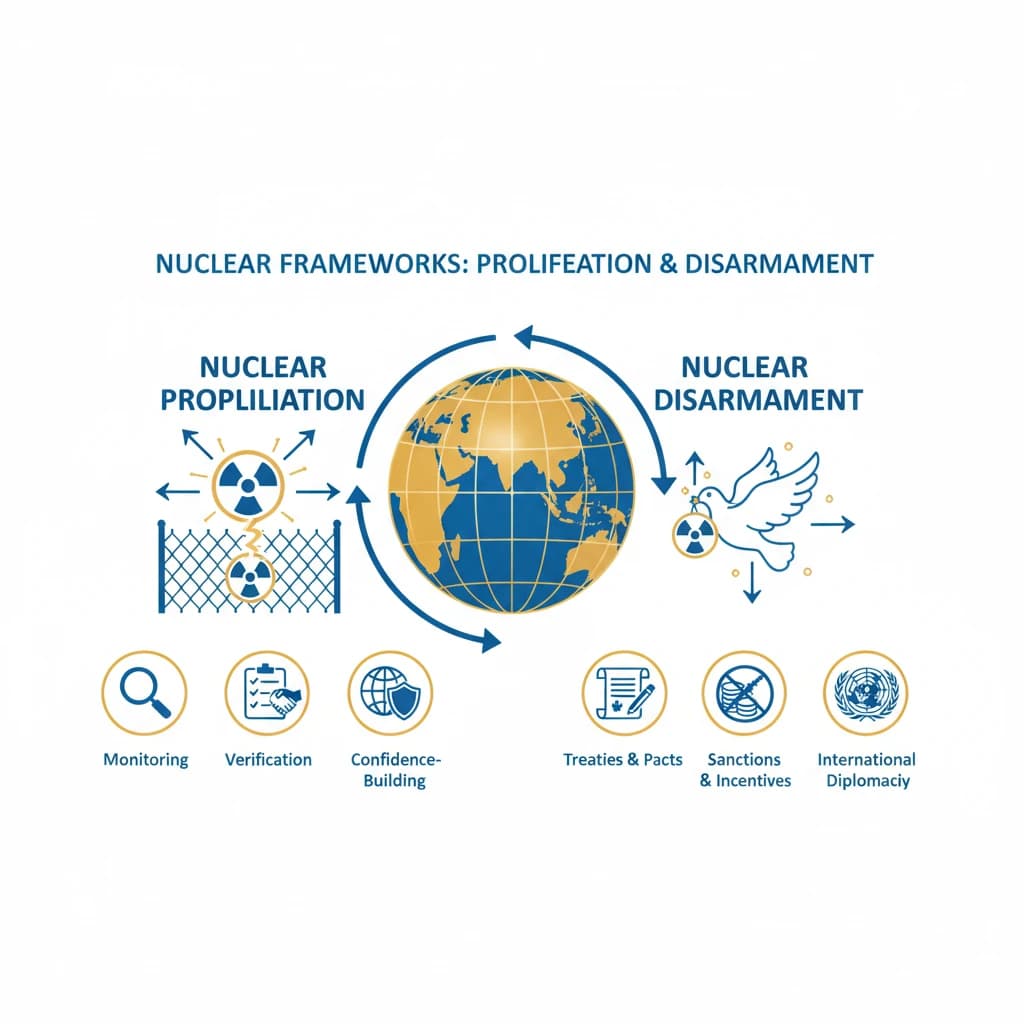
What are the Different Frameworks for Nuclear Proliferation and Nuclear Disarmament?
Medium⏱️ 7 min read
international relations
📖 Introduction
Introduction to Nuclear Frameworks
The global community faces the dual challenge of preventing nuclear proliferation and striving for complete nuclear disarmament. Various international and regional frameworks have been established to address these critical issues, aiming to ensure global peace and security.
These frameworks provide mechanisms for monitoring, verification, and confidence-building among nations regarding nuclear technology and weapons.
UPSC Insight: Understanding these frameworks is crucial for GS Paper II (International Relations) and essays on global security. Focus on their mandate, effectiveness, and India's stance.
International Atomic Energy Agency (IAEA)
The International Atomic Energy Agency (IAEA) plays a pivotal role in the global nuclear architecture. Established in 1957, it functions as the world's central intergovernmental forum for scientific and technical cooperation in the nuclear field.
Its primary mandate involves promoting the peaceful uses of nuclear energy while simultaneously monitoring compliance with international nuclear agreements to prevent its diversion for military purposes.
IAEA's Core Functions:
- Monitoring and Verification: Conducts inspections to ensure non-diversion of nuclear material.
- Safety and Security: Establishes and promotes nuclear safety and security standards.
- Technical Cooperation: Assists member states in using nuclear technology for peaceful applications (e.g., medicine, agriculture, energy).
Regional Nuclear-Weapon-Free Zones (NWFZs)
Regional Nuclear-Weapon-Free Zones (NWFZs) are geographically defined areas where countries commit to legally prohibiting the development, acquisition, testing, or possession of nuclear weapons within their territories. These zones represent a significant step towards regional and global disarmament.
Expanding the number and scope of NWFZs is seen as a crucial strategy to build momentum for a comprehensive global ban on nuclear weapons and to strengthen the non-proliferation regime.
Key Concept: NWFZs
These zones are established by treaties among states in a specific region, committing them to abstain from nuclear weapons. They contribute to regional stability and reduce the risk of nuclear conflict.
The first such zone was established in Latin America through the Treaty of Tlatelolco, setting a precedent for other regions to follow suit.
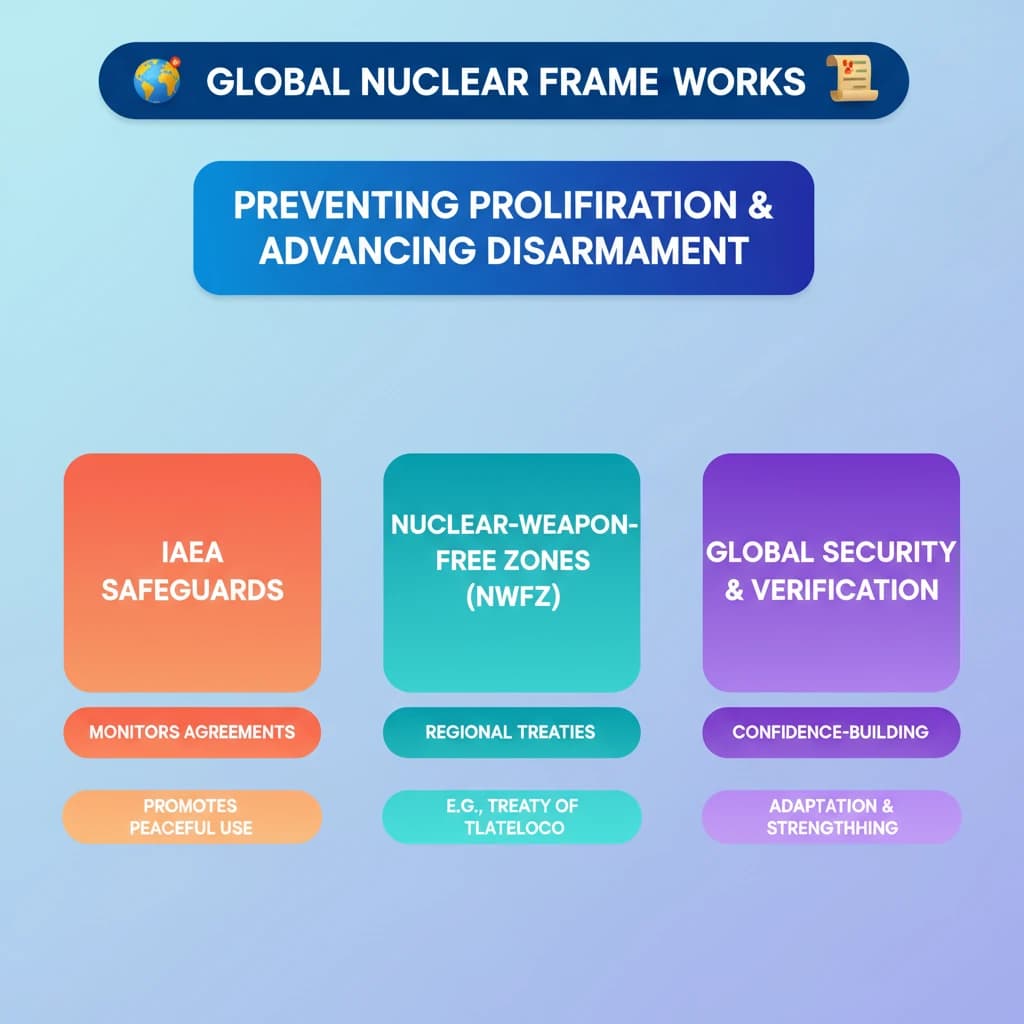
💡 Key Takeaways
- •IAEA monitors nuclear agreements and promotes peaceful nuclear energy use.
- •NWFZs are regional treaties prohibiting nuclear weapons, like the Treaty of Tlatelolco.
- •These frameworks aim to prevent nuclear proliferation and advance disarmament.
- •They are crucial for global security, verification, and confidence-building.
- •Ongoing challenges necessitate continuous strengthening and adaptation of these frameworks.
🧠 Memory Techniques
98% Verified Content
📚 Reference Sources
•United Nations Office for Disarmament Affairs (UNODA) Website
•Treaty of Tlatelolco Text
•Treaty of Pelindaba Text
•Academic literature on nuclear non-proliferation and disarmament