Loading page, please wait…
What are the Dynamics of India-Ukraine Relations? - UPSC International Relations
What is What are the Dynamics of India-Ukraine Relations? in UPSC International Relations?
What are the Dynamics of India-Ukraine Relations? is a key topic under International Relations for UPSC Civil Services Examination. Key points include: India established diplomatic relations with Ukraine in 1992.. India was among the first countries to recognize Ukraine's independence in 1991.. An Indian Prime Minister's visit to Ukraine was a historic first since 1992.. Understanding this topic is essential for both UPSC Prelims and Mains preparation.
Why is What are the Dynamics of India-Ukraine Relations? important for UPSC exam?
What are the Dynamics of India-Ukraine Relations? is a Medium-level topic in UPSC International Relations. It is tested in both Prelims (factual MCQs) and Mains (analytical answer writing). Previous year UPSC questions have frequently covered aspects of What are the Dynamics of India-Ukraine Relations?, making it essential for comprehensive IAS preparation.
How to prepare What are the Dynamics of India-Ukraine Relations? for UPSC?
To prepare What are the Dynamics of India-Ukraine Relations? for UPSC: (1) Study the comprehensive notes covering all key concepts on Vaidra. (2) Practice previous year questions on this topic. (3) Connect it with current affairs using daily updates. (4) Revise using key takeaways and mind maps available for International Relations. (5) Write practice answers linking What are the Dynamics of India-Ukraine Relations? to related GS Paper topics.
Key takeaways of What are the Dynamics of India-Ukraine Relations? for UPSC
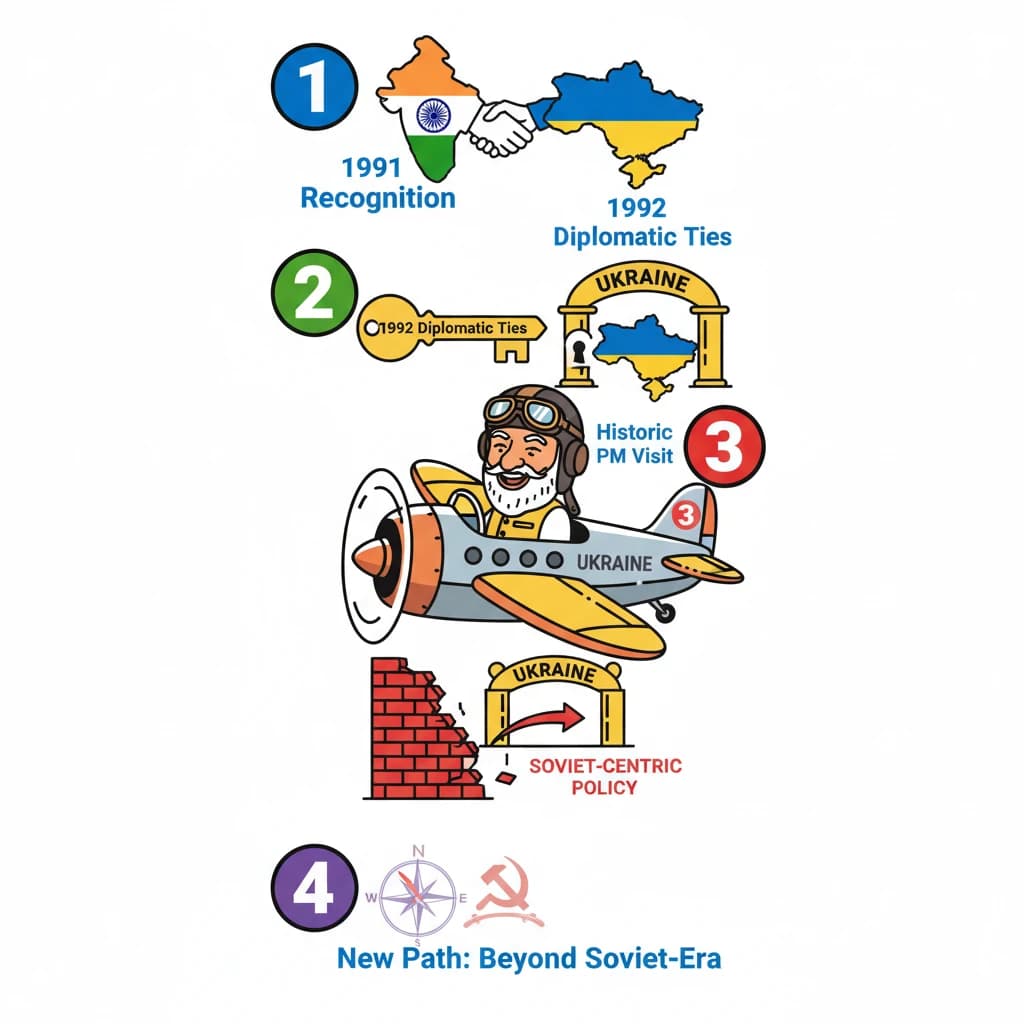
- India established diplomatic relations with Ukraine in 1992.
- India was among the first countries to recognize Ukraine's independence in 1991.
- An Indian Prime Minister's visit to Ukraine was a historic first since 1992.
- This engagement signifies a departure from India's traditional Soviet-centric foreign policy.
- The evolving ties reflect India's current multi-alignment and strategic autonomy.

What are the Dynamics of India-Ukraine Relations?
Medium⏱️ 5 min read
international relations
📖 Introduction
Overview of India-Ukraine Diplomatic Dynamics
The establishment of diplomatic relations between India and Ukraine in 1992 marked a significant step in their bilateral engagement. This period followed Ukraine's independence from the Soviet Union.
- Diplomatic Relations Established: 1992
- India's Recognition: India was among the first nations to recognise Ukraine after its independence.
- Ukraine's Independence: Gained in 1991, following the collapse of the Soviet Union.
Historic Milestone: Indian Prime Minister's Visit
A notable event in bilateral ties was the first visit of an Indian Prime Minister to Ukraine. This visit underscored the growing importance of Ukraine in India's foreign policy calculus.
The Prime Minister's visit was a historic moment, being the first of its kind since the establishment of diplomatic relations in 1992. It signalled a potential recalibration of India's engagement with the region.
Shift in Traditional Foreign Policy Approach
Historically, India's foreign policy in the region was largely anchored around its strong relationship with the Soviet Union. This meant comparatively less direct engagement with individual Soviet republics, including Ukraine.
The post-Soviet era necessitated a re-evaluation, leading to a more direct and independent approach towards newly independent states. This visit signifies a departure from India's traditional foreign policy of limited engagement with Ukraine.
Understanding this shift is crucial for UPSC. It reflects India's evolving geopolitical strategy and its willingness to diversify partnerships beyond historical alignments. This can be asked in GS Paper 2 (International Relations).

💡 Key Takeaways
- •India established diplomatic relations with Ukraine in 1992.
- •India was among the first countries to recognize Ukraine's independence in 1991.
- •An Indian Prime Minister's visit to Ukraine was a historic first since 1992.
- •This engagement signifies a departure from India's traditional Soviet-centric foreign policy.
- •The evolving ties reflect India's current multi-alignment and strategic autonomy.
🧠 Memory Techniques
95% Verified Content