Loading page, please wait…
What are the Other Conventions related to Seas - UPSC International Relations
What is What are the Other Conventions related to Seas in UPSC International Relations?
What are the Other Conventions related to Seas is a key topic under International Relations for UPSC Civil Services Examination. Key points include: Several conventions predate or complement UNCLOS, addressing specific aspects of maritime law.. The 1964 Continental Shelf Convention defined state rights over seabed resources.. The 1966 Fishing and Conservation Convention tackled high seas overexploitation.. Understanding this topic is essential for both UPSC Prelims and Mains preparation.
Why is What are the Other Conventions related to Seas important for UPSC exam?
What are the Other Conventions related to Seas is a Medium-level topic in UPSC International Relations. It is tested in both Prelims (factual MCQs) and Mains (analytical answer writing). Previous year UPSC questions have frequently covered aspects of What are the Other Conventions related to Seas, making it essential for comprehensive IAS preparation.
How to prepare What are the Other Conventions related to Seas for UPSC?
To prepare What are the Other Conventions related to Seas for UPSC: (1) Study the comprehensive notes covering all key concepts on Vaidra. (2) Practice previous year questions on this topic. (3) Connect it with current affairs using daily updates. (4) Revise using key takeaways and mind maps available for International Relations. (5) Write practice answers linking What are the Other Conventions related to Seas to related GS Paper topics.
Key takeaways of What are the Other Conventions related to Seas for UPSC
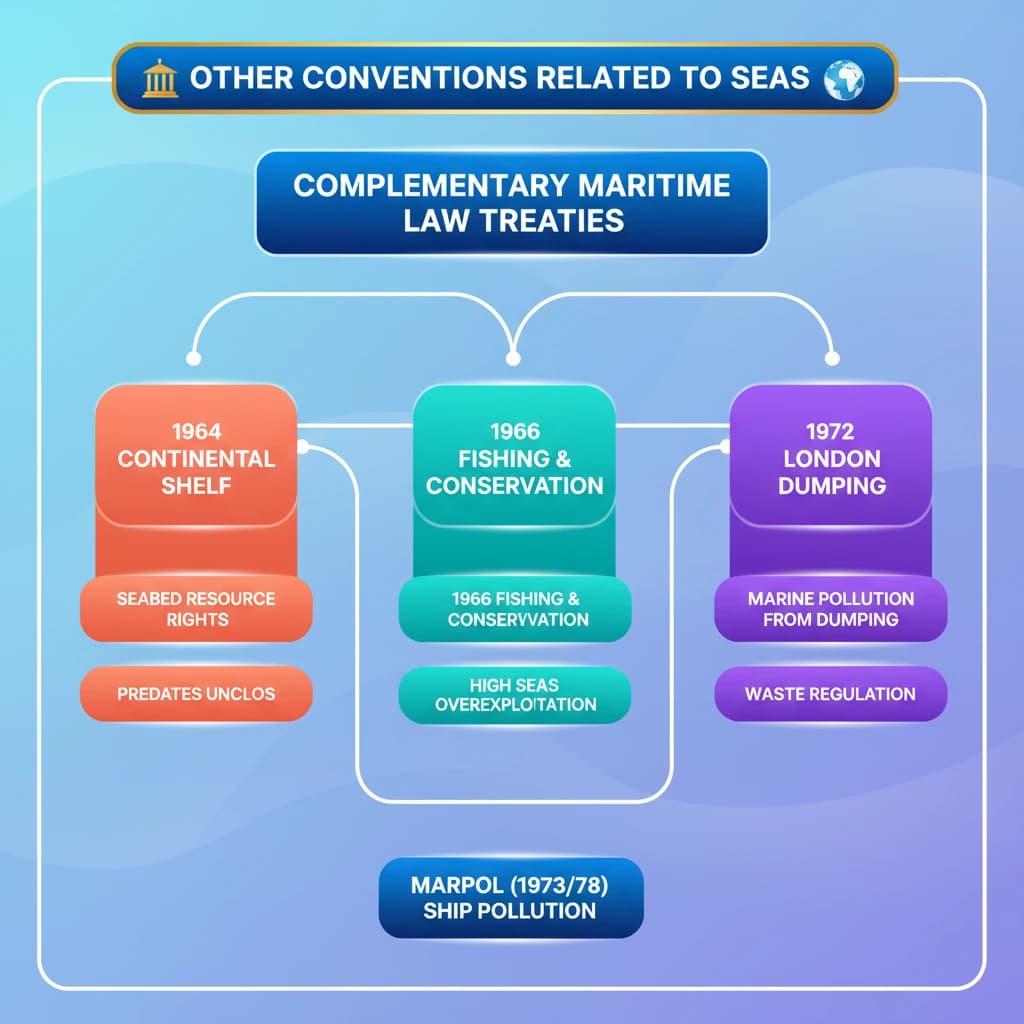
- Several conventions predate or complement UNCLOS, addressing specific aspects of maritime law.
- The 1964 Continental Shelf Convention defined state rights over seabed resources.
- The 1966 Fishing and Conservation Convention tackled high seas overexploitation.
- The 1972 London Convention targets marine pollution from dumping of wastes.
- MARPOL (1973/78) is a comprehensive treaty for preventing ship-sourced marine pollution.
- These conventions are foundational to current international maritime law and environmental protection efforts.

What are the Other Conventions related to Seas
Medium⏱️ 6 min read
international relations
📖 Introduction
Introduction to International Maritime Conventions
Beyond the comprehensive United Nations Convention on the Law of the Sea (UNCLOS), several other crucial conventions govern specific aspects of maritime activities and the protection of the marine environment. These agreements address various challenges, from resource exploitation to pollution control.
Understanding these conventions is vital for UPSC Mains GS-II (International Relations) and GS-III (Environment & Disaster Management). They demonstrate the evolution of international law concerning the seas.
Convention on the Continental Shelf, 1964
The Convention on the Continental Shelf, 1964, was one of the four Geneva Conventions on the Law of the Sea adopted in 1958. It aimed to clarify the rights of coastal states over their continental shelves.
This convention specifically defines and delimits the rights of States to explore and exploit the natural resources found within their continental shelf areas. These resources typically include minerals and sedentary species.
Convention on Fishing and Conservation of Living Resources of the High Seas, 1966
The Convention on Fishing and Conservation of Living Resources of the High Seas, 1966, addressed the growing concerns about overexploitation of marine life in international waters.
It was designed to solve problems related to the conservation of living resources in the high seas. The convention recognized that modern fishing technology posed a significant threat, potentially leading to the overexploitation of these vital resources.
London Convention 1972 (Dumping Convention)
The London Convention 1972, officially known as the Convention on the Prevention of Marine Pollution by Dumping of Wastes and Other Matter, is a key international treaty for marine pollution control.
Its primary objective is to promote the effective control of all sources of marine pollution. It mandates signatories to take all practicable steps to prevent pollution of the sea, particularly through the dumping of wastes and other matters.
MARPOL Convention (1973/78)
The International Convention for the Prevention of Pollution from Ships (MARPOL) is one of the most important international conventions addressing marine pollution from ships.
MARPOL (1973), as modified by the 1978 Protocol, covers the prevention of pollution of the marine environment by ships, whether from operational discharges or accidental causes.
It categorizes and regulates various forms of marine pollution. These include pollution caused by oil, noxious liquid substances, harmful substances in packaged form, sewage, and garbage from ships.
💡 Key Takeaways
- •Several conventions predate or complement UNCLOS, addressing specific aspects of maritime law.
- •The 1964 Continental Shelf Convention defined state rights over seabed resources.
- •The 1966 Fishing and Conservation Convention tackled high seas overexploitation.
- •The 1972 London Convention targets marine pollution from dumping of wastes.
- •MARPOL (1973/78) is a comprehensive treaty for preventing ship-sourced marine pollution.
- •These conventions are foundational to current international maritime law and environmental protection efforts.
🧠 Memory Techniques
95% Verified Content
📚 Reference Sources
•United Nations (UN) Treaties Database
•International Maritime Organization (IMO) official website
•UNCLOS (United Nations Convention on the Law of the Sea) text