Loading page, please wait…
What are the Other Development Partnerships of MEA? - UPSC International Relations
What is What are the Other Development Partnerships of MEA? in UPSC International Relations?
What are the Other Development Partnerships of MEA? is a key topic under International Relations for UPSC Civil Services Examination. Key points include: MEA's development partnerships are a cornerstone of India's foreign policy, encompassing financial aid, humanitarian assistance, and cultural cooperation.. Significant budgetary allocations are made to neighboring countries like Nepal, Maldives, Afghanistan, Bangladesh, Sri Lanka, Mauritius, and Myanmar.. Strategic projects like the Chabahar Port receive consistent funding, highlighting India's focus on regional connectivity.. Understanding this topic is essential for both UPSC Prelims and Mains preparation.
Why is What are the Other Development Partnerships of MEA? important for UPSC exam?
What are the Other Development Partnerships of MEA? is a Medium-level topic in UPSC International Relations. It is tested in both Prelims (factual MCQs) and Mains (analytical answer writing). Previous year UPSC questions have frequently covered aspects of What are the Other Development Partnerships of MEA?, making it essential for comprehensive IAS preparation.
How to prepare What are the Other Development Partnerships of MEA? for UPSC?
To prepare What are the Other Development Partnerships of MEA? for UPSC: (1) Study the comprehensive notes covering all key concepts on Vaidra. (2) Practice previous year questions on this topic. (3) Connect it with current affairs using daily updates. (4) Revise using key takeaways and mind maps available for International Relations. (5) Write practice answers linking What are the Other Development Partnerships of MEA? to related GS Paper topics.
Key takeaways of What are the Other Development Partnerships of MEA? for UPSC
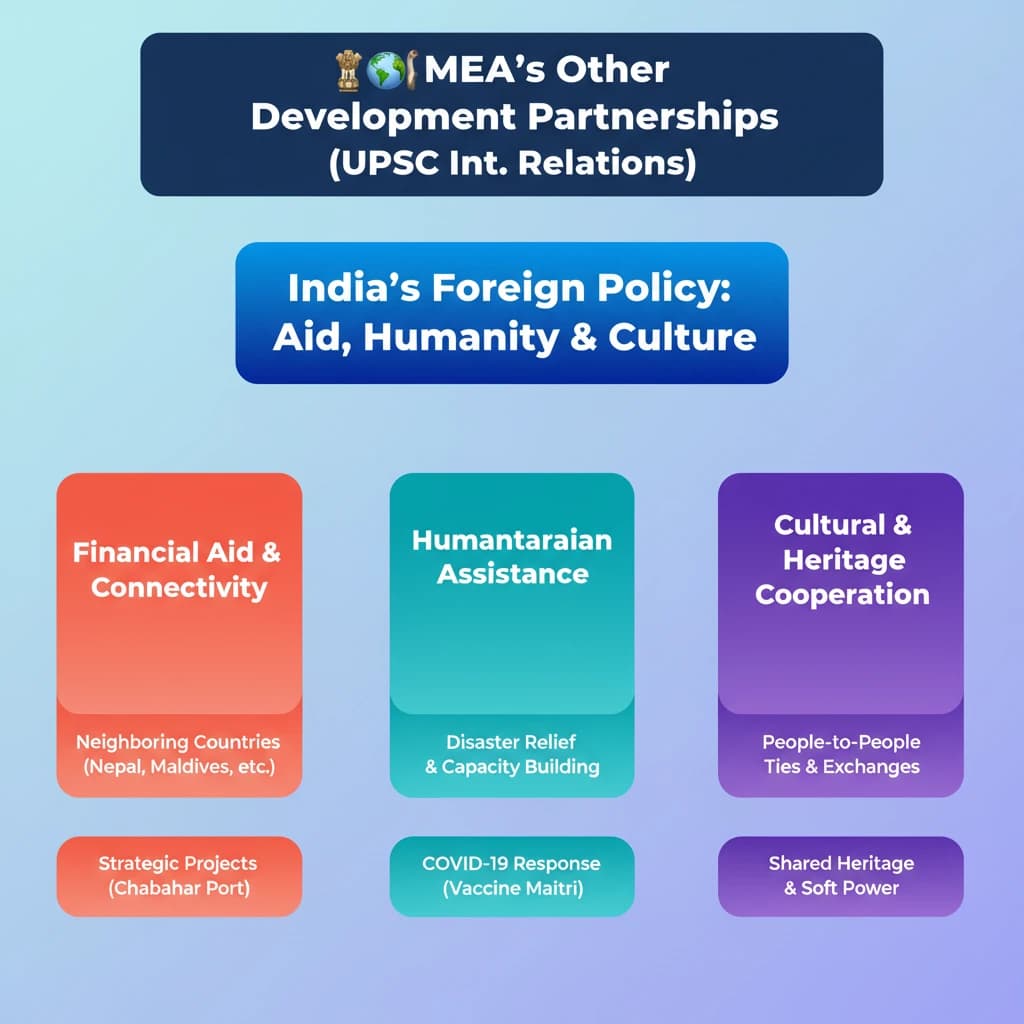
- MEA's development partnerships are a cornerstone of India's foreign policy, encompassing financial aid, humanitarian assistance, and cultural cooperation.
- Significant budgetary allocations are made to neighboring countries like Nepal, Maldives, Afghanistan, Bangladesh, Sri Lanka, Mauritius, and Myanmar.
- Strategic projects like the Chabahar Port receive consistent funding, highlighting India's focus on regional connectivity.
- India's humanitarian aid, exemplified by its COVID-19 response (Vaccine Maitri), showcases its role as a global first responder.
- Cultural and heritage projects strengthen people-to-people ties and enhance India's soft power.
- These partnerships are demand-driven and rooted in South-South Cooperation, aiming for mutual growth and regional stability.
What are the Other Development Partnerships of MEA?
Medium⏱️ 8 min read
international relations
📖 Introduction
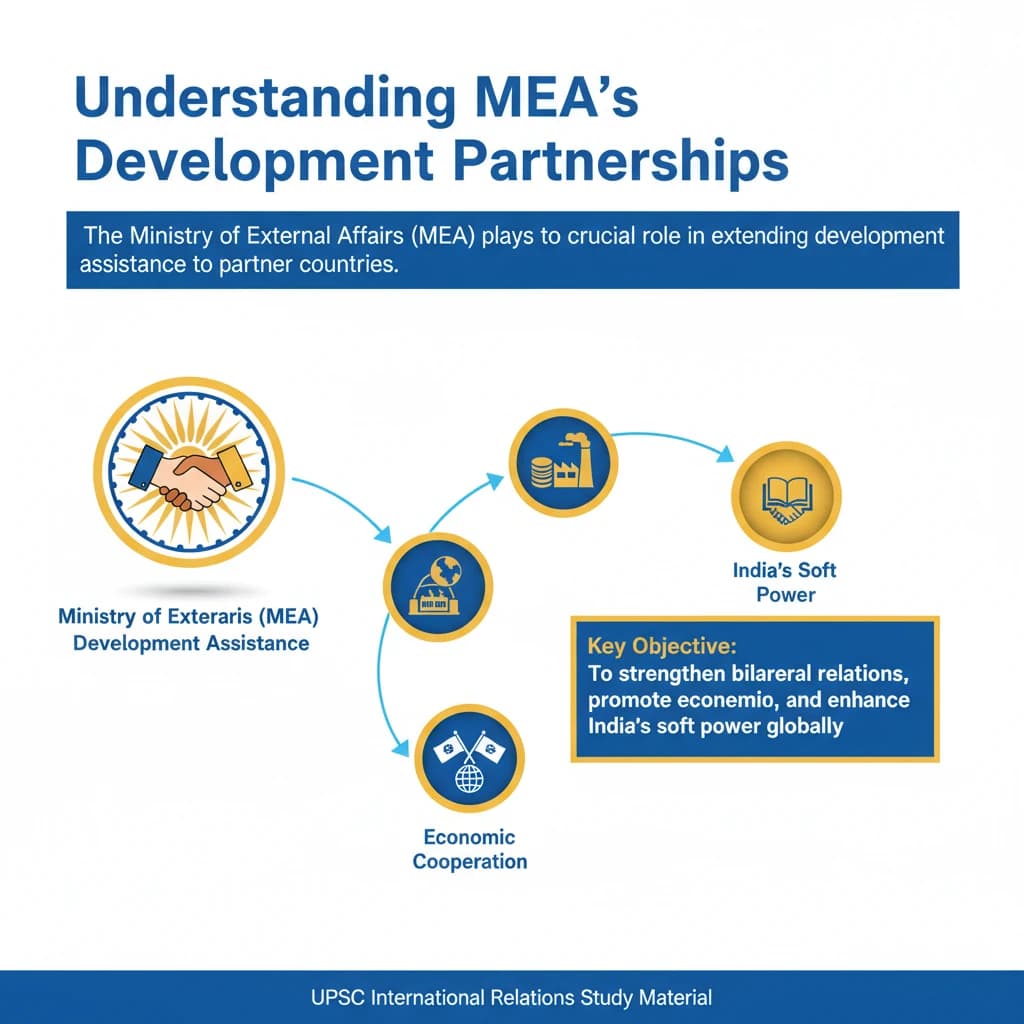
Understanding MEA's Development Partnerships
The Ministry of External Affairs (MEA) plays a crucial role in extending development assistance to partner countries. These partnerships are a cornerstone of India's foreign policy, fostering goodwill, regional stability, and mutual growth.
Key Objective: To strengthen bilateral relations, promote economic cooperation, and enhance India's soft power globally through tangible development projects and aid.
Overview of Budgetary Allocations for Development Assistance
India's commitment to its neighbors and other developing nations is reflected in its annual budgetary allocations for development aid. These funds support various projects, infrastructure development, and capacity building initiatives.
Total Allocation (Latin America & Eurasia): Rs 1,883 crore has been allocated for development assistance to various countries in these regions.
Country-Specific Development Aid Allocations
The MEA's development partnerships include specific budgetary provisions for key strategic partners, reflecting India's "Neighborhood First Policy" and broader international commitments.
Maldives: Received Rs 600 crore, a decrease from the previous year's Rs 770 crore.
Afghanistan: Allocated Rs 200 crore, underscoring India’s special relationship and continued support.
Bangladesh: Provided Rs 120 crore in development aid.
Nepal: Received a significant allocation of Rs 700 crore.
Sri Lanka: Granted Rs 75 crore in development aid.
Mauritius: Allocated Rs 170 crore.
Myanmar: Pegged at Rs 250 crore.
African Countries: A separate amount of Rs 200 crore has been set aside, emphasizing India's commitment to the African continent.
Strategic Connectivity Projects: Chabahar Port
India's focus on enhancing regional connectivity is evident through its continued support for the Chabahar Port project in Iran. This port is vital for trade routes, especially for landlocked Afghanistan and Central Asian countries.
Chabahar Port Allocation: Maintained at Rs 100 crore, highlighting India's sustained strategic interest in this crucial infrastructure.
Humanitarian Assistance Initiatives
Beyond financial aid, the MEA actively extends humanitarian assistance to partner countries during times of crisis. This includes responding to natural disasters, emergencies, and global health challenges.
Disaster Relief: India provides essential relief supplies, deploys medical teams, and offers financial assistance.
Pandemic Response: During the Covid-19 pandemic, India supplied medicines, vaccines, and medical equipment to over 150 countries, showcasing its role as a global responder.
Cultural and Heritage Cooperation
The MEA also promotes cultural and heritage cooperation, strengthening people-to-people ties and preserving shared historical legacies. This aspect of development partnership enhances India's soft power.
Completed Projects: Over 50 cultural and heritage projects have been completed. Notable examples include the restoration of Ananda Temple and Shwedagon Pagoda in Myanmar, the Indian Gallery at Sacred Tooth Relic Temple in Kandy, Sri Lanka, and the construction of Dharamshala-Pashupatinath temple in Nepal.
Currently, approximately 25 cultural and heritage projects are under implementation across various countries, demonstrating ongoing commitment.
UPSC Insight: India's development partnerships are not just about financial aid but also encompass strategic connectivity, humanitarian outreach, and cultural diplomacy, reflecting a multi-faceted foreign policy approach. Be prepared to discuss these different dimensions in GS Paper 2 (International Relations).
💡 Key Takeaways
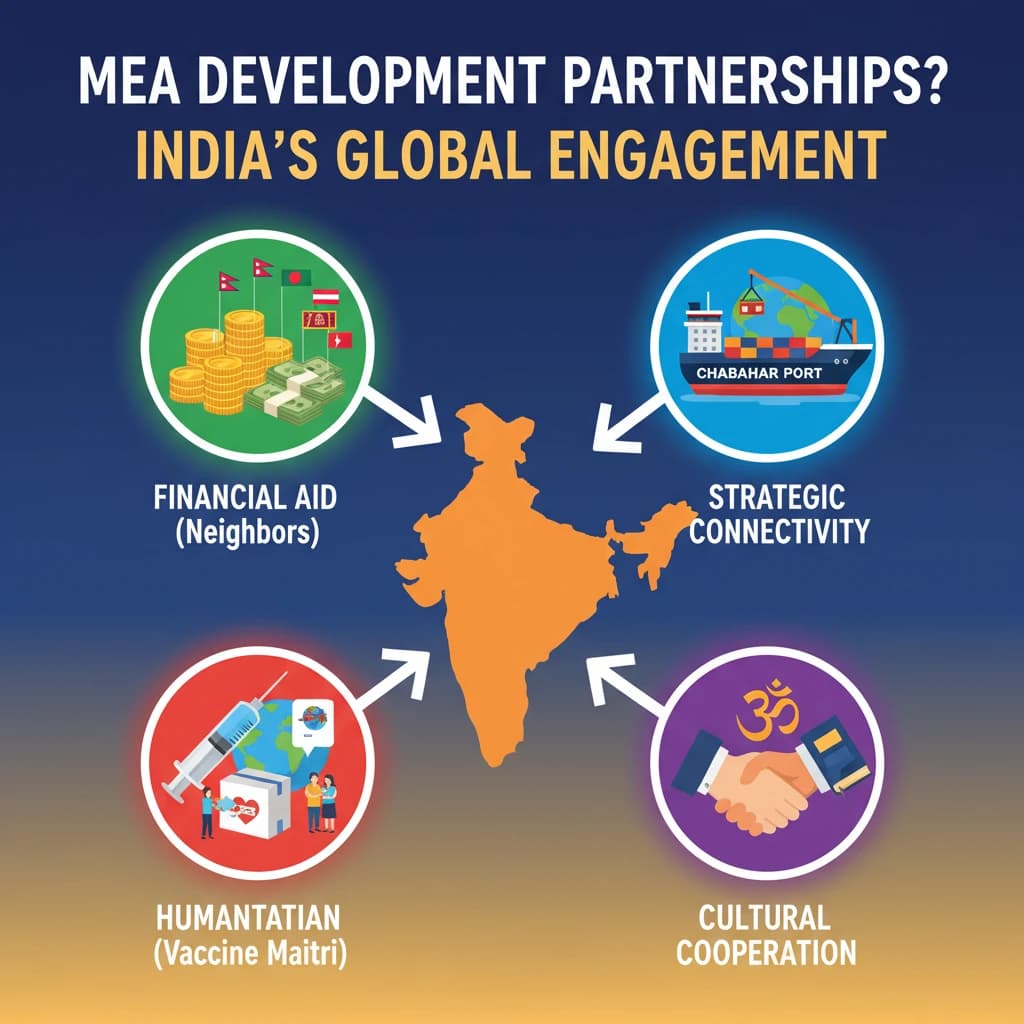
- •MEA's development partnerships are a cornerstone of India's foreign policy, encompassing financial aid, humanitarian assistance, and cultural cooperation.
- •Significant budgetary allocations are made to neighboring countries like Nepal, Maldives, Afghanistan, Bangladesh, Sri Lanka, Mauritius, and Myanmar.
- •Strategic projects like the Chabahar Port receive consistent funding, highlighting India's focus on regional connectivity.
- •India's humanitarian aid, exemplified by its COVID-19 response (Vaccine Maitri), showcases its role as a global first responder.
- •Cultural and heritage projects strengthen people-to-people ties and enhance India's soft power.
- •These partnerships are demand-driven and rooted in South-South Cooperation, aiming for mutual growth and regional stability.
🧠 Memory Techniques
95% Verified Content