Loading page, please wait…
What is a War Crime? - UPSC International Relations
What is What is a War Crime? in UPSC International Relations?
What is a War Crime? is a key topic under International Relations for UPSC Civil Services Examination. Key points include: War crimes are serious violations of International Humanitarian Law (IHL) during armed conflict.. They are based on individual criminal responsibility, meaning individuals can be held liable.. War crimes differ from crimes against humanity and genocide primarily by requiring an ongoing armed conflict.. Understanding this topic is essential for both UPSC Prelims and Mains preparation.
Why is What is a War Crime? important for UPSC exam?
What is a War Crime? is a Medium-level topic in UPSC International Relations. It is tested in both Prelims (factual MCQs) and Mains (analytical answer writing). Previous year UPSC questions have frequently covered aspects of What is a War Crime?, making it essential for comprehensive IAS preparation.
How to prepare What is a War Crime? for UPSC?
To prepare What is a War Crime? for UPSC: (1) Study the comprehensive notes covering all key concepts on Vaidra. (2) Practice previous year questions on this topic. (3) Connect it with current affairs using daily updates. (4) Revise using key takeaways and mind maps available for International Relations. (5) Write practice answers linking What is a War Crime? to related GS Paper topics.
Key takeaways of What is a War Crime? for UPSC
- War crimes are serious violations of International Humanitarian Law (IHL) during armed conflict.
- They are based on individual criminal responsibility, meaning individuals can be held liable.
- War crimes differ from crimes against humanity and genocide primarily by requiring an ongoing armed conflict.
- The four Geneva Conventions of 1949 are the cornerstone treaties defining and prohibiting war crimes, protecting specific categories of individuals.
- India is a signatory to all four Geneva Conventions, upholding their principles.
- The International Criminal Court (ICC) has jurisdiction over war crimes for signatory states, but enforcement faces significant challenges.
What is a War Crime?
Medium⏱️ 7 min read
international relations
📖 Introduction
Definition of a War Crime
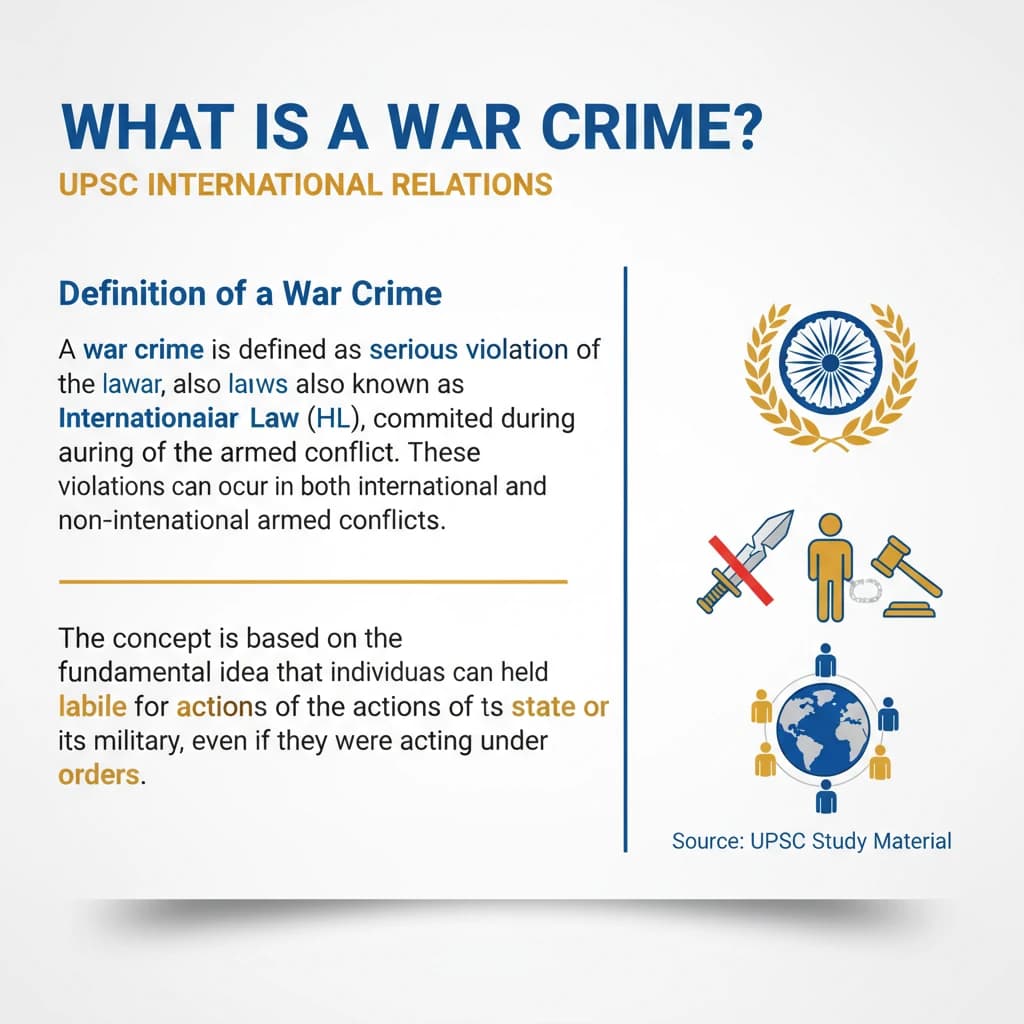
A war crime is defined as a serious violation of the laws of war, also known as International Humanitarian Law (IHL), committed during an armed conflict. These violations can occur in both international and non-international armed conflicts.
The concept is based on the fundamental idea that individuals can be held liable for the actions of a state or its military, even if they were acting under orders.
Key Characteristics of War Crimes:
- Occur during an armed conflict (domestic or international).
- Violate established international humanitarian laws.
- Involve individual criminal responsibility.
Examples of War Crimes
Common examples of acts constituting war crimes include:
- Willful killings of civilians or prisoners of war.
- Torture or inhuman treatment of prisoners of war.
- Taking of hostages.
- Extensive destruction and appropriation of property not justified by military necessity.
- Forcing children to participate in hostilities.
- Directing attacks against civilian objects or personnel involved in humanitarian assistance.
War Crime vs. Crime Against Humanity
The United Nations Office on Genocide Prevention and the Responsibility to Protect, guided by the Genocide Convention, distinguishes war crimes from other international crimes.
War Crimes: Occur specifically within the context of a domestic conflict or a war between two states. They are violations of the laws governing the conduct of warfare.
Genocide and Crimes Against Humanity: These can occur during peacetime or during a conflict. They involve widespread or systematic attacks directed against any civilian population, often with specific intent (e.g., to destroy a group in the case of genocide).
The Geneva Conventions on War Crimes
The Geneva Conventions of 1949 and their Additional Protocols are foundational international treaties that establish the core rules limiting the barbarity of war. They aim to protect those not participating in hostilities and those who can no longer fight.
India is a party to all four Geneva Conventions, signifying its commitment to upholding international humanitarian law.
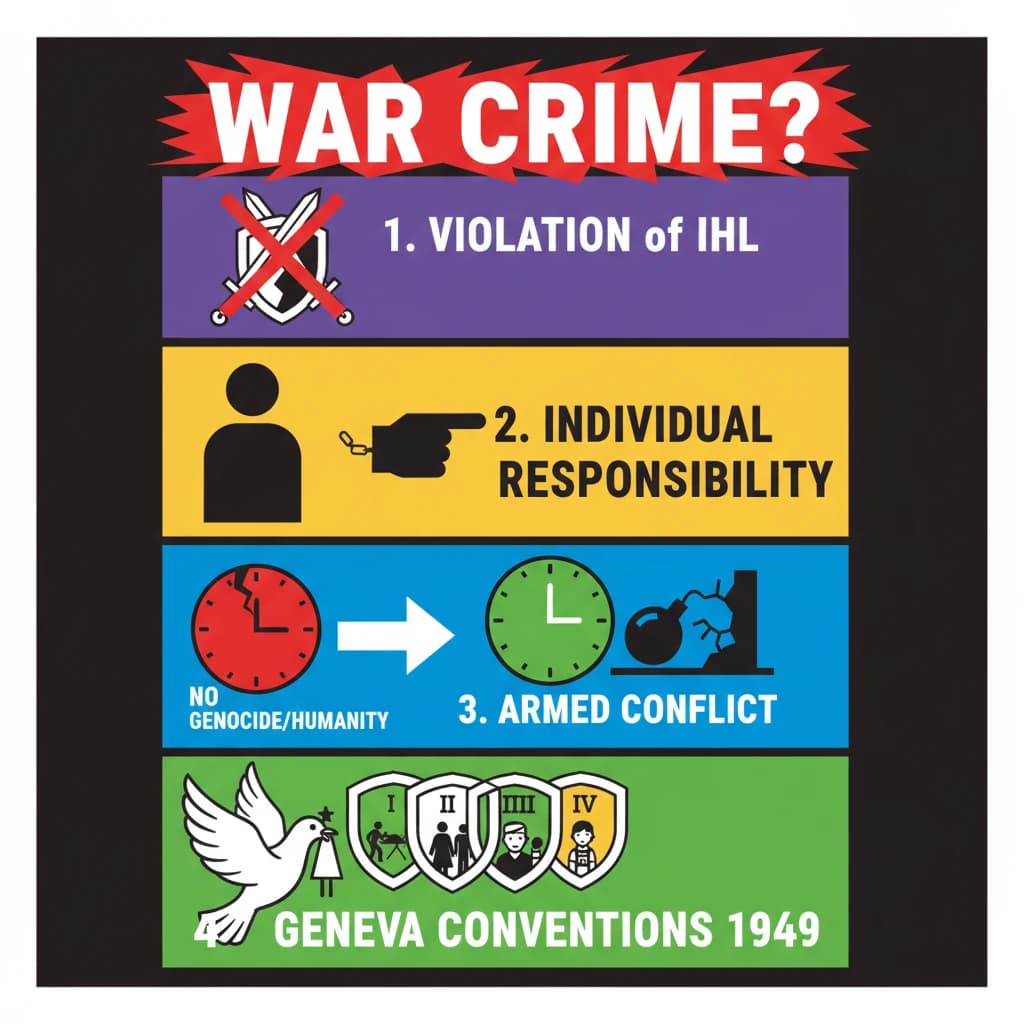
- First Geneva Convention: Protects wounded and sick soldiers on land during war.
- Second Geneva Convention: Protects wounded, sick, and shipwrecked military personnel at sea during war.
- Third Geneva Convention: Applies to prisoners of war (POWs), outlining their rights and treatment.
- Fourth Geneva Convention: Affords protection to civilians, including those in occupied territory.
UPSC Insight: Understanding the distinction between war crimes, crimes against humanity, and genocide is crucial for both Prelims (definitions) and Mains GS-2 (International Relations, International Law) for nuanced answer writing.
💡 Key Takeaways
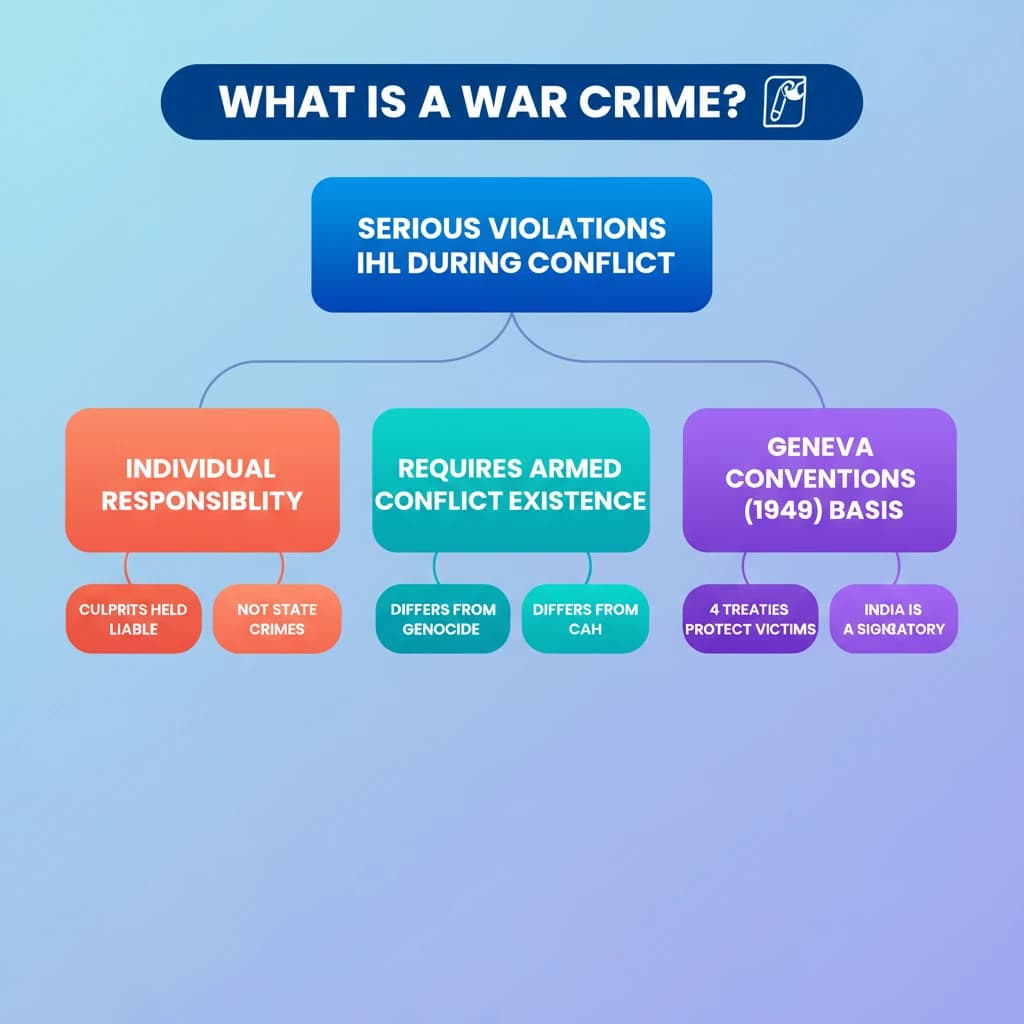
- •War crimes are serious violations of International Humanitarian Law (IHL) during armed conflict.
- •They are based on individual criminal responsibility, meaning individuals can be held liable.
- •War crimes differ from crimes against humanity and genocide primarily by requiring an ongoing armed conflict.
- •The four Geneva Conventions of 1949 are the cornerstone treaties defining and prohibiting war crimes, protecting specific categories of individuals.
- •India is a signatory to all four Geneva Conventions, upholding their principles.
- •The International Criminal Court (ICC) has jurisdiction over war crimes for signatory states, but enforcement faces significant challenges.
🧠 Memory Techniques
98% Verified Content
📚 Reference Sources
•International Committee of the Red Cross (ICRC) - Geneva Conventions
•United Nations Office on Genocide Prevention and the Responsibility to Protect
•Rome Statute of the International Criminal Court