Loading page, please wait…
What is Nuclear Disarmament - UPSC International Relations
What is What is Nuclear Disarmament in UPSC International Relations?
What is Nuclear Disarmament is a key topic under International Relations for UPSC Civil Services Examination. Key points include: Nuclear disarmament aims to reduce and eliminate nuclear weapons for global security.. Modern arsenals, including tactical weapons, increase conflict risk.. Key reasons for disarmament include humanitarian, environmental, ethical, and economic costs.. Understanding this topic is essential for both UPSC Prelims and Mains preparation.
Why is What is Nuclear Disarmament important for UPSC exam?
What is Nuclear Disarmament is a Medium-level topic in UPSC International Relations. It is tested in both Prelims (factual MCQs) and Mains (analytical answer writing). Previous year UPSC questions have frequently covered aspects of What is Nuclear Disarmament, making it essential for comprehensive IAS preparation.
How to prepare What is Nuclear Disarmament for UPSC?
To prepare What is Nuclear Disarmament for UPSC: (1) Study the comprehensive notes covering all key concepts on Vaidra. (2) Practice previous year questions on this topic. (3) Connect it with current affairs using daily updates. (4) Revise using key takeaways and mind maps available for International Relations. (5) Write practice answers linking What is Nuclear Disarmament to related GS Paper topics.
Key takeaways of What is Nuclear Disarmament for UPSC
- Nuclear disarmament aims to reduce and eliminate nuclear weapons for global security.
- Modern arsenals, including tactical weapons, increase conflict risk.
- Key reasons for disarmament include humanitarian, environmental, ethical, and economic costs.
- Humanitarian impacts involve immediate destruction, radiation sickness, and long-term genetic damage.
- Environmental risks include 'nuclear winter,' global cooling, and agricultural collapse.
- Ethical concerns revolve around the indiscriminate nature of nuclear weapons against humanitarian law.
- Economic resources spent on arsenals could be redirected to development and climate change.
What is Nuclear Disarmament
Medium⏱️ 8 min read
international relations
📖 Introduction
Understanding Nuclear Disarmament
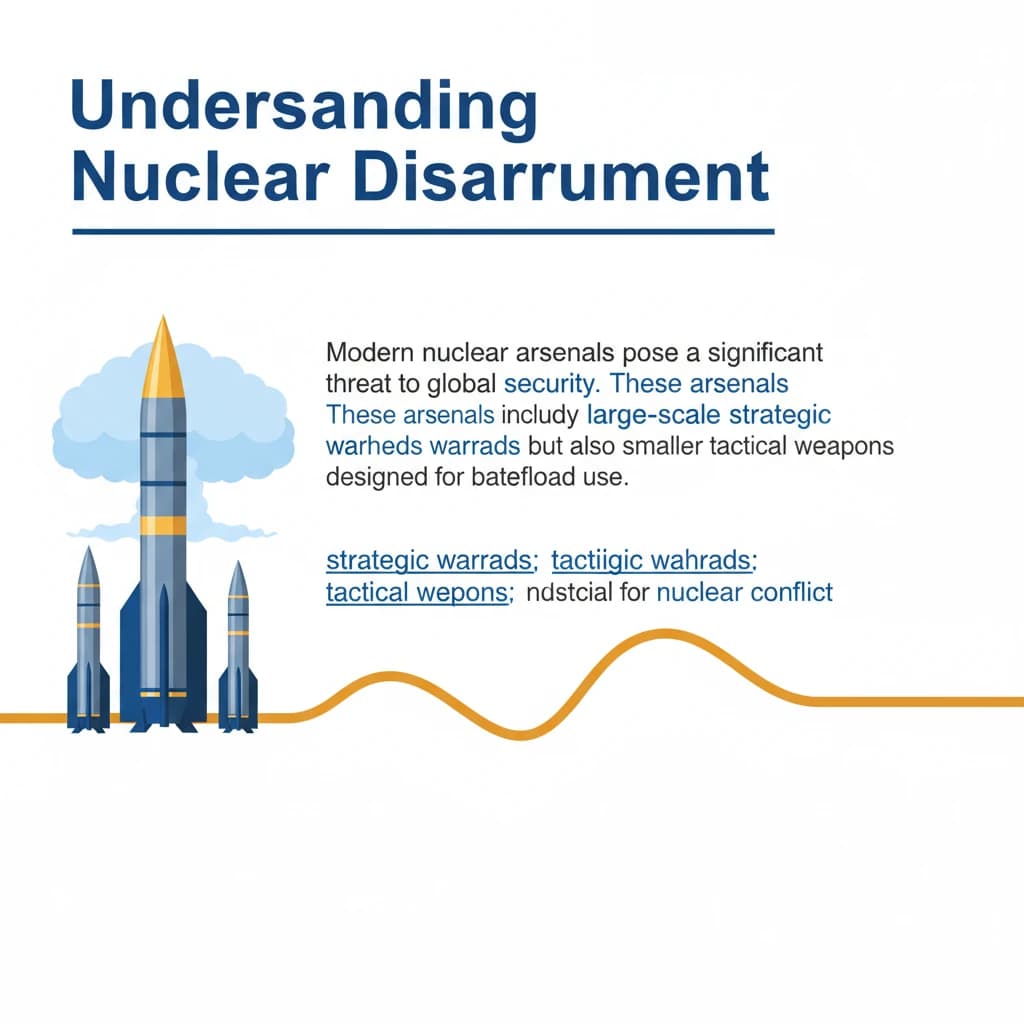
Modern nuclear arsenals pose a significant threat to global security. These arsenals include not only large-scale strategic warheads but also smaller, more portable tactical weapons.
The presence of tactical nuclear weapons, designed for battlefield use, significantly increases the risk of a potential nuclear conflict. This escalation potential underscores the urgency of disarmament efforts.
What is Nuclear Disarmament?
Nuclear disarmament refers to the systematic process of reducing or completely eliminating nuclear weapons worldwide. Its primary objective is to enhance global security and avert the catastrophic outcomes of nuclear warfare.
This comprehensive process involves various efforts aimed at stringent control and the eventual abolition of all existing nuclear arsenals. The ultimate vision is to achieve a truly nuclear-free world.
Need for Nuclear Disarmament
The imperative for nuclear disarmament stems from several critical factors, ranging from humanitarian concerns to economic implications. These considerations highlight the profound dangers associated with nuclear weapons.
Humanitarian Impact
The immediate aftermath of a nuclear explosion is devastating. It leads to widespread loss of life, immense mass destruction, severe burns, and debilitating radiation sickness among survivors.
Beyond the initial impact, long-term health consequences are dire. Survivors and their descendants can suffer from increased rates of cancer and irreversible genetic damage for many generations.
Environmental Consequences
A nuclear detonation can trigger large-scale environmental damage with global repercussions. One of the most severe potential outcomes is a phenomenon known as “nuclear winter.”
During a nuclear winter, vast amounts of smoke and dust from explosions would block sunlight, leading to a drastic and prolonged period of global cooling. This would cause widespread agricultural collapse and severe disruptions to global ecosystems.
Ethical and Moral Considerations
The sheer destructiveness and indiscriminate nature of nuclear weapons raise profound ethical questions regarding their existence and potential use. Their impact violates fundamental principles of humanity.
The concept of just war theory and the tenets of humanitarian law are directly contradicted by the indiscriminate nature of nuclear weapons, which cause widespread suffering without distinction.
Economic Costs
The maintenance and continuous upgrading of nuclear arsenals demand colossal financial resources. These funds represent a significant drain on national budgets globally.
These substantial economic costs could otherwise be allocated to crucial areas such as development initiatives, poverty alleviation, and addressing pressing global challenges like climate change. This highlights a critical opportunity cost.
💡 Key Takeaways
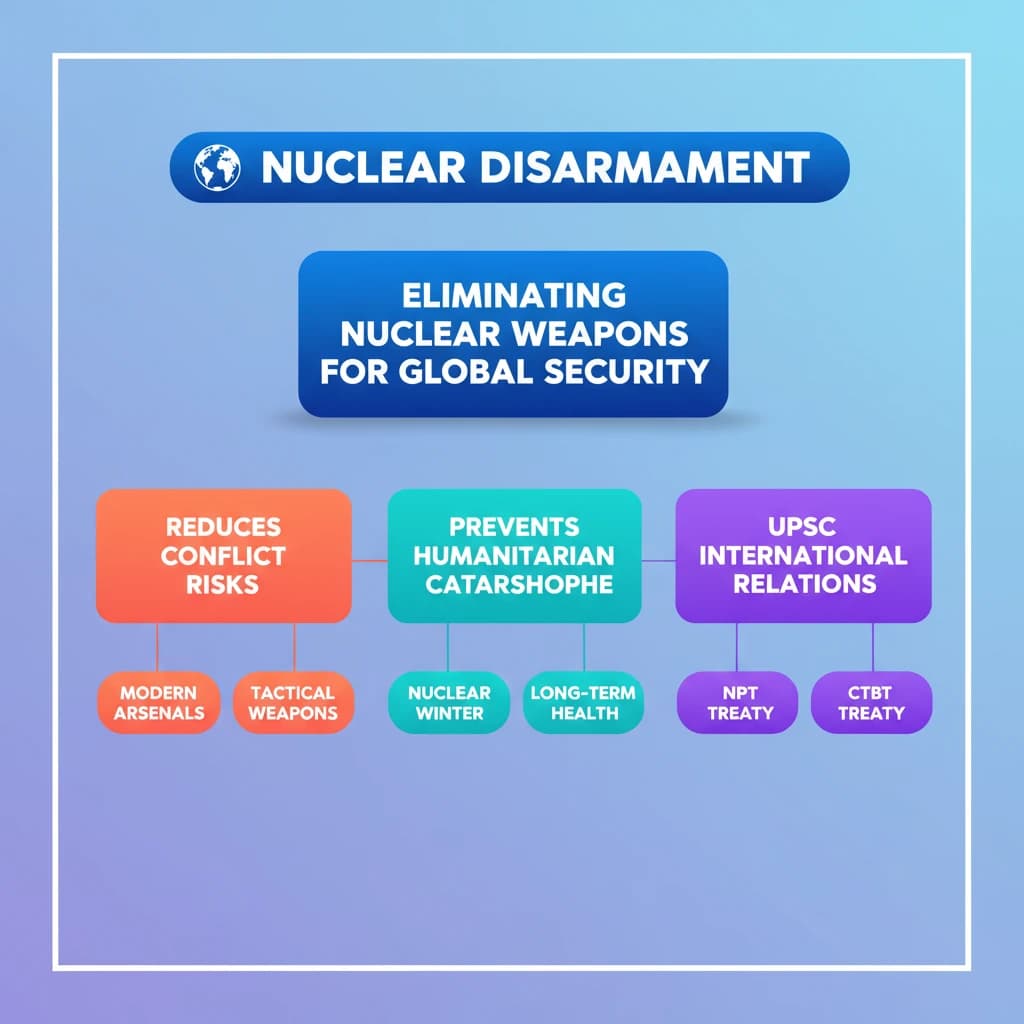
- •Nuclear disarmament aims to reduce and eliminate nuclear weapons for global security.
- •Modern arsenals, including tactical weapons, increase conflict risk.
- •Key reasons for disarmament include humanitarian, environmental, ethical, and economic costs.
- •Humanitarian impacts involve immediate destruction, radiation sickness, and long-term genetic damage.
- •Environmental risks include 'nuclear winter,' global cooling, and agricultural collapse.
- •Ethical concerns revolve around the indiscriminate nature of nuclear weapons against humanitarian law.
- •Economic resources spent on arsenals could be redirected to development and climate change.
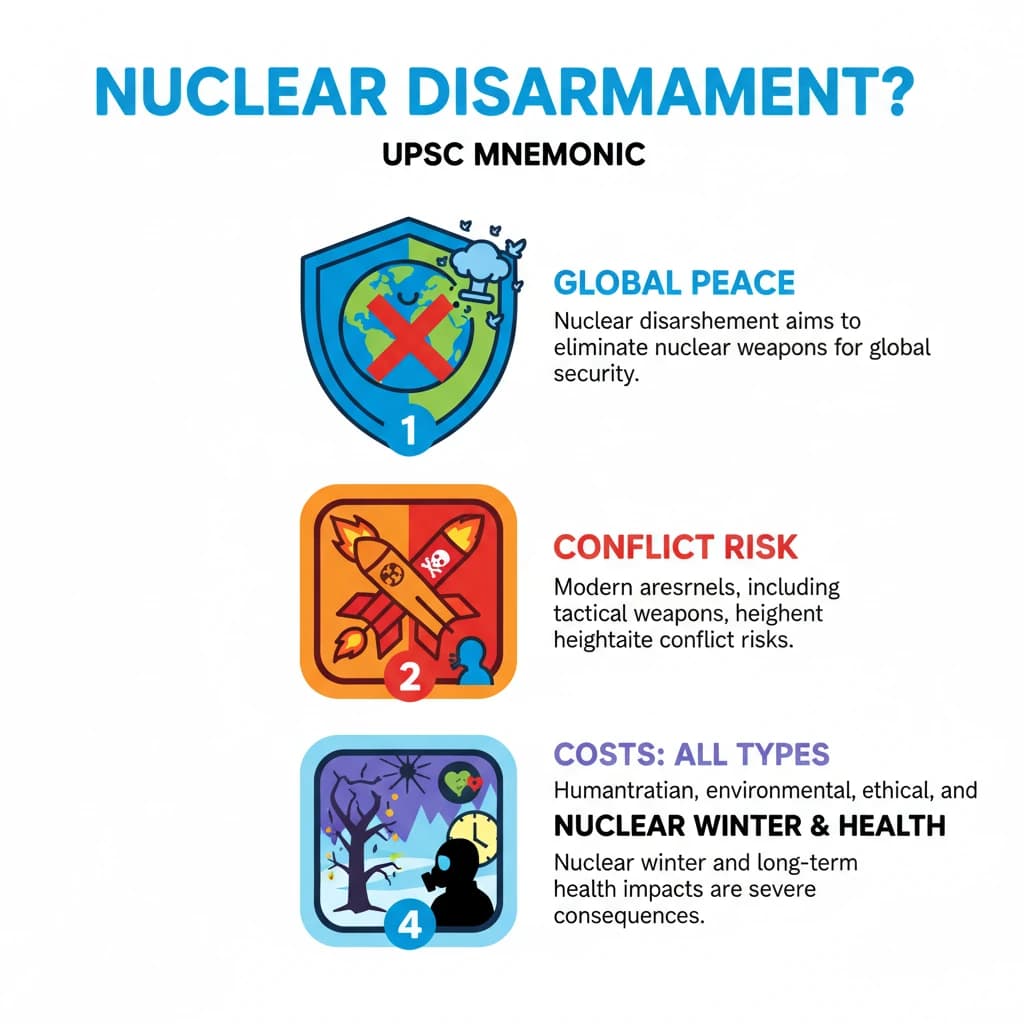
🧠 Memory Techniques
98% Verified Content
📚 Reference Sources
•United Nations Office for Disarmament Affairs (UNODA)
•International Atomic Energy Agency (IAEA)
•Stockholm International Peace Research Institute (SIPRI)