Loading page, please wait…
What is the Hybrid Renewable Energy System Project of Sri Lanka? - UPSC International Relations
What is What is the Hybrid Renewable Energy System Project of Sri Lanka? in UPSC International Relations?
What is the Hybrid Renewable Energy System Project of Sri Lanka? is a key topic under International Relations for UPSC Civil Services Examination. Key points include: Sri Lanka's project combines solar, wind, battery storage, and diesel backup for reliable power.. It addresses energy security and climate change challenges for island nations.. Hybrid systems mitigate intermittency of single renewable sources.. Understanding this topic is essential for both UPSC Prelims and Mains preparation.
Why is What is the Hybrid Renewable Energy System Project of Sri Lanka? important for UPSC exam?
What is the Hybrid Renewable Energy System Project of Sri Lanka? is a Medium-level topic in UPSC International Relations. It is tested in both Prelims (factual MCQs) and Mains (analytical answer writing). Previous year UPSC questions have frequently covered aspects of What is the Hybrid Renewable Energy System Project of Sri Lanka?, making it essential for comprehensive IAS preparation.
How to prepare What is the Hybrid Renewable Energy System Project of Sri Lanka? for UPSC?
To prepare What is the Hybrid Renewable Energy System Project of Sri Lanka? for UPSC: (1) Study the comprehensive notes covering all key concepts on Vaidra. (2) Practice previous year questions on this topic. (3) Connect it with current affairs using daily updates. (4) Revise using key takeaways and mind maps available for International Relations. (5) Write practice answers linking What is the Hybrid Renewable Energy System Project of Sri Lanka? to related GS Paper topics.
Key takeaways of What is the Hybrid Renewable Energy System Project of Sri Lanka? for UPSC
- Sri Lanka's project combines solar, wind, battery storage, and diesel backup for reliable power.
- It addresses energy security and climate change challenges for island nations.
- Hybrid systems mitigate intermittency of single renewable sources.
- Battery storage is crucial for consistent power delivery in hybrid setups.
- The project exemplifies sustainable development and decentralized energy solutions.
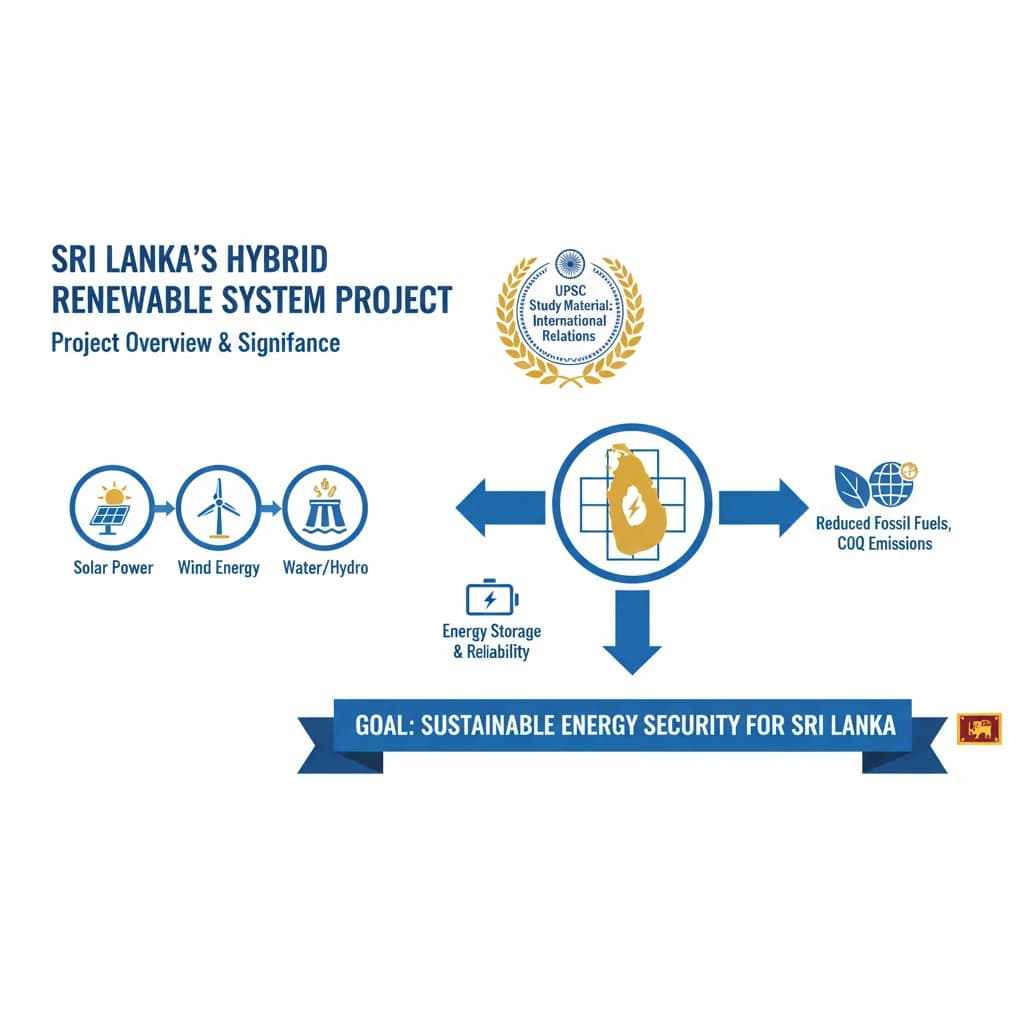
What is the Hybrid Renewable Energy System Project of Sri Lanka?
Medium⏱️ 6 min read
international relations
📖 Introduction
Project Overview: Sri Lanka's Hybrid Renewable Energy System
The Hybrid Renewable Energy System Project in Sri Lanka is an initiative focused on developing sustainable energy infrastructure. It aims to integrate multiple power generation sources to ensure a reliable and environmentally friendly energy supply.
This project is crucial for Sri Lanka's energy security and its commitment to reducing reliance on fossil fuels. It represents a forward-thinking approach to power generation in island nations.
Key Objective: To construct and operate hybrid renewable energy systems across various locations in Sri Lanka, enhancing energy access and stability.
Components of the Hybrid System
The project specifically involves the construction of systems that combine several forms of energy generation. This multi-source approach enhances reliability and optimizes energy production.
By integrating diverse sources, the system can mitigate the intermittency issues often associated with single renewable energy types like solar or wind.
The Hybrid Renewable Energy System typically includes:
- Solar Power: Harnessing energy from sunlight.
- Wind Power: Utilizing wind turbines for electricity generation.
- Battery Power Systems: Storing excess energy for use during periods of low generation or high demand.
- Standby Diesel Power Systems: Providing backup power to ensure continuous supply, especially during emergencies or maintenance.
Significance for Island Nations
For island nations like Sri Lanka, such hybrid systems are particularly vital. They reduce dependence on imported fossil fuels, leading to significant economic and environmental benefits.
The integration of battery storage is a game-changer, allowing for consistent power delivery even when renewable sources are not actively generating electricity.
UPSC Relevance: This project highlights international cooperation in renewable energy and sustainable development. It can be cited in GS Paper 2 (International Relations) for India-Sri Lanka ties or GS Paper 3 (Environment & Economy) for energy security and climate change mitigation strategies.
💡 Key Takeaways
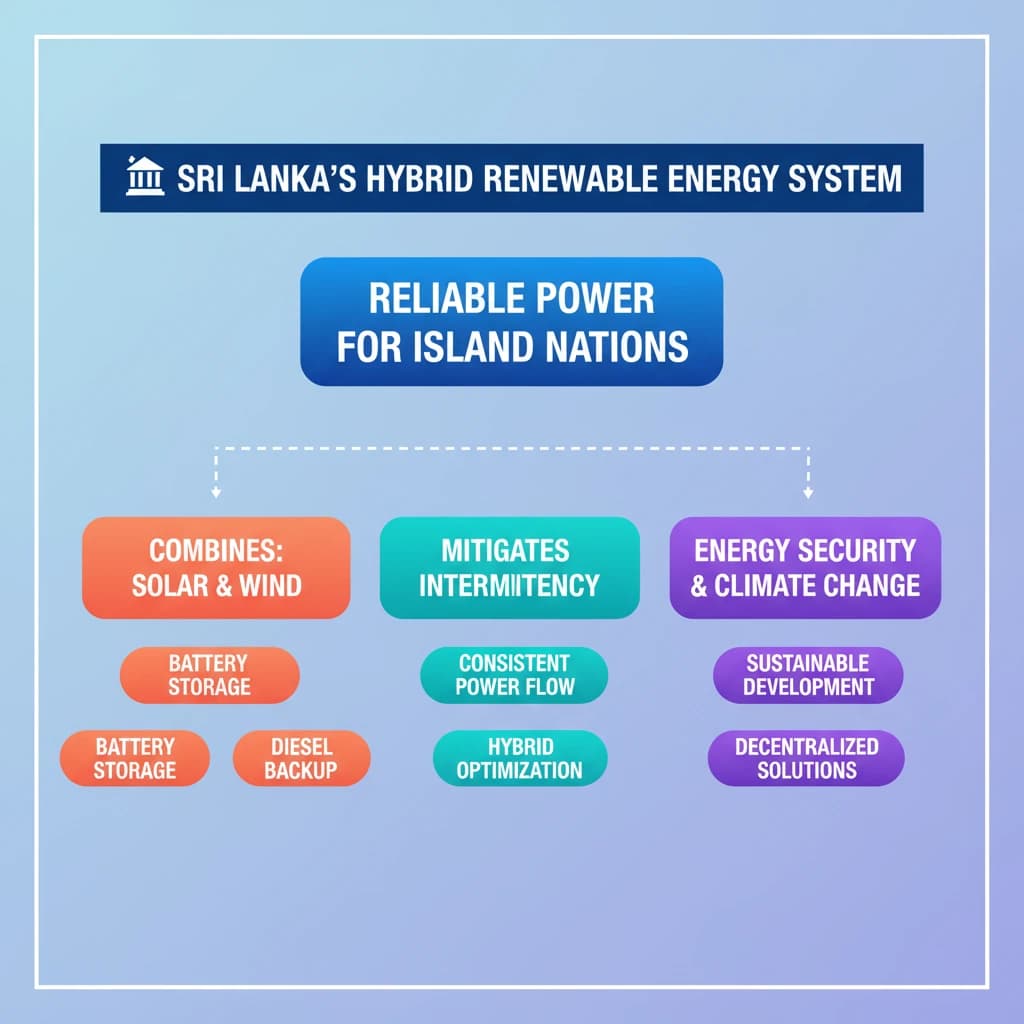
- •Sri Lanka's project combines solar, wind, battery storage, and diesel backup for reliable power.
- •It addresses energy security and climate change challenges for island nations.
- •Hybrid systems mitigate intermittency of single renewable sources.
- •Battery storage is crucial for consistent power delivery in hybrid setups.
- •The project exemplifies sustainable development and decentralized energy solutions.
🧠 Memory Techniques

95% Verified Content