Loading page, please wait…
What is the Significance of ASEAN for India and Japan? - UPSC International Relations
What is What is the Significance of ASEAN for India and Japan? in UPSC International Relations?
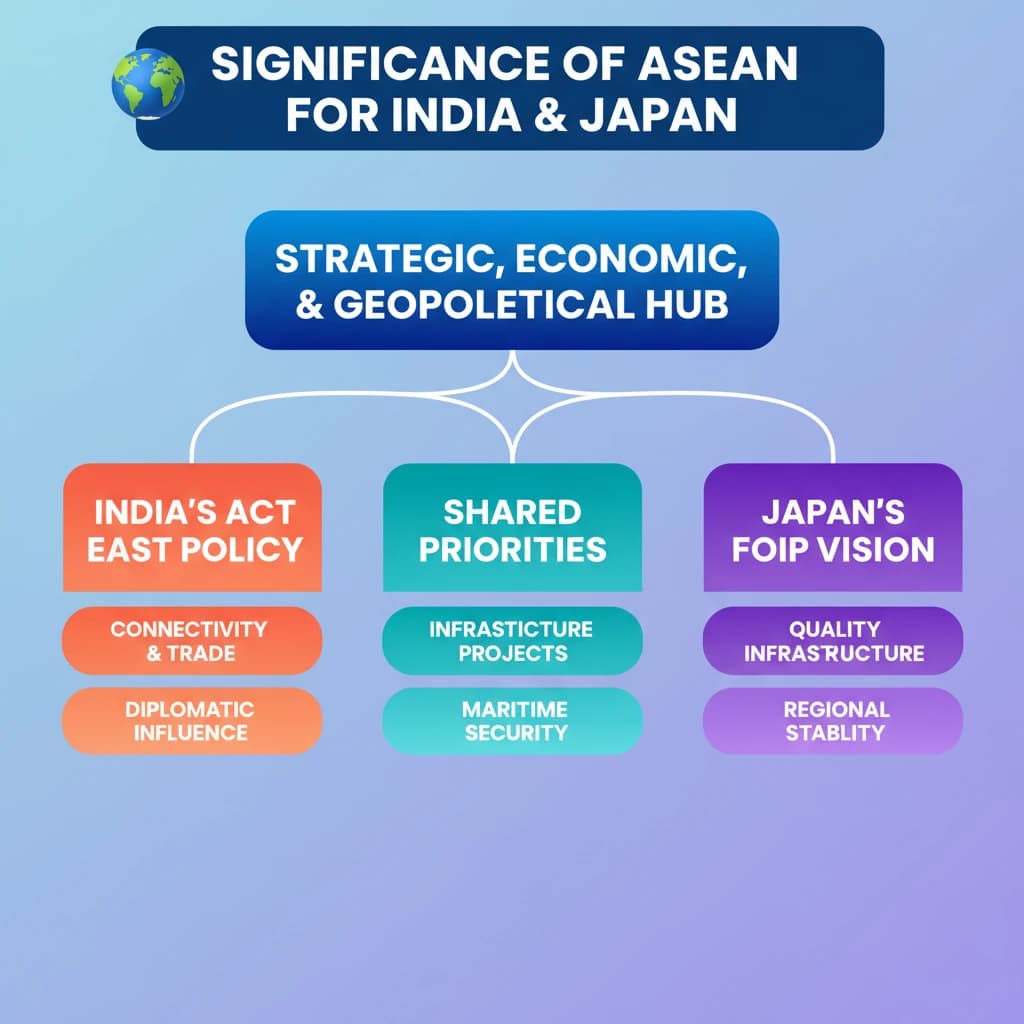
What is the Significance of ASEAN for India and Japan? is a key topic under International Relations for UPSC Civil Services Examination. Key points include: ASEAN is strategically, economically, and geopolitically vital for both India and Japan.. For India, ASEAN is the core of its Act East Policy, focusing on connectivity, trade, and diplomatic influence.. For Japan, ASEAN is central to its Free and Open Indo-Pacific (FOIP) vision, emphasizing quality infrastructure and regional stability.. Understanding this topic is essential for both UPSC Prelims and Mains preparation.
Why is What is the Significance of ASEAN for India and Japan? important for UPSC exam?
What is the Significance of ASEAN for India and Japan? is a Medium-level topic in UPSC International Relations. It is tested in both Prelims (factual MCQs) and Mains (analytical answer writing). Previous year UPSC questions have frequently covered aspects of What is the Significance of ASEAN for India and Japan?, making it essential for comprehensive IAS preparation.
How to prepare What is the Significance of ASEAN for India and Japan? for UPSC?
To prepare What is the Significance of ASEAN for India and Japan? for UPSC: (1) Study the comprehensive notes covering all key concepts on Vaidra. (2) Practice previous year questions on this topic. (3) Connect it with current affairs using daily updates. (4) Revise using key takeaways and mind maps available for International Relations. (5) Write practice answers linking What is the Significance of ASEAN for India and Japan? to related GS Paper topics.
Key takeaways of What is the Significance of ASEAN for India and Japan? for UPSC
- ASEAN is strategically, economically, and geopolitically vital for both India and Japan.
- For India, ASEAN is the core of its Act East Policy, focusing on connectivity, trade, and diplomatic influence.
- For Japan, ASEAN is central to its Free and Open Indo-Pacific (FOIP) vision, emphasizing quality infrastructure and regional stability.
- Both nations engage in infrastructure projects, economic agreements, and security cooperation with ASEAN.
- Maritime security in critical sea lanes is a shared priority for India, Japan, and ASEAN.

What is the Significance of ASEAN for India and Japan?
Medium⏱️ 6 min read
international relations
📖 Introduction
Introduction: ASEAN's Central Role
The Association of Southeast Asian Nations (ASEAN) holds profound significance for both India and Japan. Its importance stems from its strategic, economic, and geopolitical position within the broader Indo-Pacific region.
ASEAN acts as a crucial bridge, connecting South Asia with East Asia and serving as a hub for regional cooperation and stability.
Significance for India: Pillar of Act East Policy
For India, ASEAN is a vital component of its Act East Policy. This policy aims to strengthen India's engagement with Southeast Asian nations across various dimensions.
The relationship focuses on enhancing trade relations, improving regional connectivity, and boosting India's diplomatic influence in the dynamic Indo-Pacific.
India actively participates in numerous infrastructure projects within ASEAN countries. These initiatives are designed to improve physical and digital linkages, facilitating greater economic integration.
Furthermore, economic agreements are regularly pursued to deepen commercial ties. A key objective is also to ensure maritime security in the critical sea lanes that traverse the ASEAN region, which are vital for global trade.
Significance for Japan: Strategic Partner in Indo-Pacific
For Japan, ASEAN is equally critical for its strategic vision of a Free and Open Indo-Pacific (FOIP). Japan views ASEAN as a key partner in maintaining regional stability and economic prosperity.
Japan has historically been a major investor and development partner for ASEAN nations. Its engagement often focuses on high-quality infrastructure development and strengthening supply chains.
Cooperation with ASEAN is essential for Japan's energy security and the protection of vital sea lanes. It also helps counter-balance other rising powers in the region, promoting a rules-based order.
Understanding the dual significance for both India and Japan allows for a more comprehensive analysis of Indo-Pacific geopolitics in UPSC Mains GS Paper 2.
💡 Key Takeaways
- •ASEAN is strategically, economically, and geopolitically vital for both India and Japan.
- •For India, ASEAN is the core of its Act East Policy, focusing on connectivity, trade, and diplomatic influence.
- •For Japan, ASEAN is central to its Free and Open Indo-Pacific (FOIP) vision, emphasizing quality infrastructure and regional stability.
- •Both nations engage in infrastructure projects, economic agreements, and security cooperation with ASEAN.
- •Maritime security in critical sea lanes is a shared priority for India, Japan, and ASEAN.
🧠 Memory Techniques

95% Verified Content
📚 Reference Sources
•Ministry of External Affairs, Government of India (Act East Policy documents)
•ASEAN Official Website (Founding, objectives, member states)
•Japan Ministry of Foreign Affairs (FOIP strategy, ASEAN engagement)