Loading page, please wait…
What is the Significance of INSTC for India? - UPSC International Relations
What is What is the Significance of INSTC for India? in UPSC International Relations?
What is the Significance of INSTC for India? is a key topic under International Relations for UPSC Civil Services Examination. Key points include: INSTC diversifies India's trade routes, bypassing vulnerable maritime chokepoints (Suez Canal, Strait of Hormuz) and land routes through Pakistan and Afghanistan.. Significantly enhances India's connectivity and economic ties with Central Asia, Russia, and Eastern Europe, aligning with the 'Connect Central Asia' policy.. Crucial for India's energy security by providing direct access to energy resources in Russia and Central Asia, reducing reliance on the Middle East.. Understanding this topic is essential for both UPSC Prelims and Mains preparation.
Why is What is the Significance of INSTC for India? important for UPSC exam?
What is the Significance of INSTC for India? is a Medium-level topic in UPSC International Relations. It is tested in both Prelims (factual MCQs) and Mains (analytical answer writing). Previous year UPSC questions have frequently covered aspects of What is the Significance of INSTC for India?, making it essential for comprehensive IAS preparation.
How to prepare What is the Significance of INSTC for India? for UPSC?
To prepare What is the Significance of INSTC for India? for UPSC: (1) Study the comprehensive notes covering all key concepts on Vaidra. (2) Practice previous year questions on this topic. (3) Connect it with current affairs using daily updates. (4) Revise using key takeaways and mind maps available for International Relations. (5) Write practice answers linking What is the Significance of INSTC for India? to related GS Paper topics.
Key takeaways of What is the Significance of INSTC for India? for UPSC
- INSTC diversifies India's trade routes, bypassing vulnerable maritime chokepoints (Suez Canal, Strait of Hormuz) and land routes through Pakistan and Afghanistan.
- Significantly enhances India's connectivity and economic ties with Central Asia, Russia, and Eastern Europe, aligning with the 'Connect Central Asia' policy.
- Crucial for India's energy security by providing direct access to energy resources in Russia and Central Asia, reducing reliance on the Middle East.
- Reduces transit time by 20 days and freight costs by 30% compared to the traditional Suez Canal route, boosting trade efficiency.
- Strengthens India's strategic presence and influence in Eurasia, with Chabahar Port serving as a vital gateway for the corridor.
What is the Significance of INSTC for India?
Medium⏱️ 7 min read
international relations
📖 Introduction
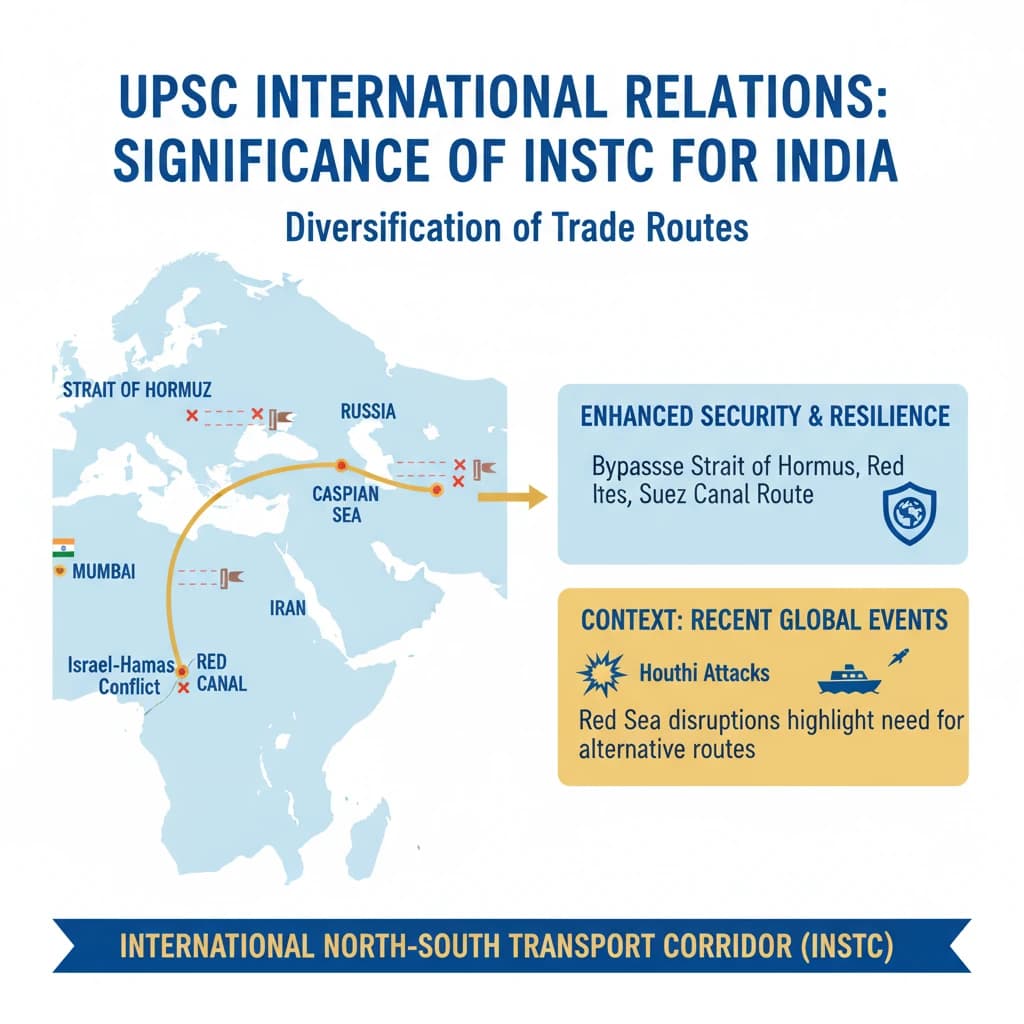
Diversification of Trade Routes
The International North-South Transport Corridor (INSTC) allows India to bypass critical maritime chokepoints like the Strait of Hormuz and the Red Sea, including the Suez Canal route. This significantly enhances the security and resilience of India's trade.
Recent global events, such as the Israel-Hamas conflict and Houthi attacks on ships in the southern Red Sea, have starkly highlighted the urgent need for secure and alternative trade routes.
Through the INSTC, India can also bypass land transit through Pakistan and unstable Afghanistan, establishing direct access to Central Asia.
Enhanced Connectivity with Central Asia
The INSTC significantly improves India's connectivity to vital markets in Russia, the Caucasus region, and Eastern Europe. This facilitates a broad spectrum of cooperation.
It fosters increased trade, robust energy cooperation, stronger defense ties, collaborative counterterrorism efforts, and enriching cultural exchanges with the Central Asian Republics.
The INSTC dramatically reduces transit time by approximately 20 days and slashes freight costs by 30% when compared to the traditional Suez Canal route.
This initiative aligns perfectly with India's
💡 Key Takeaways
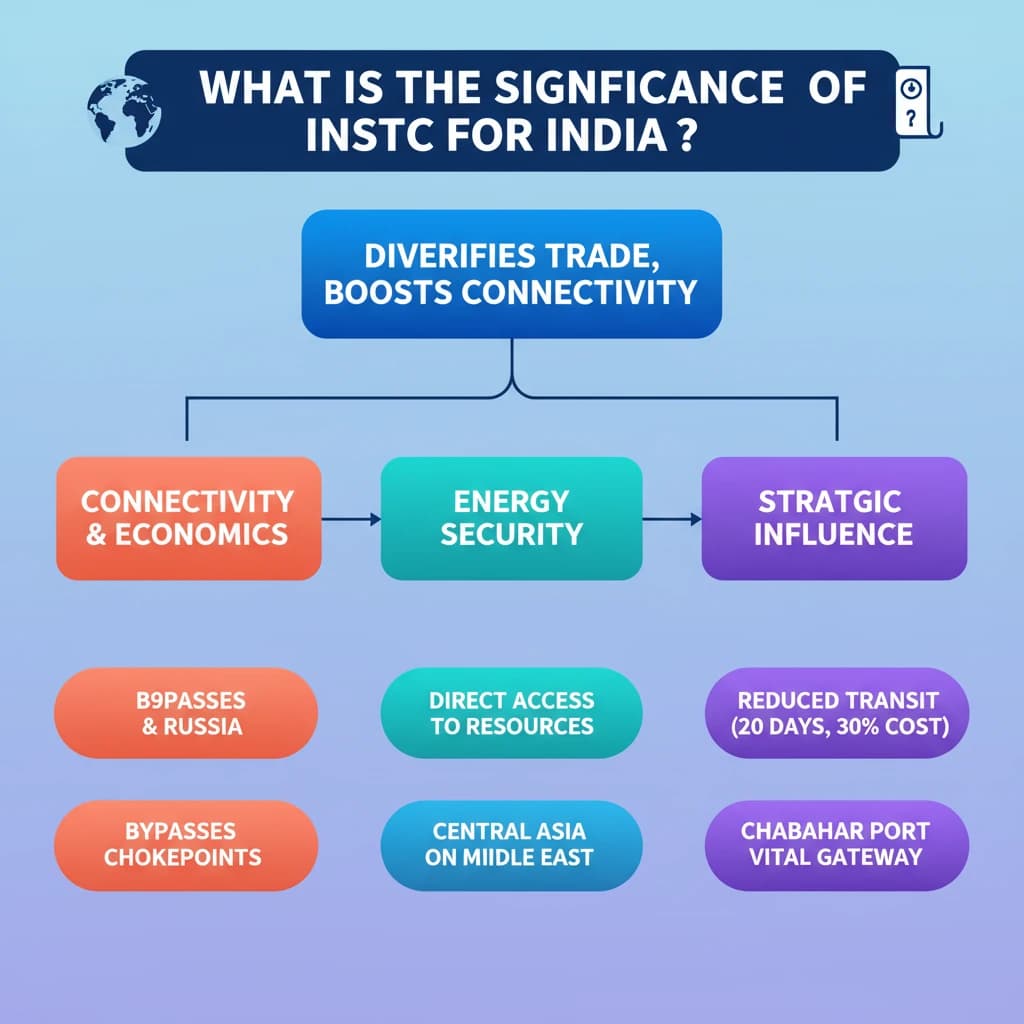
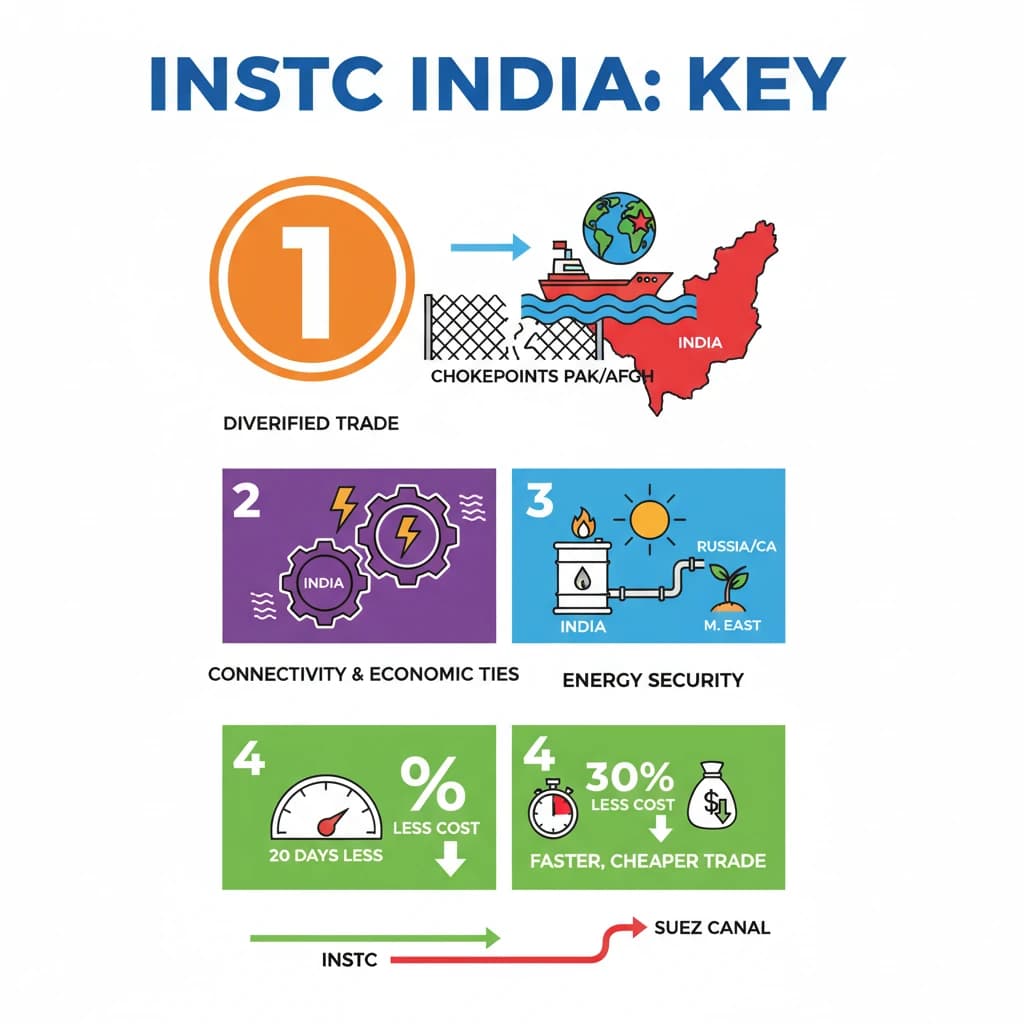
- •INSTC diversifies India's trade routes, bypassing vulnerable maritime chokepoints (Suez Canal, Strait of Hormuz) and land routes through Pakistan and Afghanistan.
- •Significantly enhances India's connectivity and economic ties with Central Asia, Russia, and Eastern Europe, aligning with the 'Connect Central Asia' policy.
- •Crucial for India's energy security by providing direct access to energy resources in Russia and Central Asia, reducing reliance on the Middle East.
- •Reduces transit time by 20 days and freight costs by 30% compared to the traditional Suez Canal route, boosting trade efficiency.
- •Strengthens India's strategic presence and influence in Eurasia, with Chabahar Port serving as a vital gateway for the corridor.
🧠 Memory Techniques
95% Verified Content
📚 Reference Sources
•Ministry of External Affairs, Government of India publications on INSTC and Chabahar Port
•Reports from international trade bodies and geopolitical think tanks regarding INSTC's progress and impact